
Santorini: The Volcano That Built, Buried, and Rebuilt a Civilization — A Field Guide to Ancient Ruins, Wine Caves, and the Real Island Beyond the Sunset
I have watched the sun set over the Santorini caldera seventeen times, and I will tell you something the postcards never mention: the best view is not from Oia. It is from a folding chair on the terrace of a family taverna in Pyrgos, drinking a glass of Assyrtiko that tastes like lightning struck a lemon tree, while the owner argues with his brother about whether this year's harvest is too saline. That is the real island. Everything else is a performance staged by geology and tourism boards.
Most visitors come for the sunset photographs. They climb the stairs in Oia, jostle for position along the castle ruins, and leave convinced they have seen Santorini. They have not. What they have seen is a postcard. The real island is buried under thirty meters of pumice, trapped in frescoes inside a climate-controlled shelter, and carved into volcanic rock in villages most visitors never enter.
Santorini is not a beach destination with nice views. It is a volcano that destroyed a civilization and then spent three and a half millennia pretending to be a postcard.
The Buried City: Akrotiri and the Minoan World
The eruption that created the caldera occurred sometime between 1620 and 1530 BCE. The exact date still divides archaeologists and volcanologists, but the scale is not disputed. The explosion ranked as a VEI-6 event, roughly thirty to forty cubic kilometers of ejecta, a column reaching thirty-six kilometers into the atmosphere. Ash fell on Cyprus, Syria, Egypt. The tsunami it generated likely reached Crete, contributing to the slow unraveling of Minoan power there. What it left behind was a crescent-shaped wound in the Aegean Sea, four hundred meters deep in places, surrounded by cliffs that drop straight into the crater.
Before the eruption, the island was called Thera, and it hosted one of the most sophisticated settlements in the Bronze Age Mediterranean. Akrotiri, on the southern tip, was a port city of roughly twenty hectares with multi-story buildings, paved streets, and a drainage system more advanced than most European cities would have for another two millennia. The inhabitants imported olive oil from Crete, textiles from the Near East, and obsidian from the island itself, which they traded across the Aegean. They decorated their walls with frescoes of saffron gatherers, antelopes, and ships carrying goods between harbors. Then the earthquakes started. The population evacuated before the final explosion, leaving behind furniture, pottery, and the tools of daily life frozen under volcanic ash.
The site was discovered in 1867 by workers quarrying pumice for the Suez Canal, but serious excavation did not begin until 1967 under the Greek archaeologist Spyridon Marinatos. What he uncovered changed how archaeologists understood the Cycladic world. Akrotiri was not a Minoan colony, as some initially claimed, but a distinct civilization that borrowed from Crete while maintaining its own architectural traditions and artistic style. The so-called "House of the Benches," excavated in recent years, suggests the inhabitants practiced rituals that explicitly referenced their Cycladic ancestors, linking themselves to a deeper island heritage rather than mainland Greece or Crete.
Visiting Akrotiri today requires planning. Since April 2024, entry is restricted to reserved time slots, valid fifteen minutes before and after your assigned entry. The site operates daily from 08:00 to 20:00, except Mondays and Thursdays when it closes at 15:30. Full admission is €20. A modern bioclimatic roof covers the excavated areas, which means you can walk through three-story buildings and paved streets without the sun destroying what remains. The frescoes have been removed to the Museum of Prehistoric Thera in Fira, but the architecture itself tells the story: storage rooms with pithos jars still in place, workshops with millstones, houses with windows facing the harbor that no longer exists.
To get there, take the local bus from Fira to Akrotiri (€1.80, approximately 25 minutes) or drive. The site has a small parking lot, but it fills by 10:00 in peak season. Wear sturdy shoes — the wooden walkways are slippery, and the summer heat under the roof can be intense even with the climate control. Bring water. There is a cafe near the entrance, but it is expensive and mediocre. Pack a snack.
The Museums of Fira: What the Volcano Preserved
The Museum of Prehistoric Thera, located on Mitropoleos Street in Fira, reopened in June 2025 after a full renovation that overhauled the building's energy efficiency and accessibility. The entry fee is €10, and the museum is closed on Tuesdays. Its centerpiece is the "Kore of Thera," a rare archaic Greek statue that became the collection's signature piece after the reopening. The Akrotiri frescoes fill multiple rooms, including the famous "Spring Fresco" with its swallows and lilies, and the "Ship Procession" depicting a fleet of vessels between islands. These are not reproductions. They are the original pigments, preserved because the volcanic ash sealed them away from light and oxygen for thirty-six centuries.
The museum is small — you can see everything in ninety minutes — but the density is extraordinary. Room 4 contains the gold ibex figurine, barely three centimeters long, found in a wooden box in a private house at Akrotiri. The box disintegrated when exposed to air, but the figurine survived, a reminder that these people had time to pack their valuables before the final eruption. I stood in front of it for ten minutes, trying to imagine the person who chose that figurine over everything else they owned.
The Archaeological Museum of Thera, also in Fira on Erithrou Stavrou Street, reopened the same month after its own renovation. It focuses on later periods, from the geometric period through Roman rule. The collection includes pottery from ancient Thera, inscriptions, and sculpture. Hours are Tuesday through Friday and Sunday from 08:30 to 15:30, Saturday from 09:00 to 21:00. Entry is €10. The two museums complement each other: one covers the buried civilization, the other the society that rebuilt on top of it.
Between the two museums, stop at Palia Kameni Cocktail Bar on the caldera edge in Fira. It is not cheap — cocktails run €14-18 — but the view is the same one the tourists pay €200 for at their hotel pool, and the bartender makes a proper mojito. Address: Fira 847 00, on the western caldera path. Open from 10:00 until late.
Ancient Thera: The City on the Ridge
Ancient Thera, the classical and Hellenistic city, sits on the ridge of Mesa Vouno mountain in the southeast, three hundred sixty-nine meters above sea level. Getting there requires a drive or a strenuous hike from Kamari or Perissa. The ruins include a theater, a gymnasium, temples to Apollo and Artemis, and houses with mosaic floors. The site is open daily except Wednesdays, 08:30 to 15:30, €10 entry.
The view from the agora looks down on both the caldera and the eastern coast simultaneously, which explains why the Dorians chose this spot when they colonized the island in the ninth century BCE. On a clear day, you can see Anafi, Ios, and the tip of Crete. Bring a hat and sunscreen — there is no shade on the ridge, and the summer heat reflects off the stone.
If you hike up from Kamari, the trail starts at the church of Agios Nikolaos at the south end of the beach. It is 2.5 kilometers and steep. Bring at least a liter of water. The bus from Perissa to the site runs hourly in summer and costs €1.80. A taxi from Fira will cost €25-30 one way.
The Venetian Heart: Pyrgos, Emporio, and the Kastelia
The Venetian period left its own layer. Between the thirteenth and sixteenth centuries, the island was a feudal possession of the Sanudo and Crispo families, who built fortified settlements called kastelia. Pyrgos, in the interior, preserves the best example: a medieval village climbing a hill to a castle at the summit, with narrow passageways designed for defense. The Church of the Presentation of the Virgin inside the castle dates to 1660 and contains icons from the Cretan school.
Pyrgos is where I send people who want to understand Santorini without the caldera crowds. The village has a working bakery, a wine bar that pours wines from three islands, and a restaurant called Penelope's Ouzeri (open 12:00-23:00, meze €6-12) where the owner makes her own fava and will tell you about her grandfather's vineyard if you ask. Address: Pyrgos Kallistis 847 00. The bus from Fira runs every hour and costs €1.80.
Emporio, in the south, has another kasteli with winding streets so tight that two people cannot pass each other comfortably. These villages were built for pirates and invaders, not for tourists. The white paint that now marks every building as "Santorini" was originally a practical choice: it reflects heat and kills bacteria in a climate with little freshwater.
In Emporio, look for To Kafenedaki tou Emboriou, a traditional coffee house on the main square where old men play backgammon and the coffee costs €1.50. It opens at 06:00 and closes when the last player leaves, usually around 22:00. There is no menu. Order a "elliniko" and wait.
The Wine Caves: Drinking the Volcano
The wine culture is inseparable from the geology. Santorini's Assyrtiko grape grows in volcanic soil so poor that the vines must be woven into basket-shaped ground-hugging coils called kouloura to protect them from wind and capture morning dew. The roots can reach six meters deep in search of moisture. The result is a white wine with high acidity and mineral notes that tastes like the island itself: sharp, saline, uncompromising.
The Koutsogiannopoulos Wine Museum in Vothonas, eight meters underground in a natural cave, traces this history from 1870 to the present. Entry is €12 including a tasting of four wines. Hours are 09:00-20:00 daily. The museum itself is kitschy — wax figures, dramatic lighting — but the tasting room is worth the visit, and the underground temperature is a welcome relief in August.
For a more serious experience, visit Domaine Sigalas in Oia (Baxedes area, open 10:00-20:00, tasting €15-25 depending on selection). Paris Sigalas is one of the island's most respected winemakers, and his Assyrtiko is benchmark: mineral, intense, with a finish that tastes like crushed oyster shells. The winery terrace overlooks the vineyard and the sea beyond. Address: Baxedes, Oia 847 00.
Gaia Wines, located on the eastern coast at Tholos Beach, operates out of a converted tomato-processing factory from the 19th century. Their Thalassitis Assyrtiko is aged on the lees and has a creamier texture than most island whites. Tastings are €12-20. Open 10:00-20:00. The setting — industrial chic next to a black sand beach — is unforgettable.
For something different, try Vassaltis Vineyards in Vourvoulos. They are newer, experimental, and their Rosé is unlike anything else on the island: made from Mandilaria with a brief skin contact, it is pale salmon, dry, and tastes of wild strawberries and volcanic dust. Tasting €15. Open by appointment — call +30 22860 71131.
The Eastern Coast: Where Santorini Actually Lives
What most visitors miss is the interior and the eastern coast. The caldera villages, Fira and Oia, are overcrowded from May through October, with cruise ships disgorging thousands of passengers who stay for three hours and buy refrigerator magnets. The eastern side of the island, where the beaches are and where locals actually live, has a different rhythm.
Kamari and Perissa have black volcanic sand, beach bars, and the ruins of Ancient Thera looming above them. The water is colder than you expect — the caldera blocks the warm currents — and the sand gets painfully hot by midday. Bring sandals. A sunbed at Kamari costs €8-12 per day. At Perissa, walk south past the main beach bars to the quieter section near the church of Timios Stavros, where the sand is cleaner and the water deeper.
Megalochori and Vothonas are village settlements with no caldera view and no tourist infrastructure, which is precisely why they feel like the island's actual present rather than its marketed image. In Megalochori, Raki is a taverna in a restored captain's house from 1815. The building alone is worth the visit — vaulted ceilings, volcanic stone walls, a courtyard garden. The food is traditional Santorinian: fava (yellow split pea puree), tomatokeftedes (tomato fritters), white eggplant (a local variety that grows without bitterness). Dinner for two with wine costs €45-60. Address: Megalochori 847 00. Open 12:00-23:00. Reserve in July and August — call +30 22860 81328.
Eating Santorini: Beyond the Sunset Dinner
The caldera restaurants in Fira and Oia charge €80-120 per person for mediocre food with a spectacular view. I have eaten at them so you do not have to. The best food on the island is inland, where rent is lower and the chefs cook for locals.
In Fira, avoid the caldera strip and walk ten minutes inland to Argo Restaurant on Erythrou Stavrou Street. The chef, Yiannis, worked in Athens for fifteen years before returning to the island. His seafood pasta (€18) and slow-cooked lamb with lemon potatoes (€22) are the real thing. Address: Erythrou Stavrou 11, Fira 847 00. Open 13:00-23:00. Call +30 22860 22696.
Metaxi Mas in Exo Gonia is a local institution. The restaurant is in a converted house, the wine list is all Santorinian, and the grilled fava with caramelized onions (€9) is the best single dish on the island. The pork apochti (cured pork with cinnamon and vinegar, €14) is a traditional recipe you will not find on the caldera. Address: Exo Gonia 847 00. Open 13:00-23:30. Call +30 22860 31323.
For breakfast or lunch, Lucky's Souvlakis in Fira is the best gyro on the island — pork or chicken, proper rotisserie, fresh pita, €3.20. Address: Dekigala 304, Fira 847 00. Open 09:00-23:00. There is no seating, so take it to the nearby park or eat standing up like a local.
In Oia, Kastro Oia Restaurant is the exception to the caldera-overpriced rule. Yes, it has a view, but the food is genuinely good — grilled octopus (€16), lobster spaghetti (€32), and a wine list that includes small producers you will not find elsewhere. Address: Oia 847 00. Open 12:00-23:00. Call +30 22860 71832.
For something quick and authentic, Pitogyros in Oia makes traditional gyros and souvlaki (€3.50-4.50) from a tiny shop with no view at all. Address: Oia 847 00, near the bus stop. Open 10:00-23:00.
The Atlantis Question: Myth and Marketing
For those interested in the Atlantis connection, the Lost Atlantis Experience in Megalochori offers an interactive museum that leans into the theory that Plato's myth was inspired by the Theran eruption. An AI-driven exhibit launched in August 2025 allows visitors to "converse" with a simulated Plato about the myth. The 9D cinema simulates the earthquake and tsunami. Entry is €18. Open 09:00-21:00. Address: Megalochori 847 00.
It is tourist-oriented and expensive, but the geological dioramas and augmented reality displays are accurate enough to justify the visit for anyone trying to understand the scale of the eruption. I went in June 2025 and spent forty-five minutes inside, most of it in the geological section, which is genuinely informative. Skip the gift shop — everything in it is overpriced and available in Fira for half the cost.
Where to Stay: Caldera vs. Reality
If you want the caldera view, accept that you are paying for the view, not the room. Expect €300-600 per night in Oia, €200-400 in Fira. The cheaper options have partial views or are set back from the cliff.
For a better balance of location and value, stay in Imerovigli or Firostefani, the villages between Fira and Oia. You still get the caldera view, but the prices are 30-40% lower, and the crowds thin out after sunset.
If you want to understand the island, stay in Pyrgos or Megalochori. Pyrgos Residence (€120-180/night, breakfast included) is a restored mansion with a courtyard pool and a view of the entire island from the roof terrace. Address: Pyrgos Kallistis 847 00. The owner, Eleni, will tell you which tavernas are open and which have changed hands recently — information no guidebook can match.
Budget travelers should consider Caveland in Karterados, a converted wine cave hostel with dorm beds (€25-35) and private rooms (€60-90). The cave rooms stay cool without air conditioning, which is a genuine advantage in July. Address: Karterados 847 00.
Practical Logistics
Getting There: Ferries from Piraeus take between five and eight hours depending on the vessel. High-speed catamarans (SeaJets, Hellenic Seaways) cost €60-80 and take five hours. Conventional ferries (Blue Star) cost €40-55 and take seven to eight hours. Book at least two weeks ahead in July and August. The airport receives flights from Athens (€80-150, 45 minutes) and seasonal European cities.
Getting Around: Local buses connect Fira to the major villages and beaches. Fares are €1.80-2.50. The schedule is posted at the Fira bus station, but delays are common. A rental car or ATV is almost essential if you want to reach Ancient Thera, Akrotiri, or the interior villages on your own schedule. Car rentals start at €35/day in low season, €60/day in July-August. ATVs are €20-30/day but are dangerous — the roads are narrow, the buses are aggressive, and the accident rate is high. Get the car.
Money: Most restaurants and shops accept cards, but the bus is cash only (exact change not required but appreciated). Carry €50-80 in cash per day. ATMs are available in Fira, Oia, Kamari, and Perissa.
Best Time to Go: April-May and September-October. June is manageable. July and August are brutal — crowds, heat, and prices triple. In August, the island receives over 100,000 visitors per day, five times its resident population. November through March, most restaurants and hotels are closed. The island is quiet, some say desolate, but if you want to see Santorini without the performance, this is the time.
The Hike: The trail from Fira to Oia along the caldera rim takes approximately three hours and offers the same views as the bus-tour crowds without the company. Start at Fira's Orthodox Cathedral at 07:00, not at sunset. Bring water, sunscreen, and sturdy shoes. The trail is uneven volcanic rock in places. There is no shade. Stop at Skaros Rock in Imerovigli for the best midpoint view.
What to Skip
The sunset in Oia. I know this sounds like heresy. But the experience of being packed shoulder-to-shoulder with five hundred other people, all holding phones above their heads, is not magical. It is a traffic jam with good lighting. Watch the sunset from Imerovigli, Firostefani, or the terrace of a winery instead.
Caldera restaurants with "sunset views." You are paying €80-120 per person for food that costs €25 inland. The view is free. Eat inland, walk to the caldera for the sunset.
The donkey ride from the old port in Fira. It is cruel to the animals and dangerous for you. Take the cable car (€6 one way) or walk. The walk up is 588 steps and takes twenty minutes if you are fit, forty if you are not. The donkeys are not.
The "blue dome" churches in Oia. They are beautiful, yes, but the specific church that appears in every Instagram post is private property, and the owners are tired of tourists climbing their walls. There are two hundred blue domes on the island. Find another one.
The volcanic hot springs boat tour. The water is not hot — it is lukewarm and muddy. The boats are overcrowded, the sulfur smell is overwhelming, and you will spend more time waiting than swimming. If you want thermal waters, go to Methana on the mainland.
Buying "Santorini wine" in Oia souvenir shops. It is overpriced, often not from Santorini, and has been sitting in a hot window for months. Buy directly from wineries or from the supermarket in Fira.
The Atlantis-themed restaurants in Fira. Bad food, worse history, and prices that would make Plato weep. There is one on the main pedestrian street with a neon sign. You cannot miss it, and you should.
Day-tripping from a cruise ship. You will see Oia, buy a magnet, and leave with the impression that Santorini is a theme park. It is not. Stay at least two nights. Three is better.
The "traditional Greek night" shows with plate smashing. This is not traditional — plate smashing was banned in Greece in 1969 due to noise complaints. What you are watching is theater for tourists, and the food is reheated.
Santorini's curse is its own beauty. The caldera, the white houses, the blue domes, the sunset over the volcano — these images have made it one of the most photographed places on Earth. But the island's real significance is what lies beneath the photographs: a civilization that built a merchant empire on a volcano, watched it explode, and left behind enough evidence to keep archaeologists arguing for decades. The sunset is free. Understanding what happened here requires work, and a willingness to look past the edge of the cliff.
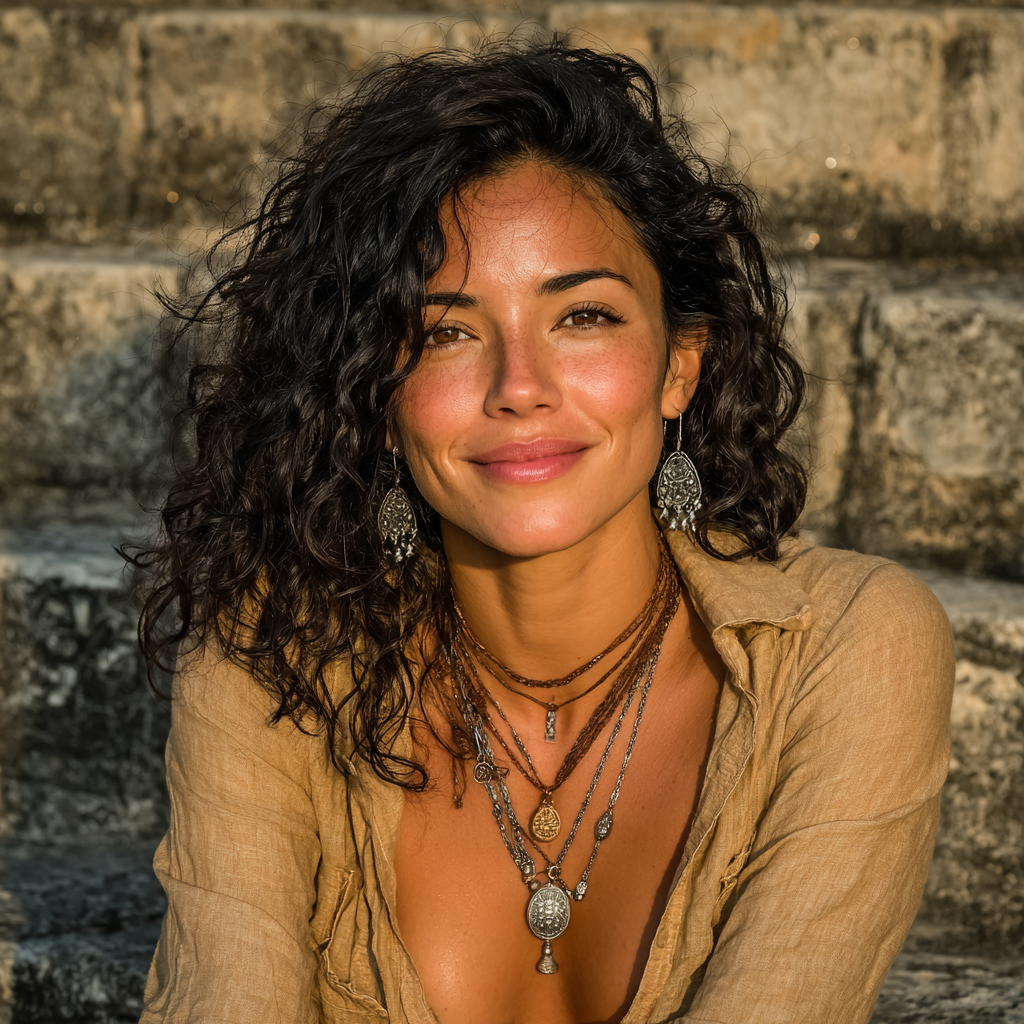
By Elena Vasquez
Cultural anthropologist and culinary storyteller. Elena spent a decade documenting traditional cooking methods across Latin America and the Mediterranean. She holds a PhD in Ethnography from Barcelona University and believes the best way to understand a place is through its kitchens and ancient streets.