
Berlin Solo: The City That Forgot to Be Intimidating — Cheap Museums, Honest Kebabs, and Nights That End at Sunrise
Berlin is the easiest capital in Europe to be alone in, and it isn't close. Nobody looks at you twice here. Nobody cares that you're eating dinner by yourself, dancing by yourself, sitting alone in a beer garden at 3 PM on a Tuesday. The city spent the twentieth century being rebuilt, divided, walled in, and reinvented — it never had time to develop the polished self-consciousness of Paris or the performance-energy of London. What it has instead is a rough, unpretentious honesty that happens to be the single best quality a city can offer a solo traveler.
I came for four days the first time. I stayed for three weeks. This guide is everything I figured out the expensive way, updated for 2026 prices.
Where to Stay: Pick Your Neighborhood, Pick Your Trip
Berlin is enormous — don't let anyone tell you it's walkable in the way Amsterdam is walkable. Where you sleep determines what your evenings look like, so choose deliberately.
Kreuzberg (around Kottbusser Tor and Oranienstraße) is the classic solo choice. It's Berlin's most multicultural district, the heart of the food scene, and the canal-side paths along the Landwehrkanal fill up at sunset with people drinking €2 Späti beers. Bergmannstraße has relaxed cafés; the area around Görlitzer Park has grittier energy. You'll walk to Markthalle Neun, the East Side Gallery, and half the good döner in the city.
Friedrichshain (near Warschauer Straße) is the nightlife base. If clubs are the point of your trip, stay here and stumble home from Berghain instead of negotiating the U-Bahn at 8 AM with pupils like saucers. Simon-Dach-Straße is rowdy; the streets around Boxhagener Platz are nicer.
Prenzlauer Berg is the grown-up option: brunch cafés around Kollwitzplatz, leafy streets, families and young professionals, quick access to Mauerpark's Sunday flea market. Quieter at night — for some travelers that's the point.
Mitte puts you next to Museum Island, the Brandenburg Gate, and the main train station. It's convenient and less soulful, though the Scheunenviertel pocket around Rosenthaler Platz still has charm.
For hostels, dorm beds across the city run €15–28 per night in 2026, and Berlin's hostel scene is one of the best in Europe. Circus Hostel (Weinbergsweg 1a, Mitte) has topped the ratings for years, with its own microbrewery and a tram stopping outside the door. St Christopher's Mitte (Rosa-Luxemburg-Straße) is the social one — Belushi's bar downstairs runs cheap drink deals and you will have plans for the night before you've finished checking in. In Friedrichshain, Sunflower Hostel keeps things friendly and a little calmer. If you want a private room, expect from around €70–85.
Getting Around: The €63 Question
Berlin's public transport is a network of U-Bahn (metro), S-Bahn (overground), trams, and buses, run by BVG and integrated into one fare system. The zones are simple: AB covers the city proper; ABC adds the airport, Potsdam, and Sachsenhausen. The old BC zone was abolished, so it's AB or ABC, nothing else.
Current fares (2026): a single AB ticket is €4.00 (a "short trip" of up to three stops is €2.80), and a 24-hour AB ticket is €11.20 — that second one is almost always the right buy for a full day of sightseeing, since two singles already cost €8. If you're arriving at BER airport, you need ABC: €5.00 single, €12.90 for 24 hours. The FEX airport express and the S9 both run to the center in about 40 minutes.
Here is the math that matters: the Deutschlandticket is €63 per month (the price went up from €58 in late 2025) and covers every tram, bus, U-Bahn, S-Bahn, and regional train in the entire country. If you're staying a week or more, or day-tripping to Potsdam or Dresden, it's a genuine bargain. Buy it through the BVG app or the DB app. Note the old 7-day ticket was retired in 2026, so short stays are now day tickets or singles.
One warning: there are no ticket gates, but plain-clothes inspectors do sweep trains and the fine is €60. Validate paper tickets at the yellow machines before boarding; app tickets are timestamped automatically.
For orientation: the Ringbahn (S41/S42) circles the whole city in about an hour on a normal AB ticket — sit by the window once and you'll understand Berlin's geography in a way no map gives you.
Museums and Memory: The 2026 Reality
Berlin's museum situation changed significantly, and a lot of outdated guides are still wrong about it. Here's the current truth.
The Pergamon Museum has been closed since October 2023 for a massive renovation. Its partial reopening is scheduled for June 2027, and even then the Ishtar Gate and Pergamon Altar halls stay shuttered into the 2030s. If the Pergamon is on your list, plan for 2027 or later. In the meantime, the Pergamon Panorama (Am Kupfergraben 2, next to Museum Island) gives you the next best thing: a monumental 360° recreation of the ancient city plus original artifacts, €14, included in the day pass. It's genuinely good — don't skip it just because it's the substitute.
The rest of Museum Island — Neues Museum (the Nefertiti bust), Alte Nationalgalerie, Bode Museum, Altes Museum — is fully open. Each individual museum costs €14, and everyone under 18 is free. Your options: the Museumsinsel-Ticket at €24 covers all five museums for one day, or the Museum Pass Berlin (€32 for three days, 30+ museums across the city) if you'll spread things out — for most solo travelers on a long weekend, the Museum Pass is the smarter buy. State museums stay open Thursday until 20:00 and otherwise run roughly 10:00–18:00, closed Mondays. One myth to kill: the free "Museumssonntag" first-Sunday program ended in December 2024. It's gone. Budget accordingly.
Beyond the island, two museums matter most for understanding this city. The Topography of Terror (Niederkirchnerstraße 8, Mitte) sits on the site of the former Gestapo headquarters and documents the Nazi machinery with unflinching clarity — entry is free. And the Jewish Museum Berlin (Lindenstraße 9–14, Kreuzberg) uses Daniel Libeskind's startling architecture as part of the exhibit itself; €14, closed Mondays.
Book popular timed entries online a few days ahead in summer. Berlin museums rarely have brutal queues, but the Neues Museum's Nefertiti room gets genuinely packed by midday.
The Best Things in Berlin Cost Nothing
You could spend four days in this city and never pay for an attraction. The East Side Gallery — a 1.3-kilometer surviving stretch of the Wall painted with murals — is free and best early morning before the crowds. The Berlin Wall Memorial on Bernauer Straße (free, outdoor, with an excellent documentation center) is where you actually understand what the division meant, because the empty death-strip is still visible between the buildings. The Memorial to the Murdered Jews of Europe (Cora-Berliner-Straße, near Brandenburg Gate) is free, and the information center underneath is essential — budget an hour.
The Reichstag dome is free but requires advance registration online — do it before your trip, bring your booking confirmation and passport, and take the elevator up for a panorama over the government quarter and Tiergarten. Walk it off in Tiergarten itself, Berlin's rambling central park, or at Tempelhofer Feld, the decommissioned airport turned public park where locals cycle, kite-surf, and barbecue down the old runways. Rent a bike for the afternoon; it's the right way to do it.
On Sundays, Mauerpark in Prenzlauer Berg hosts the city's best flea market (open roughly 9:00–18:00) and the legendary open-air karaoke in the amphitheater — a few thousand strangers cheering a shaky rendition of "Wonderwall" is a more authentic Berlin experience than any museum audio guide. Also on Sundays: most shops are closed, all day, by law. The corner Späti (late-night shop) is your lifeline for groceries, beer, and snacks — Berliners love their Spätis with a sincerity outsiders find baffling until about day three.
Eating Alone: Berlin's Greatest Talent
Nobody in Berlin blinks at a solo diner. Nobody. Eating alone here is not a compromise — it's Tuesday.
The backbone of cheap eating is the döner kebab, born in Berlin in the 1970s. The 2026 reality: a good döner runs €7–9.50. Mustafa's Gemüse Kebap (Mehringdamm 32, Kreuzberg) is the famous one — chicken and roasted vegetables under a lemony sauce — and the queue moves fast; bring cash or a card and 20 minutes. Currywurst with fries costs €4.50–7 at any Imbiss; Curry 36 (Mehringdamm, opposite Mustafa's, fittingly) is the institution. Bakeries do a proper breakfast — fresh Brötchen, coffee, pastry — for €3–6, and most restaurants offer a Mittagstisch lunch plate for €8–12, the best single food deal in the city.
Two market experiences are worth planning around. Markthalle Neun (Eisenbahnstraße 42/43, 10997 Kreuzberg) hosts Street Food Thursday every Thursday 17:00–22:00 — free entry, dozens of stalls doing one dish each, natural wine, shoulder-to-shoulder locals. It sells out of some dishes by 21:00, so arrive by 18:00. The Saturday Big Market (roughly 10:00–18:00) is for produce and picnic supplies; the hall is closed Sundays, the single most common Markthalle mistake. Second: the Turkish Market along the Maybachufer canal runs Tuesdays and Fridays 11:00–18:30 — cheap produce, gözleme cooked in front of you for a few euros, fabric stalls, and one of the best people-watching spreads in Europe. Bring cash, arrive before the lunch rush, then walk the canal path with your spoils.
Weekend brunch is a religion in Prenzlauer Berg and Friedrichshain — expect queues outside good cafés on Saturday and Sunday late mornings; a big brunch plate runs €12–18. For dinner solo, sitting at the bar or a shared table is completely normal in Berlin. A budget restaurant meal is €8–13; a mid-range main runs €15–25; a beer in a beer garden is €3.50–5.50 for half a liter; the same beer from a Späti costs €1–2, which is why the canal banks look like a festival every evening in summer.
Supermarkets (Lidl, Aldi, Rewe) do ready meals for €3–5 — hostel kitchens make the budget stretch. Tap water is excellent and safe; carry a bottle and refill it. One custom note: in Germany you round up the bill or add 5–10% for good table service; there's no US-style pressure.
A Solo Night Out (That Actually Works)
Berlin's nightlife is not a side attraction — it is a primary reason people come, and going alone is not just accepted, it's arguably an advantage.
Berghain (Am Wriezener Bahnhof, 10243, Friedrichshain) is the most famous club on earth and the door is a lottery everyone plays. Entry to Klubnacht is €25–30; the party runs from Saturday midnight through Monday morning. Cards have been accepted at the door and bars since September 2025, though the coat check is still cash (€2.50). The practical science of the door: arrive in a group of one to three (solo works, especially Sundays), dress in dark, plain clothes you can actually dance in, know who's on the lineup, stay quiet and calm in the queue, and — this is non-negotiable — never, ever photograph anything. Phones get stickered at the door; removing a sticker gets you banned. The friendliest windows are Sunday morning through early afternoon, when the Saturday rush has burned off and the crowd is locals finishing their weekend. If the answer is no, accept it gracefully and pivot — Berlin has forty other serious rooms. (Curious but not club-inclined? Berghain's Halle annex occasionally hosts ticketed classical concerts you can simply buy a seat for. Yes, really.)
Beyond Berghain: techno at Tresor (Köpenicker Straße 70, Mitte) in the old power plant, house and disco at clubs around Warschauer Straße, live music at small venues in Neukölln. Bar-crawling solo is easy and safe — start around Simon-Dach-Straße in Friedrichshain or Oranienstraße in Kreuzberg, and let the evening drift. The Berliner Philharmonie sells same-week Tuesday lunchtime concert tickets from around €15 — world-class acoustics for the price of a brunch, and a solo activity in the best sense. Check the Philharmonie website Monday evening when seats appear and book immediately.
Safety note: Berlin is very safe by big-city standards. The normal solo-travel rules apply — watch your bag in crowds, stay aware around Bahnhof Zoo and parts of Kottbusser Tor very late — but walking alone at night through most neighborhoods is unremarkable here. Emergency number is 112.
Easy Day Trips (No Tour Company Required)
Potsdam is the obvious one: Prussian palaces, the Dutch Quarter, the park at Sanssouci. Take the S7 or S1 (or a regional train) — about 40 minutes, covered by an ABC ticket (€5.00 each way). Sanssouci's palaces require timed tickets in summer (palace entry roughly €22; the park itself is free to wander and is half the pleasure). Go on a weekday.
Sachsenhausen Memorial (Oranienburg, north of the city) is a former Nazi concentration camp, now a sobering, essential memorial site. Take the S1 to Oranienburg then a local bus or a 25-minute walk; entry is free, audioguides and guided tours available (guided tours from roughly €15–20 via private operators from Berlin). It's a heavy half-day. Dress for the weather, much of it is outdoors.
The Budget: What Berlin Actually Costs in 2026
| Style | Per Day | What it looks like |
|---|---|---|
| Shoestring | €50–65 | Hostel dorm (€15–28), bakery breakfast, döner/Mittagstisch meals, Späti beer by the canal, day ticket or walking |
| Comfortable | €90–130 | Private hostel room or budget hotel, one museum + one paid activity, sit-down dinner, a couple of club entries |
| Indulgent | €180+ | Design hotel, Museum Pass, proper restaurants, bars and clubs without counting |
Berlin remains one of Western Europe's cheapest major capitals for food and going out. The two things that quietly drain money are accommodation in high season and club nights (entry plus a night of €10–15 drinks adds up; pre-game at the Späti like everyone else).
What to Skip
- Checkpoint Charlie's costumed "guards." The checkpoint itself is historically important; the actors posing for photos in front of it are a €5-per-photo tourist trap. The adjacent museum is dated for the price. Walk past, take the free picture, spend your hour at the Wall Memorial instead.
- The DDR Museum's €14.50. It's interactive and heavily marketed, but small and crowded; the Stasi Museum (Ruschestraße 103, Lichtenberg; €6, closed Mondays) in the actual former ministry gives you the real story of surveillance culture with far more depth.
- Any restaurant with a flag-waving tout within 200 meters of Brandenburg Gate or Alexanderplatz. The food is mediocre, the prices aren't. Walk ten minutes in any direction and eat better for half the money.
- Planning your trip around the "free museum Sunday." As mentioned, it ended in December 2024. Budget for the €32 Museum Pass instead.
- Berlin for one night only. The city rewards slowness — its best moments are unplanned ones between the sights. If you can, give it at least four days.
Practical Notes
- When to come: May–September for parks, canals, and beer gardens (peak season crowds and prices); late September–October for crisp light and the art season; December for the Christmas markets. January–February is cold, gray, cheap, and weirdly atmospheric if you pack for it.
- Arrival: BER airport — FEX or S9/S45 to the center, 40 minutes, ABC ticket. Don't take a taxi into town; it can hit €60+ with no traffic advantage.
- Language: English is everywhere. Learning danke, bitte, and einen Döner, bitte covers the rest.
- Plugs: Type F (Schuko), 230V — same as most of continental Europe.
- Cash: Cards are accepted nearly everywhere now, including Berghain's door — but keep €20–40 in cash for markets, coat checks, Spätis, and small Imbiss stands.
- Water: Tap water is excellent. Refill your bottle; buying bottled water all day is money you don't need to spend.
- Sunday closures: Shops are shut by law. Spätis, bakeries, and museum restaurants carry the city.
- Emergency: 112. Non-emergency police: 110.
- Solo-specific: Berlin is one of the world's great cities for traveling alone as a woman, and hostel common rooms make meeting people effortless if you want company — but the city's real gift is that you never need it.
Berlin doesn't perform for you. It doesn't dress up, it doesn't apologize for the scaffolding, and it genuinely does not care whether you came alone. That indifference is the most welcoming thing a city has ever offered me. Come hungry, stay longer than you planned, and let the U-Bahn take you home at whatever hour you end up at.
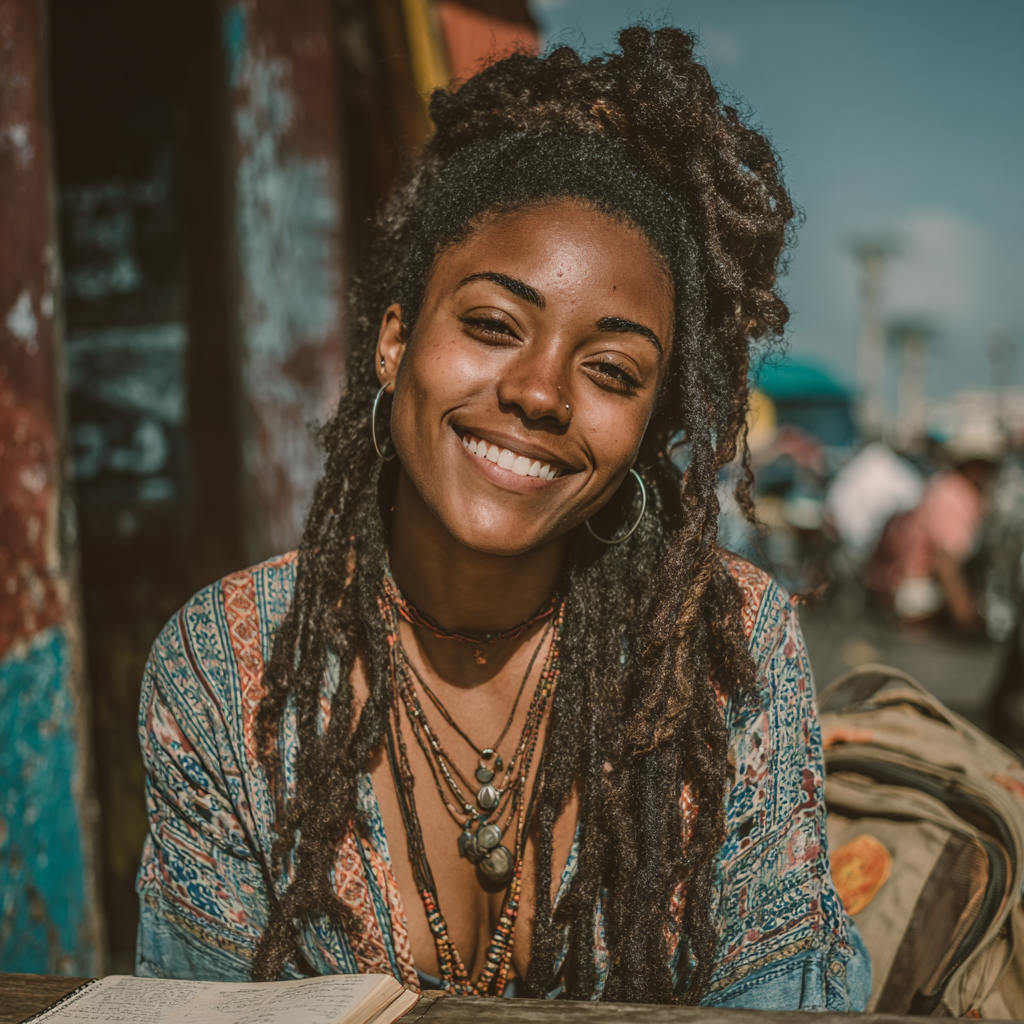
About the author: Maya Johnson writes about traveling alone without making it a personality. She's missed trains on four continents and considers the döner kebab one of humanity's highest achievements. Berlin is the city she'd move to tomorrow if her editor would let her.
By Maya Johnson
Solo travel evangelist and digital nomad veteran. Maya has spent six years traveling alone across 50+ countries on a freelance writer budget. She writes honest, practical guides for women who want to explore the world independently and safely.