
The Gambia: Where 560 Bird Species Fit Inside a Country the Size of Connecticut
Destination: The Gambia Author: Priya Sharma Category: Sustainable Travel
Six hours from London, on the flight map's blank space between Senegal's coast and the Atlantic, sits the smallest country on mainland Africa. The Gambia is 11,000 square kilometers — roughly the size of Connecticut, a tenth the size of England — and almost all of it runs along the banks of a single river. That river is the point. Wherever you stay, you are rarely more than an hour from serious birdlife, a dugout canoe, a chimpanzee sanctuary, or a village where tourism money genuinely changes what happens next.
This is not a safari country in the East African sense. There are no big cats, no migration herds, no luxury tented camps charging a thousand dollars a night. What The Gambia offers instead is accessibility and honesty: West Africa's densest birding, one of the continent's most important chimpanzee rehabilitation projects, slave-trade history that you can stand inside, and a community-tourism infrastructure that lets your dollars reach villagers directly. You do not need a tour operator, a 4x4, or a fat wallet. You need a pair of walking shoes, some patience with shared taxis, and the willingness to treat a small country as a complete one.
Why the Size Works for You
The Gambia's whole length is about 480 kilometers of river valley, and its width never exceeds 50 kilometers. In practice this means you can have breakfast on an Atlantic beach, lunch in a riverside forest, and dinner in a village 200 kilometers upcountry — all on public transport, in one day, for the cost of a London lunch. The entire country fits inside the travel time of a single Kenyan game-drive circuit. For birders and budget travelers, this density is the whole pitch: more species, shorter transfers, lower cost.
The country is also overwhelmingly easy in ways that surprise first-time West Africa visitors. English is the official language. The currency is stable and simple. Crime targeting tourists is low, and the famous Gambian welcome — strangers greeting you on the street, "You are welcome" said like a statement of fact — is not a marketing invention. The honest trade-off: infrastructure is basic, roads degrade fast once you leave the coastal strip, and the wet season (June to October) can make upcountry tracks impassable and Mandina-class lodges close entirely. Come in the right months and the country works like a well-oiled small machine. Come in August and you will spend your trip watching rain hammer the hotel pool.
The River Is the Country
Everything in The Gambia orbits the river that gives the country its name. The Gambia River runs nearly 1,100 kilometers from the Fouta Djallon highlands of Guinea to the Atlantic, and for its final 480 kilometers it is navigable, calm, and bordered by mangrove, savanna, and baobab. If you do nothing else upcountry, take a boat onto the river.
The Baboon Islands and the Chimpanzees. River Gambia National Park, about 300 kilometers upriver, protects a chain of five islands that have been a chimpanzee rehabilitation sanctuary since 1969. Habituated chimps — originally rescued from captivity — live wild on the islands, and you observe them from a boat, quietly, as the animals come to the banks. It is one of the most ethical primate encounters in Africa: no feeding, no contact, small groups, and the fees fund the ongoing rehabilitation project run by the Jan van Hooff / Chimpanzee Rehabilitation Project (CRP) team. Sightings are not guaranteed — these are wild animals on their own schedule — but they occur on most river trips, usually in the cooler morning hours. Access is by multi-day organized trip from the coast, typically three to five days including Tendaba Camp or riverside lodges, with prices around D8,000–15,000 (~$110–205) per person depending on group size and inclusions. You can also reach the area independently by taking a gelly-gelly (shared minibus) to Janjanbureh (Georgetown) and arranging a local boat from there, which drops the price substantially but requires flexibility and a night or two upcountry. Either way, this is the single most memorable thing you can do in The Gambia.
Tendaba Camp. The classic river base, roughly 160 kilometers upriver at the edge of Kiang West National Park. It is simple — en-suite bungalows, a thatched bar, solar power, cold beer — and it exists for birders heading out at dawn on the Bao Bolong creek. A night here splits the trip to the chimps and gets you onto the water at first light, when the river is glass and the herons, egrets, and fish eagles are at their most active. Book through a coastal tour operator or directly; beds run D1,500–3,000 (~$20–40) per night half-board in season.
The Lower River. Closer to the coast, Lamin Lodge — a ramshackle stilted wooden restaurant reachable only by boat, about 20 minutes from the main road near Lamin village — is the classic gentle introduction: hire a pirogue and a boatman (D500–1,000 for an hour or two, ~$7–14, depending on your negotiation and group size) to drift through the bolongs (creeks) past oyster women harvesting mangroves and kingfishers diving off branches. Further east, Bintang Bolong and the tributaries around Kiang West (entry D200, ~$2.70) offer proper wilderness birding — tidal flats, woodland, and the country's best remaining population of western red colobus monkeys.
Birds, Monkeys, and the Coast's Wild Edge
You do not need to go upcountry for wildlife. The coastal strip between Banjul and Kartong holds reserves that would be headline attractions anywhere else, at prices that barely register.
Abuko Nature Reserve is the must-do. Thirteen kilometers from Kololi, 105 hectares of gallery forest around the Lamin stream, it is the oldest protected area in the country (reserve since 1968) and still the best single morning of nature you can buy for D100 ($1.35). The full trail loop takes 90 minutes to two hours at an easy pace, under proper forest canopy, and reliably delivers western red colobus troops moving overhead, green vervets at eye level, Nile crocodiles in the pools, and — with a bit of luck — african fish eagles calling across the canopy. Over 280 bird species have been recorded here. Guides wait at the gate for D150–200 ($2–3) and are worth it: they find the green mambas and the perched owls you would walk straight past. Go early (the gate opens around 8:30), go on a weekday, and combine it with lunch at Lamin Lodge afterward.
Bijilo Forest Park sits inside the resort strip itself, across from the Senegambia area hotels — a fenced pocket of coastal forest and savanna with a 4.5-kilometer walking loop, red colobus and patas monkeys that have learned tourists mean peanuts (do not feed them; the habituation problem is real and the monkeys can be aggressive), and a fine dawn chorus in season. Entry is D300 (~$4). It is a 90-minute walk, not a destination, but if you are based in Kololi it is the easiest sunrise nature fix on the coast.
Tanji is the working counterpoint. The fishing center here is one of the country's biggest landing sites — hundreds of brightly painted wooden boats (the "pirogues") come in through the surf mid-morning, and the beach becomes a market of smokehouses, fish-drying racks, and women negotiating by the crate. Walk south along the beach to the Tanji Bird Reserve (D100–200) where the tidal lagoon behind the dunes holds flamingos, pelicans, and thousands of terns in season. The Tanji–Kartong road south passes the Kachikally Sacred Crocodile Pool in Bakau (D50, ~$0.70; +220 778 2479; [email protected]) — over 100 West African Nile crocodiles in a freshwater pool that the local Bojang family has protected for generations as a site of fertility rituals. Petting a crocodile is on offer and is exactly as unwise as it sounds; watching them from the bank is the better decision.
Kiang West and Niumi. For committed birders with a vehicle or a guide, Kiang West National Park (D200) protects 11,000 hectares of tidal flats and woodland on the south bank, with spotted hyena, bushbuck, and some of the best shorebird viewing in West Africa — you need your own transport or an organized tour, and the access road is seasonal. Across the river mouth on the north bank, Niumi National Park ($10 entry, payable in dalasi equivalent) pairs mangrove creeks with a quiet Atlantic beach where green turtles nest between July and September — combine it with the Barra ferry crossing and Juffureh for a full north-bank day.
Roots and Memory
The Gambia's most sobering hour is also one of its most important. Kunta Kinteh Island — James Island until 2011 — sits mid-river 30 kilometers from the sea, a few hundred square meters of eroding ruins where a fort held enslaved Africans before they were shipped to the Americas. It is small, wind-scoured, and quietly devastating: the dungeons, the gun batteries, the baobabs growing out of what was the fort wall. UNESCO listed it in 2003, together with the north-bank villages of Juffureh and Albreda.
The standard trip runs from Banjul: ferry across the river mouth to Barra (foot passenger, roughly D50–100 one way depending on the boat; the crossing takes 30–45 minutes and the ferry is an experience in itself — packed lorries, women with trays of peanuts, the whole working river), then a shared taxi or gelly-gelly to Juffureh. The Roots Museum at Albreda is a small, locally run slavery museum (modest entry donation) that contextualizes the trade and the Kunta Kinteh story, and the Kinteh family still lives in Juffureh — descendants will sometimes receive visitors, a living continuation of the story Alex Haley made famous. A boat hop takes you to the island itself. Count on a full day and roughly D2,000–3,500 (~$27–48) per person doing it independently, or join an organized "Roots" tour from the coast for D3,000–5,000 with guide, boat, lunch, and hotel pickup. Go on a weekday morning and the island may be nearly empty, which is how it should be seen.
Honest guidance: parts of the Juffureh visit can feel transactional — locals appear when the boat arrives, craft sellers follow groups, and photo requests sometimes come with a fee. It is poverty, not aggression, and a calm, respectful no works. But budget a little extra for tips and small purchases, and do not let it sour the history itself.
Community Tourism: Where Your Money Actually Goes
The Gambia's most distinctive contribution to African tourism is a 30-year tradition of village-based community tourism — lodges and tours designed so that revenue reaches villagers rather than foreign operators. Three standouts:
Footsteps Eco-Lodge at Gunjur, in the far south near Kartong, has been the ethical-travel flagship for two decades. Ten minutes' walk from an empty Atlantic beach, it runs on solar power, grows much of its own food, composts everything, and plows profits into the local community through its associated charity (school sponsorships, health projects). Expect en-suite rooms, excellent Gambian-European fusion cooking, birding walks into the savanna behind the lodge (temminck's courser and rare larks live out here), and no air conditioning — the sea breeze is the system. Half-board rates run roughly £55–85 (~$70–110) per person per night in season, bookable directly. The lodge is also the best base for Kartong and the sand spit at the Senegal border.
Makasutu Culture Forest, 45 minutes inland from the coast, is a 1,000-acre private reserve of palm forest, savanna, and mangrove that the local people co-own with the lodge operation. Mandina River Lodge floats solar-powered suites on the bolong's edge — the morning paddle in a dugout, silenced, past baboons and fish eagles, is the signature experience — with half-board rates from £115–220 (~$150–280) per person per night. Note the season: Mandina closes 15 April to 15 October, the wet months, as do most upcountry lodges. Outside those dates it is arguably the finest two nights in the country.
Farakunku near Tujereng and Bird Safari Camp at Janjanbureh offer simpler community stays at D1,000–2,500 (~$14–34) a night, and around them the principle holds everywhere: local guides, local food, local transport. A bird guide hired for a morning (D500–1,000) is a day's wage earned, not a tip dispensed.
When to Come
November to February is the window: 24–32°C, low humidity, dust-free skies, migrant birds arriving from Europe and the Palearctic, everything open. March to May gets progressively hotter (35°C+ by April) but stays dry, greener, and quieter — good value and excellent birding, with wildlife concentrating at water. June to October is the wet season: dramatic storms, heavy humidity, many upcountry roads closed, Mandina and most river lodges shut (15 April–15 October), but Abuko, Bijilo, and the coast function fine, package-hotel prices drop hard, and the countryside turns luminous green. Turtle nesting at Niumi runs July–September. For a first visit, aim for the last two weeks of November or anytime December–January.
Where to Stay
Budget (D800–2,000 / $11–27 double): guesthouses and small hotels around Kololi, Kotu, and Bakau — Baobab Holiday Lodge, Tropic Gardens, and dozens of family-run places near the Senegambia strip. Clean, fan-cooled, breakfast often included, walkable to restaurants. Book a couple of nights, then scout in person for longer stays — prices drop substantially for direct bookings and weekly rates.
Mid-range (D3,000–6,500 / $40–90 double): the strip's solid 3-star hotels (Kololi Beach Resort, Palm Beach, Kombo Beach area), or better value, small eco-properties like Footsteps (~$70–110 pp half-board). This tier is where The Gambia shines: proper comfort at Southeast-Asian prices.
Top end (£150–300 / $190–380 double): Ngala Lodge and Coco Ocean in the Fajara/Kotu area (adults-oriented, excellent kitchens), or Mandina River Lodge at Makasutu (15 Apr–15 Oct closure) for the river experience. There is nothing here at East African safari prices, which is rather the point.
What to Eat and Drink
Gambian food is rice, fish, peanut, and chili — cheap, filling, and genuinely good. Benachin (jollof: rice cooked in tomato and fish or chicken), domoda (peanut stew with meat, served over rice), and yassa (chicken or fish marinated in lemon, onions, and mustard) are the national trinity. In a local chop house outside the tourist strip they run D100–300 (~$1.35–4) a plate; in Senegambia-area tourist restaurants expect D400–700 ($5.50–9.50). Breakfast is tapalapa — dense local bread, sometimes with niebe bean paste or egg — for D50 ($0.70) at any market. Street snacks are a joy: cassava fries D20, homemade baobab or hibiscus (wonjo) ice pops D10, thiakry (sweet millet-and-yogurt) D10–20, and Café Touba, the Senegalese spiced coffee sold in paper cups by the roadside for D10.
Fish is the coastline's argument: grilled barracuda, butterfish, or captain fish at a beach shack (try the grill places at Cape Point, Bakau, or the fishing spots along Kotu beach) runs D300–600 with rice and attaya. Attaya — the bitter, sweet, strong green tea brewed ceremonially in three rounds — is served everywhere and accepting a glass is accepting a ten-minute conversation. Bottled water is universal; local Julbrew beer is cheap and cold; spirits in tourist bars are the main budget trap (D150–250 a cocktail versus D60 a beer).
Entry Formalities and Money
Visas: ECOWAS nationals (and most West Africans) enter visa-free. Citizens of Commonwealth countries — including the UK — technically require an Entry Clearance/visa arranged before arrival (the rule has been tightened in recent years; check the Gambian Immigration site or your nearest Gambian embassy; UK travelers typically pay around £40 single / £60 multiple). Many other nationalities, including the US and EU, can obtain a visa on arrival at Banjul airport for D7,000 (~$95) — bring crisp US dollars or euros; the desk sometimes prefers hard currency. Requirements shift without much notice, so verify within a month of travel. Yellow-fever vaccination is officially required (carry the card), and malaria prophylaxis is strongly recommended year-round.
The airport tax that is not a tax: every international arrival and departure pays a Securiport/biometric security fee of $20 (D1,000) — sometimes collected in cash at the airport, sometimes bundled into your airline ticket. Budget it twice and you will not be surprised.
Money: the dalasi trades around D73–74 to the US dollar (Oct 2026; roughly D85 to the euro, D95–98 to the pound) and has been gently sliding — check rates on arrival. This is a cash economy: cards work at larger hotels and a handful of resort restaurants and nowhere else, ATMs exist in the resort strip and major towns but routinely run dry, and foreign cards fail often. Bring US dollars or euros in clean, post-2013 bills and change at a forex bureau (better rates than banks, no commission in the strip). Budget travelers carrying cards and no cash have a miserable first day.
Getting in and around: Banjul International Airport (BJL) sits at Yundum, 24 kilometers from the capital. Official airport taxis are green with yellow doors — agree the fare before getting in: roughly D200–300 ($2.70–4) to Bakau/Kotu/Kololi and D400–500 ($5.50–7) to Banjul, though night flights and first-timers get quoted double; walking past the touts to the official rank helps. Around town, shared taxis (toyota vans with a colored stripe) are the local system: D20–40 per hop (~$0.30–0.55), flagged down, squeezed in, and gloriously efficient along the coastal road. Gelly-gellys (converted minibuses) run fixed routes to towns upcountry for pocket change — Serekunda to Brikama, Farafenni, or Janjanbureh — and are how Gambians actually travel. Car rental with a driver is D2,000–3,500/day and worth it for Kiang West or a multi-stop upcountry day. The Banjul–Barra ferry (D50–100 on foot) is itself an attraction; vehicle queues can run hours — go as a foot passenger.
SIM cards: buy a local SIM at the airport or any Africell/Qcell shop — D100–200 for the SIM plus data bundles that are cheap by any standard (D100 buys roughly 1GB of data). Coverage is good along the coast and river towns, patchy upcountry.
Honest Math
Backpacker: D1,800–2,500 (~$25–34) a day — guesthouse split between two, gelly-gellys, chop-house food, Abuko, Bijilo, a beach day. This is one of the cheapest meaningful nature trips on earth.
Mid-range: D4,500–7,500 (~$60–100) a day — comfortable hotel or eco-lodge, restaurant dinners, a guided trip (Roots day or Lamin pirogue), taxis as needed.
Comfort: D15,000–25,000 (~$205–340) a day — top-end lodge, private driver-guide, Makasutu or a river trip, everything arranged.
A week of mixed mid-range and budget travel, including one splurge at Makasutu or the Roots trip, lands around $500–800 per person excluding flights. Flights from Europe (London, Brussels, Amsterdam direct in season) run £250–500 return; from North America, figure on routing via Dakar or a European hub.
What to Skip
- The all-inclusive bubble. If your entire trip is a package hotel on Kotu beach, you have seen a buffet and a pool, not a country. The Gambia's whole case is what lies beyond the fence.
- Feeding monkeys at Bijilo. The habituation problem is documented and the bites are real. Photograph, don't feed.
- "Bumster" hustlers on the Senegambia strip. Persistent touts and would-be guides target single travelers on foot. A firm, friendly, repeated "no" works; better still, walk with purpose and never stop to look at a menu you don't intend to order from. Do not accept "free" friendship tours.
- Expecting guaranteed chimp sightings. The Baboon Island animals are wild. If your heart is set on a guaranteed close-up, you will be disappointed and you will have pressured a good project. Go for the river, and let the chimps be a gift.
- Wet-season upcountry plans. From mid-April to October, Mandina closes, roads fail, and heat plus humidity make afternoon birding pointless. Shift upcountry dreams to November–February.
- Dressing for the beach everywhere. The Gambia is 90%+ Muslim. Swimwear is fine on hotel beaches, but cover shoulders and knees in towns, upcountry, and anywhere near villages or mosques. It costs nothing and changes every interaction for the better.
- Paying tourist-menu prices without checking. Any menu in English with photos aimed at the strip is marked up. Walk five minutes inland or ask a local where they eat, and the same plate costs a third.
The Last Word
The Gambia will not overwhelm you with spectacle. No single sight here is the best of its kind in Africa. What it offers is something rarer: a complete, comprehensible West African country that you can actually meet — its river, its birds, its hardest history, its villages — on a human budget and a human scale, in a week, without an expedition. Come between November and February, leave the resort fence at least twice, put your money into local hands, and let the river do the rest.
Last updated: November 2026. Prices in Gambian dalasi (D) with US dollar equivalents at ~D73–74/USD; verify current rates on arrival.
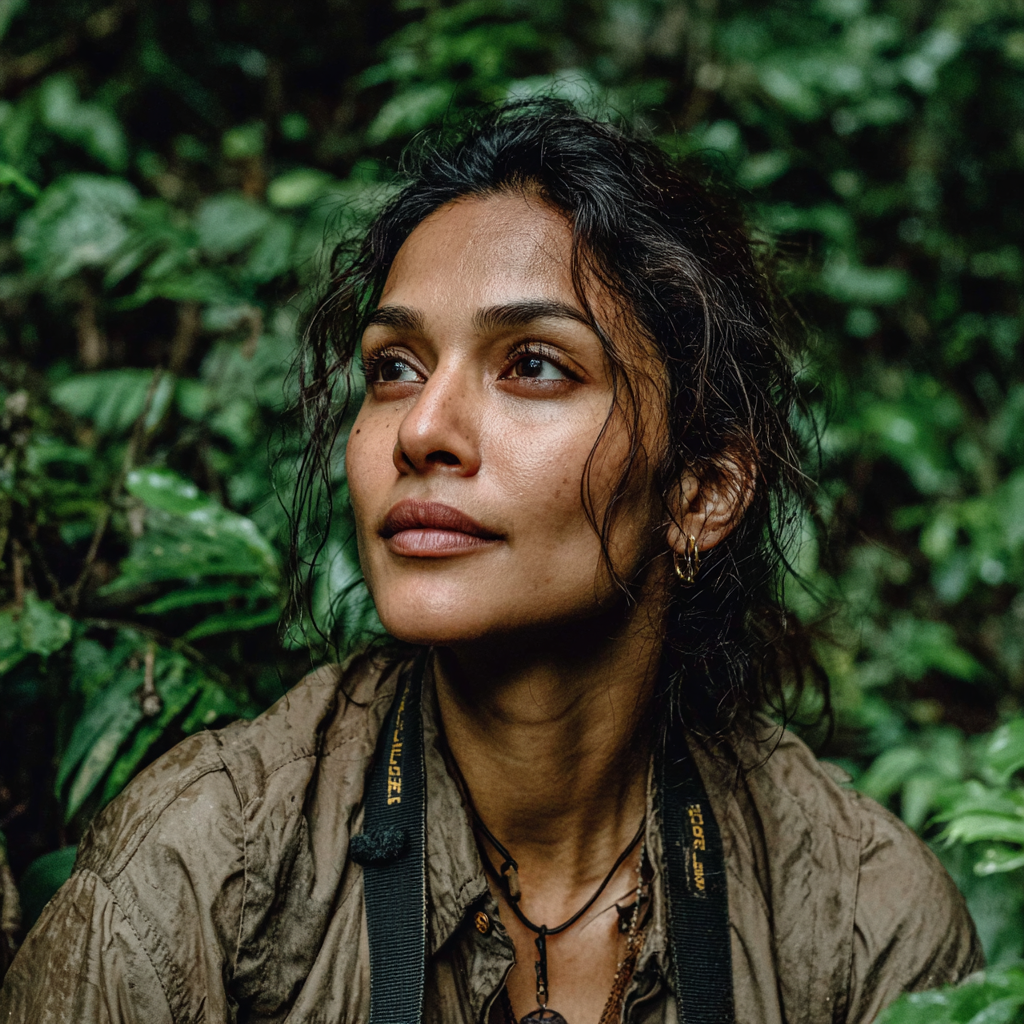
By Priya Sharma
Conservation biologist and sustainable tourism advocate. Priya works with eco-lodges and wildlife sanctuaries to promote ethical travel practices. She holds an MSc in Biodiversity Conservation and has spent years tracking endangered species across the Indian subcontinent.