
Most travelers cannot place The Gambia on a map. West Africa's smallest mainland nation sits as a narrow finger of land inside Senegal, barely 50 kilometers wide at its widest point and only 480 kilometers long. Eleven thousand three hundred square kilometers. You could fit the entire country inside Connecticut and still have room for Rhode Island. What it lacks in size, it makes up for in density of life. Five hundred and sixty bird species have been recorded here. The United Kingdom, twenty-two times larger, manages barely two hundred and fifty.
The Gambia is not a destination you stumble into by accident. Banjul International Airport receives direct flights from Brussels, Lagos, Dakar, and Casablanca, but pre-pandemic annual tourist arrivals hovered around one hundred thousand. Senegal next door saw two million. This low footfall is the country's greatest asset for sustainable travel. There are no all-inclusive resort strips dominating the coastline. No cruise ship terminals discharging thousands at once. The tourism that exists operates at a scale where individual decisions still matter, where a single booking at a community lodge represents a measurable percentage of monthly village income.
I came for the birds and stayed for the river. The River Gambia defines everything in this country. It runs the entire length of the nation, splitting it in half, and historically carried human beings in the opposite direction toward the Atlantic and the slave ships waiting offshore. Understanding this river is the key to understanding what sustainable travel looks like here.
The River Gambia National Park sits roughly two hundred kilometers inland from the capital. Most people call it Baboon Island, though the name undersells what you actually find. Stella Marsden established the chimpanzee rehabilitation project here in 1969, and today approximately one hundred chimps live across five islands in various stages of rewilding. The project does not allow visitors to land on the islands. You observe from a boat, maintaining a strict distance, watching the animals behave without human interference. This is not a wildlife park designed for photography. It is a conservation project that happens to allow observation. The difference matters. A boat tour costs around two thousand dalasi per person, roughly thirty dollars, and lasts three to four hours. The best sightings come in the dry season mornings between November and February, when the chimps move to the island edges to feed before the midday heat.
Further downstream, Makasutu Cultural Forest spans one thousand hectares of gallery forest, savanna, mangrove, and wetland. Four ecosystems in one contiguous block. The forest sits on the edge of a bolong, one of the tidal creeks that branch off the main river like veins. Local Mandinka communities have managed this land for centuries, and the tourism model here is genuinely community-based. Not the marketing version. The forest employs residents as guides, boatmen, and craft workers, and revenue shares are structured into the operating model rather than added as an afterthought. Mandina Lodges float on the creek itself, built from local materials by local craftsmen. Solar power, compost toilets, and a strict no-plastic policy. Rates run from one hundred and twenty to two hundred dollars per night depending on the season, which is not cheap by West African standards, but the money stays within a tight radius of the property.
Abuko Nature Reserve, just thirty minutes south of Banjul, was the country's first protected area. Established in 1968 on land that had served as a water catchment since 1916, it covers only one hundred and seven hectares. Small, but strategic. It protects a remnant patch of gallery forest around a perennial stream, creating a water source that attracts wildlife from the surrounding degraded landscape. Two hundred and fifty bird species, Nile crocodiles, vervet monkeys, and bush babies that you might hear but will not see unless you join a night walk. The reserve also runs an animal orphanage that rehabilitates confiscated wildlife, including hyenas and pythons, for educational purposes rather than entertainment. Entry costs about fifty dalasi, less than one dollar. The boardwalks are basic but functional, and the best strategy is to arrive at opening time, seven in the morning, before the heat and the school groups arrive.
Tanji Bird Reserve, on the Atlantic coast, covers six hundred and twelve hectares of Ramsar-listed wetland. The tidal flats here host wintering waders from Europe, terns, pink-backed pelicans, and the occasional passing cetacean. The nearby fishing village operates as it has for generations, with wooden pirogues landing catches of bonga fish and shrimp. The bird reserve and the village are functionally integrated. You do not visit one without experiencing the other. This is worth remembering when you see the fish-drying tables covered in the small silver bodies. The smell is intense, but this is a working coastline, not a curated wilderness.
The human history along this river is as important as the ecology. Kunta Kinteh Island, formerly James Island, sits in the middle of the river near the village of Juffureh. UNESCO listed it in 2003 as part of a serial nomination covering the slave trade route. The fort ruins are modest. A few stone walls, a cannon, the remains of a colonial building. The power of the place comes from understanding what happened here. Alex Haley's research into his ancestral roots brought international attention to Juffureh in the 1970s, and the village now receives a steady stream of visitors seeking the "Roots" connection. The sustainable travel approach is to treat this as a site of memory and historical education, not as a heritage tourism product. Hire a local guide from the village rather than booking a packaged tour from Banjul. The village guides charge roughly five hundred to eight hundred dalasi for a half-day walk, and the money goes directly to the families who have lived here for generations. Skip the craft markets that have sprung up at the tourist drop-off points. The carvings are largely imported from Senegal and sold at inflated prices to visitors who feel obligated to buy after the emotional weight of the island visit.
For accommodation, Footsteps Eco-Lodge near the coastal village of Gunjur demonstrates what community-based tourism looks like at a smaller scale. Three kilometers from the beach, built into the scrub forest, it runs on solar power and compost toilets, sources food from its own organic garden, and employs exclusively from the surrounding communities. The lodge has twelve rooms, so overcapacity is structurally impossible. A double room in peak season costs about sixty dollars per night, including breakfast. The lodge also runs the Footsteps Foundation, which funds local health and education projects. This is not an add-on CSR program. It is the reason the lodge exists.
Tendaba Camp, further inland on the riverbank, is more basic and less polished, which is precisely why it works for certain travelers. Solar lighting, bucket showers, and a bird list that exceeds three hundred species recorded from the camp grounds alone. The camp serves as a base for exploring the Kiang West National Park and the Tendaba rice fields, which attract large flocks of wintering European raptors and storks. A night here costs around twenty-five dollars. Do not expect reliable hot water or Wi-Fi.
The dry season from November to February is the optimal window. European winter migrants arrive, the roads are passable, and the humidity drops to manageable levels. January can bring harmattan dust from the Sahara, which reduces visibility and can irritate respiratory conditions, but the birdwatching remains exceptional. The wet season, June through October, transforms the landscape. The river floods, access to many areas becomes impossible without four-wheel drive, and malaria risk rises sharply. Most lodges outside the coastal zone close entirely. If you are serious about birding, the early wet season in May and June offers breeding plumage displays, but the logistical challenges are significant.
Currency is the dalasi, which floats against major currencies and currently trades at roughly sixty-five to the US dollar. There are no ATMs outside Banjul and the main coastal strip. Bring cash, preferably euros or dollars, and change in Banjul. English is the official language, a colonial legacy that makes communication easier than in many Francophone neighbors, but Wolof and Mandinka dominate daily conversation. Learning basic greetings in either language opens doors that remain closed to English-only visitors.
Transport is the main logistical challenge. The country has no railway. Bush taxis, shared minibuses, and chartered four-wheel drives are the options. The main road runs along the south bank of the river, and while it is paved as far as Basse Santa Su in the east, conditions deteriorate rapidly in the wet season. Allow a full day to reach the upper river regions from Banjul. Internal flights do not exist.
What to skip: the packaged "Roots" tours that bus visitors from Banjul hotels to Juffureh and back in three hours without meaningful engagement. The craft market in Albert Market, Banjul, unless you are prepared to bargain aggressively and verify that items are actually made in The Gambia rather than imported. Any wildlife interaction that involves direct contact or feeding. The beach development zone near Kololi, which is the one place in the country where mass tourism has taken hold and where the economic benefits leak back to foreign tour operators rather than local communities.
The Gambia's small scale means that individual travel choices have outsized impact. Booking one community lodge instead of an international hotel in the tourism zone changes where money flows. Hiring a village guide instead of an agency driver changes who earns it. Staying on the river rather than the beach changes what you see. The country is not a wilderness destination in the traditional sense. It is a densely populated agricultural landscape where protected areas exist as islands within a matrix of human use. This is precisely what makes it interesting for sustainable travel. The question is not how to escape human impact. It is how to engage with it in ways that benefit both the visitor and the visited.
I will leave you with one practical note. The best birding I found was not in any reserve. It was on the early morning ferry crossing from Banjul to Barra, the narrowest point on the river. The crossing takes thirty minutes, costs about twenty dalasi, and the hawkers on the boat will try to sell you everything from phone credit to peanuts. Ignore the sales pitch. Stand at the rail, watch the terns working the current line, and look for the pink flash of a pelican against the mangroves. The crossing is a daily commute for thousands of Gambians. For a visitor with binoculars, it is one of the most productive birdwatching sessions in West Africa, and the price is the cost of a cup of coffee back home.
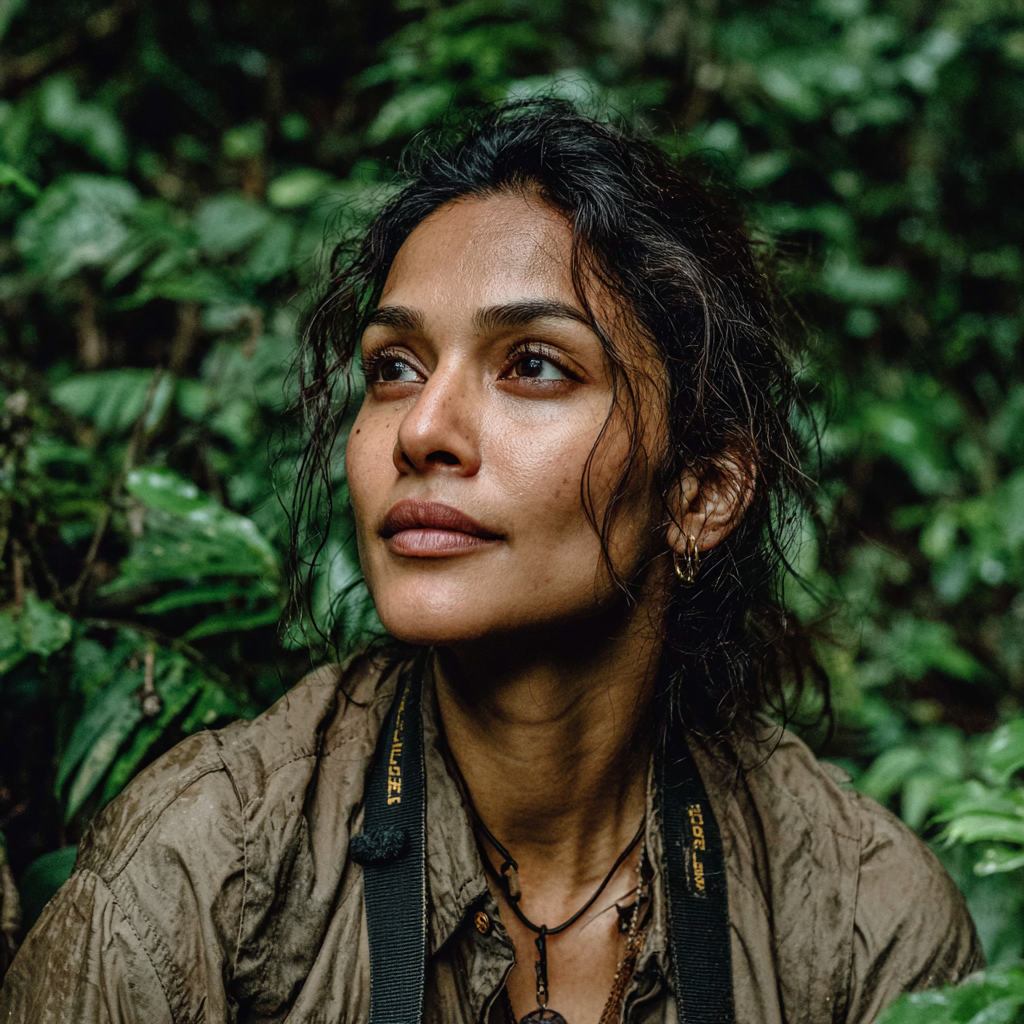
By Priya Sharma
Conservation biologist and sustainable tourism advocate. Priya works with eco-lodges and wildlife sanctuaries to promote ethical travel practices. She holds an MSc in Biodiversity Conservation and has spent years tracking endangered species across the Indian subcontinent.