
Gabon does not do tourism the way other African countries do. There are no jammed safari vehicles circling a lion pride. There are no five-star lodges with infinity pools overlooking the savannah. What Gabon has is 13 national parks covering 11 percent of its land, a decision made in 2002 when President Omar Bongo looked at a map and chose conservation over extraction. The result is one of the last places on Earth where the rainforest meets the Atlantic Ocean without a hotel chain in between.
I came to Gabon because I was tired of conservation stories that ended in compromise. Here, the compromise never happened.
The Parks That Matter
Loango National Park is the headline act. It is the only place I have seen a forest elephant step onto a white-sand beach at dawn, wade into the surf, and then stand there as if considering a swim. The park covers 1,550 square kilometers of coastline, lagoon, savannah, and rainforest. Western lowland gorillas live in the forests behind the beach. Hippos enter the surf, a behavior found almost nowhere else. Between July and October, humpback whales migrate through the waters offshore. Leatherback turtles nest on the beaches from November to March. You do not watch this from a Land Rover. You walk, or you take a boat through the Iguela Lagoon, or you sit on the sand and wait.
Loango Lodge sits on the lagoon and runs the logistics. A stay there costs roughly $400 to $600 per night full board, which includes guided forest walks, boat safaris, and gorilla tracking. There is no budget option inside the park. The alternative is Ndola Camp, eight en-suite Meru tents on a lagoon, which runs slightly less but still requires a chartered flight or long 4x4 transfer from Port-Gentil. Getting to Loango means flying Libreville to Port-Gentil (30 minutes, $150 to $250 round trip), then arranging road and boat transfers through your lodge. The total journey from Libreville to your tent can take a full day and cost $300 to $500 in transport alone.
Lopé National Park is older and stranger. It is a UNESCO World Heritage site for its prehistoric petroglyphs, rock carvings left by people who lived here 3,000 years ago. The landscape is a mix of rainforest and savannah, and every July, up to a thousand mandrills converge in the northern sector for a two-week mating window. The males arrive in electric blue and red facial markings. Only four visitors are permitted per morning group, accompanied by a researcher. This is not a show. It is a biological event, and the limit exists because the mandrills are endangered and the science matters.
Lopé Hotel overlooks the savannah and is simpler than Loango Lodge. Rooms are spacious but basic, with local wood furnishings and no pool. The point is the access, not the thread count. From here you can also track western lowland gorillas with researchers who have habituated specific troops. The trekking is harder than in Rwanda or Uganda. The forest is denser, the trails are nonexistent, and the humidity is relentless. A typical trek lasts three to six hours. You will be wet.
Ivindo National Park is the third major site. It is home to Kongou Falls, a 60-meter cascade on the Ivindo River, and the Langoué Baï, a forest clearing where elephants, gorillas, and sitatunga gather. Watching forest elephants from a raised platform at a bai is a different experience from seeing them on a savannah. They are smaller than savannah elephants, more secretive, and their presence in the clearing feels like a privilege rather than a sighting.
Libreville and the Cost of Entry
Libreville is the capital and the entry point. It is also one of the most expensive cities in Africa. Oil wealth is visible in the waterfront properties and the imported cars, but the infrastructure does not match the prices. A basic meal at a local maquis, a street-side eatery, costs $5 to $10. A dinner at a mid-range restaurant runs $30 to $50. A decent hotel in the city center costs $120 to $200 per night. The Hôtel de la Sablière, tucked in a quieter sector with a leafy courtyard, is a reliable choice for researchers and conservation workers at around $100 to $150 per night.
The currency is the Central African CFA franc (XAF), pegged to the euro at 655.957 to one. Cash is essential. ATMs in Libreville accept Visa, but they are rare outside the capital, and rural areas operate almost entirely on cash. Bring enough CFA francs to cover your entire inland trip. Credit cards are accepted at some lodges, but most require wire transfers or cash deposits in advance.
What to Skip
Do not come to Gabon expecting a traditional safari. There are no scheduled game drives, no predator counts, no checklist mentality. If you need to see a lion to feel like you have seen Africa, go to Kenya. Do not book a trip during the rainy season (March to May and October to November) unless you enjoy being stranded. Roads become impassable, domestic flights get delayed, and the forest trails turn into mud walls. Skip the idea of independent travel. Gabon’s parks require permits, authorized guides, and pre-arranged transport. The infrastructure does not exist for self-drive exploration. Do not expect fast internet or phone signal in the parks. You are offline. That is the point. Avoid the beach resorts near Libreville like Pointe-Denis if you are coming for wilderness. They are fine for a weekend but irrelevant to the conservation story. And do not treat the gorilla tracking as a photo opportunity. The researchers who lead these treks are doing science. Your presence is tolerated because it funds the work. Follow their rules, keep your distance, and put the camera down when they tell you to.
Practical Logistics
Visas are required for most nationalities, but Gabon offers an e-visa system that takes three to five business days and costs around $100 to $150. Your passport must be valid for six months beyond your arrival. Yellow fever vaccination is mandatory, and you will need to show your certificate at immigration.
The best time to visit depends on what you want to see. For beach wildlife like elephants and hippos, the dry season from June to September is ideal. For gorilla tracking and forest activities, the short dry season from December to February works better. For whale watching, plan July to October. For mandrills, you need to be in Lopé in July during the two-week mating window. For turtle nesting, come November to March.
Pack lightweight long-sleeved clothing, waterproof gear, and sturdy hiking boots that can handle mud and humidity. Insect repellent is non-negotiable. Malaria is present year-round, so take prophylaxis and sleep under a net. The gorilla trekking rules are strict: no eating near the animals, no flash photography, no touching, and a seven-meter minimum distance. If a gorilla approaches you, crouch down and let it pass. The research protocol overrides your comfort.
Gabon is not easy. It is expensive, remote, and humid beyond description. But it is also one of the few places left where the wild world operates on its own terms, and your presence is a footnote rather than the main event. I came for the conservation story. I stayed for the surf hippos. I left with the uncomfortable realization that most of the places I had called wild before this were just well-managed.
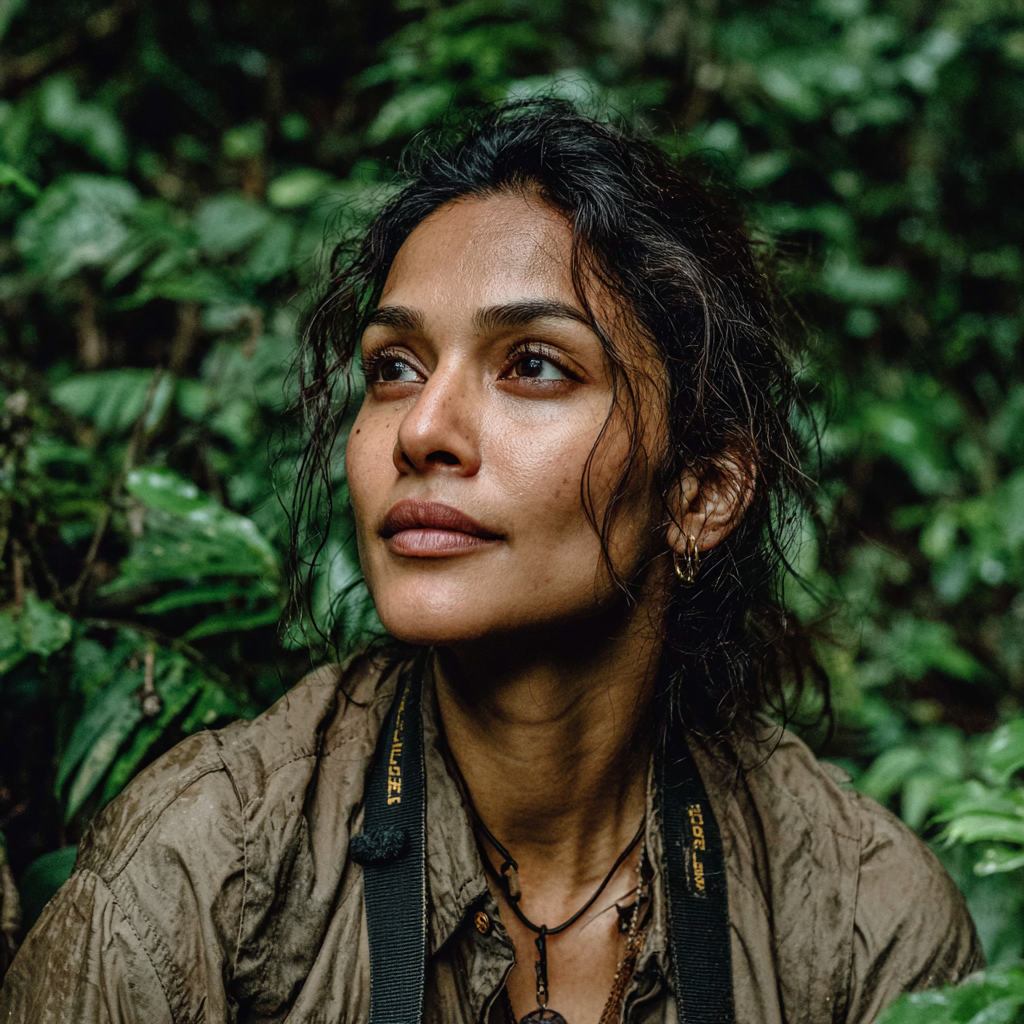
By Priya Sharma
Conservation biologist and sustainable tourism advocate. Priya works with eco-lodges and wildlife sanctuaries to promote ethical travel practices. She holds an MSc in Biodiversity Conservation and has spent years tracking endangered species across the Indian subcontinent.