
Gabon: Where the Rainforest Meets the Atlantic and the Hippos Go Surfing
Gabon travel guide: Loango surfing hippos and gorilla tracking, Lope mandrill treks, the Transgabonais jungle train, Mayumba leatherback turtles, plus visas, prices, and honest budgets.
On this page
Gabon does not do anything halfway. It is the most forested country in Africa — roughly 88 percent of its 267,000 square kilometers is still jungle — and it has a population smaller than Paris spread across the whole thing. Thirteen national parks protect around 11 percent of the territory. This is one of the last places on Earth where wildlife still has the right of way: forest elephants wander onto the beach, hippos apparently body-surf in the Atlantic surf, and a single mandrill horde can number in the hundreds.
I will be honest up front: Gabon is not cheap, and it is not easy. It is arguably the most expensive wildlife destination in Africa once you factor in lodge rates and charter flights, and the infrastructure ranges from "charming" to "nonexistent." But if you have ever looked at a map of Central Africa and wondered where the wild things actually still are — the answer is here. After the oil money, the country is betting its future on conservation under the "Green Gabon" strategy, and every park fee you pay funds rangers who are genuinely holding the line against poaching and logging. Your trip is not a sightseeing exercise. It is the business model.
Loango National Park: The Last Eden
Loango is the park that puts Gabon on bucket lists. Where else on the planet do elephants, buffalo, and hippos stroll across a white-sand beach while surfers (human ones) paddle out nearby? The park protects a rare patchwork of savannah, lagoon, and coastline about 300 kilometers south of Libreville, and the dry-season months from June to September are when the wildlife gathers along the shore.
The headline activity is the gorilla tracking at Akaka, in the forest sector. A habituated group of western lowland gorillas accepts a maximum of four visitors per day, three mornings a week, with an ANPN-certified guide. Permits run roughly US$300–550 per person depending on the operator and season, and you should book three to six months ahead — this is not Rwanda, where permits are released in bulk. You will walk anything from one to four hours to find them, and when you do, you get one hour. It is worth every CFA franc.
Practicalities: most visitors stay at Loango Lodge, on the Ngové Lagoon, which runs full board at roughly US$500–800 per person per night, with park entry fees (around €10–20 per day for foreigners) on top. There is no budget camping inside the park. Getting in means either a charter flight of about 35 minutes from Libreville arranged through your operator, or a long 4x4-and-boat combination via Omboué. Book the whole thing through an ANPN-approved operator such as Africa's Eden (Loango Tourism) — they handle permits, charters, and fees as one package.
Lopé: Mandrills and the Ghosts of the Savannah
Lopé National Park, a UNESCO World Heritage Site since 2007, is where rainforest and savannah collide, and it holds the largest study site for mandrills in the world. The park's Station d'Études des Gorilles et Chimpanzés (SEGC) research station has run since 1983, and its scientists know the local mandrill hordes — some numbering 150 to 300 animals — as individuals.
The trek itself starts and ends at the SEGC station and lasts four to six hours of genuinely demanding hiking. The reward, in the mating season from May to October when the males' faces blaze red and blue, is standing inside a moving, vocalizing horde that no zoo has ever replicated. Visitors who have done both often say it is more intense than a gorilla visit — gorillas are the calm ones; mandrills are chaos in technicolor. Permits have historically run around €230 per person, and group sizes are kept tiny. Beyond the mandrills, Lopé offers forest elephants, sitatunga in the swamps, the endemic sun-tailed monkey, and ancient rock engravings in the savannah hills that remind you people have navigated this forest-savannah edge for millennia.
Park entry runs about €10–15 per day, guided half-day walks €50–100, full days €100–200. Accommodation ranges from basic guesthouses in Lopé village (from around €30) to more comfortable lodge options near the park boundary — confirm what is currently operating with your operator or ANPN before you go, as facilities here open and close with the seasons.
The Transgabonais: Africa's Greatest Jungle Train
The single best travel experience in Gabon costs less than a dinner in Libreville. The Transgabonais is the country's only railway: 648 kilometers of standard-gauge line running from the port of Owendo (just across the river from Libreville) to Franceville, built between 1974 and 1987 to carry manganese out of the interior. For roughly 62 kilometers it slices straight through Lopé National Park — which makes the night run one of the great rail journeys anywhere.
The Express runs Monday, Wednesday, and Friday, generally departing Owendo in the evening; a slower Omnibus runs on other days. First class from Owendo to Lopé costs 25,700 CFA francs (about US$43), VIP 29,400 CFA (about US$50); through to Franceville it is 56,300/64,300 CFA (roughly US$95/110). The Libreville–Lopé run takes around six hours. First-class carriages are air-conditioned, there is a restaurant car, and dawn over the Lopé savannah — with elephants occasionally visible from the window — is the kind of thing you will describe at dinner parties for years. Buy tickets at Owendo station, bring the passports of everyone traveling, and note the luggage allowance: 10 kilograms in the cabin plus up to 30 kilograms checked for a small fee. Check current days and times at setrag.ga before you plan around it, because the timetable drifts. A €203 million French-EU modernization program signed in November 2025 means the line is being rebuilt through the late 2020s — ride it now, while it still feels like an expedition.
Ivindo and Kongou Falls: The Waterfall That Refused to Die
Ivindo National Park became a UNESCO World Heritage Site in 2021, and its centerpiece is Kongou Falls: a 56-meter drop stretching more than three kilometers across the Ivindo River, among the widest waterfalls on Earth. The story behind why it still exists is the single most important conservation tale in the country. In 2007, the government announced the falls would be dammed to power the giant Belinga iron ore mine. Gabonese activists — led by Marc Ona Essangui, who won the 2009 Goldman Environmental Prize for the fight — campaigned until the dam was shelved.
Here is the 2026 update: the mine came back anyway. Fortescue's Ivindo Iron consortium (in which the Gabonese state holds a stake) began production at Belinga and exported its first ore in December 2023. The Kongou dam is not currently being built, but conservationists are watching every announcement. Go see the falls while they are wild. Access is via the town of Makokou, then pirogue and forest trail — plan on a multi-day expedition. The other draw is Langoué Bai, a forest clearing where elephants, gorillas, and chimpanzees gather; visits run from a research camp and must be arranged well in advance. This park is only for travelers with ten days or more in the country — and those are exactly the travelers who will get the most out of it.
Mayumba: Where the Turtles Own the Beach
In the far south, on the road toward Congo, Mayumba National Park protects the most important leatherback turtle nesting beach in Africa. Between November and March — peaking in December and January — up to 10,000 nesting events occur in a season, and on peak nights hundreds of females, each two meters long and up to 700 kilograms, haul out under the stars. Around 30 percent of the global leatherback population passes along this coastline. From July to October, humpback whales cruise the same waters, often with calves.
There is no lodge inside the park. Activities are coordinated through Likwale Lodge in Mayumba town, working with park rangers: guided night turtle patrols (strict rules — no white light, no flash photography), whale-watching boat trips, and canoe safaris on the Banio Lagoon, where hippos, crocodiles, and the endangered West African manatee all share the mangroves. Getting there is an adventure in itself: fly Libreville to Gamba (Afrijet runs near-daily flights) and continue by road, or take the Saturday bush taxi from Gamba to Mayumba. Budget at least three full days on the ground once you arrive — this is not a day trip, and the turtles reward patience.
Libreville: More Than a Layover
Most visitors treat the capital as a one-night layover, which is about right — but make the night count. The waterfront Radisson Blu Okoumé Palace (roughly US$180–250) and the Hilton Libreville (US$200+) are the reliable top end; Park Inn by Radisson (US$130–170) and the Onomo near the airport (US$90–130) cover the comfortable mid-range. For dinner, skip hotel buffets and eat where Libreville actually eats: the maquis along the Boulevard de l'Indépendance and the corniche, where grilled capitaine (Nile perch) with attiéké and fried plantain costs US$8–15 and comes with the city's best people-watching. For crafts and fabric, brave the chaos of Marché Mont-Bouët with a local companion.
If you have a spare day, cross the estuary to Pongara National Park — a 15-to-20-minute boat ride from the Cap Esterias area. Forest elephants and buffalo use its beaches, and in season (November to March) leatherbacks nest there too, within sight of the capital's skyline. Alternatively, Pointe-Denis across the bay is where Libreville comes to breathe on weekends: long empty sand, a couple of simple seafood shacks, and pirogue rides through the mangroves.
Getting There and Getting Around
International flights land at Léon Mba International (LBV), about 12 kilometers north of the city. Air France connects Libreville to Paris, Turkish Airlines to Istanbul, and Ethiopian Airlines via Addis Ababa; there are no direct flights from the Americas, so connect through one of those hubs. Expect roughly US$700–1,100 round-trip from Europe in regular seasons.
Domestically, Afrijet is the reliable private carrier, linking Libreville with Port-Gentil (about 30 minutes, US$150–250 round trip), Franceville, and Gamba. Everything else — charters to Loango's airstrip, flights into Lopé — gets arranged by your tour operator as part of the package. On the ground there is no Uber; negotiate taxi fares before you get in, agree a daily rate (around US$80–120) if you hire a car and driver, and think twice about self-driving beyond the main arteries — police checkpoints are frequent, fuel stations sparse, and the Transgabonais already solves the best overland route.
Entry Formalities and Money
Almost every nationality needs an e-visa before arrival, and you should apply at least a week ahead through the official government portal (a dgdi.ga domain — beware copycat websites that charge two to three times the price). A single-entry visa for one to three months costs roughly €85 all-in; a six-month multiple-entry version is around €185. Official processing is quoted at about 72 hours, but do not gamble on it. A yellow fever vaccination certificate is mandatory and will be checked. Chinese citizens can enter visa-free for up to 90 days under a bilateral agreement — a rare exception.
The currency is the Central African CFA franc (XAF), pegged at 655.957 to the euro — roughly 610 to the US dollar. Euros are widely accepted at lodges; everywhere else, carry CFA in cash. ATMs exist in Libreville and Port-Gentil and essentially nowhere else. Tipping 5–10 percent in cash is customary at lodges and restaurants.
Where to Stay
In Libreville, the sweet spot is US$100–180 for a solid international mid-range hotel; top-end properties run US$200–300. In the parks, the model is full-board eco-lodge: Loango Lodge sits at US$500–800 per person per night including meals and most activities, and it genuinely earns the rate — the concession's tourism revenue funds anti-poaching patrols and employs local communities. Lopé village offers basic guesthouses from about €30 up to around €100 for the more comfortable options. In Mayumba, Likwale Lodge runs around US$100–150. Ivindo means simple camps around Makokou. Whatever you do, book through an ANPN-approved operator; they handle the permits, charters, and park fees that are nearly impossible to arrange independently.
When to Come
The dry season from June to September is the best overall window: roads hold, charters fly on schedule, and wildlife concentrates at water. Humpback whales cruise the coast from July to October. The mandrill mating aggregation makes May to October prime for Lopé, with July and August the peak. Leatherback turtles nest from November to March, peaking December to January. The wet season from October to April turns the country emerald and prices drop, but expect washed-out roads, canceled charters, and serious humidity.
Honest Math
Backpacker level — Libreville guesthouses, maquis food, Pongara day trip, one Transgabonais ride: US$70–100 per day. A realistic wildlife trip of seven to ten days combining Loango and Lopé with lodge stays, charters, and both primate permits: US$4,000–7,000 per person. A premium circuit adding Ivindo with private guiding: US$9,000–12,000 or more. Park fees of €10–20 per day and permits of US$300–550 stack on top of package prices. Gabon is not a shoestring destination — and honestly, that is part of what has kept it wild.
What to Skip
Skip trying to see all thirteen parks — pick two, three at most, and go deep. Skip DIY park-hopping: there is no public transport to park gates and permits must be arranged in advance. Skip more than two nights in Libreville; it is a business city, not a destination. Skip assuming your card or an ATM will work anywhere outside the capital. Skip road travel after dark, anywhere in the country. Skip Loango if you will be heartbroken without gorillas — four permits a day means you must book months out or risk missing out. Skip Mayumba as a quick add-on; at 600 kilometers south of the capital it deserves three days and turtle season. And skip booking Gabon for the surfing hippos alone — they are real, but they are also wild animals on their own schedule. Come for the whole mosaic, and let the hippos be the bonus.
Practical Stuff
French is the language — learn ten phrases and deploy them; English is rare outside the lodges. Health basics: yellow fever vaccination is mandatory, malaria prophylaxis is strongly advised, and bottled water is the rule. Electricity is 220V with European two-pin plugs (types C and E); Gabon runs on West Africa Time (GMT+1, no daylight saving). Buy a local Airtel or Moov SIM for cheap data in the cities; lodges use satellite Wi-Fi that is charmingly slow. And inside the parks, guides are mandatory and must be ANPN-certified — treat this as a feature. These are field biologists and village-raised trackers who read this forest the way you read your phone.
---
Last updated: October 2026. Park fees, permit rules, and train schedules shift — confirm with ANPN (parcsnationaux.gov.ga) and your operator before booking.
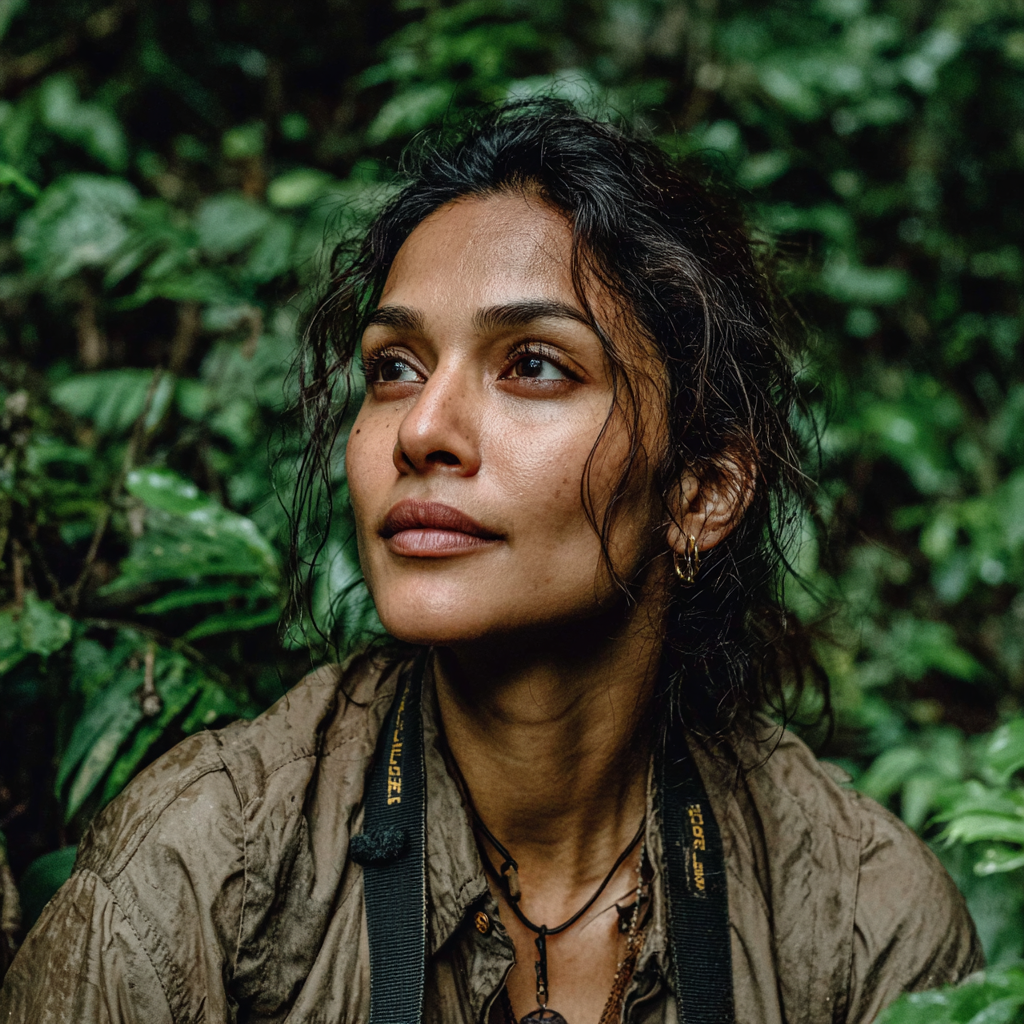
About Priya Sharma
Conservation biologist and sustainable tourism advocate. Priya works with eco-lodges and wildlife sanctuaries to promote ethical travel practices. She holds an MSc in Biodiversity Conservation and has spent years tracking endangered species across the Indian subcontinent.
More by Priya Sharma