
Reunion Island is not a beach resort. It is a volcanic laboratory where an active volcano, three roadless mountain amphitheaters, and more than 2,000 endemic species share 970 square miles of French territory in the Indian Ocean. The island has one of the highest densities of endemic biodiversity on earth, and the government has responded by protecting over 40% of the land area within Reunion National Park. If you are looking for all-inclusive resorts and calm swimming beaches, go to Mauritius instead. If you want to hike through an active volcanic crater, sleep in a mountain hamlet with no roads, and track species found nowhere else, Reunion is the place.
The island's defining feature is Piton de la Fournaise, one of the most active volcanoes in the world. It rises to 2,632 meters and erupts on average every nine months. The eruptions are effusive rather than explosive, meaning lava flows rather than blows. This makes the volcano relatively safe to approach, and the Enclos Fouqué caldera is open to hikers most of the year. The standard trail starts at Pas de Bellecombe-Jacob, a viewpoint at 2,311 meters. From there, a stone staircase descends into the caldera. The hike to the Dolomieu crater rim is about 12 kilometers round trip and takes five to six hours. The terrain is black volcanic scoria, uneven and sharp. There is no shade, no water, and no phone signal. Bring at least three liters of water per person, a windbreaker, and solid hiking boots. The weather changes fast. Morning fog can lift in minutes, or it can close visibility to ten meters. Start at dawn. The Enclos occasionally closes by prefectural decree during eruptions or seismic activity. Check the OVPF (Volcanological Observatory of Piton de la Fournaise) website before you go. The trail is marked with white paint on the rock. Stay on it. Off-trail hiking is prohibited both for safety and to protect the fragile volcanic ecosystem.
The volcano is only part of the story. In 2010, UNESCO inscribed Reunion's Pitons, cirques, and ramparts as a World Heritage site. The designation covers the volcanic landscape that created three cirques, or amphitheaters, and the surrounding ramparts. The cirques are Mafate, Cilaos, and Salazie. Each has a distinct character and each demands a different kind of effort.
Mafate is the most isolated. No roads enter the cirque. The only access is on foot or by helicopter. About 700 people live in scattered hamlets called îlets, connected by a network of footpaths. The GR R2 trail crosses Mafate from La Nouvelle to Marla, then continues over the Col du Taïbit pass at 2,083 meters into the Cirque de Cilaos. The crossing takes about four hours. Accommodation is in gîtes, basic mountain lodges with shared dormitories and sometimes no hot water. A bed in a gîte costs around €30 to €40 per night including dinner and breakfast. You must book in advance, especially in the austral winter dry season from May to November. The Mafate cirque is not for casual walkers. The paths are steep, the weather unpredictable, and you carry everything you need. But the reward is genuine isolation. At night, with no roads and no light pollution, the stars are intense.
Cilaos is more accessible. A single winding road climbs from the coast to the town at 1,200 meters. The town sits in the caldera and has thermal springs, a small wine industry, and a network of hiking trails. The climb to Piton des Neiges, the highest point in the Indian Ocean at 3,070 meters, starts from Cilaos. The trail is steep and gains over 1,100 meters in about four hours to the Caverne Dufour refuge at 2,480 meters. Most hikers start the final ascent at 3:00 AM to reach the summit for sunrise. The refuge costs about €30 per night for a dormitory bed. Book through the Cilaos tourist office. The summit offers views of all three cirques and, on clear days, the coast of Mauritius 220 kilometers away.
Salazie is the wettest and greenest cirque. It receives over five meters of rainfall annually. The town of Hell-Bourg, at 930 meters, is a collection of Creole houses with verandas and gardens. It is the most tourist-friendly of the three cirques, with guesthouses and restaurants. The Voile de la Mariée waterfall drops directly from the cliff above the road. The Trou de Fer, a 300-meter chasm in the forest of Bébour, is accessible via a guided hike from the Bélouve plateau. Guided hikes in Salazie cost around €50 to €100 per person depending on the route and group size. The GR R2 also passes through Salazie, connecting Hell-Bourg to the Col des Boeufs pass and into Mafate.
Reunion's biodiversity is extraordinary. The island separated from Madagascar and India millions of years ago, and its isolation produced a radiation of endemic species. There are over 2,000 endemic plants and animals, including the Reunion harrier, the Reunion bulbul, the Reunion day gecko, and the Reunion stonechat. The Bébour and Bélouve forests contain primary tropical rainforest with giant tree ferns and tamarind trees. The Plaine des Cafres, a high plateau at 1,600 meters, is home to the tec-tec, a small endemic bird, and the Reunion cuckooshrike. The marine environment is protected by the Natural Marine Reserve of Reunion, which covers 40 kilometers of coastline and restricts fishing and boating. Snorkeling and diving are permitted in designated zones. The coral reef is not as extensive as in the Pacific, but the marine biodiversity is high, with over 150 species of coral and 500 species of fish.
The west coast has a problem with shark attacks. Bull sharks and tiger sharks frequent the coastal waters, and since 2011 there have been multiple fatal attacks. The government has banned surfing and swimming in many areas and has installed shark nets and lookout towers on some beaches. Saint-Leu, on the west coast, has a designated shark-safeguarded swimming area with netting and patrols. Saint-Gilles and L'Ermitage also have supervised swimming zones. If you want to surf, the east coast is generally safer, but conditions are rougher. Always check current shark warnings before entering the water. This is not a place to ignore safety signs.
Getting around Reunion requires a car. The island is small but the roads are steep and winding. Public buses, called Car Jaune, serve the main towns but do not reach the trailheads or the remote cirques. Car rental costs about €35 to €60 per day. Fuel is around €1.60 per liter. The road to the Piton de la Fournaise trailhead is paved but the final section is a rough track. The road to Cilaos has 400 switchbacks. The road to Salazie is narrower and can be closed by landslides after heavy rain. Driving is on the right. The speed limit is 90 km/h on main roads and 50 km/h in towns. Police enforce limits strictly.
Accommodation ranges from coastal hotels to mountain gîtes. On the coast, expect to pay €80 to €150 for a mid-range hotel room. In the mountains, gîtes charge €30 to €40 per night with half board. Some eco-lodges operate in the cirques, using solar power and rainwater collection. The Gîte du Piton des Neiges and the Gîte de la Nouvelle are basic but well-run. Booking is essential, especially from June to August when French tourists arrive during their summer holidays. The island is busiest in July and August. Shoulder months in May, June, September, and October offer better weather and fewer people.
Food on Reunion is Creole, a mix of African, Indian, Chinese, and French influences. The staple is cari, a curry-based stew served with rice, beans, and rougail, a spicy tomato and onion relish. Fish cari is common on the coast. Bonbons piment are chili fritters sold at markets. Samoussas are smaller and spicier than the Indian version. A meal at a local restaurant costs €12 to €20. Markets in Saint-Denis and Saint-Pierre sell fresh produce, spices, and vanilla. Reunion produces high-quality vanilla and sugar cane. The local rum is excellent, and many distilleries offer tours. The Rhumerie Isautier in Saint-Pierre and the Distillerie Rivière du Mât in Sainte-Marie both offer tastings for around €10 to €15.
The island is an overseas department of France, so the currency is the euro and the infrastructure is solid. The main airport is Roland Garros (RUN), near Saint-Denis on the north coast. Flights from Paris take about 11 hours. There are also direct flights from Marseille and Lyon, and connections from Mauritius, Madagascar, and South Africa. A flight from Mauritius to Reunion takes 45 minutes. French citizens do not need a passport, but other nationalities need a valid passport. Most Western nationals do not need a visa for stays under 90 days. The time zone is UTC+4. The official language is French, but Creole is widely spoken. English is not common outside tourist areas.
The best time to visit is the dry season from May to November. Temperatures on the coast range from 20°C to 26°C. In the mountains, it can drop to 10°C or lower, especially at night. The wet season from December to April brings cyclones, heavy rain, and trail closures. January and February are the riskiest months for cyclones. If you visit during the wet season, check weather forecasts daily and be prepared for disrupted travel.
Reunion is not for everyone. The beaches are not the best in the Indian Ocean, the shark risk is real, and the hiking is demanding. But if you want to walk on the floor of an active volcano, sleep in a village with no roads, and see species that exist nowhere else, there are few places that match it. The island is a case study in how volcanic violence can create ecological richness. The French government has protected it aggressively, and the result is one of the most biodiverse islands on earth. Bring good boots, respect the trail markers, and do not swim outside the supervised zones. The volcano will do the rest.
About the author: Priya Sharma is a conservation biologist with an MSc in Biodiversity Conservation from the University of Edinburgh. She has worked on species reintroduction projects in India, Kenya, and Costa Rica, and has spent the last six years advocating for community-based eco-lodges as an alternative to mass tourism. She writes about sustainable travel with the understanding that the best destinations are often the ones that make you work hardest to reach them.
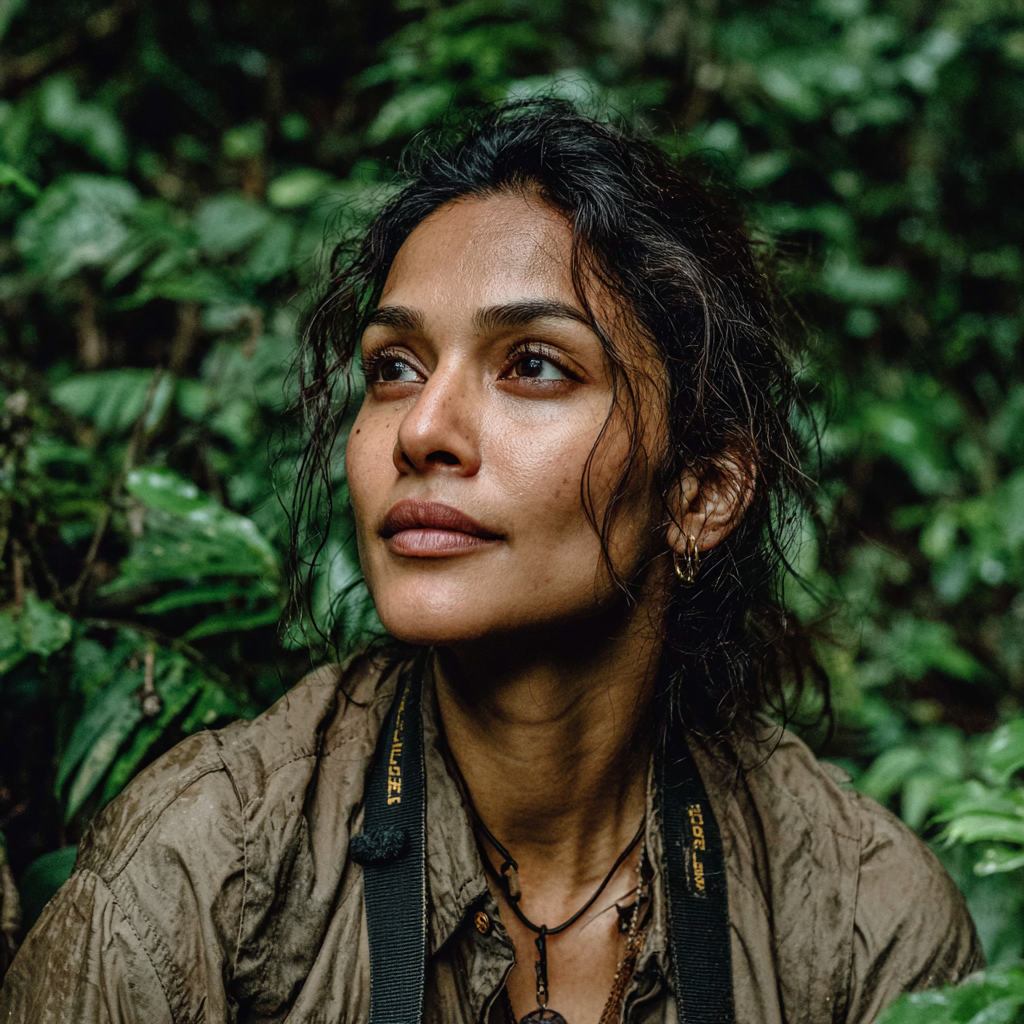
By Priya Sharma
Conservation biologist and sustainable tourism advocate. Priya works with eco-lodges and wildlife sanctuaries to promote ethical travel practices. She holds an MSc in Biodiversity Conservation and has spent years tracking endangered species across the Indian subcontinent.