
Most people who say they know Dijon mean they know the mustard. They buy a jar at the supermarket, make a vinaigrette, and think the job is done. The city itself, two hours southeast of Paris by train, is where the mustard was born, but that is only the starting point. This is the capital of Burgundy, a region that does not cook to impress tourists. It cooks because it has been farming the same vineyards, raising the same cattle, and curing the same ham for a thousand years.
The first thing to know is that Dijon is small. The historic center is roughly one square kilometer, and everything worth eating is inside it or within a twenty-minute walk. You do not need a car. You do need an appetite.
The Market That Runs the City
Start at Les Halles, the covered market on Rue Claude-Ramey. The iron-and-glass hall was built in 1875 and opens Tuesday, Friday, and Saturday from 7 AM to 12:30 PM. This is where locals buy their breakfast. The stalls are arranged in no particular order, which is part of the charm. One vendor sells nothing but grass-fed beef from a single producer in the Morvan. Another sells goat cheese from farms within fifty kilometers. The cheesemongers carry the regional lineup: Époisses, the pungent washed-rind cheese that monks began making in the sixteenth century; Cîteaux, a semi-soft cheese from the Abbey of Cîteaux that is only available in limited quantities; Brillat-Savarin, a triple-cream cheese invented in Burgundy in the 1930s. You can also find Chaource, a soft cow's milk cheese from the Champagne border, and Trou du Cru, a miniature Époisses that smells like a barn floor and tastes like heaven.
At the back of the market, enter from Rue Quentin, the caterer Le Gourmet Dijon sells jambon persillé by the slice. This is parsley ham, a terrine of cured pork and chopped parsley set in gelatin made from the cooking broth. It looks like a mosaic and tastes like a salty, porky salad. They also make a ganache gingerbread, thin layers of pain d'épice sandwiched with dark chocolate. It is not the dry, hard gingerbread you find at Christmas markets. It is moist and almost cake-like, meant to be eaten with a glass of crème de cassis at eleven in the morning.
The crème de cassis is important. The blackcurrant liqueur was first produced in Dijon in 1841 by a man named Noir de Bourgogne, though the exact origin is debated. What is not debated is the Kir. Canon Félix Kir, the mayor of Dijon from 1945 to 1968, popularized the drink that now carries his name: one part crème de cassis to five or six parts white Burgundy wine. A proper Kir should use Bourgogne Aligoté, the acidic, slightly grassy white wine of the region, not any random white wine. If you use Champagne instead, it is a Kir Royal, but that is a different conversation.
On summer Sundays, the market hosts the Brunch des Halles — a gourmet pop-up where local chefs set up stalls inside the hall. It starts at 10 AM and runs until 2 PM. Arrive early. The best charcuterie sells out by noon.
Mustard: The Real Story
Walk ten minutes from the market to 16 Rue de la Chouette, where the Edmond Fallot mustard mill has been grinding seeds since 1840. Fallot is the last independent, family-run mustard maker in Burgundy. The shop is small. There is a bin of brown mustard seeds by the door that you can run your hands through, which is oddly satisfying. The "Mustard Bar" at the back offers tastings of flavors you will not find in the export section of your local grocery store: mustard with Meursault wine, mustard with Pinot Noir, mustard with blackcurrant, mustard with honey and balsamic vinegar, mustard with Jura yellow wine. The Pinot Noir version is the best seller for a reason. It is sharp and fruity, and it pairs with the local cheeses in a way that makes you understand why people in this region do not eat plain cheddar. A small jar costs around €4.50. A large one costs €7.50. Buy the large one.
Maille, the bigger brand, opened its boutique on Rue de la Liberté in 1845. The shop is more polished than Fallot, more historic in a corporate way. They sell mustard on tap, which means you bring your own jar or buy one of theirs and they fill it from a pump. It is a fun ritual, but the mustard itself is milder and more uniform than Fallot's. The Maille boutique is worth seeing for the building and the history. For eating, go to Fallot first.
For gingerbread, skip the supermarket and go to Mulot & Petitjean at 14 Place Bossuet. This is a Living Heritage Company that has been crafting pain d'épice since 1796. The shop has a small museum space inside that tells the brand's story, but the real draw is the gingerbread itself — moelleux, almost cake-like, nothing like the dry stuff at Christmas markets. A loaf costs €6.50.
Where to Eat: From Brasseries to Michelin Stars
For lunch, walk to Le Pré aux Clercs on Place de la Libération. The restaurant is named after a meadow where clergy used to graze their animals, which tells you something about how long this city has been thinking about food. The dining room is modern, with windows looking onto the square and the Palace of the Dukes of Burgundy. The menu is Burgundian without being a museum piece: oeufs en meurette, poached eggs in red wine sauce with lardons and mushrooms; coq au vin, not the heavy, flour-thickened version tourists eat in Paris, but a lighter stew made with a rooster from Bresse and wine from the village of Givry. The prix fixe lunch is €32. The wine list is serious but not punitive. A glass of Mercurey, a village-level Pinot Noir from the Côte Chalonnaise, costs around €12.
Brasserie des Beaux Arts, tucked inside the courtyard of the Musée des Beaux Arts in the former Ducal palace, is where savvy locals go for lunch. Chef Fred Guilland cooks with regional, seasonal produce and visits the farms himself. The oeufs en meurette here are the benchmark: eggs poached in Pinot Noir with lardons and mushrooms, served with a crust of bread that has been toasted in the same wine. Lunch runs €25-35. The courtyard setting, surrounded by 15th-century architecture, is half the reason to come.
If you want something less formal, Dr Wine at 5 Rue Musette is a wine bar in a sixteenth-century mansion with a courtyard in the back. The owner is a former sommelier who refuses to serve anything from outside Burgundy except Champagne. The menu is tapas-style: melon and Chaource, terrine de campagne, saucisson from Charolais. A plate of three items with a glass of wine costs €18. The courtyard fills up by 7 PM. Arrive at 5:30 PM and you will have it almost to yourself.
For dinner, there are several directions to go. The first is Loiseau des Ducs on Rue Vaillant, a one-Michelin-star restaurant in a private mansion near the palace. It is the Dijon outpost of the Bernard Loiseau group, named after the chef who killed himself in 2003 when his restaurant was about to lose its third star. The place has a lot to live up to. The menu is precise, formal, and expensive: dinner starts at €145 without wine. The terrace, overlooking the Palais des Ducs, is worth requesting.
The second direction is DZ'envies on Rue du Petit Potet, a bistro run by a self-taught chef who worked in industrial design before opening his own place. The menu changes daily and is written on a chalkboard. On a recent visit, the main course was a shoulder of lamb from the Charolais region, slow-cooked for seven hours and served with root vegetables and a mustard jus. It cost €28. The room seats thirty people. Reservations are essential on weekends.
L'Essentiel, a short walk from the center at 3 Rue de l'École de Droit, is where locals go when they want a proper dinner without the tourist crowd. Chef Richard Bernigaud's menu is terrific value, the ingredients are top quality, and the service is warm. A three-course dinner costs €45-55. If you lived in Dijon, this would be your regular spot.
For something truly special, Cibo at 10 Rue de la Chouette is a one-Michelin-star restaurant with a minimalist, almost Scandinavian interior. Chef Angelo Ferrigno serves a 15-course tasting menu for €90 that looks like art and tastes like a masterclass in restraint. The portions are small, the flavors are precise, and the wine pairings — all Burgundy, naturally — are chosen with surgical accuracy. Book at least two weeks ahead.
La Fine Heure, at 48 Rue Monge, is a brasserie where locals go after work. The escargots here are Helix pomatia prepared with garlic-parsley butter that includes a spoonful of Dijon mustard. The mustard cuts the richness of the butter and adds a heat that lingers. A dozen costs €12. The attached wine shop, Les Caves de La Fine Heure, offers tastings by appointment with a sommelier who will walk you through the difference between a village-level Gevrey-Chambertin and a Premier Cru from the same village. The village wine costs €35 a bottle. The Premier Cru costs €85. Tasting both side by side is the best way to understand why Burgundy wine prices are what they are.
The Wine: This Is Burgundy, After All
The practical truth about drinking in Dijon is that you are at the northern end of the Côte d'Or, the most valuable strip of agricultural land in the world. The wine is expensive because the land is expensive. But there are ways to drink well without selling your car.
Au Duché de Bourgogne, underneath a regional product shop on Place de la Libération, is a vaulted cellar that hosts wine tastings with a sommelier — by request. Local products like mustard, cassis, and gingerbread are also on sale, but the real reason to come is the wine. A standard tasting of four Burgundy wines costs €25.
For a more structured experience, the Cité Internationale de la Gastronomie et du Vin opened in 2022 on the site of the old hospital. It is a €250 million complex with restaurants, cooking schools, a wine shop, and tasting rooms. La Cave de la Cité, the wine bar inside, offers over 250 wines by the glass from around the world. The practical move is to ignore the international selection and ask for the Burgundy flight: three wines from the Côte de Nuits or Côte de Beaune, chosen by the sommelier, for €22. The Cave à Manger next door sells charcuterie and cheese plates to go with the wine.
If you have a car or can hire a driver, the Route des Grands Crus begins south of the city in the village of Fixin and runs through Gevrey-Chambertin, Vosne-Romanée, and Nuits-Saint-Georges. You can stop at small producers like Domaine Confuron in Vosne-Romanée or Domaine Lignier in Morey-Saint-Denis for tastings by appointment. A standard tasting of four wines costs €20-30. Buying a bottle is not required but is expected if you liked what you drank. Do not show up without an appointment. Many producers do not welcome drop-ins, and the ones that do will give you the tourist treatment.
End the evening at Monsieur Moutarde, a cocktail bar in a thirteenth-century mansion at 40 Rue des Forges. The name is a joke — Monsieur Mustard — but the drinks are serious. The bar staff make their own syrups and infusions, including a mustard-infused vodka that sounds gimmicky but works in a savory martini variation. The terrace, hidden behind the main room, is where you want to be at dusk. A cocktail costs €14. A glass of Crémant de Bourgogne, the sparkling wine made by the same method as Champagne but from grapes grown fifty kilometers south, costs €8.
Breakfast, Bakeries, and the In-Between Meals
The gougère is a Burgundy specialty that most tourists never discover. These are light cheese puffs — pâte à choux with Gruyère — and at Aux Délices de la Chouette, 27 Rue de la Chouette, they are as big as your hand. Laurent and Catherine Blanchard, true artisans with the Boulanger de France label, won first prize at the Foire de Dijon for their gougère a few years ago. One costs €2.40. Buy two.
Maison Millière, in a house built in 1438 at 10 Rue de la Chouette, is a tea room and restaurant run by husband-and-wife team Lydia and Jean-François Lieutet. Fans of Cyrano de Bergerac will recognize the building from the film. It is a listed historical monument, and the courtyard is the most beautiful place in Dijon to eat a tartine at 10 AM. Open Tuesday through Sunday for lunch; dinner Friday and Saturday only.
La Menuiserie, on Rue Jean-Jacques Rousseau, has no printed menu. The dishes are written on a blackboard and change depending on what the chef found at the market that morning. It is casual, fresh, and unpretentious — the kind of place where the chef will adapt a dish for a vegetarian without making a fuss. Lunch costs €18-24.
What to Skip
The Maille mustard boutique on Rue de la Liberté is pretty, historic, and completely skippable for eating purposes. The mustard on tap is a fun Instagram moment, but the product is mild, corporate, and available in any supermarket. Go to Fallot for the real thing.
The Cité Internationale de la Gastronomie et du Vin is a €250 million complex that feels like a shopping mall with aspirations. The exhibitions are thin, the restaurants are overpriced, and the whole place has the energy of a conference center. La Cave de la Cité is worth a visit for the wine bar, but do not make this the centerpiece of your trip. Dijon's real food culture is in the markets, the bistros, and the family-run shops — not in a glass-and-steel monument to tourism.
Kir Royal at tourist bars. A proper Kir uses Bourgogne Aligoté, not Champagne. If you want bubbles, order Crémant de Bourgogne. If a bartender offers you a Kir Royal without asking what wine you want, you are in the wrong bar.
Dijon as a day trip. You can do it — the train from Paris Gare de Lyon takes exactly one hour and thirty-eight minutes — but you should not. One day gives you time for the market, one restaurant, and a glass of wine before you have to run back to the station. Stay two nights minimum. The city reveals itself slowly, and the best moments happen when you are not rushing.
Restaurants on Rue de la Liberté facing the palace. These are the tourist traps. The menus are laminated, the wine lists are inflated, and the food is cooked for people who will not come back. Walk two streets in any direction and eat where the locals eat.
Practical Logistics
Getting There: The TGV from Paris Gare de Lyon takes 1 hour 38 minutes. Book ahead on SNCF Connect — prices range from €25 to €80 depending on how early you book. The station is a ten-minute walk from the historic center. If you are flying, Paris Charles de Gaulle has a direct TGV connection that takes 2 hours 15 minutes.
Getting Around: Dijon's historic center is entirely walkable. Everything worth eating is within a twenty-minute radius. The city has a good tram system and buses if you are staying outside the center, but you will not need them for the main sights. The Parcours de la Chouette — the Owl Trail — is a self-guided walking route marked by brass owl plaques set into the pavement. It takes about an hour and covers the main landmarks.
When to Visit: Spring (April-June) and autumn (September-October) are ideal. The weather is mild, the vineyards are active, and the tourist crowds are thin. Les Halles market is open year-round but is at its best in autumn when the game season starts and the mushroom foragers arrive. Avoid August if you can — many restaurants close for the summer holiday.
Where to Stay: The historic center is small enough that any hotel within it puts you within walking distance of everything. For budget travelers, Hotel Wilson at 6 Rue du Président Wilson is a 17th-century coaching inn with 27 rustic rooms and a leafy courtyard. Rooms start at €75 a night. For mid-range, Maison Philippe Le Bon at 15 Rue du Petit Potet has 41 rooms across three residences overlooking a Gothic courtyard, with rates from €120. For something intimate, La Cour Berbisey at 30 Rue Berbisey has just five rooms and four suites with beamed ceilings and a heated indoor pool. Rates from €150.
Budget: Dijon is not cheap. Burgundy is not a budget region. The wine is expensive because the land is expensive. The meat is expensive because the animals are raised slowly. The cheese is expensive because it is made by hand in small quantities. A reasonable daily food budget is €60-80 per person if you eat one proper restaurant meal and snack at the market. You can reduce this by buying bread, cheese, and ham at Les Halles and eating picnic-style in the Jardin de l'Arquebuse, the botanical garden near the train station. The garden is free and open until 6 PM.
One last detail: eat breakfast at the market, lunch at a bistro, dinner at a wine bar, and drink a Kir in Place de la Libération while the sun goes down behind the palace. That is how the city is meant to be eaten.
About the Author
Sophie Brennan is an Irish food writer and historian based in Lisbon. She combines her background in medieval history with a passion for contemporary gastronomy, and has spent the last decade eating her way through the markets, bistros, and Michelin-starred dining rooms of Europe. She has written for Condé Nast Traveller and authored two cookbooks exploring Celtic and Iberian culinary traditions. She first came to Dijon for the mustard and stayed for the cheese.
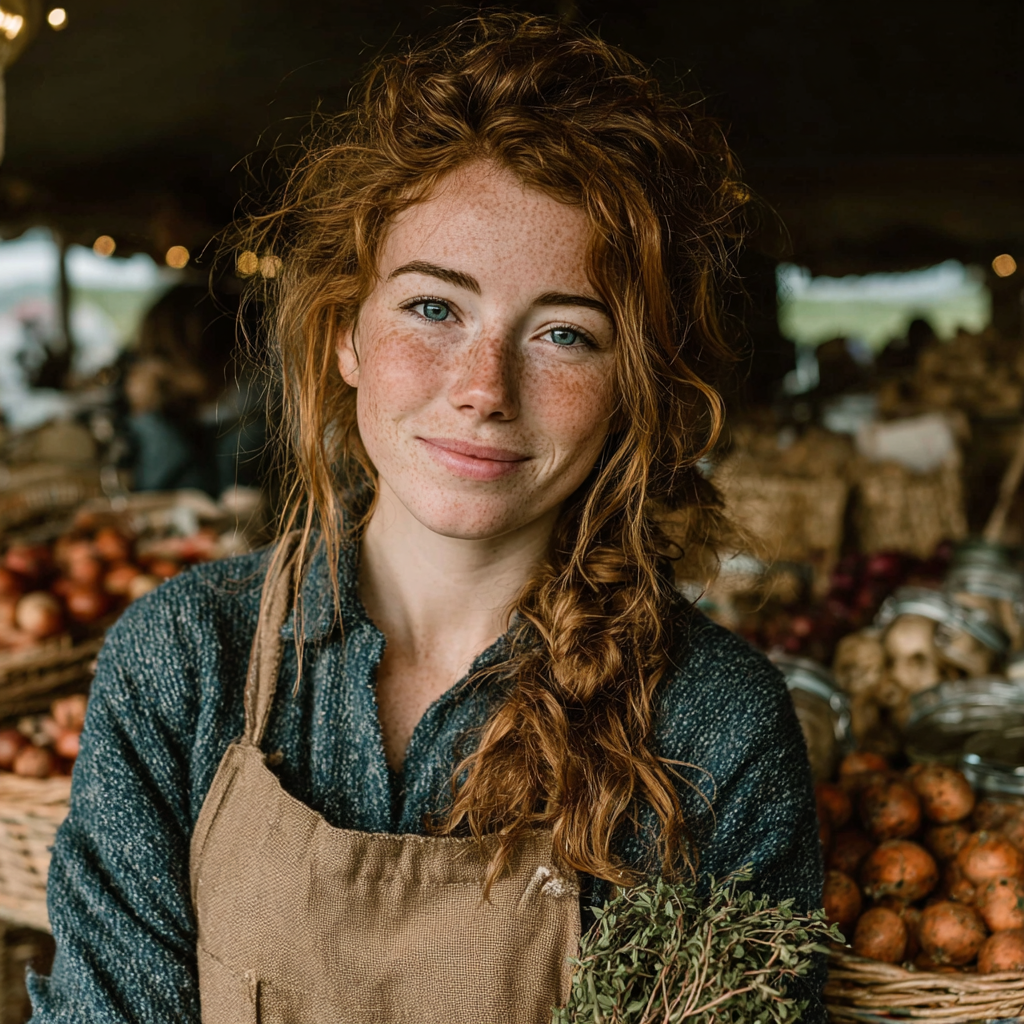
By Sophie Brennan
Irish food writer and historian based in Lisbon. Sophie combines her background in medieval history with a passion for contemporary gastronomy. She has written for Condé Nast Traveller and authored two cookbooks exploring Celtic and Iberian culinary traditions.