
Strasbourg: The City That Changed Nationalities Five Times — And Built Europe's Most Stubborn Cathedral
Strasbourg does not apologize for being confusing. Walk through the Grande Île on a Tuesday morning and you will hear French, German, and Alsatian dialect within a single block. Order tarte flambée at a winstub and the server might call it Flammkuchen before catching herself. The street signs are in French, the half-timbered architecture is unmistakably Germanic, and the attitude is pure Alsatian — a blend of stubbornness, hospitality, and dark humor forged by centuries of being told which empire you belong to this week.
This is a city that survived the Thirty Years' War, the Franco-Prussian War, both World Wars, and five formal changes of nationality. It wears its border status like a scar that never fully healed, and that tension is exactly what makes it worth visiting. Strasbourg is not a cute French village. It is a frontline city that learned to make extraordinary beer, build impossible cathedrals, and feed you until you forget which passport you are carrying.
This guide is written by Elena Vasquez, a cultural anthropologist and food writer who has spent two decades tracing how borders shape what people eat, build, and remember. She believes the best way to understand a contested city is through its stomach and its stonework — in that order.
The Cathedral and the Grande Île: 263 Years of Defiance
The Strasbourg Cathedral (Cathédrale Notre-Dame de Strasbourg, Place de la Cathédrale, 67000 Strasbourg) is the single reason most visitors come to the city, and it is the single reason they should stay longer than a day. Construction began in 1176 and the main spire was not completed until 1439. That is 263 years of stonemasons working through plague, war, and the collapse of multiple funding schemes. The result is a sandstone masterpiece that was the tallest building in the world until 1874 — and still feels like it should be.
Entry to the main nave is free and the cathedral is open daily (closed January 1, May 1, and December 25). Hours run roughly Monday–Saturday 8:30am–6:00pm (until 7:00pm in July–August) and Sunday afternoons; in winter the nave closes around 11:15am–12:45pm on weekdays for mass, so check the day's timetable at the entrance. The interior is a forest of Gothic verticality that photographs badly and impresses viscerally. Do not miss the astronomical clock in the south transept, a Renaissance-era mechanism that tracks not just time but planetary positions and religious calendars. The automatons — including a rooster that crows and the Four Ages of Man — perform daily at 12:30 PM, preceded by a short film on the clock's history at noon. The show now costs €4 for adults, €2 for children 6–17, and €3 for students — prices rose in 2026 after years at €2. Tickets are sold on the morning of the performance only: at the cathedral stalls until 11:00 AM, then at the south entrance on Place Saint-Michel from 11:30 AM. Capacity is limited to roughly 200 people, and the queue forms by 11:45 AM. Note: on Sundays or holidays when mass is celebrated at 11:00 AM, the clock presentation is free after mass and tickets are not sold separately.
The platform ascent costs €10 for adults and €6 for under-18s, students, and groups of 20+ (prices increased from €8 in 2026). It opens daily April–September 9:30am–8:00pm and October–March 10:00am–6:00pm, with the last climb 45 minutes before close — the ticket desk shutters 1:00–1:30pm. The climb is 332 steps via a tight spiral staircase. The view from 66 meters up reveals the full geometry of the Grande Île — the island UNESCO designated a World Heritage Site in 1988 because of its density of medieval half-timbered houses, canals, and institutional architecture.
Directly opposite the cathedral stands Maison Kammerzell (16 Place de la Cathédrale, 67000 Strasbourg), a 15th-century merchant house with the most photographed Gothic facade in the city. The carved wooden oriel windows and stone tracery are free to admire from the square. If you want to eat inside, the restaurant operates 11:45 AM–2:00 PM and 7:00 PM–10:00 PM. It is touristy and expensive (mains €30–€45), but the setting is genuinely extraordinary. The choucroute aux trois poissons — sauerkraut with three fish — was created here by chef Guy-Pierre Baumann in 1970 and remains the signature dish. For a cheaper option, get a coffee at the ground-floor cafe and study the facade from the terrace.
A five-minute walk brings you to Place Kléber, the largest square in the city center and the site of the city's main Christmas market in December. The rest of the year it is a functional public space with a monumental statue of General Kléber, a Strasbourg native who became one of Napoleon's marshals. Look for the Aubette 1928 on the square's north side (17 Place Kléber): a former 18th-century military building whose interior was transformed in 1928 by avant-garde artists Hans Arp, Sophie Taeuber-Arp, and Theo van Doesburg into a cinema-dancehall of pure abstract geometry. The restored Salle des Fêtes and Salon Cariatides are among the most important surviving interiors of the abstract-art movement, and entry is free. Hours vary with exhibitions — check aubette1928.com before you go.
Petite France: From Tanneries to Canals
Petite France is the postcard district, and there is no shame in treating it as such. The half-timbered houses dating from the 16th and 17th centuries, the five arms of the Ill River, and the geranium-draped balconies are exactly as picturesque as the tourism board promises. But the area was not always charming. It was originally the tannery quarter, where animal hides were soaked, dried, and treated in the open air. The wooden galleries and sloped roofs were designed for industrial function, not aesthetic appeal. The stench must have been extraordinary.
Start at Place Benjamin Zix, a shaded square named after an Alsatian painter, and walk toward the Maison des Tanneurs (42 Rue du Bain-aux-Plantes), built in 1572. The open galleries on the upper floors were where hides hung to dry. Today the building houses a restaurant, but the exterior is the point. Continue along Rue du Bain-aux-Plantes, a cobblestone lane that follows the old tanning workflow, and cross the Ponts Couverts (24 hours, free). These three bridges and four defensive towers were built in the 13th century as part of the city's fortifications. The name "covered bridges" refers to the wooden galleries that once protected archers; they were replaced by stone in 1856.
The Barrage Vauban (Place du Quartier Blanc, 67000 Strasbourg) sits at the western end of the Ponts Couverts. Built from 1686 to 1690 under the direction of Sébastien Le Prestre de Vauban, the military engineer who designed Louis XIV's fortifications, it functioned as a defensive weir. In the event of attack, the city could raise water levels and flood the approaches. The panoramic terrace on the roof — long the best free viewpoint in the city, with a clear line of sight to the cathedral, the Ponts Couverts, and the Petite France canals — reopened in summer 2026 after a €580,000 renovation that replaced the vegetated roof, an elevator, and facade elements. The works ran January through June 2026, closing the whole structure; as of October 2026 the terrace is open again but subject to occasional intermittent closures, so check visitstrasbourg.fr the morning of your visit. When open: March–April 8:00am–7:00pm, May–August 7:15am–9:00pm, September–October 8:00am–7:00pm, November–February 8:30am–4:00pm. Entry is free.
The German Century: Neustadt and the European Quarter
Cross the canal west of the old city and you enter the Neustadt, or "New City." This is not a modern development. It was built by the German Empire after 1871, when Strasbourg became the capital of Alsace-Lorraine under Kaiser Wilhelm I. The architecture here is monumental German imperial — wide boulevards, heavy stone facades, and buildings designed to project authority. The Palais du Rhin (Avenue de la Marseillaise), the former imperial palace, is the most striking example. It is now an administrative building but the exterior remains an exercise in imperial swagger.
The St. Paul's Church (6 Avenue du Général de Gaulle, 67000 Strasbourg) is the largest Protestant church in the city and a masterpiece of German neo-Gothic architecture. It was built for the German garrison and its scale is intentionally overwhelming — a reminder of who was in charge. The interior is austere, deliberate, and quietly powerful. Services are still held in German as well as French.
Further south, the European Quarter is where modern Strasbourg earns its official title as the "Capital of Europe." The European Parliament (Allée du Printemps, 67000 Strasbourg) is the most visited institution, and tours are free. Individual visitors and small groups under 20 people do not need advance booking outside of plenary session weeks. During plenary sessions (roughly one week per month), the schedule shifts: Monday 9:30am–12:00pm and 5:00pm–6:00pm; Tuesday–Wednesday 9:00am–12:00pm and 3:00pm–6:00pm; Thursday 9:00am–12:00pm; Friday 9:00am–6:00pm. Outside plenary weeks, the Hemicycle and Parlamentarium Simone Veil are open Monday–Friday 9:00am–6:00pm, Saturday 9:30am–12:00pm and 1:00pm–6:00pm. You must bring a valid photo ID (passport or national identity card) for security screening. Group visits for 20+ people must be booked 2–3 months in advance through europarl.europa.eu/visiting. The Parlamentarium Simone Veil is an interactive exhibition center in all 24 EU languages, and it is genuinely engaging even if you think you do not care about parliamentary procedure. The tram lines E or H stop at the Parliament.
The European Court of Human Rights (Allée des Droits de l'Homme) is nearby, designed by Richard Rogers. You cannot tour the interior without advance arrangement, but the building itself is worth seeing — a glass-and-steel assertion of transparency that contrasts deliberately with the imperial stone of the Neustadt.
Museums That Tell the Truth
Strasbourg's museums are not an afterthought. They are where the city's contested identity is most explicitly on display.
Musée de l'Œuvre Notre-Dame (3 Place du Château, 67000 Strasbourg; +33 3 68 98 50 00) is the most important museum for understanding the cathedral. It occupies the medieval and Renaissance-era building where the cathedral's works committee — the Œuvre Notre-Dame — managed construction and fundraising from 1226 onward. The collection includes original sculptures from the cathedral facade, removed for preservation and replaced by copies; medieval stained glass by Peter Hemmel; and a Gothic garden in the courtyard. Open Tuesday–Friday 10:00am–1:00pm and 2:00pm–6:00pm; Saturday–Sunday 10:00am–6:00pm. Closed Monday. Admission is €6.50 (reduced €3.50; children under 18 free). Through April 11, 2027, the museum marks the 800th anniversary of the Œuvre Notre-Dame foundation with the exhibition Bâtir · Préserver · Transmettre — a once-in-eight-centuries look at how the cathedral has been funded, built, and repaired. Plan 1.5–2 hours.
Palais Rohan (2 Place du Château, 67000 Strasbourg), immediately adjacent, houses three museums: the Archaeological Museum, the Museum of Decorative Arts, and the Museum of Fine Arts. The palace itself was built for the prince-bishops of Strasbourg in the 18th century and is a showcase of Rococo opulence. The Fine Arts collection includes works by Botticelli, Raphael, and Goya. Closed Tuesday. From November 20, 2026 through March 15, 2027, the Galerie Heitz hosts Au crépuscule de l'Ancien Régime: Le cardinal de Rohan et l'affaire du collier — a timely exhibition on the cardinal whose name became forever entangled with the diamond-necklace scandal that helped poison the last years of Marie Antoinette.
Tomi Ungerer Museum — International Centre for Illustration (2 Avenue de la Marseillaise, 67000 Strasbourg) is one of the few museums in Europe dedicated entirely to illustration. Tomi Ungerer, the Strasbourg-born artist who created The Three Robbers and controversial satirical posters, donated 8,000 original drawings to his hometown. The museum in Villa Greiner presents rotating exhibitions of his work. Open Tuesday–Friday 10:00am–1:00pm and 2:00pm–6:00pm; Saturday–Sunday 10:00am–6:00pm. Closed Monday. Admission: €7.50 adults, children free. Closed January 1, Good Friday, May 1, November 1, November 11, and December 25. From September 18, 2026 to February 28, 2027, À tire-d'aile places illustrator Anna Sommer in dialogue with the permanent collection. The tram lines B, C, E, or F stop at République.
Musée Alsacien (23–25 Quai Saint-Nicolas, 67000 Strasbourg) is the city's museum of regional folk life, housed in a series of interconnected 16th- and 17th-century buildings. Important: the museum is closed for renovation from July 7, 2025, through at least mid-2027 — and city statements now suggest the full reopening may slip to 2028. If you are reading this after summer 2028, normal hours are Tuesday–Sunday 10:00am–6:00pm, closed Monday. Admission is normally €7.50. Until it reopens, the Historical Museum (2 Rue du Vieux-Marché-aux-Poussins) and the free 5e Lieu culture space fill the folk-culture gap; both are covered by the city museum pass.
Museum pricing across the city: municipal museums charge €6.50 per museum (€3.50 reduced; under-18s free), and every municipal museum is free on the first Sunday of the month. A 1-day museum pass costs €12 (reduced €7) and a 3-day pass €18 (reduced €12), covering all nine municipal museums and their temporary exhibitions — if you plan more than one museum in a day, buy the pass at the first desk.
Food & Drink: Alsatian First, French Second
Alsace does not cook like the rest of France. The cuisine is heavier, porkier, more Germanic, and completely unapologetic about it. Strasbourg is the best place in the region to eat it, and the best places to eat it are not the fine-dining restaurants with Michelin stars — they are the winstubs, the traditional Alsatian taverns with wood-paneled walls, checkered tablecloths, and wine served in glass pitchers.
Chez Yvonne (10 Rue du Sanglier, 67000 Strasbourg; +33 3 88 32 84 15) is the most famous winstub in the city, operating since 1873. It holds a Michelin Bib Gourmand and serves as the benchmark for Alsatian tradition. The interior is all antique wood paneling, creaky parquet floors, and framed photographs of past patrons. The choucroute garnie — sauerkraut with multiple meats — is slow-simmered and served in generous portions. The prix fixe menu runs around €40, and a full a la carte meal with wine will push past €50 per person. Hours are daily 12:00pm–2:00pm and 7:00pm–11:30pm. It is popular; reservations are wise, especially during the Christmas Market season when every restaurant in the city books up.
La Fignette (5 Rue de la Vignette, 67000 Strasbourg), in the heart of Petite France, is a more casual option that still honors Alsatian tradition. The name is a play on the Alsatian pronunciation of "vignette." The specialty is tarte flambée (Flammkuchen) cooked over an open fire in front of you, plus hearty mains like sauerkraut and baeckeoffe — a slow-cooked casserole of marinated meat and potatoes, traditionally baked in a bread oven. Expect €11–€14 for tarte flambée, €15–€18 for baeckeoffe, and €25–€38 for a full meal with wine.
Le Tire-Bouchon (5 Rue des Tailleurs de Pierre, 67000 Strasbourg) occupies a 16th-century half-timbered house with a blue facade near the cathedral. The interior is divided into small, intimate rooms and private salons. The menu covers all Alsatian classics: fleischkieschle (meat patties), sauerkraut, pike-perch fillet on a bed of sauerkraut, and spätzle. This is where locals bring visitors when they want to prove the food is still authentic. Prices are similar to La Fignette.
For wine, you are in one of the great white-wine regions of the world. Alsatian wines are not like French wines elsewhere. They are varietal-labeled — you will see Riesling, Gewürztraminer, Pinot Gris, and Muscat on the label, not the village name. A glass of good Alsatian Riesling in a winstub costs €6–€9. A bottle of Crémant d'Alsace — the region's sparkling wine, made by the traditional method like Champagne but sold at a fraction of the price — costs €12–€18 at a cave and €20–€30 in a restaurant. If you want to taste multiple wines without leaving the city, the Alsace Wine Route begins just south of Strasbourg; day tours by bus or car reach villages like Obernai and Riquewihr in 30–45 minutes. Organized half-day wine tours from Strasbourg cost €65–€95 per person and visit 2–3 wineries.
Entry Formalities & Money
Strasbourg sits in the Schengen Area: citizens of the US, UK, Canada, Australia, and many other countries can stay 90 days in any 180 without a visa. Two 2026 changes matter for everyone else arriving at external Schengen borders. First, the Entry/Exit System (EES) is now fully live — since April 10, 2026, non-EU travelers register fingerprints and a facial photo at their first Schengen crossing, replacing passport stamps. It is free and adds only a few minutes. Second, ETIAS — the pre-travel authorization originally expected in late 2026 — has been postponed again and is now expected no earlier than 2027. When it finally launches it will cost €20 and must be bought only through the official EU site (travel-europe.europa.eu); copycat "ETIAS application services" already charge $80+ for something that does not exist yet. Ignore them.
The currency is the euro, and at October 2026 rates €1 ≈ $1.12 ( sterling and dollar travelers should check the rate again before booking — the euro has swung between roughly $1.11 and $1.20 in 2026). Cards are accepted nearly everywhere, including market stalls and winstubs, though it is worth carrying €20–€30 in cash for small bakeries and public toilets. Tipping is modest: round up or leave 5–10% for good table service; museum cloakrooms and cathedral-adjacent toilets take coins (€0.50–€1). France uses standard European two-pin plugs (Type E) and 230V.
When to Come
Late April–May and September–early October are the sweet spots: 15–22°C, 40% fewer crowds than summer, full museum hours, and the wine villages south of the city in harvest-mode by late September. July–August is warm (often 25–32°C), lively, and crowded — book accommodation two months ahead. January–March is cold, sometimes foggy, and gloriously cheap: hotel rates drop 40–50%, you can walk into most winstubs unannounced, and the cathedral's western facade gets a sound-and-light treatment on winter weekends. Late November–December is the main event.
The Christkindelsmärik — Strasbourg's Christmas market, running in some form since 1570 — opens November 27, 2026 and runs through December 24, 2026 (opening day from 2:00pm; daily roughly 11:30am–9:00pm, closing at 6:00pm on December 24; closed December 25). The Grand Sapin on Place Kléber — a 30-meter fir brought from the Vosges — lights up on the evening of November 26. Around 300 chalets spread across a dozen squares, entry is free, and vin chaud comes in a reusable cup for a €1 deposit. The market drew 3.05 million visitors in 2025. Go on a weekday morning or accept the crush; restaurants book solid, so reserve dinner weeks ahead. For 2027 planning, expect roughly the same late-November start.
Other fixed points on the calendar: the European institutions' open days in early May (free access to Parliament, the Council of Europe, and the Human Rights Court during Europe-week celebrations), Fête de la Musique on June 21 with free concerts across every square, the Musica festival of classical and contemporary music in late September–early October, and summer-long illuminations of the cathedral facade on weekend evenings from July through September.
Honest Math
Strasbourg is mid-range for France — cheaper than Paris, pricier than Lyon.
- Budget traveler: €55–€80/day excluding accommodation. Winstub lunch menus (€14–€18), free cathedral and Petite France, one paid museum (€6.50), 24-hour tram ticket (€4.60), picnic items from the Place Broglie market (Tuesday and Thursday mornings). Beds in a decent hostel or basic hotel run €60–€100/night.
- Mid-range: €120–€170/day excluding accommodation. Bib Gourmand dinner with wine (€50–€65 per person), two museums, Batorama cruise (€17.20), aperitif crémant. A good three-star or boutique four-star runs €120–€190/night — except Christmas-market season, when the same rooms cost 60–80% more and disappear entirely by October.
- Luxury: €400+/day. Tasting menus at Au Crocodile or L'Atelier du Peintre run €80–€120 per person before wine; top hotels like the Cour du Corbeau or Régent Petite France run €250–€450/night.
Where to Stay
Grande Île (the old island) is the atmospheric choice: you step out the door onto cobblestones, and the cathedral bells set your schedule. It is also the most expensive and the noisiest during market season. Neustadt is the value play — imperial grandeur, larger rooms, tram lines B/C/D/F at Homme de Fer or République, and 15 minutes on foot to the cathedral. Krutenau, southeast of the cathedral between the university and the canal, is the locals' choice: student bars, bakeries, Tuesday-and-Saturday market on Place Broglie's overflow streets, and the shortest walk to Petite France. Near the station, Hotel Kaijoo by HappyCulture remains the reliable budget-design pick. Whatever you book, confirm it includes breakfast deals with a winstub nearby — mornings in Strasbourg smell of bretzels and coffee, and you want to be close to the source.
What to Skip
- The generic "Alsatian" restaurants on Place Kléber. They exist to serve tourists who are too tired to walk another block. The food is not inedible, but it is priced 40% higher than winstubs three streets away and the atmosphere is absent.
- The cathedral during the astronomical clock show if you are claustrophobic. The 12:30 PM viewing packs 200 people into a small space with a low ceiling. The clock is visible for free in the nave anytime; the show is only if you want to see the automatons move. If you do not care about the rooster crowing, skip the €4 ticket and the crowd.
- Driving into the Grande Île. The center is a low-emission zone (ZFE) requiring a Crit'Air vignette, many older rental diesels are restricted, and the one-way medieval street maze will age you. Park at a P+R tramway lot instead — €4.20/day (€4.70 at Rotonde) including round-trip tram for everyone in the car, and be downtown in 15 minutes.
- European Parliament visits without checking the session calendar. If you visit during a plenary session week without booking, you may find the public galleries full and the security lines long. Check europarl.europa.eu for the session calendar before planning your visit.
- The Musée Alsacien until at least 2027 — and possibly 2028. It is genuinely closed for renovation. Do not plan around it.
- Overpriced souvenir shops selling "Alsace" branded mugs and generic storks. The stork is the regional symbol, but you do not need a €12 ceramic one. If you want a real souvenir, buy a bottle of Riesling from a local cave or a jar of Alsatian honey from the market at Place Broglie (Tuesday and Thursday mornings).
- Any restaurant advertising "authentic choucroute" in six languages. If the menu has pictures, keep walking.
Practical Logistics
Getting there: Strasbourg is connected to Paris by TGV in 1 hour 45 minutes (fares from ~€35 booked two months ahead on SNCF Connect; the flexible same-day fare can top €120). The main station, Gare de Strasbourg, is a 20-minute walk from the cathedral or a 10-minute tram ride on lines A or D. From Strasbourg Airport (SXB) at Entzheim, the TER shuttle reaches the central station in 9 minutes and is covered by urban-zone tickets.
Getting around: The center is compact and walkable. The tram network is excellent, and since February 2026 you can simply tap a contactless bank card in and out — the system calculates the cheapest fare across your day's rides automatically. Classic tickets: €1.90 single, €4.60 for a 24-hour solo ticket, €10.20 for a 24-hour trio covering up to three people. The tourist office sells the Strasbourg Pass (24h/48h/72h tiers in the €25–€45 range) bundling one free museum, transport, and attraction discounts, plus a separate City Card that shaves 20% off Batorama fares at the start and end of the day. Check current tiers at en.visitstrasbourg.fr; the pass pays for itself with two museums and a couple of tram rides.
Boat tours: Batorama operates 70-minute cruises along the Ill River and the canals surrounding the Grande Île from the quay at Place du Marché-aux-Poissons, 150 meters behind Palais Rohan. The full circuit costs €17.20 for adults and €10.70 reduced (short 45-minute tours €12.50/€7.20; prices rose in 2026). Commentary runs in 12 languages. Book online in advance April–October — same-day boats routinely sell out — or use the 24/7 self-service kiosks at 18 Place de la Cathédrale and on the docks.
Best time to visit: See the "When to Come" section above — but the short version: April–May and September–October for balance, late November–December for Christmas-market magic at maximum cost and crowds, January–March for bargains and empty museums.
Budget: See "Honest Math" — €1 ≈ $1.12 as of October 2026.
Language: French is official, but English is widely spoken in museums, restaurants, and hotels. Many older residents still speak Alsatian dialect, a Germanic language that sounds like a rougher version of Swiss German. Do not ask locals whether they feel more French or German. They feel Alsatian. The question is tiresome and the answer is always the same.
Elena Vasquez writes about the food and rituals of borderlands. She has eaten her way through the contested cities of Europe, the Levant, and the Caucasus, and she believes that the most honest culture is always found in the kitchen of someone who has been invaded twice. She last visited Strasbourg in June 2025, in the final weeks before the Musée Alsacien closed for renovation, and she still dreams about the choucroute at Chez Yvonne.
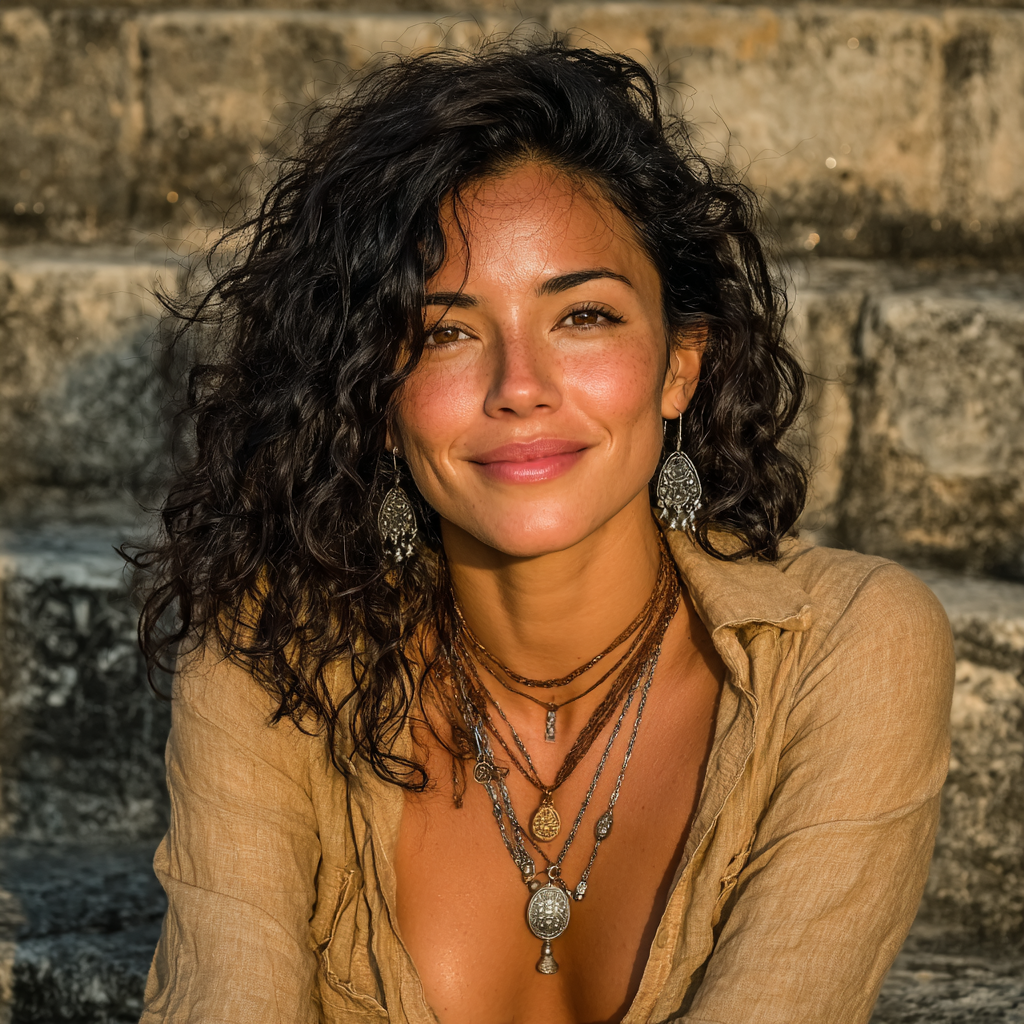
By Elena Vasquez
Cultural anthropologist and culinary storyteller. Elena spent a decade documenting traditional cooking methods across Latin America and the Mediterranean. She holds a PhD in Ethnography from Barcelona University and believes the best way to understand a place is through its kitchens and ancient streets.