
Reunion Island: Where an Active Volcano, a Roadless Mountain Village, and 2,000 Endemic Species Share One French Island
Author: Priya Sharma | Reading time: 16 minutes | Word count: ~3,450
I flew into Reunion at night, and the island announced itself before I ever saw it: the pilot banked over a black ridge, and below us the earth was glowing. Piton de la Fournaise had been erupting for days, and a thread of incandescent lava stitched the dark caldera. That is Reunion in one image — a place where geology is not a backdrop but a protagonist, where one of the most active volcanoes on earth shares 2,512 square kilometers with three roadless mountain amphitheaters, a quarter of its land locked inside a national park, and more than 2,000 species found nowhere else.
This is not a beach destination. If you want a resort lagoon and a sunbed, Mauritius is 45 minutes away by plane and a better fit. Reunion asks more of you: legs that can climb 1,700 meters, patience for hairpin roads, discipline about where you swim. Give it that and it returns something almost nobody gets anymore — an island where 42 percent of the territory is protected, where a village of 700 people lives with no road in, and where you can stand on the floor of an active volcanic crater in the morning and be eating vanilla-cured cari by the sea at night. Everything below is written for travelers who want to see it without wearing it out.
Entry Formalities & Money
Reunion's first surprise is bureaucratic: it is France, but it is not Schengen. The island is an overseas department outside the Schengen Area, which cuts both ways. The EU's new Entry/Exit System (live since October 2025) and the coming ETIAS do not apply here — but your Schengen visa does not get you in either, unless the label specifically reads "Valid for Reunion Island." EU, EEA, and Swiss citizens can enter on a national ID card alone. Citizens of the US, UK, Canada, Australia, New Zealand, Japan, South Korea, Singapore, Malaysia, Brazil, Argentina, Chile, and Uruguay, among others, get 90 days visa-free in any 180. Chinese, Indian, and Russian nationals can enter visa-free for up to 15 days only through accredited tour operators arriving from Mauritius or the Seychelles. Everyone else needs a short-stay visa applied for via France-Visas on the dedicated overseas form — budget 15 calendar days of processing. All visitors need a passport valid at least three months past departure.
The currency is the euro, and cards work nearly everywhere — except inside Mafate, which is strictly cash. ATMs cluster in the coastal towns; fill your wallet before heading to the cirques. A tourist tax (taxe de séjour) of roughly €1–4 per person per night applies at registered lodgings, collected by your host. Tipping is not expected — service is included — though rounding up is appreciated. Prices include the reduced overseas VAT. Tap water is safe and excellent; carry a refillable bottle, because buying bottled water on an island with drinkable tap water is the one unforced sustainability error you can avoid for free.
Getting There & Around
Almost everyone arrives at Roland Garros Airport (RUN), outside Saint-Denis on the north coast, with nonstop flights from Paris (11 hours from CDG on Air France, or from Orly on French Bee and Corsair) and seasonal links from Marseille and Lyon. The smaller Pierrefonds Airport (ZSE) near Saint-Pierre takes some regional and domestic traffic. There are no nonstop flights from the Americas or Asia; you connect through Paris, Mauritius (a 45-minute hop), Johannesburg, or Antananarivo. Expect €700–1,200 round-trip from Paris in high season.
Once here, you need a car. Reunion's public network, Car Jaune, is genuinely decent between towns — 16 lines, air-conditioned coaches, with the tourist Line T linking both airports along the west coast at €5 a ride, €15 for a day ticket, or €20 for a carnet of five — but not one route reaches a trailhead, a cirque floor, or the volcano. Rent a compact car for €35–60 per day (book early for July–August), and budget around €1.60 per liter of fuel. Drive on the right, respect the 90 km/h interurban limit — speed cameras are everywhere — and never plan mountain distances by the map: Saint-Denis to Cilaos is barely 45 kilometers but takes 75 minutes over some 400 switchbacks, and the road to the volcano climbs from sea level to 2,300 meters across a terrain that feels like driving onto Mars. The Route des Tamarins, the fast expressway down the west coast, finally links the airport zone to Saint-Pierre in about 90 minutes.
Two road notes for 2026. First, Cyclone Garance struck the island in late February 2025 — the worst storm in decades, with three dead, 120,000 homes briefly without power, and nearly €380 million in insured damage — and road repairs on exposed ramps continue under EU-funded programs into 2027. Second, the Maïdo road (D3) above Saint-Paul has a history of storm and landslide closures; check the prefecture's daily road bulletin before committing to a Maïdo dawn. The south-coast road between Sainte-Rose and Saint-Philippe, the Route des Laves, is the essential scenic detour: it crosses the black aprons of the 1977 and 1986 flows, and the church of Notre-Dame-des-Laves at Sainte-Rose still stands with its 1977 lava tongue stopping at the front door — a free, five-minute stop that says more about this island than any museum.
When to Come
The austral rhythm rules everything. May to November is the dry season — crisp, clear, and the only sensible window for serious hiking, with coast temperatures of 20–27°C and nights near zero at 3,000 meters. June through September is the sweet spot: settled weather, blazing visibility, and humpback whales passing the west and south coasts on their migration to calve (boat trips from Saint-Gilles and Saint-Pierre run €50–70). July and August are also when every French family arrives for the school holidays — book cars, gîtes, and refuges weeks ahead.
December to April is wet season, and it is not a soft label. January and February carry real cyclone risk, when trails close, roads flood, and the caldera itself may be sealed by decree — as it was during eruptions in January and February 2026. May, June, September, and October are the connoisseur's months: dry trails, thinner crowds, lower rates. If you come in summer regardless, build slack into the itinerary and check Météo-France Réunion daily.
Where to Stay
Base yourself on the west coast — the lagoon strip around Saint-Gilles-les-Bains, L'Hermitage, and Saint-Leu holds the island's best swimming zones, the densest restaurant row, and the fastest exits to Maïdo and the volcano road. Mid-range hotels and quality guesthouses run €100–180; the few resorts and plantation-style upscale addresses run €250–450+. Saint-Pierre, the handsome Creole capital of the south, is the better base if the volcano and lava tunnels are your priority, with slightly lower rates and the island's best Saturday market outside your door. For cirque immersion, Cilaos and Hell-Bourg have atmospheric inns at €70–130. And for the full Mafate experience, you sleep in a gîte — see below. A lightbulb-worth tip: wherever you stay, confirm parking. Old Creole townhouses often have none, and street spots fill by evening.
Piton de la Fournaise: Walking on an Active Volcano
Piton de la Fournaise is one of the most active volcanoes on the planet, and it has been earning that reputation lately. After a quiet stretch, it erupted in January 2026, closed the Enclos, and then — in a reminder that this mountain writes its own schedule — erupted again without warning on the morning of 13 February 2026, forcing helicopter evacuations of hikers already inside the caldera. The eruption cycle was winding down through mid-2026, but the deeper change is regulatory: under prefectural order, the upper Enclos Fouqué is now accessible only along three marked ONF trails — the classic route from Pas de Bellecombe past Formica Léo to the Cratère Caubet, a northern spur to the designated Dolomieu observation point, and the Sentier Kapor to Piton Kapor. The old extension along the crater rim toward the Château Fort belvedere is formally prohibited. Translation: the "full Dolomieu rim" itineraries in older blogs are out of date. Check the OVPF bulletins and prefecture decrees the evening before, and again that morning; the Enclos closes without notice during seismic unrest, and it is not a place to argue with signage.
Everything about the standard visit is free — no park gate, no trail fee, free parking at Pas de Bellecombe-Jacob (2,311 m). The marked route to the Dolomieu observation point is roughly 6 kilometers one way over black scoria, five to six hours round trip, with zero shade, zero water, zero phone signal. Carry three liters of water each, a windproof layer (the crater floor is a wind tunnel), and proper boots; the white paint blazes lead across a landscape sharp enough to shred trail runners. Start at dawn, both for weather and for the light — morning fog can drop visibility to ten meters or lift in minutes, and on my last visit the cloud floor sat exactly at the crater rim, so the lava walls appeared to float. Off-trail hiking is banned here, and rightly so: the volcanic desert looks dead and is not, hosting a slow-recovering ecosystem of pioneering ferns and endemic lichens that a single bootprint can scar for decades.
Two experiences complete the volcano story. Below the surface, Reunion's lava tubes are among the finest in the world, and guided tours are affordable: the 2004-flow tunnel at Sainte-Rose (3 hours, from €40–50 adult, €40 for under-12s) and the longer 2007 "éruption du siècle" flow (€65) with operators like Profundo, Bazaltik, or Canyon-Spéléo, helmets and lamps included. Above the surface, the Cité du Volcan museum on the Plaine des Cafres road at Le Tampon (roughly €10–15; check cite-du-volcan.re for hours) earns its keep before a hike, with a life-size lava tube walk-through and live OVPF feeds. If you'd rather walk with a volcanologist, guided full-day crater hikes run about €50 in groups to €220 private — money well spent the first time.
Piton des Neiges & the Three Cirques
The volcano's older, taller sibling, Piton des Neiges (3,070 meters), has been dormant for about 20,000 years and remains the highest point in the Indian Ocean. The classic route starts from Le Bloc above Cilaos (1,600 m) — park by 08:00 in season — and climbs 1,730 vertical meters: five hours up through cryptomeria forest to the Caverne Dufour refuge (2,478 m), where the ONF dormitory costs about €40 per person with a Creole dinner and breakfast included. Reserve two to four weeks ahead on fdh-payement.fr or via the ONF (02 62 51 26 00); it fills solidly in July–August. Summit parties leave at 03:00–04:00 with headlamps to watch sunrise break over a sea of clouds above all three cirques. The fit can do it as a brutal day-hike (8.5 hours round trip); everyone else should take the refuge night. A second, longer line comes from Hell-Bourg via the Bélouve forest — seven hours one way, two days minimum. In the national park, bivouac is permitted only from 18:00 to 08:00 at designated sites, with a free registration on the park's website.
The cirques themselves are three temperaments of the same geology. Cilaos, reached by that 400-switchback road, is the sunny one: a red-roofed town at 1,200 meters famous for lentil fields (the tiny green lentilles de Cilaos are the island's protected pride), an embroidery tradition you can watch in ateliers off the main street, and trailheads radiating in every direction. Salazie is the lush one, drowning under five meters of annual rain, where the Voile de la Mariée waterfall pours straight onto the road and Hell-Bourg — officially one of Les Plus Beaux Villages de France — lines its lanes with gingerbread-trimmed Creole villas; the Maison Folio garden villa charges a small entry and is the best hour on a rainy day. From the Bélouve plateau, guided hikes continue to the rim of the Trou de Fer, a 300-meter chasm ringed by waterfalls (€50–100 per person depending on group size). And above Saint-Paul, the Maïdo belvedere (2,205 m) is the island's great dawn theater: arrive before 07:00 because the cirque floor clouds over by mid-morning — then, if your knees allow, drop 1,000 meters of rampart on the steep path to Roche Plate in Mafate and sleep down there. The drive up has some 230 bends and landslides have closed it for stretches since Garance, so check the road bulletin the day before.
Mafate: The Cirque With No Roads
Mafate is the reason Reunion breaks itineraries in the best way. Seven hundred people live in hamlets called îlets scattered across a crater floor reachable only on foot or by helicopter — no road has ever been built in, and that is precisely the point. Everything you eat there arrives by chopper or on someone's back, which is why the classic gîte formula of dinner, bed, and breakfast costs €80–90 per person and is worth every cent: your money flows directly to the families who hauled it up. Book weeks ahead for May–October through the individual gîte sites; the going example rate is €190 for two, or €85 per person from three up, half board. Carry cash — no cards, no ATMs — plus a warm layer and a headlamp.
Three doors lead in. From Salazie, the walk over Col des Bœufs (1,956 m) is the gentlest, about 90 minutes down to La Nouvelle and doable for any fit hiker. From the Maïdo, the descent to Roche Plate drops a knee-testing 1,000 meters — go down, stay the night, and either climb back out or walk on. From Cilaos, the Col du Taïbit (2,083 m) on the GR R2 is the mountaineer's option, connecting La Nouvelle to Marla in about four hours of sublime ridge walking. Inside, the trails link Roche Plate, La Nouvelle, Marla, and Les Lataniers through rampart scenery that has no business being this empty. If the walk out feels like too much after a night of lentil cari, a helicopter hop back to the coast runs around €80 per person when seats are available — but never let the helicopter be your only plan out; weather grounds it for days at a time. My rule: carry in everything I need, carry out every scrap of trash, and buy dinner and breakfast at the gîte rather than importing food. Mafate's enforced simplicity is the island's greatest sustainability lesson, taught one footpath at a time.
The Lagoon & the Shark Rules
Now the part you cannot romanticize. Between 2011 and 2019, Reunion suffered one of the worst shark-attack clusters on record — bull and tiger sharks in the nearshore surf, multiple fatalities, the last in May 2019 at Saint-Leu. The state's response reshaped island life: since 2013, swimming and surfing outside designated, secured zones is banned and punishable by fine. Inside the zones — netted and patrolled beaches like Boucan Canot and Roches Noires at Saint-Gilles, the supervised lagoons at L'Hermitage and Étang-Salé, and the flagged water at Saint-Leu with its shark spotters in the towers ("vigies requins") — you swim with reasonable confidence, watched over by people paid to scan the horizon. Surfing happens only in flagged zones. SMART drumlines and targeted fishing quietly continue offshore.
Do not test this system. The lagoon, where it exists on the west, is lovely for snorkeling — l'Hermitage's shallow coral garden is the gentlest introduction, with sea turtles on lucky days — and the Natural Marine Reserve protects 40 kilometers of that coast, with fishing and anchoring restricted and snorkeling rules posted at each site (no standing on coral, no feeding fish). Reef-safe sunscreen matters here more than it does almost anywhere, because the lagoon is nursery habitat for juvenile fish. And in the austral winter, the deeper water delivers the island's redemption arc: humpback whales breach within sight of the west-coast beaches from July to September, and a responsible whale-watching trip (€50–70, operators out of Saint-Gilles and Saint-Pierre) is the single best-value excursion on the island. The ocean here is not a swimming pool. Treat it with the respect a wild coastline demands and it will still give you whales.
Food, Markets & Rum
Reunion eats Creole — African, Indian, Malagasy, Chinese, and French layers folded into one of the most underrated food cultures in the overseas French world. The staple is cari: a slow, turmeric-gold stew of fish, chicken, or octopus ladled over rice with rougail, a raw tomato-onion-chili relish that wakes everything up. Lunch at a tiny "case" restaurant runs €12–20; market grazing costs less. At every market you will find bonbons piment (chili fritters, a few cents each) and Réunion's own samoussas, smaller and fierier than the Indian original. Order a vanilla-spiked "rhum arrangé" after dinner — dozens of house-infused rums sit on every bar shelf — or a ti-punch done properly.
The market circuit is a morning ritual. Saint-Pierre's Saturday market is the island's biggest and best: the waterfront fills from early with vanilla pods, endemic-plant stalls, spice pyramids, and vendors ladling cari into styrofoam for the line of locals. Saint-Denis's Grand Marché (rue du Maréchal-Leclerc) is the north's answer, better for vanilla and woven craft. For vanilla with a story, drive the east to the Domaine du Grand Hazier – La Vanilleraie at Sainte-Suzanne, where the guided tour tells the island's quiet monument of a tale: in 1841, a twelve-year-old boy named Edmond Albius, born enslaved here, invented the hand-pollination technique that made vanilla cultivation possible worldwide; virtually every vanilla pod on earth is still pollinated his way. Two rum houses anchor the south: Rhumerie Isautier in Saint-Pierre (since 1845) and Distillerie Rivière du Mât in Sainte-Marie, both running tours and tastings around €10–15 — book ahead, and take the bus or a designated driver, because the tasting pours are generous. Buy vanilla and rum at the source rather than the airport: better prices, and the money stays on the island.
The Sustainability Story
Here is why this guide exists. Reunion protected 42 percent of its surface — the whole high interior, cirques, ramparts, and volcano — inside a national park (2007) and a UNESCO World Heritage listing (2010) covering the "Pitons, cirques et remparts," and the payoff is visible: tec-tec birds singing on the Plaine des Cafres at dawn, primary tree-fern forest in Bébour, orchids on the ramparts above Salazie. The park's rules are simple and load-bearing: stay on marked trails, no picking plants, no feeding the wildlife, bivouac only in designated sites between 18:00 and 08:00 with free registration, carry out what you carry in. The trail restrictions in the Enclos exist as much for the fragile volcanic desert as for your ankles.
The other story is recovery. Cyclone Garance's €380 million scar is still being rebuilt, and the most useful thing a visitor can do is simply show up, spend locally, and drive carefully past the crews still working the ramps. Sleep in Mafate gîtes and east-coast guesthouses, buy vanilla at the estate, refill your bottle instead of buying plastic, use reef-safe sunscreen in the lagoon, and take Car Jaune at least once on the west-coast run — it is €5 well spent to see how the island actually lives. Reunion is proof that a hard-edged, adventure-first destination can carry biodiversity better than a hundred soft ecotourism brochures, as long as its visitors walk softly. That is the deal here, and it is a good one.
Honest Math
Reunion is mid-priced by Indian Ocean standards and brutal if you improvise. Budget (€75–110 per person per day): gîte half-board €80–90 covers bed and two meals in Mafate, a cari lunch runs €12–15, market fritters cost pocket change; share the rental car, hike everything free. Mid-range (€160–260): west-coast hotel or guesthouse €110–180 split two ways, rental car €40–55, one paid experience — a lava-tube tour (€40–65) or a whale trip (€50–70) — plus park-rule-compliant guided day if you want one (€50–100). Comfortable (€350–600+): lagoon-view resort €250–450, helicopter flight €259–345 for 35–55 minutes over the cirques, private volcano guide around €220, distillery tour and long lunches. The two splurges that earn their cost: the Mafate night (it funds a village) and one helicopter ride (it reframes every hike you did before it). Skip the airport vanilla; buy it at Sainte-Suzanne for half the price.
What to Skip
- Swimming or surfing outside the flagged zones. This is not a guideline; it is a prefectural ban with fines, and the ocean enforces it harder than any gendarme. Check the flags and the vigies, every time.
- The midday volcano start. Hitting the Enclos at 11:00 means hiking in cloud, wind, and heat. Dawn or nothing — and check OVPF and the road bulletins the night before, because the caldera and the Maïdo road both close without apology.
- Mafate as a helicopter-only day trip with no margin. Flights cancel for weather for days at a time. Walk in with what you need, and treat any flight out as a bonus, not a plan.
- The Mauritius comparison. If you came for white-sand resort beaches, you booked the wrong island — accept that on day one and Reunion becomes the best trip you never planned.
- Night driving on mountain roads. Hairpins, rockfall, stray dogs, and no lighting; Saint-Denis traffic is bad enough at noon. Be parked by dark, especially in wet season.
- Picking, feeding, or collecting in the park. Flowers, volcanic bombs, "just one souvenir" rock — the park's strictness is why the endemics survive, and fines are real. Photograph it and leave it.
- Skipping proper insurance. You will hike above 2,500 meters, possibly in rain, possibly evacuated by helicopter. A policy that explicitly covers mountain hiking and rescue is not optional here.
Reunion is not gentle, and that is its gift. An island where the volcano erupted twice in the first two months of 2026, where a village of 700 lives happily with no road in, where the government chose biodiversity over beachfront development — this is what protection looks like when it is enforced rather than advertised. Bring the boots, respect the flags, book the gîtes early. The volcano will do the rest.
About the author: Priya Sharma is a conservation biologist with an MSc in Biodiversity Conservation from the University of Edinburgh. She has worked on species reintroduction projects in India, Kenya, and Costa Rica, and has spent the last six years advocating for community-based eco-lodges as an alternative to mass tourism. She writes about sustainable travel with the understanding that the best destinations are often the ones that make you work hardest to reach them.
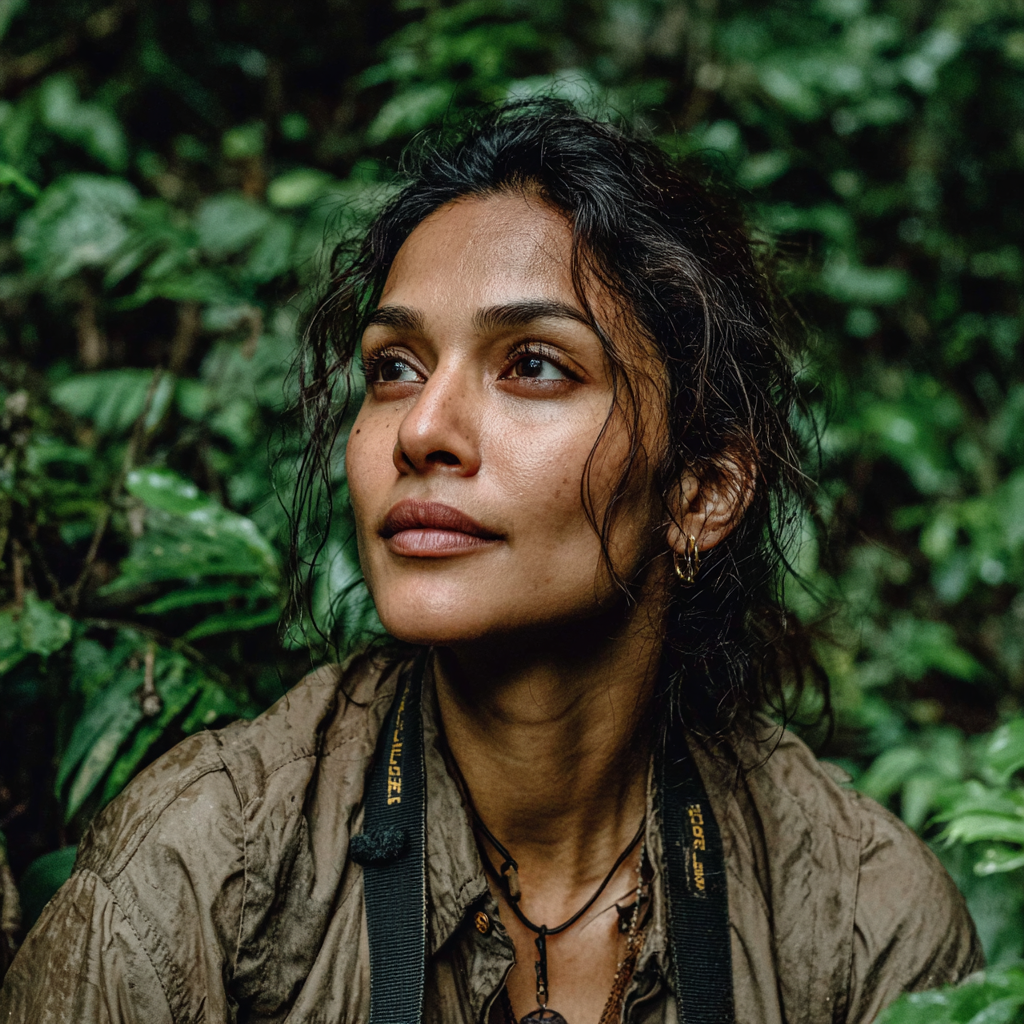
By Priya Sharma
Conservation biologist and sustainable tourism advocate. Priya works with eco-lodges and wildlife sanctuaries to promote ethical travel practices. She holds an MSc in Biodiversity Conservation and has spent years tracking endangered species across the Indian subcontinent.