
Portland, Oregon: The Unvarnished Guide to a City That Still Doesn't Care What You Think
By Finn O'Sullivan — Culture & History
Portland is the only American city whose greatest act of urban planning was deciding what not to build. While every other mid-size American downtown was strapping on a freeway corset in the 1960s, Portland looked at the Harbor Drive expressway along its riverfront, looked at the proposed Mount Hood Freeway bulldozing through southeast neighborhoods, and said no. It tore out the expressway it already had — the first American city to do that — and planted a park where it stood. That park, Tom McCall Waterfront, is now the city's front porch.
I tell you this first because it explains everything else: the food carts instead of restaurants with $80k build-outs, the farmers market that outdraws most pro sports, the bike lanes that actually go somewhere, the bookstore that fills a city block, the brewery in every church and elementary school. Portland is a city built on stubbornness, and the stubbornness has produced something genuinely rare in modern America — a place that still feels like it was designed for the people who live there, not the people passing through.
It is also, in 2026, a city with visible problems: a homelessness emergency that has lasted a decade, a downtown still recovering from 2020, a transit agency planning service cuts. This guide won't airbrush any of that. But the things that make Portland worth visiting — the gardens, the books, the food, the water, the weird civic self-confidence — are all intact. Here's how to see them properly.
The City That Never Wanted to Be Discovered
Portland exists because of a coin toss. In 1845, two men cleared a claim on the west bank of the Willamette River: Francis Pettygrove from Portland, Maine, and Asa Lovejoy from Boston. Each wanted the town named after his own city. They flipped a copper penny — twice, because the first result was disputed — and Pettygrove won both times. Portland, Maine, it was, and the coin itself sits in the Oregon Historical Society to prove it.
The town grew on timber — so much timber that stumps littered the streets for decades, which is why old-timers still call it Stumptown. The turning point was the 1905 Lewis and Clark Centennial Exposition, a world's fair on the site of what is now the University of Portland's campus. In one summer it more than doubled the city's visibility; within a decade the population had roughly doubled to match, and Portland had decided it was a real city.
Then came the facts that the booster brochures skip. In 1942, the Kaiser shipyards needed workers, and the federal government built Vanport — a housing project thrown up in 110 days on a floodplain between Portland and Vancouver. At its peak it held some 40,000 people, many of them Black workers recruited from the South who found Portland far less welcoming than the wartime posters suggested. Oregon had entered the Union with exclusion laws on the books; its 1857 constitution banned both slavery and Black residency, language that wasn't repealed by voters until 1926. Vanport was Oregon's second-largest "city," and when a railroad berm gave way on Memorial Day weekend 1948, the entire settlement vanished under fifteen feet of water in under an hour. Fifteen people died; around 18,500 lost everything. The displaced Black families were funneled into the Albina district of north Portland, where redlining kept them for decades.
This history matters because it explains the modern city's defining tension: Portland's progressive self-image versus a racial reality that never matched it. The city was long the whitest big city in America, and in 1988 white supremacists beat a Black Ethiopian immigrant, Mulugeta Seraw, to death on a Southeast Portland street. The civil rights reckoning, the freeway revolts, the environmental laws — all of it is real, and all of it sits on top of this older story. The Oregon Historical Society (1200 SW Park Avenue; $14 adults, $12 seniors 60+/students, free for everyone 17 and under — and free for all Multnomah County residents) tells the whole thing without flinching, Monday–Saturday 10:00–17:00, Sunday from noon. In May 2026, county voters passed a levy to fund it with roughly 60% approval — Portland voting, again, for the thing it values.
The freeway revolts are the city's proudest chapter. Governor Tom McCall, a Republican, spent the late 1960s and early 1970s turning Oregon into the national laboratory of land-use planning: the 1971 Bottle Bill (the nation's first), the 1973 statewide planning law with its urban growth boundary, and in 1974 the demolition of Harbor Drive to create the waterfront park that now carries his name. When the Mount Hood Freeway was officially killed the same year — after the neighborhoods organized, sued, and won — Portland became the template for every later American "tear it down" movement. Forty years on, other cities are still catching up.
Then came the plot twist. The TV show Portlandia (2011–2018) turned the city's eccentricity into a global brand, and the tech industry turned the brand into a migration wave. The metro area absorbed well over 100,000 newcomers in a decade, rents spiked, and the city's famous tolerance got stress-tested by its own success. The 2020 protests after George Floyd's murder, the federal agents tear-gassing crowds, the boarded-up storefronts, the pandemic — downtown took the hit, and parts are still rebuilding. But here's what the recovery stories miss: the neighborhoods never closed. The carts kept cooking, the breweries kept pouring, the gardens kept blooming, and the bookstore never once shut its doors.
The Neighborhoods Are the Argument
Portland is less a city than a federation of small towns stitched together by buses. Downtown is the least interesting part; the neighborhoods are the point.
The Pearl District, northwest of the Burnside Bridge, was rail yards and warehouses until the 1990s, and it went upscale so fast it became the national case study in gentrification. Today it's lofts, galleries, and Powell's — worth a few hours, but eat elsewhere; the good carts and cheap noodle joints are one neighborhood over.
Nob Hill / Northwest 23rd is the older, leafier version: Victorian houses, the surviving pre-war retail strip along NW 23rd Avenue, and Washington Park climbing the hill behind it.
Alberta Arts (NE Alberta Street) is where Black Portland rebuilt after Vanport and where the arts scene landed in the 1990s — mural-covered, gallery-dense, and still gloriously unpolished between NE 11th and 30th.
Division/Clinton in inner Southeast is the restaurant row: a mile and a half of top-tier kitchens in converted craftsman houses, plus the Cartopia pod at SE 12th & Hawthorne for when you want dinner for $14 standing up.
Hawthorne/Belmont is the vintage-and-bookstore belt — thrift shops, record stores, and the city's last genuinely divey dive bars.
Mississippi Avenue in North Portland is the template of the post-2000 neighborhood: breweries, food carts, a guitar shop, and a sense that everybody there moved in after 2010.
Sellwood at the far south end feels like a village that seceded: antique row, riverfront park, and the easiest launch point for paddling the Willamette. St. Johns, at the north tip under the St. Johns Bridge, has the cathedral-like span (1931, painted green, the finest bridge in the city) and a main street that time forgot in the best way.
The Cathedral of Books
Powell's City of Books, 1005 W Burnside Street, daily 10:00–21:00, is not a bookstore with a lot of inventory; it is a library of the world's printed output that happens to sell it. The main branch fills an entire city block, four floors, roughly a million used and new books on color-coded rooms (the Rare Book Room on the top floor is worth the climb). The used sections alone would rank among the biggest bookstores in America. Budget two hours minimum, use the in-store maps, and don't fight the impulse buys — the $6 used paperback you find here will outlast every souvenir hoodie in town. Locals treat it as a public square; the coffee shop in the middle is one of the best people-watching perches in the city.
The Gardens Portlanders Actually Use
The Portland Japanese Garden (611 SW Kingston Avenue) is the best thing of its kind outside Japan, full stop — five and a half acres on the west hills designed beginning in 1963 as a post-war gesture of cultural reconciliation. Admission is $22.50 adults, $16.50 youth 6–17, free for 5 and under; open Wednesday–Monday (closed Tuesdays), 10:00–18:30 in summer, last entry 16:30 in winter. Take the #63 bus from downtown or the MAX to Washington Park and ride the free shuttle up the hill. Go on a weekday morning when the light comes through the maples. The Umami Café does a proper matcha.
Downtown, the Lan Su Chinese Garden (239 NW Everett Street, Old Town) is its mirror image: a walled Suzhou-style scholars' garden built by artisans from Portland's sister city of Suzhou, opened in 2000. Admission is $18 adults, $17 seniors/students, $13 youth 6–18, free under 5 — and just $5 with an EBT card through Museums for All. Hours are 10:00–17:30 in season (last entry 17:00), 10:00–16:30 in winter. The Tao of Tea teahouse inside pours serious oolong; a pot and a window seat over the lake is the best $12 quiet you can buy in this city. In late winter it hosts lantern-viewing evenings for Lunar New Year.
The International Rose Test Garden up in Washington Park is free and absurdly pretty June–September. The city's rose festival tradition runs back to 1907; the Portland Rose Festival (June 2027 marks its 120th) still floods the downtown riverfront with dragon boats and carnival lights.
The Museums That Earn Their Admission
Oregon Historical Society — covered above; 1200 SW Park Avenue, $14, free under 18 and free for Multnomah County residents. The "Oregon My Oregon" hall is the essential first hour of any Portland trip.
Portland Art Museum (1219 SW Park Avenue, $27.50 adults, $24.50 seniors 65+, $22.50 students, always free for 17 and under; open Tuesday–Sunday 10:00–17:00; free on First Thursdays 17:00–20:00) is the oldest art museum in the Pacific Northwest (1892) and the most changed: the Mark Rothko Pavilion, a glass-walled addition straddling the museum's two historic buildings, opened in November 2025 and finally gave the institution a proper front door — and a bike path that runs through the building. Native American art, a strong Northwest collection, and a 2026–27 run of Rothko programming make it the city's cultural anchor right now.
OMSI (Oregon Museum of Science and Industry, 1945 SE Water Avenue on the east bank) is the rare science museum adults enjoy sober: a genuine WWII-era submarine, the USS Blueback, moored in the river (tour extra), a planetarium, and blockbuster touring shows — the Titanic artifact exhibition runs through October 18, 2026. Admission $19.95–22.50 adults depending on season, $14.50–15.50 kids 3–13, under 3 free; scattered "$5 Days" are listed on omsi.edu. Parking is $5 for two hours, $8 all day, or $2 after 17:00 — take the MAX or streetcar and skip it.
Pittock Mansion (3229 NW Pittock Drive) is the 1914 French Renaissance pile built by Oregonian publisher Henry Pittock — the man who arrived in town penniless and ended up owning the newspaper, the paper mill, and half the mountain. The house is fine; the reason to ride bus #20 up there is the view: the whole city, both rivers' worth of bridges, and Mount Hood filling the windshield on clear days. $17 adults, $15 seniors/students, $14 youth 6–18, free under 6 — and the 46-acre grounds are free always. Fall hours 09:00–16:00 (opens noon Tuesdays); spring/summer 09:00–17:00. On sunny weekends it's the single best photo in the metro area.
The Food Is Infrastructure, Not a Scene
Portland has the densest food-cart ecosystem in America, and it exists for a structural reason: carts let immigrants and working-class cooks open a kitchen for the cost of a used truck instead of a $400,000 restaurant build-out. The result is a city where you can eat Thai, Oaxacan, Georgian, Nigerian, and Cambodian in the same afternoon for cart prices — most mains $12–18.
The essential stops: Nong's Khao Man Gai (609 SE Ankeny Street, daily 10:00–21:00) — the chicken-and-rice dish that launched a thousand food writers, now $15 a plate, as good as it was when Nong Poonsukwattana started with $70 in her pocket and a single cart. Cartopia (SE 12th & Hawthorne) for late-night eats under strings of lights. The downtown pods around SW 10th & Alder for a weekday lunch crawl. And Kachka (720 SE Grand Avenue) if you want the sit-down counter-argument: Soviet-era Jewish cooking, vodka flights, and the best dinner in the city — reserve ahead, ~$60–80 per person with drinks.
On beer: Portland has more breweries than any city on earth — seventy-plus within the city limits — and the taproom is the city's living room. Coffee culture runs a close second; the original Stumptown locations still pull excellent shots. For the full immersion, hit a farmers market: the Portland Saturday Market under the west end of the Burnside Bridge (Saturdays and Sundays, March–December, free entry) has run since 1974 and is the largest continuously operating outdoor arts market in the country — local makers, street food, and buskers.
The McMenamins Doctrine
To understand Portland hospitality, understand McMenamins: a family company that buys beautiful old buildings — schools, churches, theaters, a poor farm — and converts them into hotels, breweries, and pubs without sanding off the history. Their masterpiece is the Kennedy School (5736 NE 33rd Avenue), a 1915 elementary school that closed in 1975 and reopened in 1997 as a 57-room hotel. Classrooms are guest rooms (most with no TV, all with original chalkboards), the cafeteria is a restaurant, the detention room is a bar, and the old cloak room is a cigar bar. The soaking pool — an outdoor saltwater mini-pool in a courtyard — is open to the public for $10 per person per hour (10:30–19:30, reserve online) and to hotel guests free. Rooms from roughly $208 a night. Even if you sleep elsewhere, come for a pint and a wander: this is adaptive reuse as civic religion. (Their Edgefield property in Troutdale, a former county poor farm, does the same trick in the countryside.)
The River and the Bridges
Downtown's front yard is Tom McCall Waterfront Park, a 1.5-mile strip where a freeway used to be — the single best proof of the city's founding idea. Joggers, cherry blossoms in March, the Rose Festival funfair in June. Across the Willamette, the Eastbank Esplanade runs the opposite bank, and the loop between them passes nine bridges. The Burnside Bridge (1926) at the center is a Strauss bascule lift bridge now slated for eventual earthquake-replacement — walk it anyway for the upstream view of Mount Hood framed by the city.
For the famous waterfall day trip: Multnomah Falls in the Columbia River Gorge is 30 miles east and magnificent, but since 2023 the parking lot at I-84 Exit 31 requires a timed-entry permit in season. Do it the local way: the Columbia Gorge Express shuttle from Gateway Transit Center, or a weekday early start. Never on a summer weekend afternoon.
Getting Around
Portland's transit is run by TriMet. Fares, as of this writing: $2.80 adults for a 2.5-hour ticket, $5.60 for a day pass, youth 7–17 half price, under 7 free. Buy and tap with the Hop Fastpass system using any contactless bank card, phone, or watch — no app, no paper, and daily/weekly caps mean you never overpay. The MAX Red Line connects PDX airport to downtown in about 38–40 minutes for $2.80, running from around 04:00 to midnight; a taxi downtown runs $45–60. The streetcar ($2.50) loops downtown and the Pearl; buses cover everywhere else. Note: TriMet's budget crunch means roughly 10% service cuts are rolling out across 2026–27 — check trimet.org before late-night plans.
Bikes are the real local answer. The city is largely flat, and Biketown (the municipal e-bike share) has stations everywhere. Downtown to the Japanese Garden is the one climb.
When to Come
July through early September is the sweet spot: rain odds near zero, everything outdoors open, the city at its most itself — and hotels at their priciest (~$145/night metro average in July versus $109 in January). June adds the Rose Festival. Winter is the secret bargain: museums, carts, breweries, and Powell's are all-weather attractions, and January hotel rates are the year's lowest — but pack for rain from November through March; this is a real maritime climate, not a marketing one. Shoulder seasons (late April–June, September–October) are the connoisseur's pick, with one caveat: September and early October can bring wildfire smoke that spikes the AQI for days at a time. Check air-quality apps the week before a fall trip and stay flexible.
Honest Math: What Portland Costs
- Bare bones: $130–170/day — hostel or basic hotel ($110–150), food carts and markets ($40–55), TriMet day pass, one paid attraction.
- Comfortable: $250–350/day — good downtown hotel ($160–220; metro average ~$124, downtown 3-star averages ~$154 and 4-star ~$185), sit-down dinners ($60–90 with a drink or two), museums and a soaking-pool session.
- High end: $550+/day — Kennedy School or a Proper Hotel room ($300–500), Kachka or tasting-menu dinners ($150–250 for two), private Gorge or wine-country tours.
- Budget busters to avoid: hotel parking downtown ($30–50/night — don't bring a car), rideshare surge pricing after events, and paying "Portlandia" premiums at novelty spots.
A note for international visitors: the U.S. Visa Waiver Program travelers need an ESTA (~$21; apply only at esta.cbp.dhs.gov — copycat sites charge triple). Tipping is not optional: 18–20% at restaurants, $1–2 per drink. Cards are accepted everywhere, even at food carts.
What to Skip
- The Voodoo Doughnut queue. The line out the door on SW 3rd Avenue is tourists photographing other tourists. Walk five minutes to Blue Star or any neighborhood donut shop.
- Bringing a car downtown. Parking runs $30–50/night at hotels and the transit is genuinely good. Rent only for Gorge or coast day trips.
- Dinner at downtown chain restaurants. The good food lives in the neighborhoods; downtown after dark is still the city's weakest card.
- Multnomah Falls on a summer Saturday. Timed-entry permits sell out, I-84 crawls, and the viewpoint is a mosh pit. Weekday morning or Columbia Gorge Express — or skip it for the Japanese Garden.
- Expecting nightlife past 22:00. Bars close early, last MAX runs near midnight, and Portland is proudly a morning city. Plan evenings around breweries and dinner, not clubs.
- The "weird" scavenger hunt. Keep Portland Weird was a 2003 marketing slogan. The genuinely weird stuff (the Freakybuttrue Peculiarium, the 24 Hour Church of Elvis, the vacuum museum) is fun for an hour; don't build a trip around it.
The Last Word
Portland's gift is that it never performed itself for you. The freeways stayed unbuilt, the carts stayed cheap, the bookstore stayed open, the riverfront stayed a park. Come in summer for the gardens and the falls, come in January for the museums and the carts and the $109 hotels — but come expecting a working city, not a theme park. That's exactly what makes it worth coming to.
— Finn O'Sullivan, Culture & History
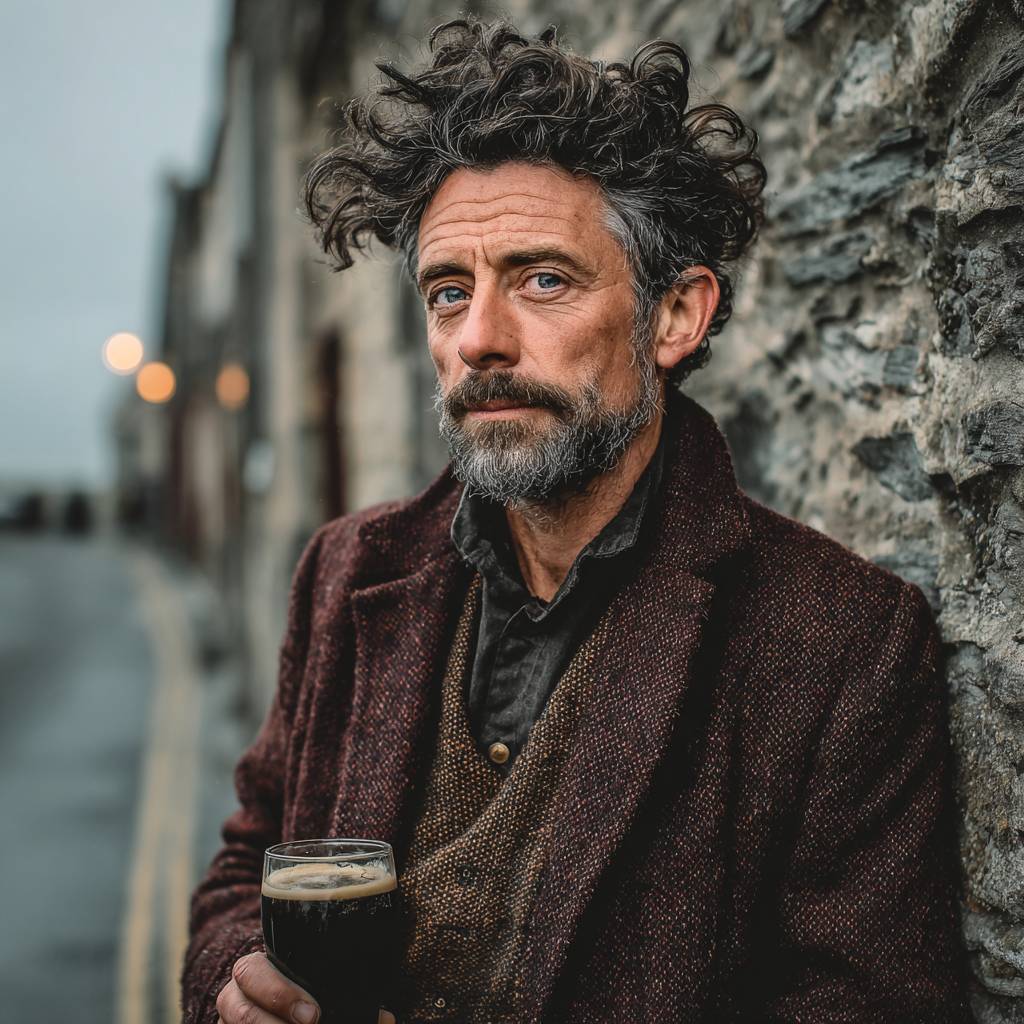
By Finn O'Sullivan
Irish storyteller and folklorist. Finn hunts for the narratives that do not make guidebooks—the pub legends, the family feuds, the neighborhood heroes. He believes every street corner has a story if you know who to ask.