
Corsica: The Island That Never Wanted to Be French — From Paoli's Mountain Republic to Napoleon's Hometown
There's a Corsican saying you'll hear within your first day on the island: Francia, maghja gni corsu — France, but never Corsican. It sums up three centuries of one of Europe's strangest relationships. Corsica has been French since 1769, yet the island keeps its own language, its own music, its own founding myths, and a political movement that has spent fifty years negotiating — sometimes at gunpoint — for the right to be something other than a département.
This is what makes Corsica one of the most rewarding culture-and-history trips in the Mediterranean: the past isn't behind glass here. It's in the bilingual street signs, in the three-voice choirs that rehearse in village bars, in the Genoese towers still standing sentinel over every headland, and in the way a Corte shopkeeper will tell you — proudly, without anger — that you're not really in France at all. This guide walks you through the history you can still touch, from Bronze Age stone warriors to the mountain republic that briefly beat Europe's great powers, with the practical details to see it properly.
A Timeline You Can Walk: 8,000 Years of Saying No
Corsica's stubbornness predates France, predates Genoa, predates Rome. On the D57 road near Sollacaro, about 20 km north of Propriano in the Taravo valley, the Filitosa prehistoric site (D57, 20140 Sollacaro; +33 4 95 74 00 91; €9 adults, €7 ages 6–17, €28 family ticket for two adults and two children, under-6s free; open daily April 1–November 2, 10:00–19:00 in the 2026 season; allow 1 hour 15) holds one of the finest collections of statue-menhirs in the world. These granite figures — warriors with carved swords, daggers, and helmets, raised between roughly 1800 and 1500 BC by the island's Torrean civilization — are 3,000-year-old portraits. Someone stood in this valley and shaped faces out of stone, and the faces are still watching. Start in the museum to understand what you're looking at, then walk the 1.5 km outdoor circuit; early morning light on the menhirs is worth setting an alarm for.
The Greeks came next, founding Aléria on the east coast around 565 BC; the Romans followed and made it their provincial capital — its excavated site and museum sit just south of the modern village. But the power that left the deepest physical mark arrived in 1284: Genoa. For nearly five centuries, the Most Serene Republic ruled Corsica from garrison towns like Bastia and Bonifacio, building the citadels and watchtowers that still define the coastline. Corsica paid taxes, supplied sailors, and periodically rose in revolt. In 1729 the islanders rose again — and this time they didn't stop for forty years.
The revolt produced the most remarkable chapter in Corsican history: the Corsican Republic of Pasquale Paoli. In 1755, Paoli proclaimed the island's independence, wrote one of Europe's first modern democratic constitutions, made the mountain town of Corte his capital, founded a university, and ran a functioning state with its own coinage and navy — all while fighting both Genoa and, after 1768, France. The French bought Genoa's exhausted sovereignty claims in the 1768 Treaty of Versailles, sent 24,000 troops, and crushed Paoli's army at the Battle of Ponte Novu in May 1769. Three months later, on August 15, 1769, Napoleon Buonaparte was born in Ajaccio — an emperor's consolation prize for the empire's loss.
Paoli died in London in 1807, and his ashes rest in his birthplace of Morosaglia, south of Corte. The republic he built became the island's founding myth, and the twentieth century gave the sentiment political teeth: a nationalist movement bombed its way through the 1980s, the French prefect Claude Érignac was assassinated on an Ajaccio street in 1998, and the unrest of 2021–2023 pushed Paris into negotiations over an autonomy statute that, as of 2026, is still being hammered out. When Corsicans tell you the story is unfinished, they mean it literally.
Ajaccio: The Emperor's Unwilling Hometown
Ajaccio has a complicated relationship with its most famous son. Napoleon was born here only because his family was fleeing the fighting; the Buonapartes were minor Corsican nobility riding out the conquest. The empire he built was French, but the family remained Corsican to the bone — his mother, Letizia, barely spoke French.
The Maison Bonaparte (Rue Saint-Charles, 20000 Ajaccio; +33 4 95 21 43 89; €10 adults, €8 concessions, free for EU residents under 26 and on the first Sunday of each month) is the house where it began — a tall, narrow Genoese townhouse with a family chapel on the ground floor, period rooms above, and the grand salon where the clan received petitioners. It's a museum of a family rather than a triumphal shrine, which makes it more interesting than you'd expect. Closed Mondays. Hours split by season: July 1–September 30, 10:00–17:30 (last admission 17:00); April 1–June 30, 10:00–12:30 and 13:15–17:30; October 1–March 31, 10:30–12:30 and 13:15–16:30. Take the free first-Sunday option if your dates align.
The wider Napoleon trail is walkable in an afternoon and best done on foot: the Cathedral of Notre-Dame-de-l'Assomption on Rue Saint-Charles, where he was baptized in 1771; the Place du Diamant with its incongruous statue of the emperor in Roman dress; and the faded imperial eagles stamped into nineteenth-century facades around the old port. Then pivot to the collection that genuinely surprises visitors: the Palais Fesch – Musée des Beaux-Arts on Rue Fesch, home to the largest collection of Italian paintings in France after the Louvre — the cardinal-uncle Joseph Fesch's obsessive hoard of Renaissance masters. It reframes the Buonapartes as a cultured Mediterranean dynasty rather than a war machine.
Ajaccio itself is a working Corsican city, not a museum piece. Have lunch at the covered market near the old port (go before 1:00 PM, when the counters start closing), where charcutiers slice coppa to order and brocciu appears in everything from omelets to fiadone, the island's signature cheesecake. Order a glass of Ajaccio AOC red — the Sciacarellu grape grows on the slopes behind the town — and watch the port do its unhurried thing.
Bastia: The Genoese Soul
If Ajaccio is Napoleon's town, Bastia is Genoa's — and locals will tell you, in Corsu-accented French, that the two cities still eye each other across the island's spine. Bastia was the Genoese administrative capital, and its old quarters are the best-preserved slice of the Republic of St. George anywhere outside Liguria.
Start in Terra Vecchia, the labyrinth of tenements around the Vieux-Port, where fishermen still mend nets on the quay and the twin-towered Church of Saint-Jean-Baptiste (the largest church in Corsica) rises directly from the water like a ship's prow. Climb into Terra Nova, the citadel quarter, for the Musée de Bastia in the Palais des Gouverneurs (Place du Donjon, La Citadelle; +33 4 95 31 09 12; €5 adults, €2.50 concessions; May 2–September 30 open 10:00–18:30, closed Mondays in May, June, and September but open daily in July and August; October–April 9:00–12:00 and 14:00–17:00, closed Sundays and Mondays). The museum tells the port's story through paintings, furniture, and shipping lore — the citadel terrace behind it gives you the wide Mediterranean view the governors enjoyed.
Back down at sea level, Place Saint-Nicolas is Bastia's living room: plane trees, a bandstand, pétanque players, and a statue of the sixteenth-century Corsican mercenary Sampiero Corso, the island's original resistance hero. This is where you come for the evening passeggiata and an aperitivo at a terrace bar. If you're here in festival season, two things to know: polyphonic singing concerts are held in Saint-Jean-Baptiste church for around €15 (the three-voice paghjella — bassu, secunda, terza — is Corsica's soul set to music, and hearing it in a baroque nave is a genuine travel memory), and the Nuits du Piano d'Erbalunga (37th edition: July 29–August 4, 2026, at the Palais des Gouverneurs in Bastia and the open-air Théâtre de Verdure in nearby Erbalunga; tickets from €33) brings world-class pianists to two of the island's most beautiful stages. Book ahead — Corsicans pack these.
Don't skip Erbalunga itself, a tiny fishing village ten minutes north where Genoese towers stand in the sea and artists' workshops line the lanes.
Corte: The Mountain Republic
Drive inland from either coast and the island changes personality. The maquis scrub gives way to granite massifs, and at the meeting of the Tavignano and Restonica valleys sits Corte, Paoli's capital and still the beating heart of Corsican identity — home to the island's university, its most ardent politics, and its most dramatic citadel, perched on a rock pinnacle that has to be seen to be believed.
The Citadel of Corte holds the Musée de la Corse (Rue de la Citadelle, 20250 Corte; +33 4 95 45 25 45; €5.50 adults, €3 reduced, free under 10s — the ticket includes access to the citadel itself; daily 10:00–19:00 in high season). It's the best single primer on Corsican culture anywhere: ethnographic collections on traditional life, transhumant shepherding, music, and the island's crafts, with the bonus of battlements that survey the very mountains where Paoli's republic made its stand. The Belvédère below the citadel is where students gather at sunset, guitars and opinions both in the air.
Corte is also the natural base for the Restonica and Tavignano gorges — glacial-pool valleys that locals treat as their summer swimming club — and it sits on the narrow-gauge railway line between Ajaccio and Bastia, which means you can arrive by one of Europe's great scenic train rides. Paoli's birthplace, Morosaglia, is a short drive northeast, his ashes under a simple granite marker with the mountains he fought for all around.
Sartène, the Stones, and Bonifacio: The Deep South's Older Memory
South of Ajaccio, the island's history gets older and stranger. Sartène, perched above the Rizzanese valley, styles itself la plus corse des villes corses — the most Corsican of Corsican towns — and earns it with a dark, proud character: grey granite houses, shuttered silence at midday, and on Good Friday the U Catenacciu procession, in which a hooded penitent drags a heavy chain through the lamplit streets in a ritual of atonement that predates Christianity's arrival. Nearby, the Cuccuruzzu and Capula archaeological sites near Levie (€4 adults, €3 reduced; roughly 9:30–17:00 June–September, 9:30–16:00 in shoulder months) preserve Bronze Age torri towers and castle-villages in the chestnut forest — far quieter than Filitosa and arguably more atmospheric.
And then Bonifacio, the improbable one: a fortified old town on a limestone promontory that the sea has undercut into a 70-meter cliff, separated from Sardinia by a channel barely 11 km wide. The Genoese held it for five centuries; before them it may have been the harbor of the lost Greek colony of Alcibiades. You can wander the citadel lanes free of charge; pay instead for a boat. SPMB (Quai Noël Beretti, 20169 Bonifacio) runs the classic trips: the 80-minute cliffs-and-caves circuit along the chalk cliffs, the grotto of Sdragonato, and the staircase of the King of Aragon is €26 adults / €16 children, while the underwater-vision boat out to the Lavezzi islands runs €36/€26 (return shuttle to Lavezzi €37/€26), with departures roughly hourly from 9:30–18:30 in season. Take the Lavezzi trip. The archipelago is a granite dreamscape of coves and wind-sculpted boulders — and it holds the island's most haunting memorial: the simple gravestones of the marine cemetery, where more than 700 soldiers and sailors who drowned when the frigate Sémillante wrecked in an 1855 storm lie among the rocks.
Bonifacio is also Corsica's door to Sardinia: ferries run to Santa Teresa di Gallura (Moby Lines and Corsica Ferries; 50–60 minutes, four to six sailings daily in peak season, roughly €30–50 return for a foot passenger), making a two-country day absurdly easy.
The GR20: Culture at 2,000 Meters
The GR20 isn't just one of Europe's hardest long-distance trails; it's a cultural institution — the pilgrimage that proves your Corsican seriousness. The full traverse runs some 180 km from Calenzana in the Balagne to Conca above Porto-Vecchio, typically 16 days, and it crosses the island's entire granite spine.
Even if you never walk a kilometer of it, understand what it means: the refuges are staffed mountain inns run by the Parc Naturel Régional de Corse, open from late May to early October, and they are now bookable only in advance online through the park's platform (reserver.sitecresa.fr) — the old walk-up culture is gone, and summer beds sell out weeks ahead. Expect dorm beds around €15–17 per night, tent pitches of €6–9, a refuge dinner around €13–25, and breakfast €8–12. The halfway point, Vizzavona, sits on the Ajaccio–Bastia railway, which makes it the classic sampler: ride the mountain train up, walk a two-day northern-section loop between refuges, ride back down. The northern section is the brutal, dramatic one; the southern half is easier and greener. Either way, you'll understand why Corsicans call the mountains u paese — the country — as distinct from the coast, which is for tourists.
The Island's Voice: Language, Music, and the Table
You'll hear it the moment you arrive: Corsu, a language with Tuscan roots closer to Italian than to French, compulsory in island schools since 1982 and alive in rap, rock, and evening news broadcasts. Street signs are bilingual; a Bonghjornu opens doors that perfect French cannot.
The island's great art form is the paghjella, the three-voice polyphony that a group of shepherds could perform with no instruments and no rehearsal — and which you'll most easily catch at church concerts in Bastia, Saint-Florent, or tiny Patrimonio during the wine festival. Food follows the same logic of terroir and season: brocciu, the lactose-free fresh ewe's-milk cheese that appears in spring and vanishes by autumn; the charcuterie trinity of coppa, lonzu, and figatellu; the chestnut, the island's historic "bread tree," ground into flour for polenta, fermented into beer, and celebrated with December fairs like the A Fiera di a Castagna in Bocognano; canistrelli biscuits for dipping in muscat; and myrte liqueur, the wild-myrtle digestif that ends every proper meal. Look for menus marked cucina corsa and the ferme-auberge signs in the mountains, where shepherds serve what their own flock produced — book ahead, bring cash, and surrender to whatever arrives.
What to Skip
The petit train and packaged "Napoleon tours" in Ajaccio. Everything they cover is walkable in 90 minutes, and the recorded commentary is thinner than the museum you already paid €10 for.
Napoleonic souvenir tat. The mass-produced "Corsican knives" and emperor busts around the old port are mostly imports. If you want a knife, buy from an actual cutler; if you want Napoleon, the Maison Bonaparte shop's books are the real thing.
Palombaggia and Rondinara at midday in August. These are the island's most photographed beaches, and from 11:00–17:00 in high season they're a parking experiment. Go at 8:30 AM or skip south to lesser coves toward Figari and Pianottoli.
The rampart-view restaurants of Bonifacio in August. You're paying €40 for a view you can get free from the citadel walls five minutes away. Eat down at the port, where the fishermen's catch lands, then walk up for the golden hour.
"Corsica in a day" excursions and one-hour Scandola blasts. Scandola, the UNESCO-listed red-porphyry reserve west of Porto, is extraordinary — but go with a proper half-day boat from Porto (€30–70 depending on operator, 3–4.5 hours, no swimming allowed inside the reserve, with a stop at the hamlet of Girolata). The truncated versions barely enter the sanctuary.
Assuming everything in August. Museums, refuges, and ferries all run different schedules in shoulder months — some boats and many refuges shut entirely from mid-October to May. Check the season before you build around it.
Practical Logistics
Getting there. Corsica has four airports — Ajaccio (AJA), Bastia (BIA), Figari (FSC), and Calvi (CLY) — served by Air Corsica and seasonal European flights, plus year-round ferries from Marseille, Toulon, Nice, Livorno, Genoa, and Savona (Corsica Ferries, Moby Lines; overnight crossings of 6–11 hours are the classic arrival, couchette from around €50). Sardinia's a 50-minute hop from Bonifacio.
Getting around. Rent a car — it's close to non-negotiable. Distances lie: Ajaccio to Bastia is only ~150 km but takes 3.5–4 hours over the mountain spine (the N193 via Vizzavona is the scenic artery; the toll-free T20 expressway runs up the east coast). The narrow-gauge railway (Ajaccio–Corte–Bastia, with a Calvi branch) is cheap, reliable, and spectacular — use it for the Corte and Vizzavona hops. Buses thin out badly outside July–August.
When to come. May–June and September are the sweet spots: warm sea, open trails, manageable crowds. July–August bring festivals and ferocious heat and prices. Mountain refuges operate late May–early October; Filitosa opens April 1–November 2; many museums close Mondays (and some take a midday pause — check before you drive).
How long and where to base. Ten days is the honest minimum: three bases — the Ajaccio/Porto southwest, Corte for the mountains, and Bonifacio or Bastia for the north/south contrast. Corsica is not a checklist island; it punishes rushing.
Money and manners. Museums run €4–10; several are free on the first Sunday of the month. Lunch menus in town run €20–28. Cards work in towns but mountain ferme-auberges and market stalls are cash-first — carry euros. Corsicans are warm once engaged and reserved until then: greet before you ask (Bonghjornu, Sì voi plasì), respect the midday pause, and don't joke about whether Corsica is "really" France. It's not a gag here; it's 250 years of unfinished business.
About This Guide
Finn O'Sullivan writes about the places where history refuses to stay in the past. Raised on Ireland's west coast, where every headland has three versions of every story, he spent years walking Corsica's maquis trails and Genoese citadels with a notebook and a stubborn habit of asking shopkeepers about their grandparents. He'll always choose the mountain road over the motorway, the church concert over the sound-and-light show, and the bakery with the queue out the door.
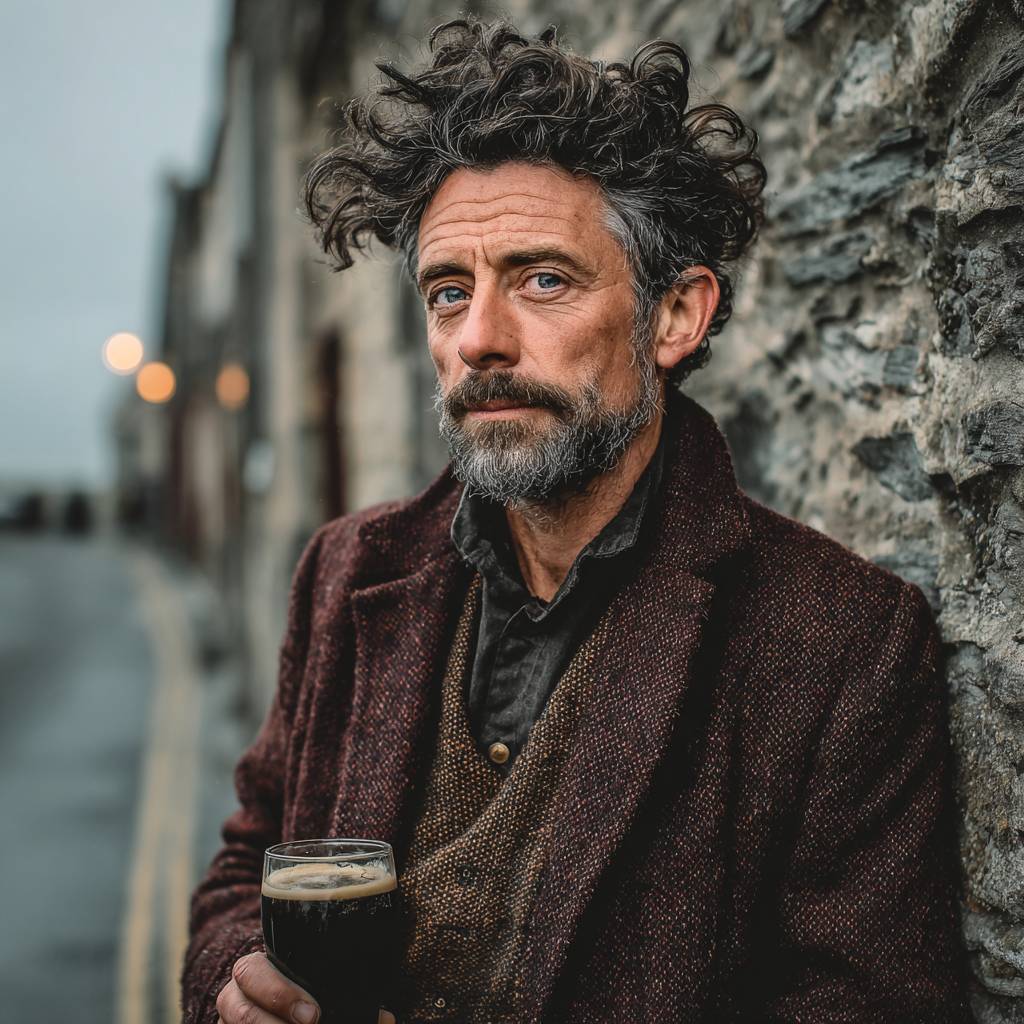
By Finn O'Sullivan
Irish storyteller and folklorist. Finn hunts for the narratives that do not make guidebooks—the pub legends, the family feuds, the neighborhood heroes. He believes every street corner has a story if you know who to ask.