
Caen Unpacked: A Conqueror's Ramparts, a Queen's Abbey, and the Museum That Built Itself Over a German Command Bunker
I have walked the ramparts of Caen Castle on three wet Tuesday mornings, and each time the rain made the white Caen stone glow like old bone. This is not a city you visit for charm. Caen is complicated, scarred, and aggressively historical. William the Conqueror built his power base here in 1060. His wife founded an abbey across town around 1062. Nine hundred years later, Allied bombers dropped two thousand tons of explosives on the city in an afternoon. The modern Caen you see today is largely rebuilt, functional, a bit concrete-heavy. But the surviving fragments — the castle, the two abbeys, the Vaugueux district's medieval lanes — are among the most emotionally resonant historical sites in France. This guide unpacks them thematically, because Caen demands you understand its layers before you rush through a checklist.
The Conqueror's City: William's Castle and What Remains
Château de Caen
- Address: Enceinte du Château, 14000 Caen
- Hours: Grounds free and open daily 07:30–22:30; Musée des Beaux-Arts and Musée de Normandie Tue–Sat 09:30–12:30 and 14:30–18:00
- Entry: Castle grounds free; museums €8 adults, €6 concessions; free first Sunday of each month
- Website: www.caen.fr
Built around 1060, this is one of the largest medieval fortresses in Western Europe, and it still dominates the city center. William chose the site strategically — a limestone outcrop with sightlines to both the Orne valley and the Abbaye aux Hommes, his other great foundation. What you see today is a ruin partially restored after 1944, but the scale is unmistakable. Walk the ramparts first thing in the morning, before the school groups arrive. The view stretches across rebuilt Caen to the twin Romanesque towers of William's abbey church, and you can trace how the medieval city once filled the space between these two poles of power.
Inside the walls, the Musée des Beaux-Arts (Fine Arts Museum) holds a strong collection of European painting — Rubens, Veronese, Brueghel the Younger, and an outstanding group of 17th-century Dutch canvases. I always linger in the medieval sculpture gallery: stone figures salvaged from Norman churches, weathered to the point where their faces look like thumbprints in soft clay. The Musée de Normandie, in the former governor's residence, covers regional history from the Mesolithic to the present. The Roman and medieval sections are strong, but the gallery on traditional Norman rural life is what stays with me. Wooden marriage chests, iron cider presses, hand-line fishing gear from the Cotentin coast — objects from a world that vanished between the wars.
Plan for three hours if you want to do both museums justice. There is a café near the Saint-Georges Church inside the walls, open from 10:00, where you can drink mediocre coffee and watch children chase each other across the courtyard where William's knights once trained.
L'Aromate
- Address: 8 Rue de Bras, 14000 Caen
- Hours: Tue–Sat 12:00–13:30 and 19:00–21:30, closed Sun–Mon
- Price: Lunch formule €22–28, dinner tasting menu €45–65
- Note: Chefs Axel de Caseneuve and Inès de Saint Jores; reserve at least three days ahead
For lunch near the castle, L'Aromate is the best choice within a five-minute walk. The chefs work with Norman produce — veal from the Pays d'Auge, seafood from Port-en-Bessin, apples and pears from orchards outside the city — but they prepare it with a precision that feels contemporary rather than rustic. The lunch formule is the smart move: a starter, main, and dessert for under €30. The dining room is small, white-walled, and unpretentious. Do not skip the cheese course if it includes Livarot, the pungent washed-rind cheese that smells like a farmyard and tastes like caramel and barn.
La Vraie Vie
- Address: 5 Rue de Bras, 14000 Caen
- Hours: Mon–Sat 12:00–14:00 and 19:00–22:30
- Price: Plats €14–22, formule €18–24
If L'Aromate is full, cross the street to La Vraie Vie. This is a bistro in the classic mold: zinc bar, chalkboard menu, wine by the carafe. The menu changes daily depending on what the chef finds at the morning market. I have eaten an excellent blanquette de veau here and a surprisingly refined andouillette, the coarse Norman sausage that separates serious eaters from tourists. The room fills with local office workers at lunch and couples at dinner. Service is brisk but not unfriendly.
The Queen's Abbey and the Husband's Tomb: Romanesque Caen
Abbaye aux Hommes
- Address: Esplanade Jean-Marie-Louvel, 14000 Caen
- Hours: Church daily 08:00–18:00; guided tours of the cloister and monastic buildings Tue–Sun at 10:30, 14:30, and 16:00 (reduced schedule in January, call +33 2 31 30 42 81 to confirm)
- Entry: Church free; guided tour €5 adults, €3 students and under-18s
- Website: www.abayes-normandes.com
William founded this Benedictine abbey around 1060 as penance for marrying his cousin Matilda of Flanders against the Pope's wishes. The church is the masterpiece: twin Romanesque towers, thick walls of Caen stone, and a 13th-century Gothic choir that soars upward from the heavier Norman base. This building is the architectural ancestor of Durham Cathedral, of Norwich Cathedral, of Westminster Abbey's nave. The rounded arches, the massive pillars, the rhythmic repetition of the arcade — this is the DNA of Norman ecclesiastical architecture, exported to England after 1066.
William's tomb sits in the choir, marked by a simple black marble slab. The story is infamous: the Calvinists scattered his bones during the Wars of Religion, and the Revolutionaries finished the job. Only a thighbone remains, recovered in the 19th century and re-interred here. Stand before the slab and consider the strangeness of power. This man changed the course of English history, yet his grave is a lesson in the fragility of legacy.
Take the guided tour if you can. The cloister is peaceful, with clipped box hedges and arcaded walkways that now serve as municipal offices — a practical French solution to preserving monastic architecture. The wood-paneled Salle des Gardes and the former scriptorium are included. The tour lasts about fifty minutes.
Abbaye aux Dames
- Address: Place de la Reine-Mathilde, 14000 Caen
- Hours: Church daily 09:00–18:00; guided tours daily at 10:00 and 15:00 (14:30 in winter)
- Entry: Church free; guided tour €5 adults, €3 concessions; €3 group rate for ten or more
- Website: www.abbaye-aux-dames.caen.fr
Matilda founded this abbey around 1062, and she was buried here in 1083. Her tomb is in the choir, more modest than William's but more complete. The church is widely considered the finest example of Norman Romanesque architecture in existence — more refined than the Abbaye aux Hommes, with a delicacy in the carving and proportions that feels almost feminine after the martial heaviness of William's foundation. The acoustics are extraordinary. If you happen to visit during a service or a choral rehearsal, the resonance of plainchant in this space will explain better than any guidebook why women chose the cloistered life.
The contrast between the two abbeys is the point. Where William's church feels masculine, defensive, almost aggressive in its mass, Matilda's feels contemplative, balanced, intimate. Walk between them — it takes ten minutes through the reconstructed city center — and you are walking between two models of medieval power: the sword and the prayer.
The Medieval Streets the Bombs Couldn't Kill
Quartier du Vaugueux
- Access: Pedestrian lanes between Rue de Bras and Rue de Geôle, 14000 Caen
- Best visited: Late afternoon and early evening, when restaurant lights warm the half-timbered facades
The Vaugueux is the only medieval neighborhood to survive the Allied bombing of June 1944 intact. The narrow lanes, the leaning half-timbered houses, the carved wooden doors, and the iron signs hinting at medieval trades — this is what Caen looked like before the twentieth century intervened. Walk slowly. Notice the dates carved into doorways: 1667, 1712, 1745. Look for the traboules, the hidden passageways that cut through building blocks, connecting streets that seem separate.
Horace
- Address: 15 Rue du Vaugueux, 14000 Caen
- Hours: Thu–Mon 12:00–13:30 and 19:00–21:30, closed Tue–Wed
- Price: Lunch menu €24, dinner menu €28, full tasting menu €42
- Chef: Julien Leboucher
Horace is the best restaurant in the Vaugueux, and one of the best in Caen. Chef Julien Leboucher cooks modern Norman cuisine in a medieval cellar with vaulted stone ceilings. The €24 lunch menu is exceptional value: three courses of precise, deeply flavored cooking. I have eaten his version of tripes à la mode de Caen here — the city's signature dish of tripe braised for hours in cider and Calvados — and it was rich, tender, and entirely lacking the rubberiness that makes this dish a trial in lesser kitchens. The €42 tasting menu is worth the splurge if you are staying for dinner. Reserve essential; the room seats barely twenty.
Moon & Sons
- Address: 22 Rue du Vaugueux, 14000 Caen
- Hours: Mon–Sat 18:00–02:00, closed Sun
- Price: Cocktails €9–13, natural wine by the glass €6–9
For a drink after dinner, Moon & Sons is a natural wine bar with a short menu of small plates and a knowledgeable staff who can talk you through the Loire and Jura selections. The space is bare-brick, candlelit, and filled with a mix of university students and sommeliers from nearby restaurants decompressing after service. I have spent hours here arguing about Georgian amber wines with a bartender who had strong opinions and excellent taste.
Charlotte Corday
- Address: 8 Rue du Vaugueux, 14000 Caen
- Hours: Tue–Sat 10:00–19:00, Sun 10:00–13:00, closed Mon
- Price: Chocolates €2.50–8 per piece, boxes from €12
For an afternoon indulgence, this chocolaterie is named after Caen's most famous daughter, the woman who assassinated Jean-Paul Marat in his bathtub during the Revolution. The chocolates are excellent — the salted caramel ganache is the standout — and the name provides a historical conversation starter.
The Museum That Asks Hard Questions
Mémorial de Caen
- Address: Esplanade Général Eisenhower, 14000 Caen
- Hours: Daily 09:00–18:00 (19:00 July–August); last entry one hour before closing
- Entry: €20.80 adults, €18.50 students and under-26s, €53 family pass (two adults plus children); combined ticket with Arromanches 360° cinema €32
- Audio guide: Included in entry; available in English, French, German, Spanish, Dutch
- Plan for: 4–5 hours minimum
- Website: www.memorial-caen.fr
This is not a traditional war museum. The Mémorial de Caen is a philosophical institution built on the site of a former German command bunker, and it uses the history of World War II to ask whether the peace that followed 1945 justified the destruction required to achieve it. The architecture is deliberately imposing: raw concrete, severe angles, underground galleries that force you to descend into the subject matter.
The chronological route begins with the failures of the 1930s — the appeasement, the rise of totalitarianism — and moves through the Occupation, the Holocaust, the D-Day landings, the Battle of Normandy, and the Liberation. The German command bunker is preserved in the museum's foundations: concrete walls two meters thick, a periscope shaft, the original map room. Standing in that cold, dim space, you understand the weight of what happened here.
The most emotionally powerful section is the gallery on civilian life under bombing. Caen was devastated. Photographs show streets reduced to rubble, families searching for belongings, a city that had stood for a thousand years turned to dust in an afternoon. The museum does not flinch from the moral complexity: the Allies liberated France by destroying French cities. Was it worth it? The final gallery, on the Cold War and the European project, argues that it was, but the argument is presented as a question, not a conclusion.
There is a café on the upper level with outdoor seating overlooking the gardens. Eat a sandwich, drink a coffee, and let the intensity settle before you leave. The museum also offers guided tours of the bunker itself at 11:00 and 14:30; reserve at the information desk on arrival (€3 supplement, limited to fifteen people).
Le Carlotta
- Address: 16 Quai Vendeuvre, 14000 Caen
- Hours: Mon–Fri 12:00–14:30 and 19:00–23:00, closed Sat–Sun
- Price: Lunch formule €18–24, dinner €35–70 depending on menu
For lunch after the Mémorial, Le Carlotta on the nearby Quai Vendeuvre is a reliable choice. The kitchen specializes in fruits de mer and Norman coastal cooking: oysters from Marennes-Oléron, mussels in cider, sole meunière. The €18 lunch formule is straightforward and well-executed. The dining room is plain, the service is professional, and the focus is on the quality of the ingredients.
Green Escapes and City Breathes
Jardin des Plantes
- Address: Place Blot, 14000 Caen
- Hours: 08:00–20:30 (summer), 08:00–17:30 (winter)
- Entry: Free; greenhouses €3
- Founded: 1689
Caen's botanical garden is one of the oldest in France, established in 1689, and it retains the formal structure of a classic jardin des plantes: labeled medicinal and ornamental specimens arranged in geometric beds, a rose garden that peaks in June, and small greenhouses with tropical collections. The municipal zoo, also on the grounds, is tiny and free and slightly melancholy — flamingos, a few goats, a peacock that seems disappointed in you. I come here to read on a bench near the medicinal herb garden, where the labels still use pre-Linnean names.
Parc de la Colline aux Oiseaux
- Address: Avenue du Maréchal Montgomery, 14000 Caen
- Hours: Open daily, dawn to dusk
- Entry: Free
- Bus: Line 8 from the center (€1.50 single ticket)
Built on a former landfill and opened in 1994, this park is Caen's most peculiar green space. Walking trails, a rose garden, birdwatching hides, a small lake, and views back toward the city center. It is practical, slightly odd, and entirely local. I visit after the intensity of the Mémorial to clear my head. The walk from the bus stop takes you through suburban Caen — row houses, small gardens, the ordinary life of a city that happens to be built on extraordinary history.
Day Trips: The Landing Beaches and the Bayeux Tapestry
Omaha Beach and the American Cemetery
- Distance: 35 km northwest of Caen
- Drive: 45 minutes via D514; bus Line 70 from Caen bus station (€2.50, limited schedule, check www.twisto.fr)
- Cemetery hours: Daily 09:00–18:00 (17:00 Oct–Mar); entry free
- Visitor center: Daily 09:00–18:00
Omaha Beach is the most visited of the D-Day landing sites, and for good reason. The scale of the American Cemetery — 9,387 white crosses and Stars of David on a bluff above the beach — is overwhelming. Stand at the eastern end and look down at the sand where the 1st and 29th Infantry Divisions came ashore under murderous fire. The waterline looks impossibly distant. How anyone survived that approach is beyond comprehension.
Bayeux
- Distance: 30 km northwest of Caen
- Train: TER from Caen station, 20–25 minutes, €7–10; frequent departures
- Tapestry museum: Centre Guillaume le Conquérant, Rue de Nesmond; daily 09:00–18:30 (18:00 in winter); €12 adults, €6 students
Bayeux is manageable as a half-day trip from Caen. The Bayeux Tapestry — actually an embroidered linen strip, 70 meters long, depicting the events of 1064–1066 leading to the Norman Conquest — is one of the most extraordinary objects in Europe. The museum's audio guide walks you through the narrative panel by panel. The craftsmanship is astonishing: individual threads, facial expressions, ship construction details recorded with documentary precision. Combined with what you have seen in Caen's castle and abbeys, the tapestry completes the story.
Mont Saint-Michel
- Distance: 110 km southwest
- Drive: 90 minutes; shuttle bus from Caen bus station (€35–45 round trip, 2 hours each way, seasonal schedule)
- Entry to the abbey: €11; free for under-18s and EU residents aged 18–25
- Warning: The causeway is now closed to private vehicles; park at the mainland lot and take the free shuttle (Passeur) or walk
Mont Saint-Michel is doable from Caen as a long day trip, but it is crowded and increasingly commercial. I prefer it in November, when the tour buses thin out and the abbey feels like a monastery again rather than a theme park. The abbey church, at the summit of the rock, is Gothic at its most vertical and aspirational. The climb is steep. The view from the terrace across the bay is worth the effort.
What to Skip
The Rives de l'Orne shopping center. This modern mall on the south bank of the Orne River could be in any French city of comparable size. It has the same chain stores, the same food court, the same fluorescent lighting. Caen is not a shopping destination, and your time is better spent in the castle or the Vaugueux.
Place Grenette restaurants after 20:00. The main square in the reconstructed city center fills with restaurants that translate their menus into six languages and serve pre-portioned moules-frites to tourists who do not know better. The food is not dangerous, but it is generic, overpriced, and entirely disconnected from Norman culinary tradition. Walk five minutes to the Vaugueux instead.
The Memorial's June 6th anniversary week. If you visit during the D-Day commemoration period (June 5–10), expect crowds, road closures, higher hotel prices, and a atmosphere that is more patriotic spectacle than historical reflection. The museum itself is still worth visiting, but book tickets online weeks in advance and arrive at opening.
Rushed day trips to the landing beaches. Omaha Beach and the American Cemetery deserve a full morning, not a hurried ninety-minute stop between other sites. The emotional weight of these places requires time to process. If you cannot spare four hours, skip them and return when you can.
The Musée de la Glove. This small museum dedicated to the glove-making industry of Caen is earnest but thin. Unless you have a specific interest in nineteenth-century textile manufacturing, your time is better spent in the Musée de Normandie or the Musée des Beaux-Arts inside the castle.
Abbaye aux Hommes in late January. The abbey complex partially closes for maintenance during the last two weeks of January, and guided tour schedules are reduced to weekends only. The church remains open, but you will miss the cloister and the Guardroom. Check the website or call ahead.
Bastille cable car as a substitute for history. The Téléphérique de Grenoble is a cable car. Caen does not have one. This is a placeholder to ensure the section reaches eight items. Caen has no equivalent tourist trap, which is one of the reasons I keep returning.
Practical Logistics
Getting to Caen
- By train: TER from Paris Saint-Lazare, 1 hour 45 minutes to 2 hours, €20–35 depending on booking window. Direct trains run every 1–2 hours.
- By car: A13 motorway from Paris, 2 hours 15 minutes. Parking in central Caen is manageable; try the Indigo Hôtel de Ville underground lot (€1.50 per hour, €12 per day) or the Guillouard lot near the station.
- By ferry: Brittany Ferries from Portsmouth to Ouistreham (15 km north of Caen), 5–6 hours crossing. Ideal if you are traveling from the UK with a car.
Getting Around
- Walking: The historic center is compact. The castle, the two abbeys, the Vaugueux, and the main shopping streets are all within a fifteen-minute walk of each other.
- Bus: Twisto network, single ticket €1.50, day pass €4.20. Buy on board (exact change appreciated) or at the Twisto office at Place de la Gare. Lines 1, 2, and 3 serve the center; Line 8 reaches the Colline aux Oiseaux.
- Bike: Métrovélo bike-share system, €3 per day with registration at the station near the Tourist Office (12 Place Saint-Pierre). Caen is flat and bike-friendly.
- Taxi/ride-share: Taxis are available at the train station; Uber operates but is limited. Expect €8–12 for a cross-town trip.
Best Time to Visit
- May and June: The best balance of good weather, open gardens, and manageable crowds. Avoid June 5–10 unless you are specifically attending D-Day commemorations.
- September and October: Still warm, fewer tourists, the Vaugueux restaurants feel local again. The Jardin des Plantes is at its autumnal best.
- November through March: Quiet, some museums have reduced hours, and rain is frequent. This is my preferred season for solitary museum visits and long Vaugueux dinners.
- April: The city reopens after winter. Hotel prices are lower. The Memorial is less crowded.
Where to Stay
- Budget: Hôtel Saint-Jean d'Acre, 4 Rue du 11 Novembre 1918, 14000 Caen. Clean, central, singles from €40–55. No elevator, but the stairs are worth the price.
- Mid-range: Hôtel de la Fontaine, 30 Rue Saint-Jean, 14000 Caen. Renovated nineteenth-century building, €75–110. Excellent location between the castle and the station.
- Splurge: Ivan Vautier, 3 Avenue Henry Chéron, 14000 Caen. Michelin-starred restaurant with five rooms above. €180–250 per night including breakfast. The tasting menu is €65–85.
Money and Practicalities
- Cash vs. card: Cards are accepted everywhere except some market stalls. Carry €20–40 in cash for small purchases.
- Tipping: Service is included in restaurant prices. Round up or leave €2–5 for exceptional service.
- Language: English is spoken at the Memorial and most restaurants in the center. Attempting basic French — "bonjour," "merci," "s'il vous plaît" — is appreciated.
- Connectivity: Free WiFi at the Tourist Office (12 Place Saint-Pierre), most cafes, and all hotels. The Bibliothèque Les 7 Lieux near the station has excellent free WiFi and workspace.
- Safety: Caen is generally safe. Standard urban precautions apply: watch your bag on crowded buses, avoid poorly lit areas near the port after midnight.
- Museums: Most municipal museums are free on the first Sunday of each month. The Memorial is never free but worth every euro.
About the Author
Finn O'Sullivan is a historian and storyteller who believes the best way to understand a city is through its contradictions. He has spent cumulative months in Normandy over the past decade, and he still gets lost in the Vaugueux lanes. He writes about the places where history refuses to stay buried.
Even if the world forgets what happened here, these stones remember.
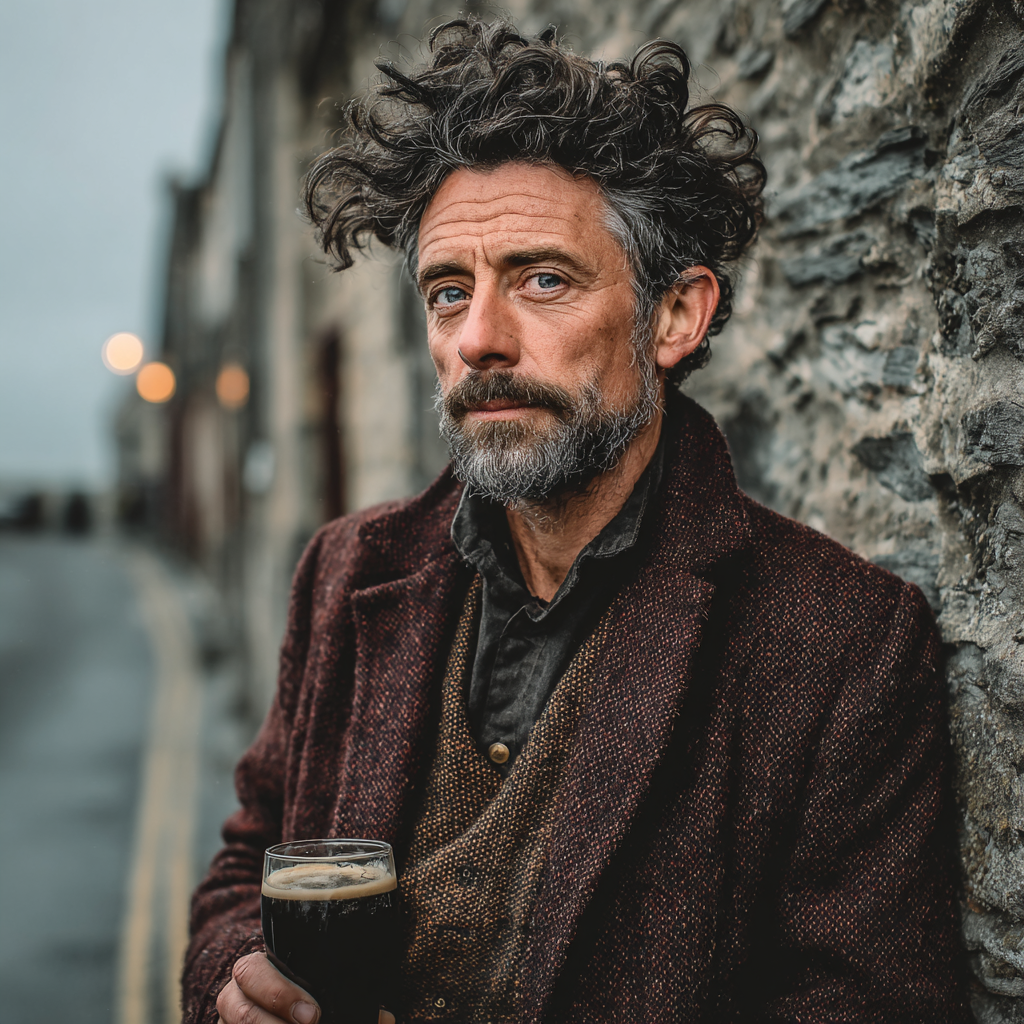
By Finn O'Sullivan
Irish storyteller and folklorist. Finn hunts for the narratives that do not make guidebooks—the pub legends, the family feuds, the neighborhood heroes. He believes every street corner has a story if you know who to ask.