
Cannes Is Not What You Think: The Real City Behind the Red Carpet
Cannes does not want your pity, but it deserves your attention. For eleven months of the year, this city is not the red-carpet circus you see on television. It is a working port town with 2,600 years of continuous habitation, a hilltop old quarter that smells of frying socca and blooming jasmine, and a population that has watched empires rise and fall while they kept fishing.
I have walked Le Suquet at dawn when the only sound is a scooter delivering bread. I have stood in the cell where the Man in the Iron Mask stared at the same sea you can see today. I have eaten anchovies at the market while a Provençal grandmother explained why Cannes tomatoes taste different from Nice tomatoes ("The soil. The light. Pay attention."). This guide is what I would tell you if we were sharing a carafe of rosé on a terrace overlooking the port—not the Wikipedia version, the real one.
About This Guide
Author: Finn O'Sullivan
Specialty: Culture & History, Local Stories
Approach: I write about places where history still breathes. I do not do lists of "top ten Instagram spots." I do the story of how a Ligurian fishing village became a global symbol, what got lost along the way, and what remains if you know where to look.
Logistics at a glance:
- Best months: April–June and September–October. July and August are brutally crowded; mid-May is Film Festival chaos unless you are accredited.
- Getting here: Nice Côte d'Azur Airport (NCE) is 30 minutes by train or car. Cannes station is central; most of this guide is walkable.
- Budget: Museums run €6–6.50. A socca snack at the market is €3–4. Dinner in Le Suquet starts around €25. The islands ferry is €17.50 round trip.
- What to bring: Comfortable shoes for cobblestones. A hat—the Mediterranean light is no joke. Curiosity.
Le Suquet: Where Cannes Actually Began
Forget the Croisette for a moment. The real Cannes is uphill.
Le Suquet is the original settlement, a limestone hill that rises behind the old port. The Ligurians chose it around the 2nd century BC for the same reason people have always chosen hills: you can see who is coming. The Romans built a fortification on top. The medieval monks of Lérins Abbey expanded it. The street plan you walk today still follows Roman pathways. This is not reconstructed heritage tourism—these are the same stones, re-laid and patched for two millennia.
The climb is steep. That is the point. The city was never meant to be easy to reach.
Château de la Castre / Musée des explorations du monde
At the summit sits the Musée des explorations du monde, housed in the medieval Château de la Castre. The building itself is the main attraction: an 11th-century fortress expanded over five centuries by monks who understood that prayer and defense were not incompatible.
What is inside:
- A world-class ethnographic collection gathered by 19th-century Cannes residents who sailed to Oceania, the Himalayas, the Arctic, and pre-Columbian America and brought things back. Some of these collections are extraordinary; others reflect the colonial attitudes of their era. The museum does not shy away from this context, which is rare and welcome.
- Mediterranean antiquities: Greek and Roman artifacts from regional sites, including pieces recovered from underwater archaeology.
- A musical instrument collection spanning five continents.
- The 109-step climb to the square tower for the best panoramic view on the Riviera. On a clear day you see the Lérins Islands, the Esterel mountains, and the bay all the way to Antibes.
Current exhibitions (check before visiting): The museum runs rotating temporary shows. As of early 2026, "Démones et déesses" explores the divinized image of women across cultures, running through 24 May 2026.
📍 Place de la Castre / Rue de la Castre, 06400 Cannes
🎫 €6 adults; €3 students and seniors (with ID); free for under-18s and on the first Sunday of the month November–March
🕐 Oct–Mar: Tue–Sun 10:00–13:00, 14:00–17:00, closed Mon and public holidays (1 Nov, 11 Nov, 25 Dec, 1 Jan). Apr–Jun: Tue–Sun 10:00–13:00, 14:00–18:00; Wednesday nights until 21:00 in June. Jul–Aug: daily 10:00–19:00, Wednesday nights until 21:00. Sept: Tue–Sun 10:00–13:00, 14:00–18:00, Wednesday nights until 21:00. Last entry 30 minutes before closing.
Note: No oversized luggage or prams inside. If you have mobility concerns, a small tourist train departs every 30 minutes from the harbor area near the Palais des Festivals and drops you at the top.
Église Notre-Dame de l'Espérance
Beside the museum sits this Provençal Gothic church, built between 1521 and 1627. The painted wooden ceiling and 17th-century Virgin statue are worth the stop. The bell tower was added in the 19th century.
📍 Place de la Castre
🎫 Free
🕐 Daily 09:00–18:00
The Walk Down
Do not rush. The alleys of Le Suquet—Rue du Suquet, Rue Saint-Antoine, Rue du Pré—are narrow, cobbled, and lined with small restaurants that open at noon and close when the owner decides the night is over. Rue de la Castre has several ateliers where artists work with doors open. If you see someone painting, stop. Talk. This is where Cannes still behaves like a town instead of a brand.
The Englishman Who Accidentally Invented Cannes
In 1834, Henry Peter Brougham—a British statesman, lawyer, and famously difficult man—was traveling to Italy with his daughter when a cholera outbreak closed the border at Nice. Stuck, he took rooms in Cannes, then a village of roughly 1,000 people whose main industries were fishing and olive oil.
Brougham bought land and built Villa Eléonore-Louise. He wrote letters to influential friends praising the climate. Within a decade, British aristocrats were arriving every winter with their doctors' prescriptions for "sea air and Mediterranean sun." The railway from Paris reached Cannes in 1863. By 1900, it was a resort.
This is the origin story of modern Cannes, and it is worth sitting with. The city was not planned. It was improvised by a man who got stuck. The glamour was an accident.
What remains:
- Villa Eléonore-Louise 📍 18 Boulevard de la Croisette. Now part of the International School of Cannes. A plaque marks the spot. You cannot enter, but you can stand in front of it and consider how one travel delay reshaped a coastline.
- Hôtel Carlton 📍 58 Boulevard de la Croisette. Built in 1911, this Belle Époque palace hosted royalty before royalty became unfashionable. The twin domes were supposedly modeled on the breasts of Caroline Otero, a courtesan of the era. Whether this is true or hotel mythology does not matter; it is exactly the kind of story Cannes trades in.
- Hôtel Martinez 📍 73 Boulevard de la Croisette. Built in 1929 by Emmanuel Martinez, it was the largest hotel in Europe at the time. It hosted the first Cannes Film Festival in 1946. The Art Deco façade is still impressive.
The Festival: More Than Flashbulbs
The Cannes Film Festival was conceived in 1938 as a direct response to the Venice Film Festival, which had become a propaganda tool for Mussolini and Hitler. The French government, with British and American support, wanted an event free from fascist interference.
The first festival was scheduled for September 1939. One film screened—The Hunchback of Notre Dame—before Germany invaded Poland and everything stopped. The festival finally launched in 1946 at the old Casino Municipal, with the entire jury seated on a single dais because no one had planned the logistics.
Today, the festival runs for roughly twelve days each May. The 2026 edition is scheduled for 12–23 May. It is the largest film market in the world. The Marché du Film—held parallel to the main competition—is where distribution deals worth hundreds of millions are negotiated in hotel suites and beachfront pavilions.
What to see as a visitor:
- Palais des Festivals et des Congrès 📍 1 Boulevard de la Croisette. The current building opened in 1982, replacing the 1949 original. The famous red-carpet steps are accessible to the public outside festival periods; during the event, they are credential-only. Year-round guided tours are available.
- Chemin des Étoiles (Walk of Stars). Outside the Palais, over 300 handprints of actors, directors, and producers are embedded in the pavement. Meryl Streep, Sylvester Stallone, Pedro Almodóvar, and Wong Kar-wai are among them.
- Festival poster display inside the Palais: a visual history of graphic design and cinema from 1946 to present.
My advice: If you are not accredited, do not visit during the festival. Accommodation prices triple. Restaurants require reservations weeks ahead. The city becomes a fortress of credentials and security. Come in late May, after the circus leaves, when the red carpet is rolled up and Cannes returns to itself.
The Islands Nobody Talks About
The Lérins Islands—Sainte-Marguerite and Saint-Honorat—sit twenty minutes offshore and are the spiritual and strategic counterweight to everything flashy on the mainland.
Île Saint-Honorat
In 410 AD, Saint Honoratus founded a monastery here. For sixteen centuries, Cistercian monks have prayed, farmed, and made wine on this island. The abbey is still active. You will see monks in white habits working the vineyards. They produce wine and liqueur sold to support the monastery. The same vines have been cultivated for over a thousand years.
The fortified towers—seven of them—were built in the 15th and 16th centuries to defend against Barbary pirate raids. They still stand, watchful, at the island's edges.
What to do: Walk the island's perimeter (about 30 minutes at a slow pace). Visit the church and cloisters. Buy a bottle of the monks' wine—it is surprisingly good, and the story justifies the price. Eat at the abbey's simple restaurant if it is open.
🚢 Ferry from Cannes: €17.50 round trip (companies include Horizon and Planaria; departures every hour in summer, less frequently off-season). The crossing takes 15 minutes.
🎫 Abbey entry: Free (donations welcome)
🍷 Monks' wine: €15–30 per bottle, available at the abbey shop
Île Sainte-Marguerite
The larger island is dominated by Fort Royal, built and expanded between the 17th and 18th centuries. It served as a state prison, a military garrison, and—during World War II—a German installation.
The fort now houses the Musée de la Mer (Maritime Museum), which explores underwater archaeology, Roman maritime artifacts, and the island's military history.
But the real draw is the cell.
The Man in the Iron Mask: Cannes' Best Story
In 1687, a prisoner arrived at Fort Royal who would become one of history's enduring mysteries. Known as Eustache Dauger or simply "the masked prisoner," he had already been moved between several prisons before landing here. He stayed until 1698, when authorities transferred him to the Bastille in Paris. He died in 1703, buried under the name "Marchioly."
The mask was actually black velvet, not iron. The prisoner was treated relatively well—he had books, decent quarters, and a servant. Very few people ever saw his face. His identity has been debated for three centuries: Louis XIV's twin brother? An illegitimate son? A disgraced general? An Italian diplomat who knew too much?
Alexandre Dumas made him famous in The Vicomte of Bragelonne. Historians have never solved the case. The cell where he stared at the same Mediterranean you can see today is small, barred, and haunting.
📍 Fort Royal, Île Sainte-Marguerite
🎫 €6, included in the ferry + fort combination ticket
🕐 Check seasonal hours; generally open daily in summer, limited hours in winter
Why this matters: Every city has history. Not every city has an unsolved mystery that shaped world literature. When you stand in that cell, you are standing in the same spot as a man whose identity changed how France imagined its own monarchy. That is not tourism. That is contact.
Museums That Reward the Curious
Centre d'art La Malmaison
This is Cannes' premier contemporary art space, located in a former Grand Hotel built in 1863. Queen Victoria stayed here. The first Cannes Film Festival opened in its gardens in 1946. The municipality bought the building in 1969, and it reopened as an art center in 1995.
La Malmaison hosts rotating exhibitions of modern and contemporary art. The building itself—a Belle Époque villa with a terrace overlooking the sea—is half the experience. A small café on the rooftop serves coffee that is better than it needs to be.
📍 47 Boulevard de la Croisette, 06400 Cannes
🎫 €6.50 adults; €3.50 reduced (ages 18–25, groups of 10+, Cannes Pass Culture holders); free for under-18s, students, jobseekers, and disabled visitors with one accompanying adult. Free on the first Sunday of each month November–March.
🕐 Sept–Jun: Tue–Sun 10:00–13:00, 14:00–18:00, closed Mon. Jul–Aug: daily 10:00–19:00.
📞 +33 (0)4 97 06 45 21
Current exhibitions: As of early 2026, the center is between exhibitions (closed 5 Jan–18 Feb 2026 for installation). Check the official website before visiting—exhibitions change frequently and the space is compact enough that a single show defines the visit.
My take: La Malmaison is small. Some visitors complain it is not worth €6.50. They are wrong. The value is not the square footage. It is the context: standing in a room where Picasso or Miró or Othoniel has been exhibited, in a building that watched Cannes become Cannes. Context is what museums sell. This one delivers.
Villa Domergue
Built in 1934 by painter Jean-Gabriel Domergue, this Art Deco villa sits in the hills above Cannes with gardens designed as "outdoor rooms" and views over the bay. The city uses it for exhibitions and private events. When open, it is one of the most beautiful small spaces on the Riviera.
📍 15 Avenue Fiesole
🎫 Free when exhibitions are running; check current schedule
🕐 Open for exhibitions and special events only
The Market That Feeds the Real Cannes
Marché Forville is the city's beating heart. Not the Palais. Not the Croisette. This market.
The covered hall dates to 1934, but markets have operated on this site for centuries. It sits at the foot of Le Suquet, between the old town and the port, which made it the natural meeting point for fishermen and farmers. It still is.
Important: The market hall is undergoing renovation until early 2026 (expected completion first quarter 2026). During construction, the market is split:
- Local producers, fishermen, and florists: Moved to a temporary large hall on the Allées de la Liberté, opposite the bandstand (the square between Forville and the port).
- Retailers and specialty stalls (caterers, butchers, cheesemongers, prepared foods): Remain on the eastern side of the original Carreau Forville.
What to buy and eat:
- Socca: A thin chickpea-flour pancake baked in a wood-fired oven and sold by weight. It costs roughly €3–4 per portion. It is warm, salty, and deeply satisfying. Eat it standing up, with your fingers, like everyone else.
- Pissaladière: The Niçoise onion tart, often available from the same vendors who sell socca. Sweet, anchovy-topped, and specific to this coastline.
- Violet artichokes with anchovy paste: A local specialty. The artichokes are small, tender, and meant to be eaten whole.
- Fresh fish: The fishermen's stalls open early. If you are self-catering, buy whole fish and ask the vendor to clean it. If not, just look. The variety of Mediterranean species—red mullet, sea bream, octopus—is remarkable.
- Flowers: Buy a bouquet at the west gate before you leave. The vendors will wrap it in paper and charge you €5–8 for something that would cost €25 in Paris.
📍 Marché Forville, 6 Rue du Marché Forville / Allées de la Liberté (temporary), 06400 Cannes
🕐 Sept–Jun: Tue–Sun 7:00–13:00, closed Mon. Jul–Aug: Mon–Sun 7:00–13:00. Monday = flea market (Marché Brocante) year-round.
Pro tip: Arrive by 8:30 AM. By 11:00, the best produce is gone and the market is packed with tourists. The vendors know their regulars. If you return two days in a row and buy something small, they will remember you. This is how you access Cannes.
What to Skip
I do not recommend skipping things lightly. But Cannes has traps, and they are expensive traps.
The Croisette beach clubs in July and August. These are not beaches. They are reservations systems with sand. A lounger and umbrella at a reputable club costs €30–50 per day. The public beaches—Plage du Midi, Plage de la Croisette east of the port—are free, accessible, and arguably more pleasant because they are not performance spaces.
The celebrity-spotting economy. The restaurants near the Palais that advertise "Seen on TV" or "Frequented by Stars" are almost uniformly mediocre and overpriced. A €35 hamburger is not better because someone famous ate there once.
The Film Festival period without credentials. If you do not have accreditation, a hotel reservation made six months ago, or a contact in the industry, do not come in mid-May. You will spend your time watching security barriers and wondering why your hotel costs €400 per night.
The "Old Town" restaurants on Rue du Suquet after 8:00 PM in summer. Many of these switch to tourist menus of frozen seafood and reheated gratins. The good ones—the ones the locals use—are on the side streets (Rue du Pré, Rue Saint-Antoine) and do not have laminated menus in four languages.
The casino. Unless you enjoy losing money in environments designed to make you lose money, skip it. The architecture is not interesting enough to justify the visit.
Practical Logistics
Getting Around
Cannes is compact. The center—from the station to Le Suquet to the Croisette—is walkable in 20 minutes. Buses serve the suburbs and nearby towns (Nice, Antibes, Grasse). The tourist train to Le Suquet departs from the harbor every 30 minutes and is useful if the climb is difficult.
Museums Pass
The Cannes Museums Pass covers:
- Musée des explorations du monde (Château de la Castre)
- Centre d'art La Malmaison
- Musée de la Mer (Fort Royal)
Price: €12, valid for 7 days. Buy it at any participating museum. If you visit two museums, it pays for itself.
Guided Tours
- Cannes Tourist Office (1 Boulevard de la Croisette, near the Palais) offers historical walking tours of Le Suquet in English and French. Book ahead in summer.
- Festival tours of the Palais des Festivals run year-round and include the red-carpet steps, the auditoriums, and the poster collection.
Best Times to Visit
- April–May: Warm enough for the beach, gardens in bloom, markets full of spring produce. Avoid 12–23 May unless accredited for the festival.
- June: Long days, warm evenings, the market stays open Wednesday nights. Ideal.
- September–October: The sea is still warm, the crowds have thinned, and the light takes on a golden quality that photographers chase.
- November–March: Quiet, some museums have reduced hours, but the market still operates and the city feels like itself again. Christmas is surprisingly pleasant.
Money and Practicalities
- Cash vs. card: The market vendors prefer cash. Most restaurants and museums accept cards.
- Tipping: Service is included in restaurant bills. Round up or leave €1–2 for good service.
- Language: French is appreciated. "Bonjour" before you ask a question changes everything. English works in tourist areas; Provençal is still spoken by some older vendors.
Conclusion
Cannes does not need you to love it. It has survived Roman legions, pirate raids, British aristocrats, fascist politics, and the global entertainment industry. It will survive your visit too.
What I am asking is that you look past the surface. Climb Le Suquet at dawn. Eat socca with your fingers at the market. Stand in the cell where a masked man stared at the sea and wonder who he was. Drink the monks' wine on an island where people have prayed for sixteen centuries.
The true luxury of Cannes is not the designer boutiques. It is the depth—the 2,600 years of accumulated story, still visible if you know where to look. That is what this guide has tried to show you. The rest is up to you.
Don't worry. Even if the world forgets the real Cannes, I'll remember it for you.
Last updated: May 2026. Opening hours and prices subject to change. Verify current information before visiting. The Forville market renovation may affect access through early 2026—check the Cannes municipal website for the latest status.
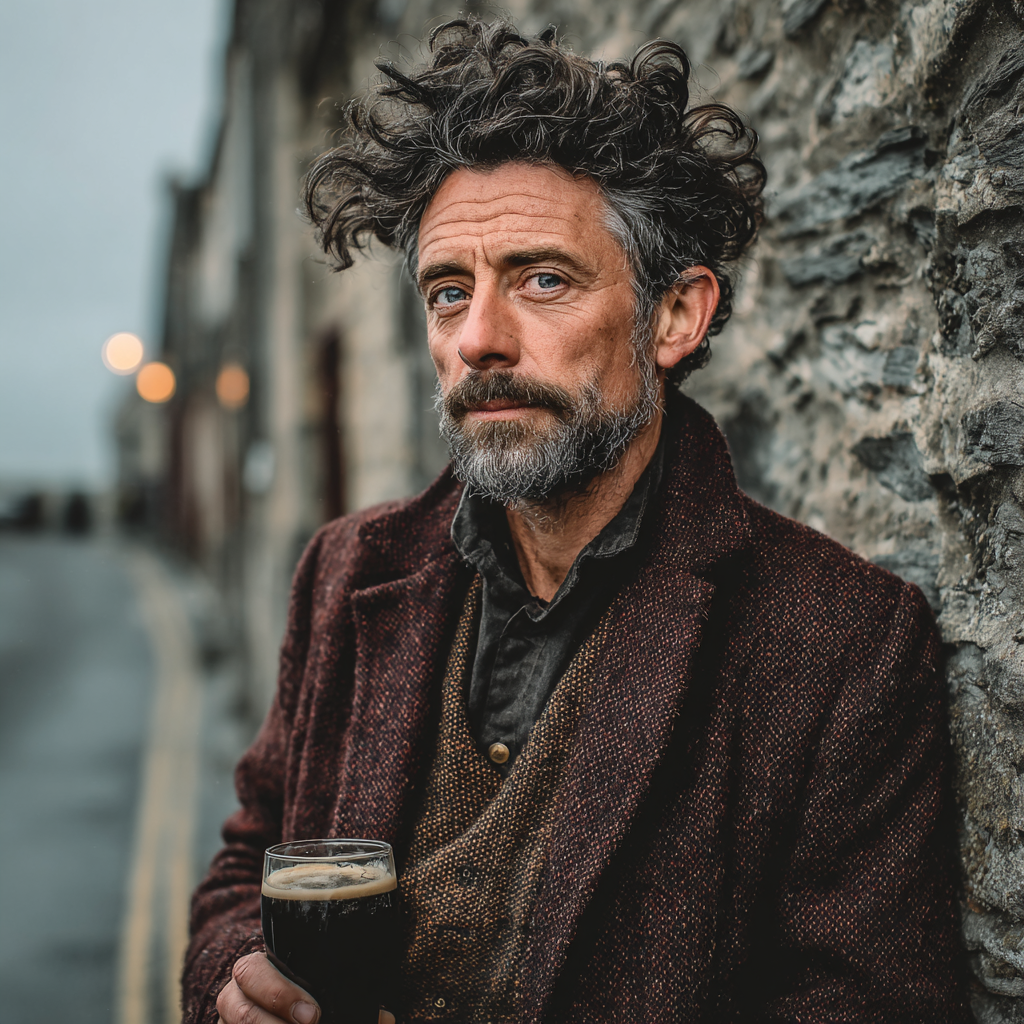
By Finn O'Sullivan
Irish storyteller and folklorist. Finn hunts for the narratives that do not make guidebooks—the pub legends, the family feuds, the neighborhood heroes. He believes every street corner has a story if you know who to ask.