
Cairo Beyond the Pyramids: Where 2,600 Years of History Still Breathes on Every Corner
Elena Vasquez
Cairo is not a city you visit. It is a city that visits you—through the dust that coats your shoes within an hour of landing, the call to prayer that fractures the morning air at dawn, the diesel fumes that taste of cumin and burnt rubber and something else, something ancient. Twenty million people navigate this urban labyrinth daily, moving through layers of history so dense they become geography itself. The pyramids sit at the edge of the desert like a geological feature, postcard-perfect and strangely detached from the chaos below. But the real Egypt—the one that breathes and argues and negotiates in cramped coffee shops, that simmers lentils for twelve hours in alleyway kitchens, that carries grief and joy with equal theatricality—unfolds in the streets below.
I have spent months walking these neighborhoods at different hours, learning which bakeries pull their first baladi bread from wood-fired ovens at 4 AM, which tea men have occupied the same sidewalk corner for thirty years, where to find the fava bean vendor who remembers your order from yesterday. Cairo does not reveal itself quickly. It demands repetition, patience, a willingness to be disoriented. This guide is for travelers who want to understand what they are seeing, not just photograph it.
The Islamic Quarter: Where the Medieval City Still Functions
Most visitors glimpse Islamic Cairo from a tour bus window, registering it as a decorative backdrop of minarets and domes against a hazy sky. This is a profound mistake. Enter through Bab al-Futuh, the northern gate built in 1087 by the Fatimid commander Badr al-Jamali, and you walk into a city that has operated continuously for nearly a thousand years. The stone is the same stone. The street pattern predates European urban planning by centuries.
Narrow lanes funnel pedestrians past buildings that house three generations in warrens of rooms, small factories where men shape copper by hand over open flames, workshops where teenage apprentices learn the same leatherworking techniques their great-grandfathers practiced before the Suez Canal existed. The architecture is not preserved for tourists. It is maintained because it works, because these families have nowhere else to go, because the rent—if it is paid at all—amounts to pocket change by modern standards.
Al-Azhar Mosque anchors the quarter, founded in 970 and still operating as one of the world's oldest continuously running universities. Non-Muslims can enter the courtyards during non-prayer hours—roughly 9 AM to noon and 2 PM to 4 PM, though times shift with the prayer schedule. The madrasa attached to the mosque has trained Islamic scholars for over a millennium, and the current curriculum would be recognizable to students from the Fatimid period. Admission is free, though modest dress is strictly required—shoulders and knees covered for all genders, and women should bring a headscarf. The marble floors are cold even in summer; wear socks or prepare to dance on your heels.
Khan el-Khalili, the market that fills the heart of the quarter, began as a caravanserai in 1382 under the Mamluk Sultan Barquq. The current stalls sell everything from plastic kitchenware to gold jewelry to knockoff Manchester United jerseys, but the structure of commerce remains medieval. Bargaining is not optional; it is the social contract, a performance of mutual respect that must be enacted. Start at 40% of the asking price and expect to settle around 60-70%. The shopkeepers in the inner courtyards, where tourists rarely venture, still craft brass lanterns and mother-of-pearl inlay boxes using techniques passed through families for six centuries. Ask for Mohammed al-Soussi in the copper workers' alley—his grandfather made fixtures for the Shepheard's Hotel before it burned.
El Fishawi Cafe, tucked into a corner of the bazaar at 12 El Moez Li Din Allah Street, has operated since 1773. The mirrors are clouded with age, the wooden benches polished by two and a half centuries of patrons. This is not a reproduction of old Cairo; it is old Cairo continuing. Order mint tea (15 EGP) and sheesha (40-60 EGP) and watch the bazaar flow past. Naguib Mahfouz wrote sections of his Cairo Trilogy here, and the waiters will tell you which table he preferred if you ask politely.
The Wikala of al-Ghuri, a 16th-century merchant hostel at Al-Azhar Street near the mosque of the same name, hosts Sufi dance performances on Wednesday and Saturday evenings. The spinning dervishes perform at 8:30 PM; tickets cost around 90 EGP and must be purchased in advance at the nearby al-Ghuri Complex. The performance is authentic religious practice, not tourist entertainment—these are members of the Qadiriya order who have trained for years to achieve the trance state through circular movement. Arrive by 7:45 PM to secure a seat on the wooden benches. Photography without flash is permitted.
What to eat nearby: Felfela, at 15 Talaat Harb Street just on the edge of the Islamic Quarter, has served taameya (Egyptian falafel made with fava beans, not chickpeas) and ful medames since 1959. A breakfast of ful, taameya, fresh baladi bread, and tea costs around 35 EGP. For something more substantial, Koshary El Tahrir at 16 Champollion Street serves Egypt's beloved carb-tower of rice, pasta, lentils, chickpeas, fried onions, and tomato-vinegar sauce. A large bowl runs 40-50 EGP and feeds two.
Coptic Cairo: The Egypt Before Islam
Beneath the noise and density of modern Cairo lies an older city. Take the Metro to Mar Girgis station and surface into a walled enclave that contains some of Christianity's oldest surviving sites. This is Misr al-Qadima, Old Cairo, and it feels like stepping through a portal.
The Hanging Church (El Muallaqa), built atop the Roman fortress of Babylon in the 7th century, hangs suspended above the ancient gate. Enter from the courtyard and climb the twenty-nine steps—children count them every Sunday—to the nave. The wooden roof resembles an inverted ark, a symbolic choice dating to when Egypt's Christians saw themselves as surviving a flood of persecution. The 13 pillars in the nave represent Christ and the twelve apostles; twelve are dark marble, one is light, representing Judas replaced by Matthias. The iconostasis dates to the 13th century, and the icons themselves represent a continuous tradition of Coptic art that predates Western religious painting by centuries. Open 8 AM to 4 PM daily; admission is free though donations are welcomed. The guard, an old man named Girgis, has worked here for forty years and knows the history of every icon.
Below street level, the Church of St. Sergius and Bacchus (Abu Serga) occupies a cave where tradition holds the Holy Family hid during their flight into Egypt. Archaeological evidence confirms Roman occupation of the site, and the current structure dates to the 8th century. The baptismal font is original—Christian initiates have been submerged in that stone basin for 1,200 years. The water comes from a well that predates the church. The space is small, damp, and profoundly quiet. Remove your shoes before entering.
The Coptic Museum, housed in a mansion built in 1910 at 3 Mari Girgis Street, contains the world's largest collection of Christian artifacts from Egypt. The textiles collection is particularly significant: fragments of 4th-century tunics with pagan and Christian motifs woven together, documenting the period when Egypt's religion was in transition. The Nag Hammadi codices, containing Gnostic texts that challenge orthodox Christian history, were housed here before their controversial publication. Admission is 100 EGP; the museum opens at 9 AM and closes at 5 PM, with last entry at 4:15 PM. The garden cafe serves acceptable coffee and excellent shade.
Downtown Cairo: The European Experiment That Refused to Die
Khedive Ismail visited Paris in 1867 and returned determined to build an African Paris on the Nile. The result is Downtown Cairo (Wust al-Balad), a grid of belle époque buildings that now serves as the city's commercial and cultural engine, its facades crumbling but its pulse strong.
The architecture tells the story of Egypt's 19th-century modernization project. The Cinema Metro, built in 1939 at 35 Talaat Harb Street, still screens films—mostly Arabic-language productions now, though the Art Deco interior with its curved balconies and gilt detailing remains intact. Tickets cost 50-75 EGP. The program changes weekly; check the handwritten posters outside.
Cafe Riche, at 17 Talaat Harb Street, has operated since 1908. This is not a themed restaurant. It hosted the meetings where revolutionaries planned the 1919 uprising against British rule and the 1952 coup that ended the monarchy. The waiters have worked there for decades; ask about the secret back room where Naguib Mahfouz wrote sections of his Cairo Trilogy and where Umm Kulthum once sang for a private party. The coffee is dark and strong (25 EGP), the atmosphere unchanged since the 1940s. Go in the late afternoon when the light cuts through the dusty windows at an angle that makes you feel you have stepped into a black-and-white film.
Talaat Harb Street itself, named for the economist who founded Egypt's first national bank, now hosts shoe stores and mobile phone shops at street level, with the original Beaux-Arts facades crumbling above. Many buildings are structurally unsound; you can see exposed rebar and splitting columns on structures that should have been condemned decades ago. Preservation efforts move slowly against the pressure of real estate speculation. But look up: the cornices, the balustrades, the cartouches with Arabic and French inscriptions—these details reward attention.
The Egyptian Museum sits at the edge of Downtown in a pink stone building constructed in 1902 at Tahrir Square. The collection—120,000 artifacts on display, with another 200,000 in storage—includes the Tutankhamun treasures and the Royal Mummy Room. The display methods are archaic: objects crowded into cases with typewritten labels in Arabic and English, the building itself leaking during rainstorms. A new museum is opening in Giza, but this chaotic repository has its own strange power. You are seeing these objects as archaeologists saw them—piled, dusty, overwhelming, without the curated reverence of modern museum design. Admission is 200 EGP; the mummy room costs an additional 180 EGP. Open 9 AM to 5 PM, with extended hours until 9 PM on Thursdays. The museum shop sells excellent reproductions of jewelry from the Tutankhamun collection.
Sequoia, at 53 Abu El Feda Street in Zamalek (the diplomatic quarter on Gezira Island, a short taxi ride from Downtown), offers upscale Nile-side dining in a breezy, lantern-lit pavilion. The mezze platter (280 EGP) spans the Mediterranean—baba ghanoush, hummus, muhammara, marinated olives. Come at sunset when the call to prayer echoes across the water and the city lights begin to flicker on. Reservations recommended after 7 PM.
Zamalek: The Leafy Other Cairo
Most visitors never cross to Gezira Island, and this is their loss. Zamalek, the northern half of the island, was built as a garden suburb for Cairo's elite in the early 20th century and retains a character unlike anywhere else in the city. Jacaranda trees line the streets. The Arabic Language Institute offers intensive courses in a villa with a garden. Art galleries cluster on Hassan Sabry Street.
The Cairo Opera House at the southern tip of the island hosts ballet, orchestral music, and Arabic pop concerts in a modern complex built with Japanese funding after the original 1869 opera house burned in 1971. Tickets range from 75 EGP for balcony seats to 400 EGP for premieres. The program is unpredictable—check the website or the bulletin board outside the box office.
Diwan Bookstore at 159 26th July Street is Cairo's best English-language bookshop, with a curated selection of Egyptian literature in translation, architecture books, and novels by Mahfouz, Alaa Al Aswany, and Ahdaf Soueif. The cafe upstairs serves decent espresso and plays jazz. A good refuge when the city overwhelms.
La Bodega, at 6 El Shagaret El Dor Street, occupies a 1920s apartment building and serves what might be the best steak in Cairo (450 EGP for a ribeye) alongside a wine list that includes Lebanese and Egyptian vintages. The crowd is journalists, diplomats, and old-money Cairenes who have been coming here since the 1990s. The walls are covered in vintage movie posters and black-and-white photographs of Downtown in its heyday.
The City of the Dead: Living Among the Tombs
North of the Islamic Quarter, the desert contains an estimated half-million tombs dating from the 7th century to the present. Between 500,000 and 1 million people live among them. This fact usually shocks visitors. It should not.
The City of the Dead (al-Qarafa) has been inhabited for centuries—caretakers, Sufi devotees, and families who could not afford housing elsewhere have always found shelter in the mausoleums. The current population explosion dates to the 1950s, when rural migrants began squatting in the structures. Now there are power lines, small shops, coffee houses, and a functioning community complete with schools and clinics. Children play soccer in the avenues between tombs. Weddings are held in the courtyards of 15th-century mausoleums.
Visiting requires sensitivity. These are people's homes, not a theme park. The Northern Cemetery contains the most architecturally significant tombs, including the massive complex of Sultan Qaitbay from 1474, whose stone dome is a masterpiece of Mamluk engineering. The area is generally safe during daylight hours, though women should not visit alone. Guides are available at the main entrance; expect to pay 200-300 EGP for a two-hour walk. The best time is early morning, before the heat builds and when the light is soft on the stone.
The people here are not zoo exhibits. Ask permission before photographing. If invited for tea, accept. The mint will be fresh, the sugar excessive, the conversation surprising.
Contemporary Cairo: Where the Revolution Still Echoes
Tahrir Square sits at the city's geographic center, and the 2011 revolution that removed Hosni Mubarak unfolded here. The square has remained a contested space ever since. The government has rebuilt the central traffic circle multiple times to prevent mass gatherings; the current configuration includes barriers and observation posts. The Egyptian Museum's facade still bears pockmarks from the battles.
The surrounding streets tell a different story. The Townhouse Gallery, founded in 1998 at 10 Nabrawy Street off Champollion Street, continues to exhibit contemporary Egyptian artists despite repeated government closures. The Rawabet Theater in the same complex hosts independent productions in a converted warehouse. Check their Facebook page for current exhibitions; most openings are free and happen Thursday evenings, when Cairo's art crowd circulates with plastic cups of warm white wine.
The Cairo Jazz Club, at 197 26th July Corridor in Agouza (just west of Zamalek), opened in 2001 and books local bands playing everything from shaabi street music to experimental electronica. A beer costs 60-80 EGP; cover charges range from 100-200 EGP depending on the act. The crowd is young, cosmopolitan, and dressed in ways that would raise eyebrows in the Islamic Quarter. Go on a Tuesday for the open jam session.
The contemporary art scene operates under constraints. Censorship is unpredictable—a work that passes review one month may be banned the next. Artists have developed coded visual languages to address politics without triggering official response. The annual Cairo International Film Festival, founded in 1976, remains a significant regional event, though it has faced funding challenges in recent years. Screenings happen at multiple venues across the city; tickets run 75-150 EGP.
What to eat: For a meal that spans classes and centuries, visit Koshary Abu Tarek at 16 Champollion Street in Downtown. The original location, opened in 1950, has expanded into a multi-story restaurant but retains its chaotic, communal energy. Order the large koshary (50 EGP) with extra daqqa (the spicy tomato-vinegar sauce) and watch the servers layer your bowl with theatrical precision from giant metal vats. This is Egypt's national dish, invented in the 19th century as a cheap way to feed laborers, now beloved by everyone from taxi drivers to cabinet ministers.
What to Skip
The Sound and Light Show at the Pyramids. Overpriced (300+ EGP), underwhelming, and narrated in a dramatic baritone that makes the Sphinx sound like a B-movie villain. The pyramids are magnificent at dawn or dusk without the lasers.
Papyrus "museums" near the pyramids and in tourist hotels. These are souvenir shops with a ten-minute lecture. The papyrus is mostly printed banana leaf, not authentic. If you want real papyrus, visit the Papyrus Institute at 114 Tahrir Street, Downtown, where you can watch artisans work and buy certified pieces with documentation.
Felucca rides on the Nile at sunset from the docks near the Four Seasons. The touts are aggressive, the prices inflated (expect to pay 300-500 EGP for what should cost 100), and the experience is identical to what you get from any riverside cafe without the harassment. If you must sail, negotiate at the public docks south of the Corniche in Maadi.
The Citadel's Muhammad Ali Mosque. While the Citadel itself is historically significant, this particular mosque is a 19th-century Ottoman restoration, heavily European-influenced and lacking the authentic character of Cairo's older Islamic architecture. Visit for the view, but spend your architectural attention on the mosques of the Islamic Quarter.
Khan el-Khalili's main tourist drag. The shops facing the main alleys sell the same mass-produced brass, perfume bottles, and stuffed camels you find at every airport in the Middle East. Push into the inner courtyards and perpendicular alleys for the real craftsmen.
Any restaurant with a menu in six languages and a tout outside. If someone is paid to pull you in, the food is mediocre and overpriced. Trust places where Egyptians queue.
Practical Cairo: What You Need to Know
Getting Around: The Metro costs 5-10 EGP depending on distance. It is efficient, crowded, and operates from roughly 5 AM to midnight. Women have dedicated cars at the front of each train; men who enter these cars face fines. During rush hour (7-9 AM, 4-7 PM), the cars are packed to capacity—plan around these times if possible. Uber and Careem operate in Cairo and are generally reliable; a cross-town trip costs 50-150 EGP depending on traffic. White taxis exist but require negotiation; insist on the meter or agree on a price before entering. The city has no bus system that visitors can practically use. Walking is possible in Downtown, Zamalek, and parts of the Islamic Quarter, but distances are large and the heat is serious from May through September.
Safety: Street harassment of women is persistent and documented. Dress conservatively—loose clothing that covers shoulders, chest, and knees. Ignore catcalls; responding escalates the situation. Political discussions with strangers are unwise; the security services monitor conversations, and foreigners have been detained for social media posts. Avoid demonstrations and crowds that appear to be gathering for political purposes. The most common danger is traffic—Cairo has one of the world's highest rates of pedestrian accidents. Look both ways, then look again. Motorcycles drive on sidewalks.
Timing: Ramadan moves through the calendar according to the lunar cycle. During this month, most restaurants close during daylight hours, and the city shifts to a nocturnal schedule. If you visit during Ramadan, expect traffic at 3 AM and empty streets at noon. The Islamic New Year and Eid holidays also affect opening hours. The coolest months are December through February, when temperatures hover around 20°C and rain is possible (Cairo's "winter" is brief but real). March-April brings the khamaseen, hot winds carrying sand from the Sahara that turn the sky orange and irritate throats. May through September is genuinely hot—35-45°C—and sightseeing should be concentrated in early morning and late afternoon.
Money: Cash dominates. Many establishments do not accept cards; ATMs frequently run out of money or dispense only 200 EGP notes when you need thousands. Bring crisp US dollars or euros to exchange at official bureaus; worn or torn bills will be rejected. Tipping is expected—10% at restaurants, 5-10 EGP for bag handling, 20 EGP for restroom attendants. Carry small change; vendors will claim to have none.
Friday: The Islamic weekend. Most museums close; the city slows until after the noon prayer. Plan outdoor activities or rest. The Islamic Quarter comes alive after 2 PM as families visit the mosques and markets. Many Coptic churches hold services Friday morning as well, and the sound of ancient liturgical Arabic mixes with the call to prayer in ways that remind you this city has always been layered.
Health: Tap water is technically treated but pipes are old; drink bottled water (5-10 EGP for 1.5L). Street food is generally safe if it is cooked in front of you and served hot. The khamaseen winds can trigger respiratory issues; carry a scarf to cover your nose and mouth. Hospitals in Zamalek and Mohandessin meet international standards; avoid public hospitals if possible.
Language: Arabic is the official language. English is widely spoken in hotels, restaurants, and shops that cater to tourists. Learning a few phrases—shukran (thank you), la shukran (no thank you), bikaam (how much), min fadlak (please)—will improve your experience and reduce prices by 20-30%.
Cairo rewards patience and punishes hurry. The man who sells tea from a brass samovar on a street corner has likely occupied that corner for thirty years; the pattern of his day connects to patterns established when Mamluk sultans ruled from the Citadel. You cannot see all of this. You can only accept that you are moving through a depth of time that makes tourism feel like a shallow word. The city will frustrate you, exhaust you, maybe frighten you. But if you stay long enough to stop fighting it, Cairo will show you something no other city can: history not as a monument, but as a living, arguing, tea-drinking, bread-baking, continuously unfolding present.
Elena Vasquez is a travel writer specializing in culture, history, and the food traditions that connect them. She has spent six months in Cairo over multiple visits and still gets lost in the Islamic Quarter.
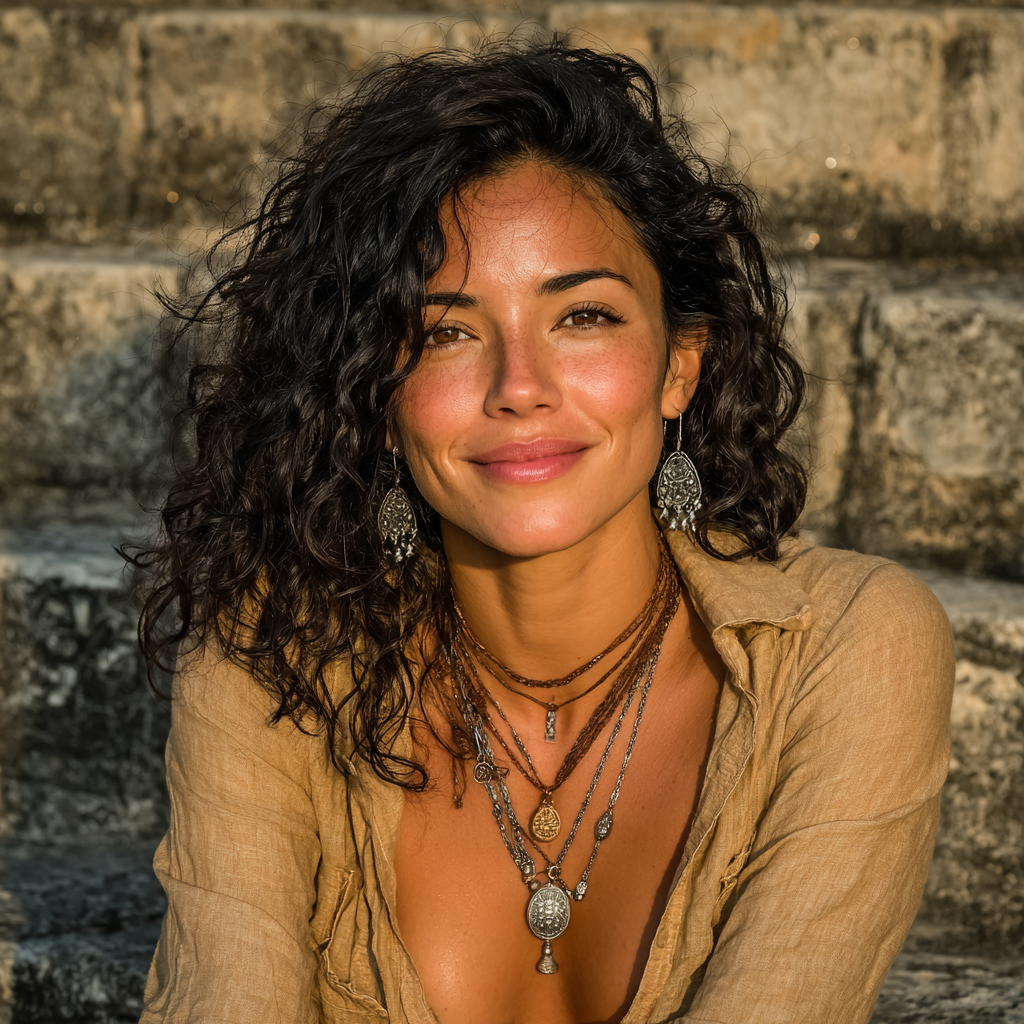
By Elena Vasquez
Cultural anthropologist and culinary storyteller. Elena spent a decade documenting traditional cooking methods across Latin America and the Mediterranean. She holds a PhD in Ethnography from Barcelona University and believes the best way to understand a place is through its kitchens and ancient streets.