
Mindo is not a town you stumble into. It is a town you choose because you have already decided that 450 bird species matter more than paved sidewalks and that a cloud forest at 1,300 meters is worth the two-hour crawl from Quito on a road that halves its width every time it rains. The village sits inside the Mindo-Nambillo Cloud Forest Reserve, a fragment of the Chocó biodiversity hotspot that runs from Panama to northern Peru. Annual rainfall is about 3,000 millimeters. The mist does not lift. It simply thins enough for you to see the next hummingbird.
I arrived in January, the dry season, though "dry" in Mindo means it rains for four hours instead of eight. The town itself is a single main street with a handful of lodges, chocolate shops, and tour agencies. Population is roughly 2,500. You can walk across it in twenty minutes. Most visitors come as day-trippers from Quito, which is a mistake. The cloud forest does not reveal itself in daylight hours. It reveals itself at 5:30 AM, when the violet-tailed sylph is dipping into a feeder and the toucan barbet is calling from a balsa tree. Stay at least two nights. Three is better.
**The Birds
Mindo is the most accessible piece of the Chocó for anyone who wants to see what an intact cloud forest bird community looks like. The Chocó has 70 endemic species, and many of them are here. The Andean cock-of-the-rock, a bright orange bird that looks like a squashed fruit, gathers at leks along the Milpe Road at dawn. The best-known lek is at a site called Sachatamia, about 15 minutes from town by taxi. Entry is $10. Arrive before 6:00 AM. The males display from November through April, though they are present year-round.
The hummingbirds are the main event. At feeders behind lodges like Septimo Paraiso and Sachatamia, you can see ten species in an hour: velvet-purple coronet, brown inca, purple-bibbed whitetip, booted racket-tail. The velvet-purple coronet is the one people photograph until their memory cards fill. It is aggressive, territorial, and deeply metallic. Bring a lens that can focus at two meters. The feeders are active from 6:00 AM to 4:00 PM, though the best light is between 7:00 and 9:00 AM.
The toucan barbet, with its green body and red breast, is the loudest bird in the forest. It travels in pairs and calls continuously. You will hear it before you see it. The plate-billed mountain toucan, another Chocó endemic, is harder to find. Your best chance is along the Las Tangaras Reserve road, a 45-minute drive from Mindo, where the forest is older and the canopy higher. Las Tangaras charges $15 entry and requires advance booking. I saw three plate-billed mountain toucans there in one morning.
For serious birders, the Milpe Bird Sanctuary and the Yellow House Trails are the two sites to prioritize. Milpe is 30 minutes from Mindo, entry $10, and holds species like the moss-backed tanager and the glistening-green tanager. Yellow House is closer to town, entry $8, and has easier terrain. Both open at 6:00 AM. Hire a local guide. Rates run $40 to $60 for a half-day, and the difference between a guided morning and a solo morning is about thirty species. Guides are booked through the Mindo tourism office on the main street or directly through lodges.
**The Forest Beyond the Feeders
The Nambillo Waterfall Sanctuary is the most popular hike, and for good reason. The trail follows the Nambillo River through primary forest to seven waterfalls. The round trip takes three to four hours. Entry is $5. The water is cold, roughly 16 degrees Celsius, and the pools beneath the falls are deep enough to jump into from the rocks. I jumped from the third waterfall, a drop of about four meters. The trail is well-marked but slippery. Proper hiking shoes are not optional here. Flip-flops will send you home in a taxi.
The canopy is accessible through several zip-line and canopy tower operations. I am not enthusiastic about zip-lines in protected areas. The noise scares birds, and the infrastructure requires tree trimming. That said, the towers at Sacha Kusikusa and nearby lodges are passive and genuinely useful for spotting canopy species like the white-winged tanager and the masked trogon. If you must zip-line, use one of the smaller operators on the edge of town rather than the large canopy tour that runs sixteen parallel cables. The smaller operations have less impact and charge $15 to $20 for five cables, half the price of the main outfit.
**The Chocolate
Mindo sits in the upper basin of the Ecuadorian cacao-growing region. The Nacional variety, which geneticists now recognize as a distinct strain with floral and nutty notes, grows at these elevations. Several operations offer chocolate tours. The one at El Quetzal, on the main street, is the most established. The tour costs $10, lasts 90 minutes, and walks you through fermentation, drying, roasting, and tempering. You taste at every stage. The raw cacao is bitter and tannic. The finished 70% bar is floral and smooth. El Quetzal's shop sells bars for $6 to $8, which is expensive by Ecuadorian standards but fair given the small-batch production.
A more agricultural experience is available at smaller farms on the road toward Los Bancos. These charge $5 to $8, have less polished presentations, and often include a walk through a working cacao plot. I visited one called Finca Gary, booked through the tourism office. The owner, a third-generation grower, explained how the arrival of the monilia fungus in 2016 forced him to switch from bulk export to fine-flavor production. His 85% bar was the best chocolate I tasted in Ecuador.
**Where to Stay
Mindo's accommodation is mostly eco-lodges, and the quality varies enormously. The most established is Septimo Paraiso, about 2 kilometers outside town on the road to Las Tangaras. It has 32 rooms, a private reserve of 200 hectares, and feeders that attract 22 hummingbird species. Rates run $90 to $120 per night for a double, including breakfast. The rooms are simple but the location is unmatched. You can bird from the porch.
Sachatamia Lodge is closer to town, about 500 meters from the main street, and cheaper at $60 to $80 per night. It has a glass-walled restaurant that looks directly into the forest. I ate breakfast there while a masked flowerpiercer worked over a banana flower three meters from the window. The rooms are smaller than Septimo Paraiso and the reserve is only 30 hectares, but the birding is still excellent.
For tighter budgets, Dragonfly Inn and Mindo Real are in the town center and charge $25 to $40 per night. They are basic, clean, and close to restaurants. You lose the forest immersion, but you gain reliable Wi-Fi and hot water. Both can book guides and transport.
The best sustainable option is Cabañas Armonia, a family-run lodge 3 kilometers from town that runs on solar power, composts waste, and sources 80% of its food from its own organic farm. Rates are $50 to $70. The rooms are cabin-style, with wood stoves for the cold nights. Temperatures drop to 12 degrees Celsius after dark, and humidity is constant. You will need a sweater and a rain jacket regardless of the season.
**Getting There and Around
There is no airport. Everyone arrives from Quito. The drive is 80 kilometers and takes two to three hours depending on landslides. The road is paved but narrow, with hairpin turns after Calacalí. Public buses leave Quito's Ofelia terminal at 8:00 AM and 3:00 PM daily. The fare is $3.50. The bus drops you on the main street. Taxis from Quito cost $50 to $60 and can be arranged through any lodge.
Inside Mindo, everything is walkable. Taxis to outlying reserves cost $10 to $20 one way, depending on distance. Most lodges include transport to their own trails. If you are visiting multiple sites, negotiate a half-day rate with a driver. $30 to $40 is standard.
**What to Skip
The main canopy zip-line operation with sixteen cables is overcrowded, noisy, and overpriced at $35. It attracts day-tripper groups from Quito who treat the forest like an amusement park. The constant shouting scares birds for hundreds of meters. Use the smaller operators or skip zip-lining entirely.
The butterfly farm near the town entrance is underwhelming. The species are common, the enclosure is small, and the $8 entry is not justified. If you want lepidoptera, ask your bird guide to point out clearwing butterflies along the forest trails. They are free and more interesting.
tubing on the Mindo River is popular with the day-trip crowd. The tubes are cheap at $5, but the water is cold, the current is weak, and the scenery is just riverbank vegetation. You will see more interesting riparian habitat by walking the Nambillo trail.
The town's restaurants are largely mediocre. Most serve generic Ecuadorian fare at inflated tourist prices. The exception is the chocolate shops, which are genuinely good, and a small place called El Chef that does a decent trout in garlic sauce for $8. Eat breakfast at your lodge if possible. Dinner is best cooked yourself if you have kitchen access, or head to the comedor near the bus stop where locals eat. The set lunch there is $3.50 and the soup is better than anything on the main street.
**The Hard Truth
Mindo is not perfect. The cloud forest is under pressure from agriculture on its edges, particularly cattle pasture and African palm oil plantations that creep up the valleys. The town's waste management struggles with tourist volume. The river carries plastic after heavy rains. The eco-lodge label is applied liberally by places that are simply hotels in the forest.
But the core reserve is still intact, the birding is genuinely world-class, and the community-based tourism model is more developed here than in most of Ecuador. The local guides are trained through a cooperative that shares revenue. The lodges employ from the village. The chocolate operations buy directly from smallholders. It is not pristine, but it is functional.
**The Practical Close
The best months are January through April, when rainfall is lower and the cock-of-the-rock is displaying. May through August is wetter but still birdable. September and October are the rainiest; trails become rivers and landslides close the road from Quito unpredictably. Avoid weekends if you can; the day-tripper traffic from Quito doubles the town's population from Friday evening through Sunday afternoon.
Pack a rain jacket, a warm layer, hiking shoes with grip, and binoculars. Camera with macro capability for hummingbirds. Cash in small bills; many lodges and small restaurants do not take cards. And book your lodge at least two weeks ahead in high season. The good ones fill fast, and the bad ones stay open for a reason.
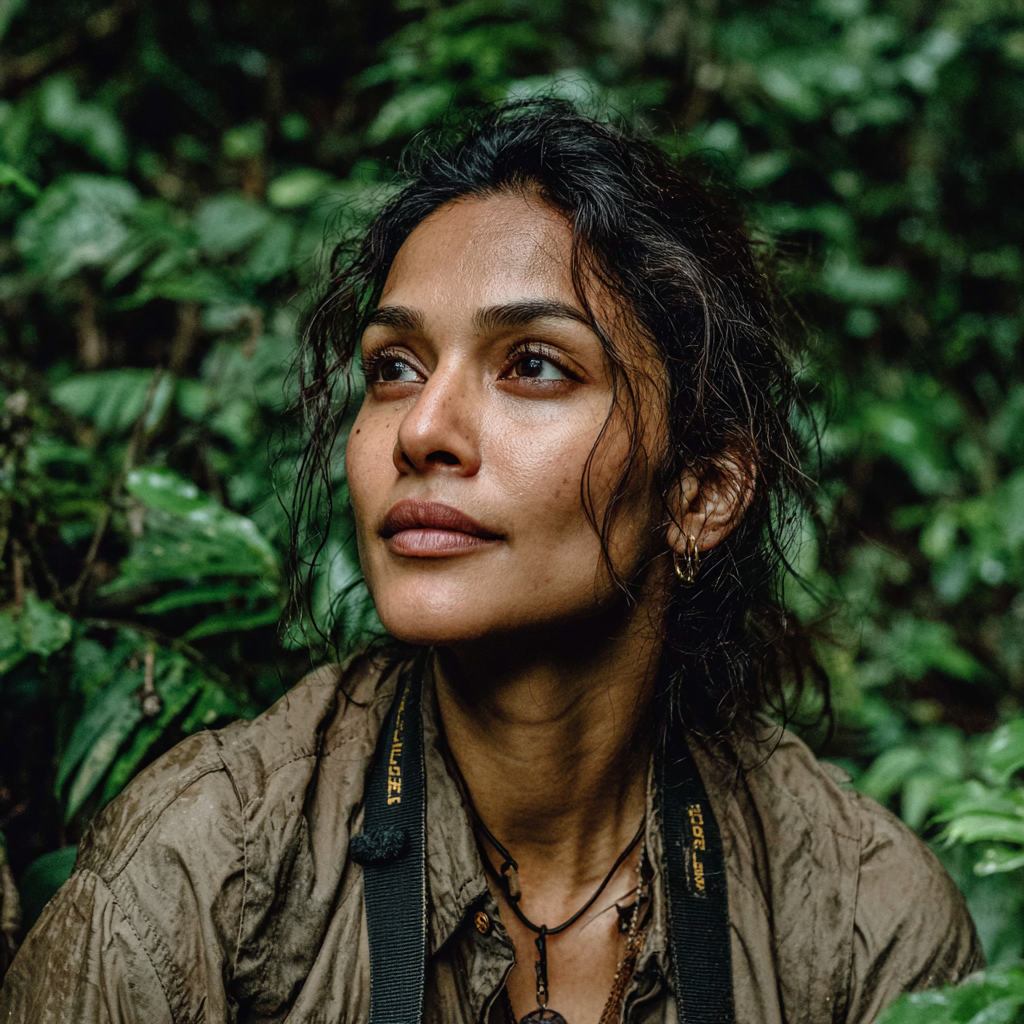
By Priya Sharma
Conservation biologist and sustainable tourism advocate. Priya works with eco-lodges and wildlife sanctuaries to promote ethical travel practices. She holds an MSc in Biodiversity Conservation and has spent years tracking endangered species across the Indian subcontinent.