
Djibouti: Where Whale Sharks, Salt Flats, and Volcanic Chimneys Redefine What Desert Travel Means
A sustainable travel guide to Djibouti: swimming with whale sharks at Arta Bay, floating in Lake Assal, camping among the chimneys of Lac Abbe, and budgeting honestly for one of the least-visited countries on Earth.
On this page
Priya Sharma has spent a decade reporting on wildlife tourism and what it gets wrong. She has tracked elephants in Botswana, tagged along with reef rangers in the Philippines, and now writes about the places where a traveler's dollar can either protect something or help destroy it. She believes the best wildlife experiences are the ones the animals would still be having if no one was watching.
---
Most people cannot place Djibouti on a map. It is a thumb-sized country wedged between Ethiopia, Eritrea, and Somalia, facing Yemen across the Bab-el-Mandeb strait. The French Foreign Legion trains here. The Americans, Chinese, and Japanese all have military bases. What most travelers do not know is that this tiny nation also holds the lowest point in Africa, one of the largest seasonal gatherings of whale sharks on the planet, and a landscape so strange that standing in it feels like a software error.
I came for the whale sharks and stayed for the geology. Djibouti sits at the Afar Triple Junction, where three tectonic plates are actively pulling the continent apart at roughly two centimeters a year. That process built the rift valleys, the volcanoes, the boiling springs, and the salt — and it is still running. Nothing here is landscaped, signposted, or managed for visitors. There are no all-inclusive resorts, no cruise ships, no souvenir shops. There is a wild country with almost no tourism infrastructure, a handful of Afar and Somali communities trying to build something from it, and a conservation window that will not stay open forever. Go before the world discovers it, and go in a way that keeps the money with the people who live there.
Swimming with Whale Sharks at Arta Bay
The whale sharks arrive between November and February, sometimes as early as late October. They come to the Gulf of Tadjoura to feed on the plankton bloom, and Arta Beach, roughly 45 minutes to an hour east of the capital by boat, is the launch point. These are the largest fish in the world, regularly reaching 10 to 12 meters. The water is warm, visibility runs 10 to 20 meters, and the sharks are serenely indifferent to humans.
The important detail: they are not fed or baited. This is not a cage dive or a theme park. You slip off the side of the boat and swim alongside an animal whose lineage is about 60 million years old, in water visited by a few boats a day at most. Because there is no chumming, encounters are genuinely wild — some days you swim with three sharks in an hour, some days the sea is quiet. That uncertainty is the price of authenticity, and it is a fair trade.
Local operators run day trips of six to seven hours, usually including lunch and snorkeling gear. A seat on a group boat runs around $80 to $120 per person; Dolphin Excursions, one of the longest-running local outfits, schedules group departures mainly on Fridays and Saturdays (about $110 for snorkeling, more with scuba). If your dates do not align, a private boat for up to six people costs from about 60,000 DJF (~$340) for the group — split it with other travelers at your hotel and the price drops fast. Combination day tours pairing the morning shark session with Lake Assal are sold on international platforms from around €296 per person, which is convenient but nearly double what you will pay booking direct once you land. Book through your hotel concierge or WhatsApp a local operator a few days ahead; there are no walk-in ticket booths at Arta.
One request from everyone who works this coast: no touching, no chasing, no flash photography. The sharks stay because the bay stays calm. The operators enforce the rules because their livelihood depends on the animals coming back — this is exactly how community-based wildlife tourism is supposed to work, so follow it.
Lake Assal: The Lowest Point in Africa
Lake Assal sits about 155 meters below sea level, the lowest point on the African continent and among the lowest depressions on Earth. It lies 120 kilometers west of Djibouti City on a paved road that cuts straight across the Grand Bara, a bleached pan of cracked white clay that was once a lakebed — and, improbably, a designated Space Shuttle emergency landing strip. The drive takes about 90 minutes direct, longer if you stop, and you should stop.
About 40 minutes in, the road drops to the Ghoubbet el Kharab, "the pit of darkness," a deep basalt bay where the Arabian plate is tearing away from the African plate. Walk the Canyon Adaleh (sometimes signed as Dimbia) down to the water, then continue to Ardoukoba volcano, a black cinder cone that last erupted in 1978. There is a marker where you can stand astride the rift with one foot on each plate.
Then the lake itself: a crater of hypersaline water ringed by a salt field up to 60 meters deep, with dormant volcanoes behind it. The water is roughly ten times saltier than the ocean. You float without trying. Every scratch and shaving cut on your body will announce itself. Bring at least three liters of fresh water per person to rinse — there are no facilities, no entrance fee, no shade, and no vendors. None. Go at dawn if you can; by midday the heat bouncing off the white salt is genuinely dangerous, and by afternoon a wind often whips the surface into a stinging spray.
Local Afar families have harvested this salt for centuries, cutting slabs by hand and loading camel and donkey caravans for the slow week-long walk into Ethiopia. You will see the caravans near the shore. Buying a chunk of salt or paying a small tip for photos puts money directly in their hands — do it.
Logistics: there is no public transport. A guided day trip with transfers costs about €70 per person in a shared group, or 15,000 to 20,000 DJF (~$85–115) arranged locally; international operators quote from $275 for private versions. Any driver in the capital knows the route, but a guide earns the fee at Ghoubbet, where the geology needs translating.
Lac Abbé: Where the Earth Is Tearing Apart
Lac Abbé is stranger than Assal, and harder to reach. It sits on the Ethiopian border at the point where three plates — African, Arabian, Somali — meet and writhe apart. The five-to-six-hour drive south crosses the Grand Bara and the black lava plains of Gobaad, with the last 80 kilometers on rough track through the villages of As Eyla and Koutabouya. The lake covered more than 550 square kilometers in 1939; diversion of Ethiopia's Awash River has shrunk it to under 150. What remains is a surreal, blinding-white shore ringed by hundreds of limestone chimneys, some 50 meters tall, built by mineral-rich steam venting from underground thermal fields. Some still smoke. Hot springs bubble at their bases. Flamingos work the shallows, donkeys commute unaccompanied to grazing grounds each morning, and Afar shepherds move flocks through a landscape that looks engineered for a film about another planet.
The single-day version of this trip exists (some operators advertise it from $79) and it is a mistake. Six hours each way for ninety minutes at the lake does the place no justice and you will arrive at the worst light. Do it properly: an overnight at the Afar-run camp on the shore. The camp is basic — woven-grass huts, cots with thin mattresses, mosquito nets with variable integrity, shared showers and toilets, electricity off by about 8 pm, dinner and breakfast included for around 10,000 DJF (~$55) per person. Bring a headlamp, a warm layer for the surprisingly cold night, your own towel, and realistic expectations. The payoff is the two hours on either side of sunrise and sunset, when the chimneys smolder gold and pink and there is no other light, sound, or human being in any direction.
Tours must be arranged in advance — at least two weeks is wise, longer in high season — and typically run $540 to $650 per person all-in for two days and one night covering Lac Abbé and Lake Assal together (Africa Horn Travel quotes $540 for the Abbé-only circuit, $630 adding Assal; Massigo Travel and similar local agencies quote in the same range). The price includes the government-mandated armed escort for the border region, vehicle, fuel, guide, camp, and meals. It is expensive. Djibouti is expensive. But a meaningful slice of that fee funds the Afar cooperative that runs the camp, which is the single most direct way tourism money reaches this community.
Two safety notes the guides will repeat: never drive or walk off the marked track near the lake — the crust looks solid and is not, and vehicles do sink — and do not approach the boiling springs, whose edges are thin over scalding mud.
The Gulf of Tadjoura: Islands, Diving, and Tadjoura Town
The narrow strait at Bab-el-Mandeb funnels water between the Red Sea and the Indian Ocean, and the result is a marine corridor where Indo-Pacific and Red Sea species mix. Moucha and Maskali Islands, about an hour by boat from the capital, have coral gardens, Napoleon wrasse, green turtles, and reef sharks. Visibility is not Maldives-level — expect 10 to 20 meters — but you will not see another dive boat. Not one. Diving runs roughly $45 to $70 per tank with equipment, and PADI-certified operators in the city arrange trips.
On the far shore, Tadjoura is the country's oldest town: a quiet, crumbling whitewashed port with a 12th-century mosque and a string of small guesthouses. It is more interesting than the capital in every way that matters. The ferry from Djibouti City takes about an hour and runs daily; the crossing alone is worth it for the gulf views. If you want a beach day, Plage des Sables Blancs nearby is the pleasant option — clean sand, shallow water, a couple of simple seafood shacks. Note that beaches within Djibouti City itself are polluted; swim from a boat or from Sables Blancs, not off the city corniche.
Day Forest and the Goda Mountains: The One Place That Isn't Desert
Day Forest National Park, in the Goda Mountains northwest of the capital, is the only place in Djibouti that does not look like Mars. It is a remnant juniper forest at around 1,300 meters, about three hours by rough road, and the temperature drops ten degrees the moment you climb. The forest has been hammered by firewood cutting and grazing, and it is not pristine — go knowing that. A community conservation project is replanting and protecting what remains.
The star is the Djibouti francolin, a large ground-dwelling partridge found nowhere else on Earth, with a wild population estimated in the low hundreds. It is most reliably seen at dawn along the trails above the village of Bankoualé, where local guides lead walks for a small fee plus a modest park entrance charge arranged at the reserve office. Even if the bird stays hidden — it is critically endangered and properly shy — the walk through juniper and acacia with the escarpment falling away to the desert below is the best hiking in the country. Guides can be arranged through the village or via your tour operator; an English-speaking guide is not guaranteed, so a few words of French help.
Djibouti City: Functional, Sweaty, Not the Point
Be honest with yourself: you are not here for the capital. Djibouti City is a working port of broad avenues, mild decay, and a notable absence of tourists. Give it one day. Walk the Central Market (Marché Central) for frankincense, spices, and the morning fish landing; admire the 1906 Hamoudi Mosque on Rue de Venice; and sit with a thé à la menthe somewhere on the corniche watching the dhows.
The one genuinely local spectacle worth planning around is khat. Midday flights from Ethiopia land with tonnes of the leaf, and between about 1 and 3 pm the city performs its daily ritual: men filing home or into shaded corners with bundles of stems, markets surging, then an almost eerie post-lunch torpor while the country chews. It is legal, ubiquitous, and culturally central — observe it, do not join it, and do not photograph people mid-chew without asking.
Eating here is a highlight if you eat like a local. Skudahkharis, the national dish, is rice simmered with lamb, cumin, and cardamom. Lahoh, the spongy, slightly sour flatbread, appears at breakfast with honey or beans. Ethiopian-style injera with lentil and goat stews is common and excellent. Fresh grilled kingfish or red snapper bought at the morning port auction and grilled at a beach shack costs a fraction of hotel menus. Camel meat and milk, mildly gamey and surprisingly delicate, are Afar staples worth trying once. Alcohol is served in hotel bars only; local restaurants do not serve it, and you should not ask.
French and Arabic are the official languages, but you will mostly hear Somali and Afar. English is limited outside the main hotels — a working vocabulary of French greetings and numbers transforms the trip. Friday is the prayer day; many businesses close or slow through Friday midday, and the weekend runs Friday and Saturday.
What to Skip
The malls. The modern shopping centers on the city's outskirts were built for military personnel and expat contractors. They have a supermarket, a burger chain, and zero local character. You did not fly to the Horn of Africa for air conditioning.
The generic city tour. Packages that show you the presidential palace exterior, the port gate, and a monument will consume a day you could spend in the water with a whale shark. Decline politely.
Waterfront fine dining with Paris pricing. Several corniche restaurants serve competent but unremarkable French-influenced cooking at prices justified by the view, not the plate. The same money buys grilled snapper at the port and a private boat upgrade.
Lac Abbé as a day trip, or any self-drive to the lakes. A there-and-back dash gets you the worst hours of light and none of the night sky. And unless you have serious desert-driving experience, the lava fields, soft salt crust, and trackless sections will end your holiday early. The rental companies themselves restrict where their 4x4s may go.
Independent travel near the Ethiopian border. Beyond the escorted Abbé circuit, the border districts have periodic instability. Heed your operator's routing and the advice of your embassy.
The city beaches. Polluted water, sharp debris. Every swim worth having is a boat ride away.
When to Come
November to March is the window. Daytime temperatures sit between 24 and 30°C, the whale sharks are in the gulf, the Lac Abbé camp is operating, and the Day Forest trails are walkable. December and January are peak season — book the whale shark trip and Lac Abbé camp well ahead. In December, the French military stages its famous Grand Bara 15-kilometer race across the desert pan at sunrise; spectators are welcome and it is one of the country's few annual public events.
April to June is the furnace: 38 to 45°C and climbing. July to September adds punishing humidity as the monsoon brushes the coast. Rain is almost a theoretical concept — the country averages well under 200 millimeters a year, and some years get next to nothing — but when it does rain, the tracks to Lac Abbé become impassable for days. Shoulder-season travelers in late October sometimes catch the first sharks and lower prices; that is the gamble I would take.
Where to Stay
Djibouti City concentrates nearly all accommodation, and it is not cheap — the average room in the country runs well over $250 a night, driven up by the military and aid-industry clientele. Book early.
Djibouti Palace Kempinski (Ilot du Héron) is the country's only true five-star: private beach, two pools, spa, casino, and famously the only reliably hot showers in the nation. Expect $250 to $350 a night. It is where every tour driver will pick you up without being asked twice.
Sheraton Djibouti (Plateau du Serpent) runs $230 to $280 with a pool, sea views, and a long-standing reputation as the expat social hub.
Les Acacias Hotel (Lotissement Héron) offers a pool, decent rooms, and airport shuttle for $145 to $170 — the sensible mid-range choice.
Atlantic Hotel and similar city-center options start around $115 to $130; rooms are dated but air-conditioned, which is non-negotiable at any price.
Budget travelers face the country's harshest math. Basic guesthouses and small hotels (Ras Dika and similar) start around $55 to $85 for a tolerable room, and dorm-style options barely exist. Outside the capital, Tadjoura has a few simple guesthouses from about $40, and the Lac Abbé Afar camp (~$55 with meals) is an experience, not a saving.
Whatever you book, base yourself in the capital for the whole trip — every road and boat departs from here, and hotel concierges are the de facto tour-booking engine of the country.
Entry Formalities and Money
Here is the single most important correction to older guides: the visa-on-arrival era is effectively over. As of 2026, virtually all nationalities must obtain an e-visa in advance through the official government portal, evisa.gouv.dj. Two tiers: USD 12 for a transit e-visa (1 to 14 days) and USD 23 for a short-stay e-visa (15 to 90 days), payable by card. Processing takes three to four working days, but apply two weeks before departure. You will need a passport valid at least six months beyond arrival, your flight booking, proof of onward travel, and an accommodation address. Print the approval PDF — airlines ask for it at check-in, long before you reach Djibouti immigration. Ignore the third-party "visa service" sites that charge several times the official fee for the same application.
One crucial limitation: the e-visa covers air arrivals at Ambouli Airport (JIB) only. If you are overlanding from Ethiopia or Somaliland, you must arrange the correct visa in advance through a Djiboutian embassy. A yellow fever certificate is required if you are arriving from an at-risk country.
The currency is the Djiboutian franc, pegged at 177.721 to the US dollar since 1973 — so 1,000 DJF is about $5.60, a conversion you can do in your head all trip. US dollars are widely accepted and often quoted for tours. Cards work at the international hotels and almost nowhere else: carry cash for restaurants, tips, markets, and camp fees. ATMs exist in the capital but are unreliable; bring a cushion of dollars. Everything is imported, water is desalinated, and the foreign-military economy inflates demand — this is one of the most expensive countries in Africa, and the sticker shock is real, not a scam.
Honest Math: What a Week Actually Costs
Budget — $70 to $100 per day: Basic guesthouse or simple hotel, meals at local restaurants and the port fish grills, group seats on whale shark and Lake Assal day trips, shared transport. Tight but doable; Djibouti punishes the budget traveler least when you travel in November with flexible dates.
Mid-range — $180 to $280 per day: Acacias or Sheraton-level hotel, private 4x4 day trips, a dive or two, restaurant dinners with wine at the hotel bar. This is the realistic comfort zone.
Top end — $350 and up per day: Kempinski, private boat charters, the two-day Lac Abbé circuit, and guided everything.
The Lac Abbé overnighter ($540 to $650 all-in) and whale shark trip ($80 to $120 group, ~$340 private boat) sit on top of daily costs, not inside them. A strong week — four nights in the capital, both lakes, two days on the water — lands between $1,600 and $2,600 per person before flights. Fly into JIB via Addis Ababa, Istanbul, Dubai, or Doha; advance fares from Europe or North America typically run $700 to $1,200.
The Practical Stuff You Actually Need
Getting around: There is no tourist public transport. Rent a 4x4 with a driver — expect roughly $80 to $120 per day arranged through your hotel — for Assal, Day Forest, and the city. Lac Abbé must be a pre-arranged tour with the armed escort included; operators such as Dolphin Excursions, Massigo Travel, and Africa Horn Travel handle the full circuit. The Chinese-built railway to Addis Ababa (2017) is efficient and cheap but stops at none of the sights you came for.
Connectivity: Buy a local SIM (Djibouti Telecom is the main provider) at the airport or in the city for a few dollars — data coverage reaches the lakes and even parts of the Abbé track, spottily. Hotels have Wi-Fi of varying sincerity.
Health: Drink bottled or filtered water only. The sun at Assal and Abbé will injure unprepared skin in under an hour — high-SPF sunscreen, a hat with a brim, long loose clothing, and three or more liters of water per person per outing are survival gear, not accessories. Malaria is low-risk in the dry season but present; consult a travel clinic. Medical care beyond basics means evacuation — insurance with evacuation cover is mandatory for the Abbé circuit and sensible everywhere.
Packing quirks: A headlamp is essential for the Abbé camp (power off by 8 pm and dark paths to the toilets). A thin blanket or liner upgrades the camp cot dramatically. Reef-safe sunscreen protects the sharks' plankton buffet. Bring any specialty medications with you; pharmacies in the capital stock basics only.
Cultural notes: Dress modestly away from the beach — shoulders and knees covered goes a long way, especially around mosques and in Tadjoura. Ask before photographing people; Afar and Somali communities generally appreciate the courtesy. Photography near military installations, the port, and the airport is prohibited and enforced — when in doubt, lower the camera.
Final thought: Djibouti does not care that you have arrived. The whale sharks do not care. The salt flats do not care. The desert, certainly, does not care. That indifference is precisely the point — this is one of the last places on Earth where the wild things carry on regardless of whether anyone is watching, and where your visit, routed through local operators and Afar cooperatives, can help keep it that way. The conservation challenge here is not managing crowds. It is making sure the model works before the crowds arrive.
Come with heat tolerance, realistic expectations, and a willingness to hand cash directly to the people running the boats, the camps, and the caravans. Leave the checklist at home. The reward is an encounter with a living, tearing, steaming landscape that has not been packaged for anyone — least of all you.
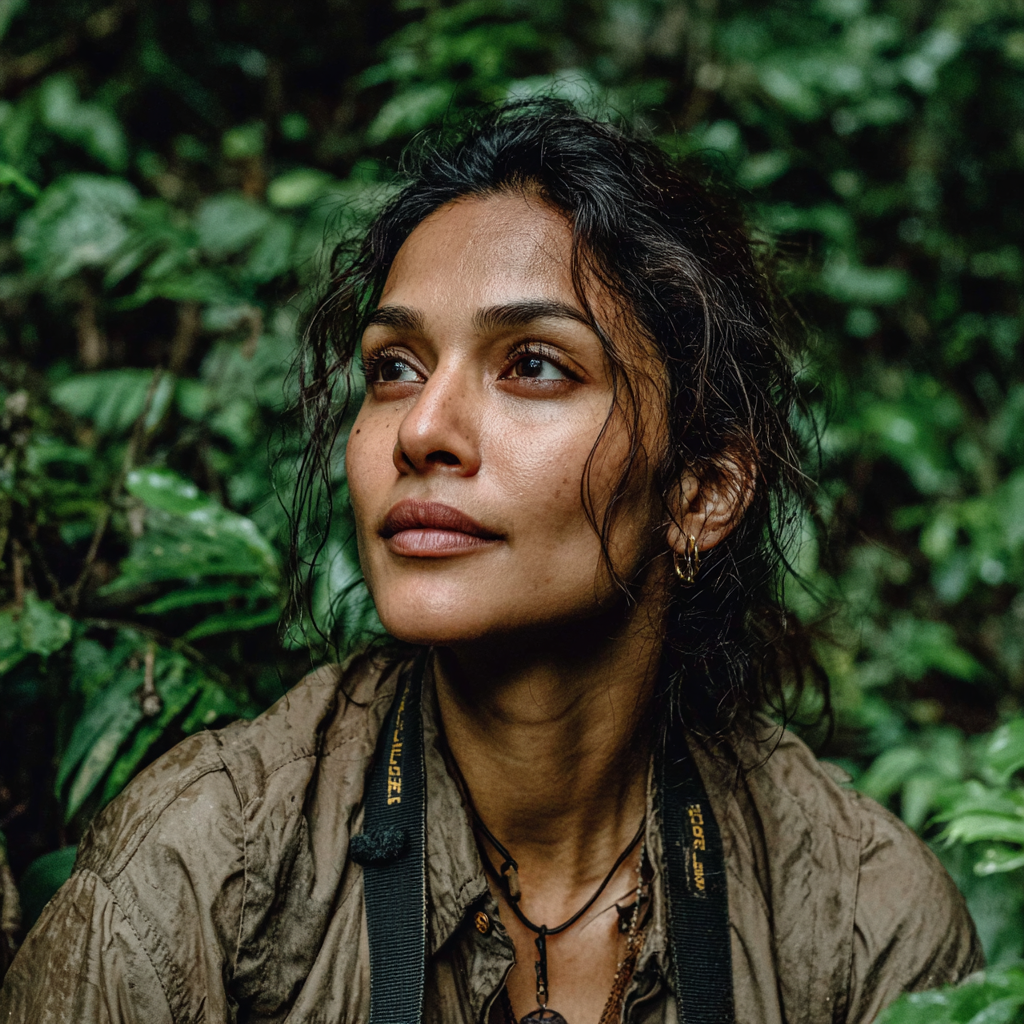
About Priya Sharma
Conservation biologist and sustainable tourism advocate. Priya works with eco-lodges and wildlife sanctuaries to promote ethical travel practices. She holds an MSc in Biodiversity Conservation and has spent years tracking endangered species across the Indian subcontinent.
More by Priya Sharma