
Most people cannot find the Comoros on a map. That is the point. The islands sit in the Indian Ocean between Madagascar and Mozambique, three volcanic specks with a combined population smaller than a single district of Mumbai. Fewer than 2,000 tourists visit each year. There is no all-inclusive resort, no cruise port, no airport terminal with duty-free shops. What exists instead is an active volcano that last erupted in 2005, a marine park where whale sharks and dugongs still roam, and a fish scientists once believed had been extinct for 66 million years.
This is not a destination for everyone. The roads are rough, the electricity intermittent, and the national airline's booking system occasionally fails to work at all. But the Comoros is one of the last places in the Indian Ocean where a traveler can stand on a shoreline and see no footprints but their own.
The Three Islands
The Comoros is three islands. Grande Comore is the largest and holds the capital, Moroni, plus the country's dominant feature: Mount Karthala. At 2,361 meters, it is one of the world's largest active shield volcanoes. Its caldera measures three by four kilometers across. The last major eruption was April 17, 2005, which forced hundreds of villagers to evacuate. Smoke still rises from vents near the summit. The standard trek to the rim takes two days, with an overnight camp near the upper slopes. Local guides charge roughly 30,000 to 50,000 Comorian francs (€60–€100) for the trek, including porters and basic meals. A 4x4 can reach the upper trailhead to cut the hike to a single day, but the two-day route through tropical forest is the better experience. The mountain is monitored by scientific stations, and the trails are passable May through October. During the rainy season from November to April, the upper slopes become slippery and clouded.
Mohéli is the smallest island and the most ecologically significant. The Mohéli Marine Park, established in 2001 as the country's first national park, covers the waters and islets off the southwest coast. This is where sea turtles come to nest, where dugongs feed in seagrass beds, and where whale sharks appear seasonally. The park is managed in cooperation with local villages, and entry is informal. There is no gate or ticket booth. Laka Lodge in Nioumachoua, the main settlement near the park, charges approximately €60 to €90 per night for a bungalow. The lodge organizes snorkeling excursions and can arrange boat trips to the islets. Diving is limited but possible; the best sites are around the marine park's outer reefs. The island's interior holds the Mwali Highlands, where four bird species exist nowhere else on earth: the Moheli Bulbul, Moheli Brush Warbler, Moheli Scops Owl, and Comoros Green Pigeon.
Anjouan is the triangular middle island, rising to 1,580 meters at Mount Ntingui. It is more densely populated than the others, with steep valleys that have suffered significant erosion. The port town of Mutsamoudou, on the northwest coast, has the most functional harbor in the archipelago. Anjouan receives the fewest visitors of the three islands. AB Aviation, the national carrier, operates internal flights between the islands, though schedules shift and the online booking system is unreliable. Most travelers book through local agencies once in Moroni. A one-way flight between islands costs approximately €50 to €80.
The Living Fossil
The Comoros is the only place where the coelacanth is regularly encountered in shallow water. The fish was thought extinct since the Cretaceous period until a South African trawler caught one in 1938. Comorian waters, particularly around the deep reefs off Grande Comore and the marine park near Mohéli, hold populations of the West Indian Ocean coelacanth. It is not a fish a casual snorkeler will see. They live at depths of 100 to 400 meters. But the Comoros has made the coelacanth a symbol of its conservation efforts, and research stations on Grande Comore monitor populations. A small coelacanth museum in Moroni, near the waterfront, has specimens and explanatory displays. It is not well-marked. Ask at the Volo Volo market area for directions.
The Practicalities
Getting to the Comoros requires commitment. Prince Said Ibrahim International Airport (HAH) on Grande Comore receives flights from Nairobi (Kenya Airways, daily), Addis Ababa (Ethiopian Airlines, daily), and Paris (seasonal). The airport sits roughly 30 kilometers north of Moroni. There are no direct flights from Asia or the Americas. A round-trip ticket from a European hub typically costs $800 to $1,200.
Visas are available on arrival. The fee is €30 or $50. Bring cash in euros or US dollars. The immigration officers do not accept credit cards, and the ATM in the airport terminal is frequently empty. The visa is valid for 45 days and can be extended at the immigration office in Moroni.
The currency is the Comorian franc (KMF). The exchange rate is roughly 490 KMF to €1. There are almost no ATMs outside Moroni, and credit cards are accepted only at the Golden Tulip hotel and a few mid-range establishments. Cash is essential. The Volo Volo market in Moroni is the main place to exchange money informally, though banks on Rue de l'Indépendance handle formal exchanges Monday through Friday mornings.
Accommodation in Moroni ranges from basic to limited luxury. Hotel Jardin de la Paix, near the city center, offers functional rooms for roughly 20,000 KMF ($40) per night. Retaj Moroni, near the waterfront, has a pool and more reliable electricity for approximately 50,000 KMF ($100) per night. The Golden Tulip Grande Comore Moroni Resort & Spa, the only property approaching international luxury standard, charges roughly 90,000 to 120,000 KMF ($180–$240) per night and sits on the northern edge of the city. On Mohéli, Laka Lodge is the primary option. On Anjouan, accommodation is limited to a few guesthouses in Mutsamoudou; expect to pay 15,000 to 30,000 KMF ($30–$60) and confirm electricity and water availability in advance.
Transportation between islands is by AB Aviation flights or by boat. Ferries run between Grande Comore and Anjouan, but schedules are irregular and safety standards are not high. Most travelers who visit multiple islands fly. On Grande Comore, shared taxis operate from the Volo Volo market to fixed destinations for a few hundred francs. Hiring a car with a driver costs roughly 15,000 to 25,000 KMF ($30–$50) per day. Roads are paved in and around Moroni but deteriorate quickly in the interior. There is no formal bus system.
Meals in local restaurants cost 5,000 to 10,000 KMF ($10–$20). Comorian cuisine blends African, Arab, and French influences. Skoudehkaris, a spicy fish stew with rice, is the staple dish. Mkatra, a fried bread, accompanies most meals. Fresh lobster and tuna are common. Alcohol is scarce. The Comoros is a Muslim country, and only a few licensed hotels serve alcohol to non-Muslim guests. Dress conservatively. Women should cover shoulders and knees. Men should avoid shorts outside beach areas.
The Wildlife
Beyond the coelacanth and marine park, the Comoros holds significant biodiversity for its size. The Comoros black parrot, endemic to the islands, is critically endangered with fewer than 500 individuals remaining. It lives in the remaining forest patches on Grande Comore and Mohéli. Humblot's Sunbird, the Comoros Thrush, and the Karthala Scops Owl are also found nowhere else. Birdwatchers should hire a local guide through the Centre National de Documentation et de Recherche Scientifique (CNDRS) in Moroni. The center can arrange permits and guides for forest access. Contact them in advance; permits are not issued quickly.
Humpback whales migrate through Comorian waters from June to October. Whale shark sightings peak around the Mohéli Marine Park from November through February. Dugongs, one of the rarest marine mammals, feed in the seagrass beds off the park's southern islets. Green and hawksbill turtles nest on the beaches from October through March. Laka Lodge has a basic turtle monitoring program that visitors can join.
What to Skip
The beaches near Moroni are not the draw. The capital's shoreline is volcanic rock and dark sand, and the water quality near the port is poor. Better beaches exist on the northern coast of Grande Comore and on Mohéli. Do not expect reliable internet. The connection is slow and drops frequently. This is not a remote-work destination. Do not attempt to visit Mayotte, the fourth island of the archipelago, without a French visa. Mayotte is administered by France, and entry requires Schengen clearance. The political tension between the Comoros and France over Mayotte's status is real, and Comorian citizens are not permitted to settle there freely. Do not raise the topic casually.
The Honest Assessment
The Comoros is not comfortable. Power cuts are common. Hot water is a luxury. The national airline may cancel a flight without announcing it. But the absence of infrastructure is what preserves the place. There are no tour buses at Mount Karthala. No dive boats fighting for space at the turtle nesting beaches. No souvenir shops selling the same wooden masks you can buy in Nairobi or Zanzibar.
The country is one of the poorest in the world. Tourism is not a major economic sector. A visitor's money matters more here than in most places. The environmental challenges are severe: deforestation for charcoal production, coral bleaching events, and the slow erosion of the islands' endemic forests. The Comoros is not a perfect conservation success story. But it is a place where the natural world still dominates the human one, and where a traveler can see what the Indian Ocean looked like before the resorts arrived.
If you go, bring cash, patience, and a willingness to step outside the infrastructure entirely. The Comoros does not meet travelers halfway. But the payoff is a shoreline with no footprints, a forest with birds that exist nowhere else, and a volcano that is still deciding what shape it wants to be.
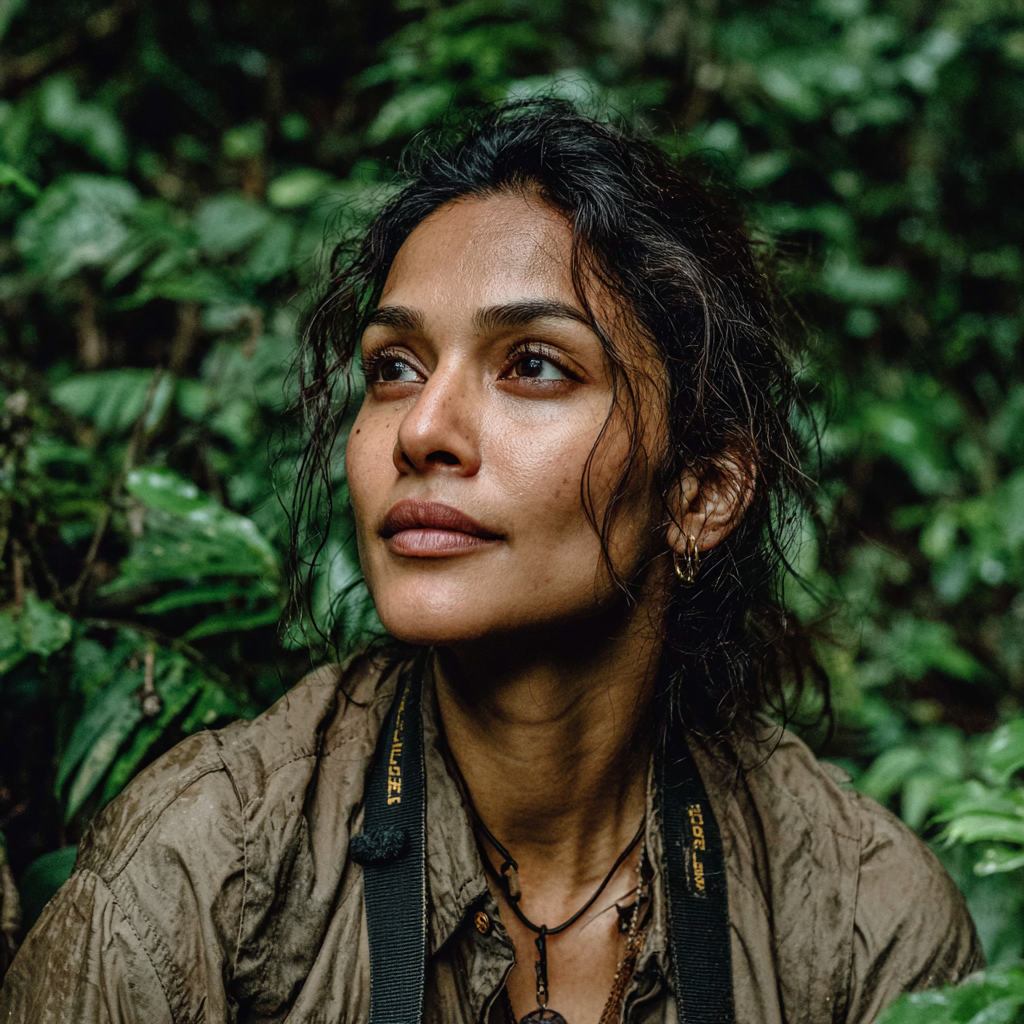
By Priya Sharma
Conservation biologist and sustainable tourism advocate. Priya works with eco-lodges and wildlife sanctuaries to promote ethical travel practices. She holds an MSc in Biodiversity Conservation and has spent years tracking endangered species across the Indian subcontinent.