
Most travelers arrive in Medellín expecting danger. They have the statistics half-right: in the early 1990s, this was the homicide capital of the world. What they miss is what happened after. The city did not just reduce violence. It reconfigured the relationship between geography, class, and public space in ways that no other Latin American city has attempted.
Start in the center, at Plaza Botero. The twenty-three bronze sculptures Fernando Botero donated to his hometown occupy the square in front of the Museo de Antioquia. They are fat. That is the point. Botero's inflated figures—rabbits, horses, a reclining Venus, a soldier on horseback—mock the classical ideal and assert a regional aesthetic against Bogotá's cultural dominance. The museum itself (entrance 18,000 COP / ~$4.50, closed Mondays) holds pre-Columbian gold, colonial religious paintings, and Botero's own works. The plaza is free and open until 6:30 PM. Street vendors sell raspados and mazorca. Police presence is visible but not aggressive.
Walk two blocks to the Catedral Metropolitana, built from 1875 to 1931 from 1.2 million bricks. It is the largest brick church in South America and the second-largest in the world. The neo-Romanesque interior is cavernous and slightly damp. Services run daily; tourists are welcome outside mass hours. The surrounding Bolívar neighborhood is the historic core, with Republican-era architecture, bookstores, and the old Palacio de la Cultura. It is safe by day but empties after 7 PM. Walk with purpose.
The real story of Medellín is vertical. The city sits in a narrow valley. The wealthy built on the flat floor. The poor settled the steep hillsides, accessible only by dirt paths. The metro, opened in 1995, was the first in Colombia. But the critical intervention came later: the Metrocable. Cable cars now connect hillside barrios to the metro line at five points. They are not tourist attractions. They are public transit, priced at the standard metro fare of 2,880 COP (~$0.70). Line K climbs to Santo Domingo Savio in the northeastern hills. From there, Line L continues to Parque Arví, an ecological reserve at 2,500 meters with pre-Hispanic trails and a Saturday artisan market. The ride itself is the point: you pass over cinder-block houses, tiled roofs, and laundry hanging in the Andean morning.
Comuna 13, in the western hills, was the most violent neighborhood in the most violent city. Government operations in 2002 displaced guerrillas and paramilitaries but destroyed the social fabric. The turnaround was not primarily police-driven. It was driven by residents who painted murals, built community centers, and opened their streets to visitors. Today, Comuna 13 runs organized graffiti tours. The outdoor escalators—six sections climbing 384 meters—were installed in 2011 and cost 6.5 billion pesos. They are still functioning, still used daily by residents carrying groceries uphill. The graffiti is not sanctioned street art. It is community memory: portraits of disappeared neighbors, the Colombian flag in fractured panels, tags from local collectives like Casa Kolacho. Tours cost 50,000–80,000 COP (~$12–$20) and last two to three hours. Go with a community-led operator, not a downtown agency. Some resident guides were directly affected by the conflict. They will answer questions about Escobar if asked, but they do not romanticize him. Listen to what they emphasize instead: the library, the music school, the skate park.
The Casa de la Memoria, on Calle 18 in the center, documents the armed conflict in Antioquia without reducing it to a narco-narrative. Entry is free. The permanent exhibition uses video testimony, recovered objects, and data visualization to track disappearances, displacement, and resistance. It is quietly devastating. Plan an hour. Photography is restricted in some rooms.
Pueblito Paisa, on Cerro Nutibara, is a reconstructed Antioquian village: whitewashed houses, a fountain, a chapel, a loom. It is kitsch by design, built for the 1970 Flora and Fauna Expo. It is also free, open until 6 PM, and offers the best panoramic view of the valley's urban sprawl. Locals visit on Sundays. Tourists dismiss it as artificial, but it tells you something about how Paisas imagine their rural past from within a metropolis.
For a different kind of history, take the metro to the Estadio station and walk the Laureles neighborhood. This is where the professional class lives: tree-lined streets, low-rise apartment buildings, cafés that roast Antioquian coffee by the kilo. Cafe Velvet on Carrera 76 serves pour-overs from single-origin farms in Fredonia and Jardín. A block away, Mercado La 70 sells fresh produce and butchered meat. The restaurants along La 70 serve bandeja paisa, the regional platter of beans, rice, ground beef, chorizo, blood sausage, fried egg, plantain, and avocado. It is designed for farm laborers. Order the half portion unless you are one.
El Poblado, southeast of the center, is where most tourists sleep. Provenza and Manila are the "cool" sub-neighborhoods: craft cocktail bars, specialty coffee, international restaurants. They are safe, polished, and slightly interchangeable with similar districts in Mexico City or Buenos Aires. They are useful for a good meal but not representative. The actual cultural production of contemporary Medellín happens further out: in the independent theaters of Envigado, the salsa clubs of Calle 9 in El Centro, the open-air gyms of Belén.
Weather is the city's secret weapon. At 1,495 meters in a tropical latitude, Medellín holds a steady 22–26°C year-round. Rain arrives most afternoons between March and May and September and November. Morning is the reliable window. The nickname "City of Eternal Spring" is technically accurate but culturally loaded: it was a marketing phrase coined in the 1980s to rebrand the city during the violence. Residents use it without irony now.
Safety has improved to the point where solo travelers regularly use the metro after dark. The remaining risks are concentrated in peripheral barrios and involve petty theft, not homicide. The Escobar-era danger is gone. What replaced it is more complex: a city that reduced violence through infrastructure and social investment but still grapples with inequality, gentrification in Comuna 13, and the question of who benefits from the tourism boom.
Day trips: Guatapé is 86 kilometers east. The 740-step climb to the top of El Peñol rock costs 25,000 COP and delivers a view of a reservoir system that flooded a farming valley in the 1970s. The town itself is painted in zócalo reliefs—colorful bas-reliefs on every facade. It is beautiful and crowded on weekends. Go midweek.
What to skip: Pablo Escobar tours. They are commercially available from multiple operators in El Poblado. The narrative centers on a criminal as a folk hero. Local residents and the Casa de la Memoria actively oppose them. If you are interested in that period, read Mark Bowden's Killing Pablo and spend the tour money in Comuna 13 instead.
Also skip the suggestion that Medellín is "the new Berlin" or "the new Brooklyn." It is not. It is a mid-sized Colombian city with a specific topography, a specific history of violence and recovery, and a specific regional identity. The comparisons flatten what is actually there.
Practical: José María Córdova International Airport is in Rionegro, 45 minutes by bus (13,000 COP) or taxi (90,000–120,000 COP) from the city center. The metro runs from 4:30 AM to 11 PM weekdays, slightly shorter hours weekends. A reusable Civica card costs 5,500 COP and can be recharged at any station. Spanish is essential outside El Poblado. Most museums close on Mondays. Casa de la Memoria opens Tuesday through Saturday, 9:30 AM to 5:30 PM.
The city that invented the narco-drama has spent three decades trying to tell a different story. The infrastructure works. The graffiti is real. The memory is painful and public. That is the actual Medellín.
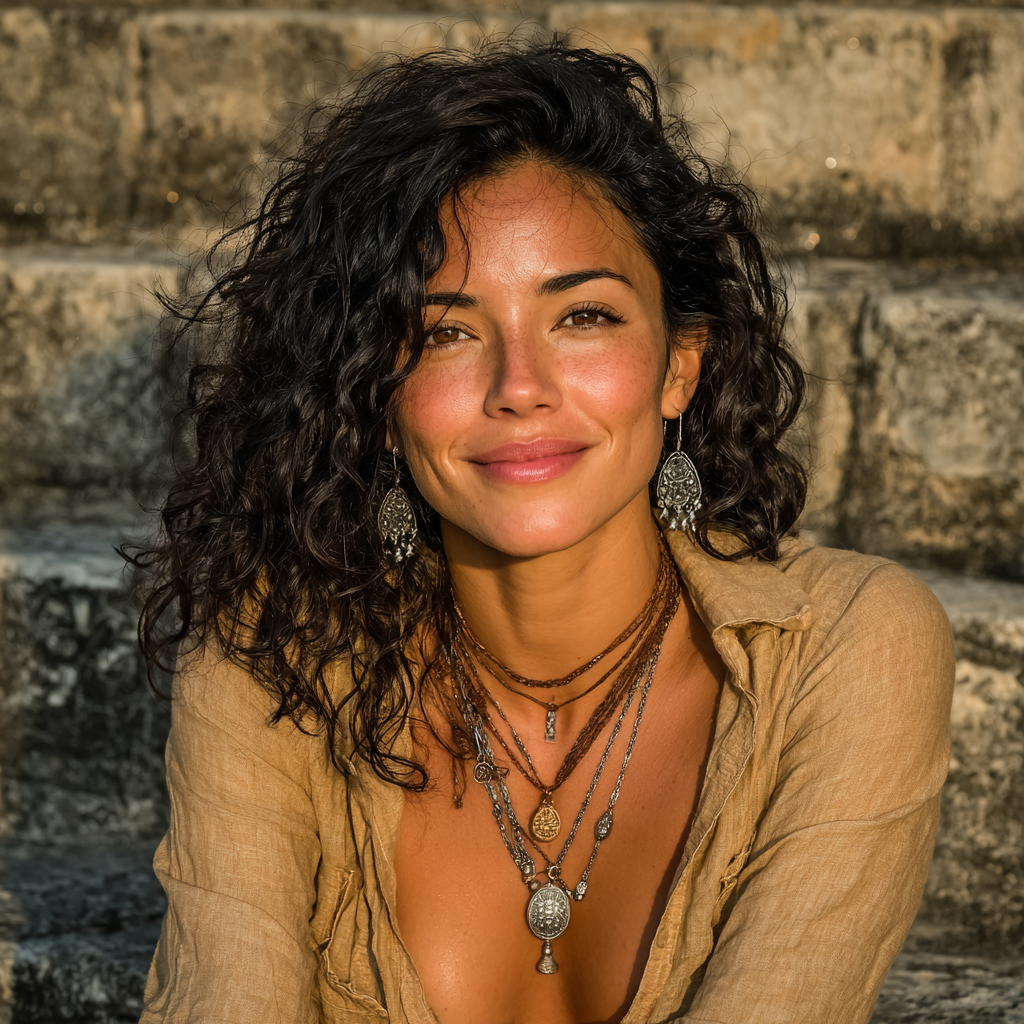
By Elena Vasquez
Cultural anthropologist and culinary storyteller. Elena spent a decade documenting traditional cooking methods across Latin America and the Mediterranean. She holds a PhD in Ethnography from Barcelona University and believes the best way to understand a place is through its kitchens and ancient streets.