
Minca: Where the Coffee Is Organic, the Birds Outnumber the People, and the Waterfalls Have a Crowd Problem
Why Minca Matters
Forty-five minutes uphill from the heat and honking of Santa Marta, the road crests a ridge and the air simply changes. The Caribbean humidity drops away. Mist slides between coffee bushes. Somewhere above the cloud line, the Sierra Nevada de Santa Marta rises to 5,775 meters — the highest coastal mountain range on Earth, snow within sight of the sea. And folded into its lower flank at roughly 650 meters sits Minca: a village of a few unpaved streets, a church, a handful of comedores, and one of the densest concentrations of birdlife and small-scale organic agriculture in Colombia.
Minca matters because it is a working alternative. The farms here did not convert to sun-grown, pesticide-drenched monoculture when the commodity market pushed them to. The forests were not fully cleared. The Kogi, Arhuaco, Wiwa, and Kankuamo nations — whose territory this still is — still walk these ridges, and their philosophy of the Sierra Nevada as the "heart of the world" quietly governs how conscientious visitors should behave. Minca is not a theme park of sustainability. It is a place trying, imperfectly and under real economic pressure, to keep its ecosystem intact while still feeding the people who live in it. That is exactly why you should come, and exactly why how you come matters.
Entry Formalities & Money
Citizens of the US, UK, Canada, the EU, Australia, New Zealand, and roughly eighty other countries enter Colombia visa-free for up to 90 days. You can apply for one 90-day extension inside the country (at a Migración Colombia office or online), for a maximum of 180 days per calendar year; the extension fee runs about 150,000 COP under the 2026 fee schedule. Bring proof of onward travel — airlines and immigration both ask.
Every traveler must complete the Check-Mig form before flying in and again before flying out of Colombia. It is free, done on the official Migración Colombia website (check for the .gov.co domain — fee-charging copycat sites exist), and the submission window opens 72 hours and closes 1 hour before departure. Airlines can refuse boarding without it, so treat it as mandatory even though the government technically classifies it as "recommended." A yellow fever certificate is required only if you are arriving from a risk country.
The peso floats around 4,000 to the US dollar in 2026 (it has ranged roughly 3,700–4,200). Minca has almost no ATMs and spotty card acceptance — a few larger lodges and hotels take cards, but fincas, comedores, mototaxi drivers, and waterfall gates are cash-only. Pull plenty of pesos in Santa Marta and break large bills there; a 100,000 COP note is close to useless at a jungle trailhead. Carry small bills for the informal entrance fees at Pozo Azul and for tips. Travel insurance covering hiking is strongly advisable — there is no real clinic in Minca.
Getting There and Around
From Santa Marta by colectivo: Colectivos run by Cootransminca depart from Carrera 9 between Calles 11d and 10, beside the public market — look for the blue-and-white minibuses with Minca in the windshield. The ride costs 8,000–12,000 COP per person, leaves when reasonably full (roughly every 30–60 minutes from early morning until about 6 PM), and takes 45–60 minutes depending on how many bags of plantains are riding on the roof. You arrive at Minca's small terminal in the middle of the village; it is also your departure point back down.
From the airport: Simón Bolívar International (SMR) sits about 35 km from Minca. A private taxi or pre-arranged transfer runs 100,000–130,000 COP and takes 60–80 minutes. There is no direct public bus from the airport — go through Santa Marta first.
Mototaxis: This is Minca's public transit — helmeted motorbike taxis that shuttle locals and visitors between the village, the waterfalls, and the fincas. Short hops within the village run 5,000–8,000 COP; rides out to Pozo Azul or Marinka run 10,000–15,000 COP; Finca La Candelaria is about 20,000 COP. Agree on the price before you climb on. If a driver quotes double for a gringo, the next one along will not — there are plenty.
Renting a motorbike: Several shops in the village rent motorbikes for around 100,000 COP per day including fuel. Only do this if you can already ride confidently — the roads are unpaved, steep, rutted, and slickest exactly when the views are best. Ask for a helmet and take a photo of the shop's hand-drawn area map; it is genuinely the best map of Minca that exists.
On foot: Many of the best experiences — the walk to Pozo Azul, the climb toward La Victoria, the trail network around Los Pinos — are hiking routes. Trails are muddy after rain, signage is minimal, and distances deceive: everything is vertical. Bring water.
The Waterfalls — and Their Crowd Problem
Minca's waterfalls are legitimately spectacular, and they are the village's single biggest management challenge: on weekends and holidays, thousands of day-trippers from Santa Marta pour up the road, and the most accessible falls can feel like a mall. The fix is timing and choice.
Pozo Azul (about an hour's walk uphill from the village, or a 10,000–15,000 COP mototaxi) is the famous one: a series of deep turquoise pools on the Río Minca, with a rope swing and a cliff-jumping rock at the lower pool. Local caretakers now collect an informal entrance of roughly 5,000–8,000 COP. Arrive before 10 AM on any day and you will have it almost to yourself; arrive at 1 PM on a Sunday and you will queue for the swing. The upper pool is quieter, prettier, and better for swimming — but do not jump into it: submerged rocks have injured people, and the safe-jump spot is the lower pool only. Do not swing on the Tarzan vine either, however Instagram-famous it has become; it has snapped more than once.
Cascada Marinka (mototaxi 10,000–15,000 COP from the village) has changed the most. What was once a wild fall is now a curated complex — entrance around 20,000–22,000 COP in 2026 (it has risen steadily from the old 10,000) — with three waterfalls, wooden treehouse platforms, riverside hammocks, and two full restaurants. Purists grumble. Honestly, the complex solved the area's biggest problems: toilets, trail erosion, and food for drivers' families. Come on a weekday, walk the extra five minutes past the first fall to the second, and swim under the third where the crowd thins to zero.
Ojo de Agua, on the Río Gaira just below the village, is a small free swimming spot popular with locals. Fine for a quick cool-down, nothing special.
Cascada Escondida and Cascada Perdida sit on trails that have been the subject of an ongoing access dispute. The gate at Hostal La Veranda has charged 10,000 COP and, at various points, trail police have turned hikers back claiming the path is closed — reports of travelers paying, walking 20 minutes, and being refused at a second checkpoint are common enough to treat as a pattern. Ask at your lodge the day before whether the full loop is actually open, or skip it: Marinka and Pozo Azul are better swimming anyway.
Coffee, Cacao, and the Farms That Stayed
Minca's farms are the reason the birds are here. Almost everything is shade-grown under native canopy — coffee and cacao interplanted with banana, citrus, and towering remnant forest trees. A sun-grown plantation supports a fraction of the insect life, and therefore a fraction of the birds. When you buy a bag of Minca coffee, you are directly funding the habitat you just hiked through.
Finca La Victoria is the headline act, and it earns it. Founded in 1892, the farm still processes coffee on original machinery shipped from London and New York — belt-driven pulpers, wooden fermentation tanks, drying patios with views over the whole Santa Marta plain. The guided tour (roughly 15,000–25,000 COP depending on group size) walks the full bean-to-cup process and ends, inevitably, with a cup that will ruin airport coffee for you. You can walk up in about an hour from the village or take a mototaxi partway; buy a bag — prices are fair and the beans are excellent.
Finca La Candelaria is the chocolate answer, a family farm where coffee shares space with cacao. The one-hour tour (around 20,000–25,000 COP) covers both plants and ends with chocolate making and tasting; the 360-degree view from the top of the farm is a bonus. It is a 20,000 COP mototaxi ride plus a ten-minute walk — combine it with La Victoria for a full farm day.
Jungle Joe's full-day tour (about 80,000 COP booked directly at the office in Minca, or around 150,000 COP including transport from Santa Marta) is the efficient option: coffee finca visit, cacao tasting, jungle hike to a remote waterfall, lunch in a bamboo treehouse, and a running natural-history commentary from a guide who knows every toucan nest on the ridge. For travelers short on time, it is the single best-value day in the village.
The Birds
This is the real reason to come, and the reason Priya-type travelers keep extending their stays. The Sierra Nevada de Santa Marta evolved in isolation, and its avifauna is staggering: the Minca area alone records around 350 species, including a cluster of endemics found nowhere else on Earth — the Santa Marta parakeet, the Santa Marta antpitta (best found around 1,800 meters), the Santa Marta bush-tyrant, the white-tipped quetzal, and the Santa Marta sabrewing, a hummingbird so recently rediscovered it still feels mythical. Add toucans, motmots, tanagers in confetti colors, and the soundtrack of distant howler monkeys, and you understand why birders rank this ridge with the Andes' finest.
The El Dorado Bird Reserve, run by the Colombian conservation NGO Proaves at 1,900–2,600 meters up the old Cerro Kennedy road, is the single best birding site in the range — 340-plus species recorded, feeders that pull in endemics at arm's length, and a genuine conservation story (the reserve protects the Santa Marta parakeet's last strongholds). Day visits are possible by 4x4 with a local operator; serious birders should overnight at the reserve's simple lodge and take the dawn trail. Arrange through Proaves, a Minca tour office, or your lodge — the road up requires a proper vehicle.
Closer in: Jungle Joe runs birding-focused walks, and most lodges can arrange a dawn guide for roughly 150,000–200,000 COP per person. Gonawindúa Pro Birding is owned and guided by the Kogi people of the Jaba Nokwa reserve — birding with the territory's original custodians is both the most ethical and often the most skilled option on the mountain. Whichever you choose: go at dawn, wear muted colors, and leave the Bluetooth speaker in your room — trail etiquette here is a conservation tool.
Cerro Kennedy
The old antenna road climbs from Minca to around 3,100 meters, above the cloud layer, with the snow-capped peaks of Pico Colón and Pico Bolívar looming over the Caribbean in a single panorama. It is one of the great viewpoint hikes in Colombia, and it is cold at the top — genuinely, bring a warm layer. Organized groups with a local guide leave Minca between 5:30 and 6:00 AM to hit the viewpoint for sunrise; figure 150,000–200,000 COP per person including a 4x4 or moto-taxi shuttle partway. December through February offers the clearest mornings; in the wet season you may climb for three hours to stand inside a cloud. Even then, the birding on the way up is superb, and the farm kitchens on the lower road serve hot chocolate and arepas. If your guide suggests turning around because clouds have closed in, take the suggestion — the mountain will still be there.
Where to Sleep
Minca sleeps roughly three ways. Hostels and guesthouses in and around the village run 40,000–70,000 COP for a dorm bed and 150,000–250,000 COP for a private room — book ahead for weekends and Colombian holidays, when the village fills. Casa Elemento, perched at about 1,000 meters, is famous for a hammock the size of a small house and a bar with craft beer; the walk up is steep but the sunset over the sea is the payoff. Mundo Nuevo combines a working organic farm, yoga, and finca-to-table meals above the cloud line. Sintropia, a sustainable coffee finca with ocean-view rooms, is where to sleep if you want coffee bushes outside your window and a real sustainability conversation at dinner. Nearer Marinka, Akainoie sits streamside in the forest — more expensive, worth it for early access to the falls. Most mid-range and up include or offer dinner; take it, because kitchens close early and the roads are dark.
When to Come
The drier window runs roughly December through March — trails firm, waterfalls still full from the rains, and Cerro Kennedy at its clearest from late December through February. The wet season, April through November with heavy peaks around May and October–November, means daily afternoon downpours, mud up to your ankles, and dramatically fewer people; birding is arguably better in the wet months (breeding plumage, more vocal birds), and prices soften. Shoulder months like late March and November are the connoisseur's pick. Avoid Colombian public holidays and weekends if you want the waterfalls without the crowds — or lean in, book a lodge with a pool, and treat the village festival atmosphere as part of the show.
Honest Math
At roughly 4,000 COP to the dollar: a shoestring traveler sleeping in dorms, hiking to the falls, eating at comedores, and taking colectivos spends 30–40 USD a day. A midrange traveler with a private room, one guided activity a day (birding walk, coffee tour, or Kennedy shuttle), farm dinners, and mototaxis lands at 60–90 USD. A comfortable couple splitting an ecolodge room with meals and private 4x4 transfers should budget 120–180 USD. The biggest cost swings are lodging class and whether you hire guides — and in Minca, hiring local guides is money well spent in every sense. If you are combining with the Lost City trek (four days, currently about 1,860,000 COP all-in for the regulated standard route, departing from the El Mamey trailhead two hours south), do Minca first as your acclimatization and let your legs recover by the river afterward.
What to Skip
Skipping the overnight. The single most common mistake is day-tripping Minca from Santa Marta. You will see the most crowded version of every waterfall, miss the dawn birdsong, and leave thinking it is overrated. It is not overrated. You were just there at the wrong hour. Stay at least two nights.
The Cascada Perdida runaround. Given the recurring access disputes and double-charging at the La Veranda gate, this trail is the village's most reliable frustration. Confirm same-day that the full loop is open, or redirect that energy toward Marinka's upper falls.
Renting a motorbike if you cannot actually ride. The road to Cerro Kennedy has sent confident riders to the clinic in Santa Marta. If your two-wheel experience is a scooter in Bali, take a mototaxi with a local driver and keep your skin.
Night hiking. Trails are unlit, fog rolls in fast, and the Sierra Nevada's lower slopes are still working indigenous territory with real (if low) security sensitivities. Dawn starts get you everything night hiking promises, minus the risk.
Arriving at the big falls between 10 AM and 2 PM on weekends. This is when Pozo Azul is a queue with a waterfall at the end. Before 9 AM or after 4 PM, it is a different planet.
Assuming cards work and bringing only large bills. See the money section. Santa Marta ATMs are your last reliable tap; after that, it is the jungle's cash economy.
Feeding animals, playing music on trails, and straying off marked paths. The whole point of Minca is that the ecosystem still works. The monkeys do not need your chips, the birds do not need your playlist, and the Kogi's sacred sites are not photo sets.
A Last Word
I came to Minca for the birds and stayed for the farms. What struck me most was not any single sighting — though a white-tipped quetzal at dawn is not nothing — but the fact that this village has quietly solved problems the rest of the travel industry still performs concern about. Its coffee grows under forest. Its birding economy pays local and indigenous guides real money. Its waterfalls have entry fees that fund the families who guard them. Minca is not perfect, and the pressure of its own popularity is its biggest threat. But as a model of what a mountain village can look like when it decides its forest is worth more alive, it is one of the most instructive places in South America. Come. Stay a while. Spend deliberately. And take the early walk.
Priya Sharma covers climate and conservation travel across Latin America. She believes the best souvenirs are local bank accounts — yours, moved into theirs.
Word count: ~3,300
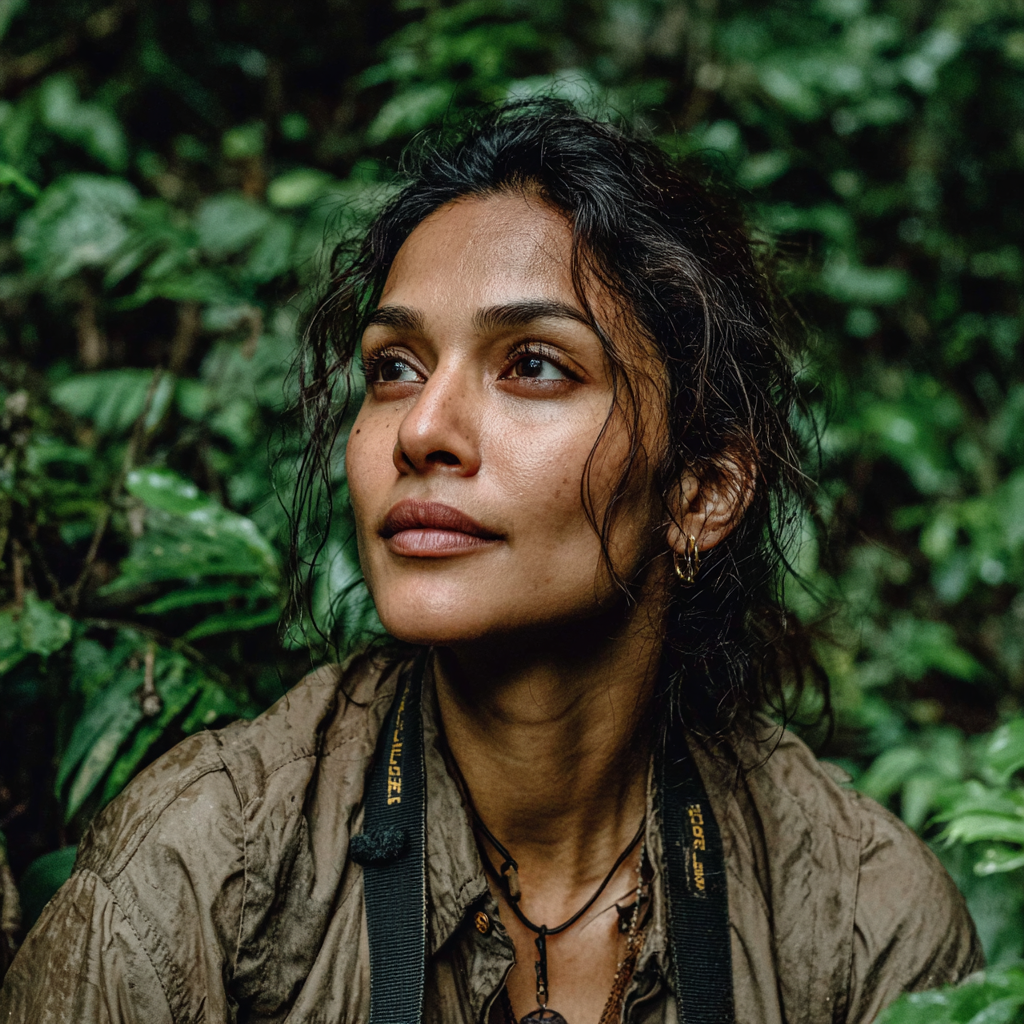
By Priya Sharma
Conservation biologist and sustainable tourism advocate. Priya works with eco-lodges and wildlife sanctuaries to promote ethical travel practices. She holds an MSc in Biodiversity Conservation and has spent years tracking endangered species across the Indian subcontinent.