
Macau: Where a Fire-Ruined Church, Macanese Egg Tarts, and 442 Years of Portuguese Rule Created Asia's Most Complicated City
Meet Your Guide: Elena Vasquez
I'm Elena Vasquez, a cultural anthropologist and food writer who has spent fifteen years studying how empires leave their fingerprints on kitchens, churches, and street signs. I came to Macau first in 2014, expecting a smaller, glitzier Hong Kong. What I found was something older, stranger, and far more interesting — a city where a Qing dynasty merchant built a house with Portuguese verandas, where Catholic processions start at a Taoist temple, and where the local creole language is dying but the local creole cuisine is thriving. I've returned four times since, each trip peeling back another layer. This guide is the result.
My philosophy is simple: the best travel writing doesn't describe what a place looks like. It describes what a place means. Macau means hybridity. It means survival. It means two empires that never quite conquered each other, leaving behind a culture that is neither Chinese nor Portuguese but unmistakably Macanese.
The Last European Colony in Asia
The ferry from Hong Kong docks at the Outer Harbour, and the first thing you notice is how quiet it is. No horns, no shouting, just the soft rumble of buses and the click of tiles being shuffled in a nearby park. This is Macau's trick: it looks like a gambling metropolis from the brochures, but the city you actually walk through is something older, smaller, and stranger.
Macau was the last European colony in Asia, handed back to China in 1999 after 442 years of Portuguese administration. The Chinese never expelled the Portuguese, and the Portuguese never fully controlled the Chinese population. What grew in that gap was a hybrid culture that still persists in the food, the architecture, and the casual religious pluralism that has Catholics burning incense at Buddhist temples and vice versa. The result is a UNESCO World Heritage Site that covers barely 29 hectares but contains more cultural layering than most countries manage in their entire territory.
The Historic Centre: Where Two Worlds Collide
The Ruins of St. Paul's: A Stone-Carved Bible in the Tropics
The Ruins of St. Paul's are the obvious landmark — the facade of a 17th-century Jesuit church destroyed by fire in 1835, now held up by steel scaffolding and photographed by thousands daily. The trick is to visit at 8:00 AM, before the tour buses arrive from Zhuhai. At that hour, you can see the facade properly: not as a backdrop for selfies, but as a strange object — European baroque carved by Japanese Christians and local Chinese craftsmen, mixing biblical scenes with chrysanthemums and Chinese characters.
Ruins of St. Paul's — Rua de São Paulo, Macau Peninsula. Facade open 24 hours (free). Museum of Sacred Art and Crypt: 9:00 AM – 6:00 PM, closed Tuesdays (free). The crypt, discovered during 1990s excavations, contains the bones of Japanese and Vietnamese martyrs — Christians executed for their faith — alongside the remains of the Jesuit founders. Most visitors rush past this solemn site. Don't. The 66 stone steps to the facade are steep and cobbled; wear sensible shoes. The side viewing from Rua da Ressurreição offers a less crowded angle with fewer stairs.
Behind the facade, the Museum of Sacred Art displays vestments and liturgical objects that show the same fusion: chasubles embroidered with lotus flowers, processional banners painted with Guanyin, silver processional items from Macau's churches, and rare Japanese Christian artifacts from the persecution era. The oil paintings of martyrs include Christians executed in Nagasaki — a reminder that Macau was a refuge for those fleeing Japan's violent suppression of Christianity.
Look for the cryptogram stone on the facade's fourth level, where "MATER DEI" is partially obscured. Local legend claims a hidden message about buried treasure. Several stones bear marks believed to be signatures of Japanese Christian craftsmen — look closely at the lower sections. And don't miss the peony relief on the third tier, an unmistakable Chinese motif reportedly carved secretly by Ming craftsmen as a sign of prosperity.
Na Tcha Temple: A Taoist God Beside a Jesuit Facade
Directly beside the Ruins of St. Paul's stands the Na Tcha Temple (哪吒廟), a small Chinese temple dedicated to the child deity Na Tcha. Built in 1888, it sits almost touching the church facade — a deliberate, almost provocative placement that encapsulates Macau's religious coexistence. The temple is free to enter and takes five minutes, but the contrast is the point: a Taoist shrine with burning incense standing shoulder-to-shoulder with the ruins of a Catholic cathedral. This is Macau in miniature.
Mount Fortress: Cannons, Jesuits, and Dutch Privateers
Behind the ruins, walk up to the Mount Fortress (Fortaleza do Monte), built by the Jesuits in 1616 as much for defense against Dutch privateers as for religious purposes. The cannons are still there, pointed out to sea, and the view from the top shows the city's geographic oddity: a dense peninsula attached to mainland China, plus two islands — Taipa and Coloane — connected by reclaimed land that used to be sea.
Mount Fortress — Free admission, open 7:00 AM – 7:00 PM. The Macau Museum inside the fortress costs MOP$15 (adults), free for children under 12 and seniors over 65. Hours: 10:00 AM – 6:00 PM, closed Mondays. The museum traces Macau's history from prehistoric settlement through Portuguese colonization to the 1999 handover. The archaeological section includes pre-colonial Chinese artifacts, colonial-era ceramics, and a recreation of a traditional Macanese living room.
Senado Square and the Portuguese Grid
Descend through the old Portuguese neighborhoods of Santo António and São Lourenço. The streets here are named in Portuguese — Rua de São Paulo, Travessa do Armazém — but the shops sell Chinese medicinal herbs and dried seafood. The houses are Mediterranean in form, with shuttered windows and balconies, but painted in tropical colors: mint green, butter yellow, dusty rose.
Senado Square (Largo do Senado) is the heart of the historic center, paved with wave-patterned Portuguese mosaic tiles that look like a giant, colorful carpet. The surrounding buildings cluster some of Macau's most important landmarks:
- Holy House of Mercy (1569): Macau's oldest charity building, blending green shutters with Chinese-style balconies. Free entry to the courtyard.
- Post Office (1929): A neo-classical building with a domed ceiling decorated with murals of Macau's history. Still operational — send a postcard with a Portuguese-era stamp.
- St. Dominic's Church (1587): A pastel-yellow Baroque church with a golden altar, housing over 300 Catholic relics in its Sacred Art Museum. Free admission, museum open until 6:00 PM. The cream and green facade is one of the most photographed buildings in Macau.
- Leal Senado Building: The former Portuguese municipal chamber, with a beautiful public garden inside. Free to enter the courtyard.
- Lou Kau Mansion (盧家大屋): A traditional Chinese merchant house at 7 Lou Kau Mansion, built in 1889 by a Qing dynasty merchant who adopted Western architectural elements — verandas, shuttered windows — while keeping the traditional internal courtyard layout. Free admission, open 10:00 AM – 6:00 PM, closed Mondays.
From Senado Square, walk three minutes to Travessa da Paixão (Lover's Lane) — a charming alley with pastel façades and white railings that has become a mandatory photo stop for couples. It's pretty, but it's also a good example of how Macau's Portuguese street names persist even in the most Chinese of contexts.
The A-Ma Temple: The City Before the Portuguese
The A-Ma Temple is your next stop, and it's essential. Built in 1488, before the Portuguese arrived, it honors Mazu, the Taoist goddess of seafarers. The temple climbs up a hillside in traditional southern Chinese style: entrance gate, prayer hall, hall of Guanyin, and finally the pavilion of the Immortal Water at the top. What makes it strange is the coexistence. Portuguese sailors named the city after this temple — "A-Ma-Gau" became "Macau" — and Catholic processions have started here for centuries.
A-Ma Temple — Barra Square, Macau Peninsula. Free admission, open 7:00 AM – 6:00 PM daily. Allow 45 minutes to climb through all the levels. The temple is built into a hillside with banyan trees growing through the stone gates — a classic example of southern Chinese temple architecture where the building follows the terrain rather than flattening it. On the feast of the goddess, in late April or early May, the temple fills with incense and opera performances. On the feast of St. John, in June, Portuguese-descended Macanese still gather here before marching down to the harbor to set small boats on fire, a tradition no one quite remembers the origin of.
The Maritime Museum nearby (Museu Marítimo) traces Macau's history as a port and fishing village. Admission: MOP$10 adults, MOP$5 students. Hours: 10:00 AM – 6:00 PM, closed Tuesdays. The museum includes traditional fishing boats, models of Portuguese caravels, and exhibits on the maritime trade routes that defined Macau's economy for four centuries.
The Macanese Kitchen: A Creole Built by Sailors
Lunch should be Macanese, the unique cuisine that developed here. Unlike the food of Goa or Malacca, Macanese cooking isn't just Portuguese adapted to local ingredients. It's a genuine creole, with African, Indian, Malay, and Chinese influences accumulated over centuries of Portuguese maritime trade. The Macanese wives of Portuguese sailors — known as "Godmothers of the Kitchen" — developed dishes using spices from Europe, South America, Africa, and Southeast Asia, combined with local Chinese ingredients. The result is a cuisine that exists almost nowhere else on earth.
Where to Eat Macanese
A Lorcha — 289A Rua das Lorchas, Macau Peninsula (near the Inner Harbour). Open 12:30 PM – 3:00 PM, 6:30 PM – 10:00 PM, closed Tuesdays. MOP$150–250 per person. Order the galinha à Africana — chicken roasted with a sauce of coconut, peanuts, and spices that has nothing to do with Africa and everything to do with Portuguese sailors' route home. The restaurant sits on the waterfront in a restored colonial building, and the view of the harbor at sunset is part of the experience. Reservations recommended on weekends.
Restaurante Litoral — 261A Rua do Almirante Sérgio, Macau Peninsula. Open 12:00 PM – 3:00 PM, 6:30 PM – 10:30 PM daily. MOP$120–200 per person. Housed in a restored colonial building with tiled floors, ceiling fans, and vintage Portuguese posters, this is the place to try tacho — a boiled dinner of Chinese sausage, Portuguese chorizo, cabbage, and taro that makes sense only in this specific place. The caldo verde (Portuguese kale soup) and bacalhau à bras (salt cod with potatoes and eggs) are also excellent.
Riquexó — 69 Avenida Sidónio Pais, Macau Peninsula. Open 11:30 AM – 9:00 PM daily. MOP$60–100 per person. A canteen run by the same family since 1950, serving the working-class Macanese food that predates the casino boom: minchi (ground pork and beef with potatoes and rice, MOP$45), bacalhau (salt cod) prepared ten different ways, and the egg tarts that Macau has made famous. This is where locals eat, not tourists. The atmosphere is unpretentious, the portions are generous, and the regulars have been coming for decades.
Lord Stow's Bakery — 1 Rua do Tassara, Coloane Village (original location). Open 7:00 AM – 10:00 PM daily. MOP$10 per tart. The pasteis de nata here are different from the Portuguese original — the Portuguese version uses cinnamon, the Macanese one uses caramelized sugar on top, a modification credited to Englishman Andrew Stow, who started the bakery in 1989 and created a version that appealed to Chinese palates. The result is richer, sweeter, and more custard-like than the Lisbon original. There are now locations across Macau, but the Coloane original is still the best. Arrive before 10:00 AM for warm tarts.
Fernando's — Hac Sa Beach, Coloane. Open 12:00 PM – 11:00 PM daily (kitchen closes at 9:30 PM). MOP$150–250 per person. A Portuguese restaurant in a garden setting that feels more Mediterranean than Chinese, serving grilled sardines, chorizo, and sangria since 1986. The beachside location makes it a full-day destination — eat, swim, drink, repeat. No reservations; arrive before 12:30 PM or after 2:30 PM to avoid queues. Cash preferred; cards accepted but with a surcharge.
The Casino Strip: Architecture of Excess
Evening is for the casinos, but not for gambling. The Venetian Macao, the largest casino in the world, is worth seeing as architecture of excess: 550,000 square meters of shopping mall made to look like Venice, with canals and gondoliers who sing in Mandarin. The lighting is perpetual twilight, designed to keep visitors inside and unaware of time. Walk through, observe the mechanics — the baccarat tables, the absence of windows or clocks — and then leave.
The Venetian Macao — Estrada da Baía de Nossa Senhora da Esperança, Taipa. Open 24 hours. Free entry to the mall and canals; gambling requires ID with minimum bets at MOP$300 on baccarat. Gondola rides: MOP$145. The artificial sky is perpetually set to "golden hour" — a psychological trick to disorient visitors. The mall houses 350+ shops, but prices are inflated. See it, photograph it, leave.
The Cotai Strip — the reclaimed land between Taipa and Coloane — is a parallel city of glass towers that most residents avoid. The Parisian Macao has a half-scale Eiffel Tower (MOP$108 to ascend). The Londoner Macao recreates British landmarks. These are not places to spend money — they are places to observe the architecture of global capitalism, where European cities are replicated as shopping experiences for Chinese tourists.
Coloane: The Island Time Forgot
If you have a second day, take the bus to Coloane, the southern island where the pace slows further. The village center is a grid of pastel houses around a church square, with a beach and walking trails through the hills. Coloane was the last part of Macau to be developed — the casinos only arrived in the 2010s — and it retains a village atmosphere that the peninsula lost decades ago.
Coloane Village — Bus 15, 21A, 25, 26, or 26A from the peninsula (MOP$6, 30–40 minutes). The village center is walkable in 20 minutes. Key stops: St. Francis Xavier Church (a pale yellow Baroque church built in 1928), Lord Stow's Garden Cafe (the original bakery location, open 7:00 AM – 10:00 PM), and the Coloane Library (a pastel pink colonial building that is now a community library). The Casa Garden nearby houses the Orient Foundation, which hosts art exhibitions and cultural events.
Hac Sa Beach — Black sand beach, free entry, open dawn to dusk. The sand is naturally black due to mineral content, and the beach is popular with locals on weekends. The water quality is acceptable for swimming but not pristine — this is a city beach, not a resort. The walking trails behind the beach lead into the Coloane hills, with routes ranging from 30 minutes to 3 hours.
Fernando's (see above) is the anchor of a Coloane day — arrive late morning, eat lunch, spend the afternoon on the beach, and return to the peninsula in the evening.
What to Skip
1. The casinos for gambling. Unless you are a serious baccarat player with a high tolerance for loss, the gambling floors are designed to extract money from visitors through psychological manipulation — no windows, no clocks, free drinks, and perpetual artificial lighting. Walk through, observe, leave.
2. The Venetian Macao gondola ride. At MOP$145 for a 15-minute ride in a fake canal under an artificial sky, this is the definition of tourist trap. The gondoliers sing in Mandarin, not Italian, and the water is chlorinated pool water. Take a photo of the canal and spend the money on a real meal instead.
3. The shops at the Cotai Strip malls. The luxury brands at the Venetian and Parisian are priced at premium rates, and the merchandise is identical to what you'd find in Shanghai or Singapore. The "Venice" and "Paris" themes are thin veneer over standard luxury retail.
4. Rua da Felicidade (Lover's Lane) at midday. This pretty alley beside the Ruins of St. Paul's becomes a human traffic jam between 11:00 AM and 3:00 PM, with tourists posing for the same photos in the same spots. Visit at 8:00 AM or after 7:00 PM for a peaceful experience.
5. The Macau Tower bungee jump. At MOP$3,888, this is one of the most expensive bungee jumps in the world. The view is good but the tower itself is an unloved concrete cylinder from 2001. If you want a view, go to Mount Fortress for free. If you want adrenaline, save your money and jump somewhere cheaper.
Practical Logistics
Getting There
From Hong Kong: The most common route is the TurboJET or Cotai Water Jet ferry from the Hong Kong Macau Ferry Terminal (Sheung Wan) or Hong Kong International Airport. The journey takes 55 minutes to 1 hour and costs HK$170–200 (MOP$175–210) one way. Ferries arrive at either the Outer Harbour Ferry Terminal (Macau Peninsula) or the Taipa Ferry Terminal (near the Cotai Strip). Book online in advance during weekends and holidays — seats sell out.
The Hong Kong-Zhuhai-Macau Bridge bus is cheaper and faster: HK$65 (MOP$67), 45 minutes from Hong Kong Airport or Tung Chung. Buses arrive at the Macau Port on the eastern side of Taipa. From there, take a free casino shuttle or bus 101X to the historic center.
From mainland China: The Portas do Cerco (Barrier Gate) is the northern land border with Zhuhai. Visitors from mainland China need a Macau visa; most nationalities get 30–90 days visa-free. The border crossing is efficient but can queue for 30–60 minutes on weekends.
Getting Around
Bus: Exact change required: MOP$6 per ride. Buy a Macau Pass for MOP$130 (MOP$100 credit + MOP$30 deposit) from convenience stores — it gives 50% off fares (MOP$3 per ride). Key routes: 3, 3A, 10, 10A to the Ruins of St. Paul's; 15, 21A, 25, 26, 26A to Coloane.
Casino shuttles: Free shuttle buses from ferry terminals and major hotels run every 10–15 minutes. You don't need to gamble to use them — just walk to the shuttle bay and board. This is the city's best-kept transport secret.
Taxi: Base fare MOP$19 for the first 1.6 km, then MOP$2 per 260 meters. A taxi from the Outer Harbour Ferry Terminal to the historic center costs MOP$40–60. Most drivers speak Cantonese and Mandarin; English is limited. Have your destination written in Chinese.
Walking: The historic center is compact but hilly and cobbled. Wear comfortable shoes with grip. The Senado Square → Ruins of St. Paul's → Mount Fortress loop takes 30 minutes with significant elevation change.
Money
Macau Pataca (MOP) is the official currency, but Hong Kong dollars (HKD) are accepted everywhere at parity. Most visitors simply use HKD, which is convenient because the currencies are pegged at roughly 1:1. Chinese yuan (RMB) is also accepted in many tourist areas but at a poor exchange rate.
Credit cards are accepted at hotels, casinos, and major restaurants, but many smaller eateries, bakeries, and local shops are cash-only. Carry MOP$200–300 in small bills for buses, snacks, and market purchases. There are ATMs at every casino and major hotel.
Costs:
- Budget traveler: MOP$400–600 per day (hostel, street food, buses, free attractions)
- Mid-range: MOP$800–1,200 per day (3-star hotel, Macanese restaurant meals, taxis, museum entries)
- Luxury: MOP$2,000+ per day (5-star hotel, fine dining, casino entertainment, private transfers)
Where to Stay
Budget: Masters Hotel or 5footway.inn Project Ponte 16 — both in the historic center, walking distance to the Ruins of St. Paul's. MOP$300–500 per night. Clean, basic, and well-located.
Mid-range: Hotel Royal Macau or Sofitel Macau at Ponte 16 — full-service hotels on the peninsula with Portuguese colonial design elements. MOP$800–1,200 per night. The Sofitel has a riverfront location and an excellent Portuguese restaurant.
Luxury: The Mandarin Oriental or Grand Lisboa — the Mandarin Oriental is understated luxury with a central location; the Grand Lisboa is the iconic gold-lotus-shaped casino hotel that defines the Macau skyline. MOP$1,500–3,000+ per night.
Coloane: Pousada de Coloane — a beachfront hotel with a Mediterranean vibe, perfect for a slower-paced stay. MOP$600–900 per night. Book well in advance for weekends.
When to Visit
Best months: October to December, and March to May. Autumn is ideal — warm, dry, and with the Macau Grand Prix in November adding energy to the city. Spring is pleasant but can be humid.
Avoid: Chinese New Year (January/February, exact dates vary) and Golden Week (October 1–7), when the city is packed with mainland Chinese tourists and hotel prices triple. Summer (June–September) is hot, humid, and prone to typhoons. Typhoon season peaks in July–August; shops and attractions may close during storm warnings.
The Macau Grand Prix (mid-November) is thrilling but chaotic — the city shuts down for four days, hotels sell out months in advance, and prices spike. Book 3–6 months ahead if you want to attend.
Language and Etiquette
Languages: Cantonese is the daily language. Mandarin is widely spoken. Portuguese is the official language but is now spoken by only a small percentage of the population — mostly older Macanese and government officials. English is widely understood in tourist areas, hotels, and casinos, but less so in local neighborhoods and restaurants. Learn a few Cantonese phrases: "m̀h gōi" (thank you), "jeh ga" (this one — useful for pointing at menu items), and "géi dō chín a?" (how much?).
Signs: Street signs are in Portuguese and Chinese, which is charming but confusing. Most major tourist sites have English signage. The dual naming system means every street has at least two names — e.g., Avenida de Almeida Ribeiro is also known as San Ma Lo (新馬路).
Religious etiquette: At temples, dress modestly (shoulders and knees covered). Remove hats and sunglasses. Don't point at statues with your feet. Photography is generally allowed, but avoid flash inside shrines. At churches, the same modesty applies. The A-Ma Temple and St. Dominic's are both active religious sites, not just tourist attractions — be respectful of worshippers.
Tipping: Not customary. A 10% service charge is included in most restaurant bills. Round up taxi fares to the nearest MOP$5 if the driver was helpful. Hotel porters appreciate MOP$10–20 per bag.
Safety: Macau is extremely safe, with one of the lowest crime rates in Asia. Pickpocketing is rare but can occur in crowded tourist areas around the Ruins of St. Paul's. Keep valuables in front pockets and be aware of your surroundings during peak hours. The casinos are heavily monitored and safe, but don't gamble more than you can afford to lose — the house always wins.
Connectivity
Internet: Free WiFi is available at most hotels, casinos, and tourist sites. The city also offers "WiFi Go" free public WiFi at over 200 locations. Register with a phone number or email at the login page.
SIM cards: Buy a local SIM at the airport, ferry terminals, or 7-Eleven stores. CTM offers tourist SIMs with data for MOP$50–100.
Electricity: 220V, 50Hz, with three-pin UK-style plugs (same as Hong Kong). Bring an adapter if needed.
The Macanese Identity: A Culture That Refuses to Die
There are only a few thousand pure Macanese left — people of mixed Portuguese and Chinese descent — and their creole language, Patuá, is dying. UNESCO lists it as "critically endangered," with fewer than 50 fluent speakers under 50. But the culture persists: in the food, in the religious festivals, in the architecture, and in the city's fundamental strangeness.
Before you leave, walk the barrier gate at Portas do Cerco, the northern border with mainland China. The old Portuguese arch still stands, inscribed in Latin: "Honor is measured by work." On the other side is Zhuhai, a Chinese boomtown of skyscrapers and shopping malls. The contrast is stark — Macau's low-rise density against Zhuhai's vertical expansion — but the people flow back and forth all day, as they have for centuries, and the boundary feels less like a border than a fold in a continuous fabric.
Macau isn't Hong Kong's little brother or China's Las Vegas. It's its own thing, a place where two empires met and something unexpected grew in the overlap. The casinos will come and go. The egg tarts will stay warm. And the fire-ruined church will still stand, carved with chrysanthemums and Christian saints, refusing to be one thing or the other.
— Elena Vasquez. Fourth visit. Still not finished with this city.
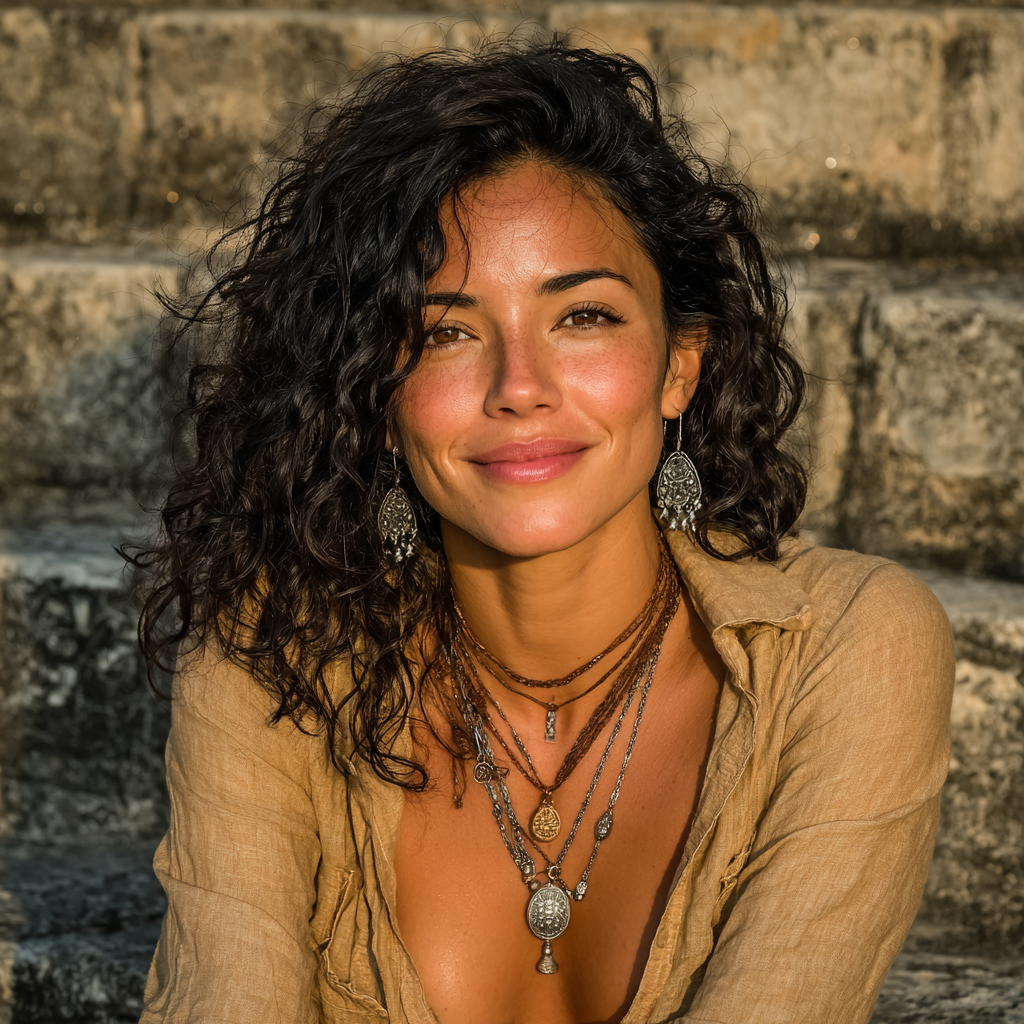
By Elena Vasquez
Cultural anthropologist and culinary storyteller. Elena spent a decade documenting traditional cooking methods across Latin America and the Mediterranean. She holds a PhD in Ethnography from Barcelona University and believes the best way to understand a place is through its kitchens and ancient streets.