
Vancouver: The City Still Arguing With Its Own Reflection — A Culture & History Deep Dive
Meet Your Guide: Elena Vasquez
I'm a cultural anthropologist by training and a recovering city-planner by mistake. I first came to Vancouver in 2009 for a conference on urban Indigenous land rights and stayed three weeks longer than planned because I couldn't stop walking. This city forces you to look at what most places hide: the foundation is someone else's home, the skyline is built on stolen timber wealth, and the yoga studios on every corner are a very recent addition to a story that goes back ten millennia. I keep returning because Vancouver is one of the few cities in North America honestly struggling with its own history instead of performing a sanitized version of it. That struggle is messy, uncomfortable, and absolutely worth your time.
The Land Before the City
The peninsula where downtown Vancouver now sits has been inhabited for at least 10,000 years. Long before the Hudson's Bay Company established a trading post in 1867 or the Canadian Pacific Railway chose the terminus site in 1884, the Musqueam, Squamish, and Tsleil-Waututh nations lived, fished, and traded here. The current city is a palimpsest in the truest sense: Indigenous territories, Victorian resource-extraction boomtown, Asian immigration gateway, and now a testing ground for how a modern city reconciles with its layered past.
The single most important place to begin is the Museum of Anthropology at the University of British Columbia. This is not optional. The building itself, designed by Arthur Erickson with post-and-beam construction inspired by Northwest Coast longhouses, is worth seeing before you even enter. Inside, the Great Hall displays massive carved house posts and totem poles from Haida, Gitxsan, and Coast Salish artists. The visible storage galleries show the scale of the collection: thousands of baskets, masks, textiles, and tools. What sets MOA apart from ethnographic museums elsewhere is its honesty about its own problematic acquisitions; labels note which pieces were collected under duress or taken from potlatch ceremonies banned by Canadian law until 1951. Current exhibitions include contemporary Indigenous artists working in traditional forms, making clear that these are living cultures, not artifacts. The Bill Reid Rotunda holds the artist's massive bronze sculpture "The Raven and the First Men," depicting the Haida creation story.
Museum of Anthropology at UBC — 6393 NW Marine Drive, Vancouver, BC V6T 1Z2. Open daily 10am to 5pm; extended to 9pm on Thursdays. Closed Mondays October 15 through May 15. Admission: $26 CAD adult (19–64), $23 senior/student, $13 youth (6–18), free for children under 5, Indigenous peoples, and UBC students/staff. Half-price Thursday evenings after 5pm. Allow 2–3 hours. Phone: 604-822-5087. moa.ubc.ca.
Stanley Park, the 1,000-acre peninsula that juts into Burrard Inlet, carries its own complicated history. Tourists flock to the seawall for the 9-kilometer cycling and walking path with views of the North Shore mountains. The deeper history is at the eastern end, where nine totem poles stand at Brockton Point. These are replicas carved in the 1980s and 1990s; the originals were removed to indoor storage for preservation. The poles represent various Northwest Coast nations, and the park provides decent interpretive signage explaining the symbols and stories. More significant is the work being done by the Stanley Park Ecology Society, which has begun installing signage in Sḵwx̱wú7mesh (Squamish) and other Indigenous languages, acknowledging the park's location on traditional, unceded territory. The Second Beach area includes a restored salmon stream where the Stanley Park Environmental Art Project has commissioned works by Indigenous artists.
Gastown and the Invention of Vancouver
Gastown is where Vancouver began, more or less. The district centers on a statue of Gassy Jack Deighton, a Yorkshire-born riverboat pilot who opened a saloon in 1867 that became the nucleus of the settlement. The area went through decades of decline before revitalization efforts in the 1970s turned it into a heritage district with cobblestone streets and restored Victorian buildings.
Here is the first thing you need to know about the famous steam clock at Cambie and Water Street: it is a 1977 invention, built to cover a steam vent and draw tourists. It chimes every 15 minutes. The real interest in Gastown is architectural. The Byrnes Block (1886), the Templeton Building (1906), and the Flack Block (1899) show the transition from wooden frontier construction to masonry commercial buildings. Blood Alley, despite its colorful name (likely from butchers' shops rather than violence), has several preserved heritage facades. Look up at the cornices and window details; this is where Vancouver learned to look like a city instead of a logging camp.
The nearby Vancouver Lookout at Harbour Centre (555 West Hastings Street, $20.50 CAD, daily 9am–8:30pm, summer until 9:30pm) gives you the aerial view that makes the palimpsest literal: glass towers built on a peninsula that was forest, then stumps, then docks, then this.
Chinatown and Japantown: Immigration, Defiance, and Erasure
Chinatown, adjacent to Gastown, is the largest historic Chinese neighborhood in North America. The population here dates to the 1880s, when Chinese laborers were brought to work on the Canadian Pacific Railway and then faced systematic discrimination that concentrated the community in this district.
The Sam Kee Building at 8 West Pender Street holds a Guinness World Record as the shallowest commercial building in the world, just 1.8 meters deep at its narrowest point. It was built in 1913 after the city expropriated most of the lot to widen Pender Street; the owner, Chang Toy, built the narrow structure as an act of defiance. The basement reportedly housed public baths and a barber shop, and glass blocks in the sidewalk now illuminate it. This is not a quirky photo opportunity. It is a monument to someone who refused to be erased.
The Chinese Cultural Centre Museum at 50 East Pender Street traces immigration history, including the head tax and exclusion era. The district's remaining heritage buildings face pressure from development, but the Millennium Gate at Pender and Taylor marks the entrance to a zone where the city has attempted to preserve the low-rise character and traditional businesses.
For food, try Phnom Penh at 244 East Georgia Street, a Cambodian-Vietnamese restaurant that has operated since 1985 and serves what many locals consider the best chicken wings in the city. Open Tuesday–Sunday, 10am–9pm; wings around $16 CAD, pho $14–18. Or visit Bao Bei at 163 Keefer Street, a modern Chinese brasserie that respects the neighborhood's history while cooking something entirely contemporary. Dinner mains $24–38, open 5:30pm–late, reservations recommended.
Nearby, what was once Japantown holds a more somber history. The Powell Street area was the heart of the Japanese-Canadian community until 1942, when 22,000 people were forcibly removed and interned during World War II. Most never returned. The Vancouver Japanese Language School at 487 Alexander Street survived because a non-Japanese custodian held the property in trust. Today it operates as a cultural center and language school again. A memorial plaque at Oppenheimer Park notes the site's use as a holding area for internees. The annual Powell Street Festival in August celebrates Japanese-Canadian culture and remembers the displacement. If you are in town during the festival, go. It is one of the most honest public commemorations I have seen in any city.
Granville Island: Industrial Ghosts Turned Arts Colony
Granville Island, under the Granville Street Bridge, represents a different kind of redevelopment. Formerly an industrial site dominated by sawmills and factories, it was converted in the 1970s to a mixed-use district of markets, studios, and shops. The Public Market operates daily 9am to 6pm (until 7pm Thursday–Sunday in summer, June 4–September 7), with food vendors, fresh produce, and crafts. Entry is free.
The island is also home to the Emily Carr University of Art + Design, named for the painter who documented Indigenous villages and coastal forests in the early 20th century. Her work, now recognized for both its artistic merit and its documentary value, is held at the Vancouver Art Gallery downtown. Granville Island Brewing, Canada's first microbrewery, opened here in 1984. Their taproom at 1441 Cartwright Street offers tastings; a flight runs $12–16 CAD, open daily 11am–11pm.
Take the Aquabus or False Creek Ferries from downtown rather than driving. The ferry ride costs $3.75–4.50 CAD one-way and gives you the view the island deserves: arriving from the water, the way goods once did.
The Art of Reconciliation
The Vancouver Art Gallery, housed in the former provincial courthouse building at 750 Hornby Street (1906), holds the largest collection of Emily Carr's work, including her later "Indian Church" period and her abstracted forest paintings. The building itself is worth seeing: the neoclassical facade, the rotunda with its stained glass dome, and the transformation of courtrooms into gallery spaces. The gallery's permanent collection emphasizes Canadian and Indigenous artists, with rotating exhibitions that often address political and social themes. General admission: $35 CAD adult, $29 BC resident, free for youth 13–18, children under 12, Indigenous peoples, and caregivers. Open Monday, Wednesday, Thursday, Saturday, Sunday 10am–5pm; Friday 10am–8pm; Tuesday closed. Summer hours (May 19–September 8, 2026): open daily 10am–5pm, Friday until 8pm. Free admission first Friday of every month, 4pm–8pm. vanartgallery.bc.ca.
The Contemporary Art Gallery at 555 Nelson Street is smaller, sharper, and always free. Tuesday–Sunday, 12pm–6pm. Closed Mondays. This is where you see what Vancouver's artists are actually arguing about right now.
For contemporary art in a less formal setting, the Punjabi Market on Main Street around 49th Avenue reflects another immigration story. South Asian settlement in Vancouver dates to the early 1900s, and this commercial strip has operated since the 1970s. The annual Vaisakhi Parade in April draws hundreds of thousands of participants. The neighborhood includes the Ross Street Gurdwara, one of the oldest Sikh temples in North America. Visitors should be respectful of services and dress codes; cover your head and remove your shoes.
The North Shore, accessible by the SeaBus ferry from Waterfront Station ($4.35 CAD with Compass Card), includes the Capilano Suspension Bridge Park, which has added Indigenous cultural programming in recent years. The bridge itself dates to 1889, though the current structure is a reconstruction. Admission is approximately $65–75 CAD; check capbridge.com for current pricing and hours. More authentic is the nearby Squamish Lil'wat Cultural Centre in Whistler, about 90 minutes north, which presents the history and contemporary culture of two nations whose territories overlap in the region.
The Downtown Eastside: Poverty and Heritage Sharing the Same Block
The Downtown Eastside, which includes parts of Chinatown and overlaps with the former Japantown, is Vancouver's most complex neighborhood. It contains both extreme poverty and significant heritage resources. The Carnegie Community Centre at Main and Hastings, built in 1903 as a public library with funds from Andrew Carnegie, now serves as a community hub. The area includes the Woodward's Building, a 1903 department store that was redeveloped in 2010 into mixed-income housing, a controversial project that displaced some residents while creating new units. The Woodward's "W" neon sign, restored and reinstalled, is visible from much of the downtown peninsula.
This is not a neighborhood to tour as poverty spectacle. If you walk through, do so with the same respect you would bring anywhere else. The Carnegie has a public reading room; the nearby Ovaltine Cafe at 251 East Hastings is a genuine 1940s-era diner where you can get breakfast for under $10 CAD. Open daily 8am–8pm. The people who live here have seen their neighborhood become a talking point for urban planners from around the world. They do not need to be observed. They need the housing crisis to end.
What to Skip
The Steam Clock as a Destination. It is a 1977 tourist trap built to cover a vent. Take your photo and move on.
Capilano Suspension Bridge at Peak Hours. It is expensive, crowded, and the nature experience is diluted by the boardwalk infrastructure. Go early morning or skip it for the free Lynn Canyon Suspension Bridge in North Vancouver.
Granville Island After 6pm. The Public Market food stalls close early. The island becomes quiet and most of the character disappears with the vendors.
Blood Alley Instagram Sessions. The name is marketing. The history is interesting; the photo shoots are not.
Gastown Souvenir Shops. The neighborhood has genuine architectural value. The shops selling maple-leaf keychains do not.
The Vancouver Aquarium if You Have Limited Time. It is well-regarded but expensive ($40+ CAD) and not essential to understanding Vancouver's cultural history. Prioritize MOA and the VAG.
Practical Logistics
Getting Around. The Compass Card system works on buses, SkyTrain, and SeaBus. A single zone adult fare is $3.20 CAD; day passes are $11.40. The SeaBus from Waterfront Station to Lonsdale Quay in North Vancouver takes 12 minutes and runs every 15–30 minutes. The SkyTrain's Canada Line connects downtown to Vancouver International Airport (YVR) in 25 minutes for $9.55–11.70 depending on time of day. Taxis and rideshares are readily available; expect $35–45 CAD from the airport to downtown.
When to Go. Vancouver is a year-round city, but it rains. November through March sees near-daily drizzle. July and August are warm and dry but crowded. May, June, and September offer the best balance: mild temperatures (15–22°C / 59–72°F), fewer tourists, and the gardens in full bloom. Pack a rain jacket regardless of season.
Where to Stay. The downtown peninsula is compact and walkable. Gastown has boutique hotels in heritage buildings; the Skwachàys Lodge at 31 West Pender Street is an Indigenous arts hotel with gallery space and culturally informed programming, rooms from $160 CAD/night. For budget travelers, the HI Vancouver Central at 1025 Granville Street offers dorms from $45 CAD and privates from $110. Yaletown, south of downtown, has a more polished nightlife scene and converted warehouse lofts.
Food Budget. Vancouver eats well at every price. A food-hall lunch at Granville Island Public Market runs $12–18 CAD. A mid-range dinner in Chinatown or Commercial Drive is $20–35 per person. A serious meal at a restaurant like AnnaLena in Kitsilano (1809 West 1st Avenue, tasting menu $140 CAD, reservations essential) competes with anything in New York or London.
Safety. Vancouver is generally safe, but the Downtown Eastside requires awareness, not fear. Do not leave valuables visible in vehicles anywhere in the city. Bike theft is endemic; use secure locks. The city has a significant opioid crisis, and you may see open drug use in the Downtown Eastside. Carry naloxone if you are trained, and treat the people you encounter with dignity.
Language. English is universal. Learning a few words of hən̓q̓əmin̓əm̓ (the Musqueam language) or Sḵwx̱wú7mesh (Squamish) is not expected but deeply appreciated if you are attending Indigenous-led events. Land acknowledgments are common at public events; listen to how they are phrased.
The Bottom Line
Vancouver is still figuring out how to tell its own story honestly. The official narrative of harmonious multiculturalism sits uneasily with the documented history of discrimination, displacement, and environmental extraction. The best cultural experiences in Vancouver acknowledge this tension: the MOA's labeling of problematic acquisitions, the Chinatown heritage preservation efforts fighting market pressure, the annual Powell Street Festival's combination of celebration and memorial.
This is a city worth visiting not because it has solved these questions, but because it is asking them in public. That makes it rare. That makes it necessary. And that is why I keep coming back.
— Elena Vasquez
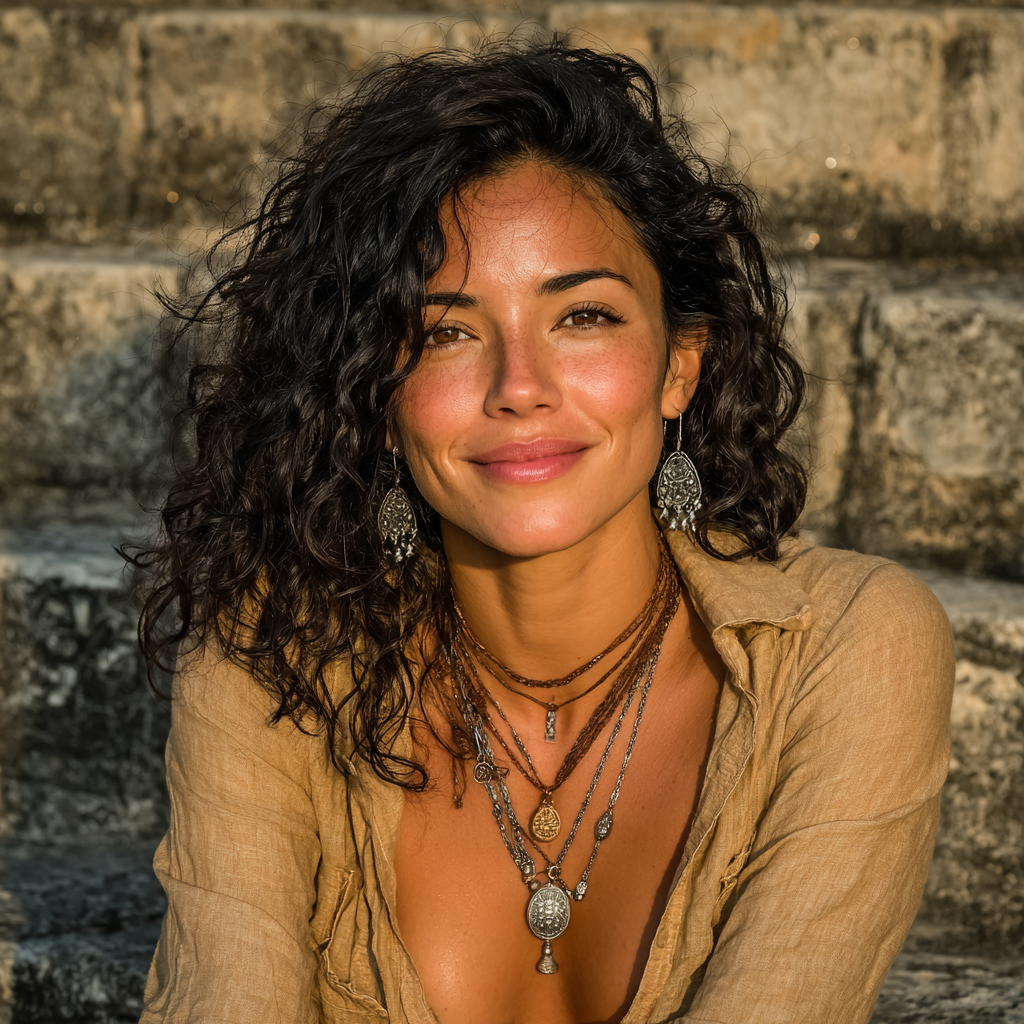
By Elena Vasquez
Cultural anthropologist and culinary storyteller. Elena spent a decade documenting traditional cooking methods across Latin America and the Mediterranean. She holds a PhD in Ethnography from Barcelona University and believes the best way to understand a place is through its kitchens and ancient streets.