
Phnom Penh: Where the Mekong Meets Memory — A Storyteller's Guide to Cambodia's Unquiet Capital
By Finn O'Sullivan, Irish storyteller and folklorist
The City That Refuses to Be a Transit Stop
Phnom Penh does not announce itself gently. It arrives in a roar of motorbikes, a haze of grilled squid smoke, and the persistent honking of tuk-tuk drivers who have spotted fresh luggage. For decades, travelers treated Cambodia's capital like a layover—a grim necessity before the real prize of Angkor Wat. They were wrong, and the city has never bothered to correct them. It simply waits, patient and bruised, for those willing to look closer.
I came to Phnom Penh expecting tragedy. I found something far more complicated: a city that carries its wounds openly but refuses to be defined by them. The Mekong and Tonlé Sap rivers meet here in a muddy confluence that Cambodians call Chaktomuk—"four faces"—and the city spreads outward from that junction like a story with no clean beginning or end. This is not a place you "do" in a day. It is a place you sit with, listen to, and let unsettle you.
The Weight of History: Tuol Sleng and Choeung Ek
No honest guide to Phnom Penh can avoid the Khmer Rouge. The regime's shadow stretches across every street, every conversation, every generation. Between 1975 and 1979, Pol Pot's forces murdered an estimated 1.7 to 2.2 million Cambodians—nearly a quarter of the population. Understanding this is not optional. It is the key that unlocks everything else you will see.
Tuol Sleng Genocide Museum (S-21)
The Tuol Sleng Genocide Museum occupies a former high school at Street 113, Phnom Penh 12304. In 1975, the Khmer Rouge converted these cheerful yellow buildings into Security Prison-21, one of roughly 150 torture centers operated nationwide. Between 17,000 and 20,000 people were imprisoned here. Only seven survived.
The museum opens daily from 8:00 AM to 5:00 PM. Admission is $5 USD for entry only, or $10 USD with the audio guide—which you should absolutely take. The guide includes survivor testimony and historical context that transforms the experience from merely horrifying to genuinely comprehensible. Most visitors spend two to three hours here, though some leave sooner, overwhelmed.
Building A preserves the torture rooms as they were found in 1979: metal bed frames, shackles, and bloodstains still visible on the floor. Building B displays the haunting black-and-white photographs taken of every prisoner upon arrival—thousands of faces staring blankly at cameras they did not choose to face. Building C shows the crude wooden cells constructed inside former classrooms, barely wide enough for a person to lie down. Building D documents the methods of interrogation and the bureaucratic machinery of genocide.
On weekday afternoons, usually between 2:30 PM and 3:00 PM, the museum sometimes hosts survivor testimony sessions. If you are fortunate enough to be present, you will hear from one of the seven who walked out alive. These sessions are not performances. They are acts of memory, delivered by elderly men who have spent forty years answering the question that haunts them: Why me?
Choeung Ek Genocidal Center (The Killing Fields)
Fourteen kilometers south of the city center lies Choeung Ek, the most infamous of Cambodia's hundreds of mass grave sites. The address is Roluos Village, Sangkat Cheung Aek, Dangkao District, Phnom Penh. The center opens daily from 7:30 AM to 5:30 PM, and admission is $6 USD, which includes an excellent audio guide and headphones.
The site was an orchard before the Khmer Rouge turned it into an execution ground. Prisoners from S-21 were trucked here at night, beaten to death to save bullets, and buried in mass graves. The central Buddhist stupa contains 8,000 human skulls arranged by age and sex, excavated from the surrounding fields. The audio tour incorporates survivor testimony and, most hauntingly, the actual music the regime played through loudspeakers to mask the sounds of execution.
Practical logistics: The two sites are best visited together, but be prepared for an emotionally exhausting day. Many visitors arrange a tuk-tuk for the combined trip—negotiate $15-20 USD for a round trip that includes waiting time. Alternatively, book a guided tour through your guesthouse. Start with Tuol Sleng in the morning, break for lunch, then proceed to Choeung Ek in early afternoon. Bring water, tissues, and the understanding that you will not be the same person leaving as you were entering.
What to Skip: Do not treat these sites as photo opportunities. Selfies with the skull stupa are not just tasteless—they actively harm the dignity of the dead. Avoid guided tours that rush you through in under an hour. This is not a checklist item. If you are not prepared to engage seriously, do not go.
The Royal Palace: Living Monarchy in a Republic
The Royal Palace, located at Samdach Sothearos Boulevard (Street 3), Phnom Penh, has served as the official residence of Cambodia's monarch since King Norodom relocated the capital from Oudong in 1866. The complex opens daily in two sessions: 8:00 AM to 11:00 AM and 2:00 PM to 5:00 PM, with the ticket office closing thirty minutes before each session ends. Admission is $10 USD, with an optional guided tour available for an additional $10 USD per group.
The architecture fuses traditional Khmer design with French colonial influence—golden spires rising above manicured gardens, elaborate murals depicting the Reamker (Cambodia's version of the Ramayana), and the kind of formal symmetry that demands slow walking. The Throne Hall, with its tiered roof and gilded details, opens to visitors when the King is not in residence. A blue flag on the central flagpole signals his presence.
The Silver Pagoda, named for the 5,000 silver tiles covering its floor, houses the Emerald Buddha and a 90-kilogram gold Buddha encrusted with 9,584 diamonds. You must remove your shoes before entering, and photography is strictly forbidden inside. Modest dress is enforced without exception—shoulders and knees must be covered. Scarves draped over shoulders are not accepted; wear actual sleeves.
What to Skip: Ignore tuk-tuk drivers outside who claim "the Palace is closed today." This is a persistent scam to divert tourists to commission-paying shops. Walk to the ticket booth yourself. Also skip the midday hours when the complex closes for lunch—the heat is oppressive and there is no shade inside the buildings.
The National Museum: Where Stone Speaks
Directly north of the Royal Palace at Street 13, corner of Street 178, the National Museum of Cambodia occupies a striking red terracotta building designed in traditional Khmer style by French architect George Groslier in 1917. The museum opens daily from 8:00 AM to 5:00 PM, with last admission at 4:30 PM. Tickets are $10 USD for adults, $5 USD for visitors aged 10-17, and 500 riels for Cambodians.
The collection spans over 14,000 artifacts from prehistoric times through the Angkorian period. The bronzes from the pre-Angkor period are exceptional—delicate Hindu deities cast with a skill that vanished for centuries. The sandstone gallery contains fragments from Angkor itself, including a head of Vishnu that once towered over a temple doorway. The central courtyard, filled with frangipani trees and lotus pools, provides necessary contemplative space between the heaviness of history.
Photography is not permitted inside the galleries, but the exterior and courtyard are fair game. Guided tours in Khmer, English, French, and Japanese can be arranged at the entrance. Plan for ninety minutes to two hours.
The Riverside: Phnom Penh's Communal Living Room
Every evening, the promenade stretching along the Tonlé Sap and Mekong transforms into the city's most democratic space. Cambodians of all ages walk, jog, practice aerobics to booming Khmer pop music, or simply sit on the concrete wall watching the water darken. Street vendors sell corn on the cob, grilled squid, and sugarcane juice squeezed fresh before your eyes for 1,000-2,000 riel (roughly $0.25-0.50 USD).
This is where Phnom Penh reveals itself most honestly. You will see teenage couples on motorbikes, grandmothers in patterned pajamas power-walking, monks in saffron robes scrolling smartphones, and children shrieking with delight at the simplest games. The riverside does not discriminate between tourist and local, rich and poor. It belongs to everyone.
Practical logistics: The best stretch runs from the Night Market area south past the Royal Palace. Arrive around 5:30 PM to catch the golden hour, stay through sunset, and eat dinner at one of the plastic-table restaurants that set up along the water. The weekend night market near the northern end offers grilled meats and fried noodles with riverside views.
Markets: Where the Real City Happens
Russian Market (Tuol Tom Poung)
Officially Tuol Tom Poung but universally known as the Russian Market for the Soviet expatriates who shopped here in the 1980s, this sprawling maze at Corner of Streets 440 and 155, Chamkar Mon District is where Phnom Penh's residents actually buy things. Unlike the grand Central Market with its art deco dome, this is an un-airconditioned warren of stalls selling everything from motorcycle parts to vintage Cambodian pop cassettes.
The back section houses tailors who can produce custom clothing in 24 hours—shirts for $15-25 USD, suits for $80-150 USD depending on fabric. Silk textiles, handwoven baskets, and silver jewelry fill the central aisles. Bargaining is expected, though starting prices are already lower than tourist markets. The market opens daily from roughly 7:00 AM to 5:00 PM, though individual vendors keep their own hours.
Street 240: The Gentrified Edge
Running parallel to the Royal Palace, Street 240 has emerged as Phnom Penh's most pleasant commercial strip. Foreign residents and affluent Cambodians browse boutiques selling Cambodian-designed clothing, handmade jewelry, and natural skincare products. Artisans Angkor operates a workshop and store at No. 48, Street 240 where visitors can watch craftspeople carve stone and weave silk, continuing techniques that nearly disappeared during the Khmer Rouge era.
Joma Bakery Cafe at No. 54, Street 240 occupies a restored colonial shophouse with courtyard seating and reliable Western-style breakfast. The Shop 240 next door offers similar coffee and atmosphere. Neither will change your life, but both provide air conditioning and decent WiFi—valuable commodities in a city that regularly hits 35°C.
Eating in Phnom Penh: Beyond Fish Amok
Cambodian cuisine deserves far more attention than it receives. Older than Thai and less fiery, it relies on fermented fish paste (prahok), fresh herbs, slow-simmered broths, and a French colonial legacy that left baguettes and strong coffee in its wake.
Romdeng
Located at No. 74, Street 174, Romdeng occupies a renovated colonial villa and operates as a training restaurant for former street youth. The social mission is genuine, but the food stands on its own. Their fish amok—steamed coconut curry with kroeung (lemongrass-herb paste) in banana leaf—is among the city's best, and the crispy red tree ants with beef provide an introduction to insect eating that even skeptics can manage. Main dishes run $5-9 USD. Open daily from 11:00 AM to 10:00 PM.
Malis
Celebrity chef Luu Meng's flagship at No. 136, Norodom Boulevard focuses on royal Khmer cuisine reconstructed from historical texts. Meng's grandmother cooked in the Royal Palace, and he has spent decades documenting regional recipes that nearly vanished. The saraman curry, heavy with dried Indian spices, and the refined fish amok are standouts. A tasting menu runs $35-45 USD. Open daily from 6:30 AM to 10:00 PM. Reservations recommended: +855 (0)15 814 888.
Khmer Taste
At No. 36, Street 178, this unpretentious local favorite serves reliable versions of Cambodian classics for $3-5 USD per dish. The bai sach chrouk (grilled pork with broken rice) is excellent, and the prahok ktis (fermented fish dip with pork and coconut) delivers the pungent, complex flavors that define Khmer cooking. Open daily from 7:00 AM to 9:00 PM.
Street Food Essentials
The riverside night market sets up along Preah Sisowath Quay each weekend evening, offering grilled meats, fried noodles, and sugarcane juice at plastic tables overlooking the water. For breakfast, seek out num banh chok—rice noodles in fish-based curry with morning glory and banana flower—from street carts near Orussey Market. A bowl costs roughly $1-1.50 USD and is best eaten before 9:00 AM, when the broth runs out.
What to Skip
The Tiger Beer tourist strip on Street 51: This backpacker ghetto offers nothing you cannot find in Bangkok or Ho Chi Minh City for half the price and twice the hassle. If you are traveling thousands of miles to drink cheap beer with other Westerners, reconsider your choices.
The Central Market for shopping: While the art deco architecture is worth admiring from the outside, the interior has been colonized by souvenir vendors selling identical T-shirts and carved wooden elephants. Prices are inflated for tourists, and the real commerce happens elsewhere.
One-day itineraries: Phnom Penh cannot be done in a day. Anyone who tells you otherwise is selling a bus ticket to Siem Reap. The city requires at least three full days to engage with its history, absorb its energy, and understand why Cambodians still call it "the Pearl of Asia."
Disrespectful photography at memorial sites: This bears repeating. The Killing Fields and Tuol Sleng are not Instagram backdrops. Put the camera away, listen to the audio guide, and be present.
Nightlife: Rooftops and Khmer Rock
Phnom Penh's nightlife divides into three distinct ecosystems: the backpacker bars of Street 51 (avoid), the expat pubs around Bassac Lane (tolerable), and the genuinely interesting venues that have emerged in recent years.
Sora Skybar
On the 37th floor of the Vattanac Capital Tower at No. 60, Preah Monivong Boulevard, Sora offers 360-degree views across the city and river. Cocktails run $12-15 USD, and the dress code is strictly enforced—no shorts, no sandals. Open from 5:00 PM to midnight. Arrive before sunset to watch the city transition from gold to electric neon.
Eclipse Sky Bar
At the Phnom Penh Tower on Monivong Boulevard, Eclipse provides similar vistas at slightly lower prices ($8-12 USD for cocktails). The atmosphere is more relaxed than Sora, and the rooftop pool is open to bar patrons after 6:00 PM.
Jet's Container Night Market
For live music, this outdoor venue near Russian Market hosts Cambodian bands playing everything from traditional wedding music to Khmer-language rock. Beer is cheap, the crowd is local, and the energy is infectious. Open from 6:00 PM to midnight, Thursday through Sunday.
Practical Logistics
When to Visit
The dry season runs November through April, with temperatures peaking around 35°C in March and April. The wet season brings afternoon downpours from May through October, though mornings often remain clear and the countryside turns vividly green. November's Water Festival draws millions of Cambodians to the riverside for boat races—energetic but chaotic, requiring advance hotel booking.
Getting Around
Tuk-tuks are the default transport: motorcycles with covered trailers that negotiate traffic more efficiently than cars. Short rides cost $2-3 USD; cross-town journeys $4-6 USD. PassApp and Grab operate ride-hailing services with set prices that eliminate haggling. For independent exploration, renting a bicycle ($2-3 USD daily) works well on flat terrain, though traffic requires constant vigilance.
Where to Stay
Riverside (Daun Penh District): Convenient for walking to the Royal Palace, National Museum, and riverside promenade, but noisy and crowded. Good for first-time visitors who want to be in the center of everything.
BKK1 (Chamkar Mon District): Quieter, more restaurants and cafes, better for longer stays. The area around Streets 51 and 282 has excellent dining options.
South of Center (near Aeon Mall): Developing rapidly with modern apartments and malls. Convenient for self-catering but requires tuk-tuks to reach the historic center.
Budget: Dorm beds $5-8 USD at hostels like Mad Monkey or One Stop. Mid-range: Hotels with pools $40-70 USD—try The Plantation or Tea House. Luxury: Raffles Hotel Le Royal at 92 Rukhak Vithei Daun Penh has operated since 1929, hosting Charlie Chaplin and Jackie Kennedy. Colonial-era suites run $200-400 USD.
Money Matters
Cambodia uses both US dollars and Cambodian riel, with riel primarily used for small transactions under $1. ATMs dispense dollars. Credit cards are accepted at mid-range and upscale restaurants but rarely at street food stalls. Carry small bills—tuk-tuk drivers never have change for $20.
Safety
Phnom Penh is generally safe for attentive travelers. The main risks are bag-snatching from passing motorbikes (keep bags away from the street side) and tuk-tuk scams (agree on prices before departure). Violent crime against tourists is rare. The riverside and BKK1 are safe to walk at night; exercise more caution in poorly lit areas.
The Story That Stays With You
I spent my last evening in Phnom Penh sitting at a plastic table on the riverside, eating grilled squid and watching the fishing boats return as the sky turned orange over the Mekong. An elderly Cambodian man sat down beside me, uninvited, and began talking about his childhood in the city before the war—how his family lived near the palace, how his father sold noodles from a cart, how everything changed in 1975.
He spoke for twenty minutes without asking my name. Then he stood up, smiled, and walked away. I never saw him again.
That is Phnom Penh. It does not perform for tourists. It simply lives its complicated, beautiful, painful existence, and if you are patient enough to sit still, it will tell you things you did not come prepared to hear. The city rewards those who look beyond its difficult history without ignoring it. Stay long enough to understand why Cambodians call their capital "the Pearl of Asia." They are not wrong. They are just asking you to look deeper.
Finn O'Sullivan is an Irish storyteller and folklorist who hunts for the narratives that do not make guidebooks—the pub legends, the family sagas, the whispered histories passed between generations. He has spent the last decade documenting oral traditions across Southeast Asia, from the hill tribes of northern Vietnam to the fishing villages of southern Cambodia.
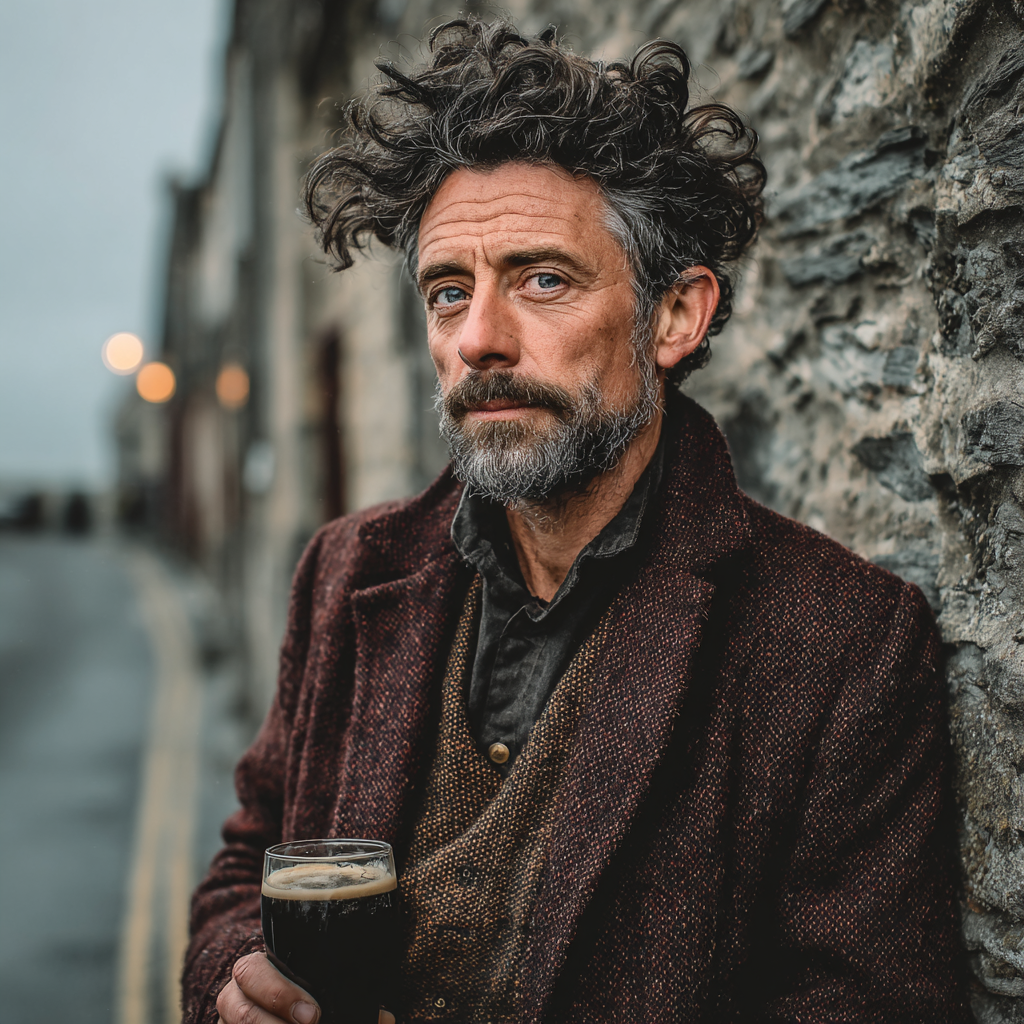
By Finn O'Sullivan
Irish storyteller and folklorist. Finn hunts for the narratives that do not make guidebooks—the pub legends, the family feuds, the neighborhood heroes. He believes every street corner has a story if you know who to ask.