
Bhutan: The $100-a-Night Kingdom That Made Tourism Pay for Forests, Free Healthcare, and Happiness
Bhutan cut its famous $200 daily fee to $100 per night through August 2027. Here is what the fee actually funds, what a trip really costs in 2026, and how to see Tiger's Nest, Punakha, and the crane valleys without the crowds.
On this page
Most countries treat sustainable tourism like a checkbox. They slap a green leaf on the brochure, install a few solar panels at the airport, and call it a day. Bhutan does not do this. In Bhutan, sustainable tourism is the entire operating system — written into the constitution, enforced by a nightly fee, and measured in things other countries gave up on decades ago.
Here is the number most people still get wrong: since September 1, 2023, the Sustainable Development Fee has been $100 per person per night, not $200. The Royal Government halved its headline levy for four years, through August 31, 2027, while keeping the mechanism intact. Children aged 6 to 12 pay $50. Children under six pay nothing. The fee still funds free healthcare, free education, and conservation for Bhutan's roughly 700,000 citizens. The forests still cover more than 70 percent of the country — the constitution mandates a minimum of 60 — and the kingdom remains the world's only carbon-negative nation, absorbing roughly nine million tonnes of CO2 a year while hydropower supplies about 95 percent of its electricity.
And it is working as policy, not just poetry. In 2025, Bhutan recorded 209,376 tourist arrivals, up 44.33 percent year on year, generating USD 43.31 million in SDF revenue alone. Arrivals are still capped in spirit if not on paper: this is the "high value, low volume" model, and it is why the cranes still winter in Phobjikha without a single hotel blocking their flight path.
This guide is for travelers who want to understand what that $100 actually buys, what a trip really costs in 2026, and how to spend your time in a country that refuses to let tourism run wild.
What the Fee Covers — and What It Does Not
The SDF is a development levy, not a travel bundle. It does not include your hotel, meals, vehicle, or guide. What it funds is the system that makes low-impact tourism possible: forest rangers, wildlife corridors, waste management in remote districts, and the social infrastructure — hospitals, schools — that Bhutanese citizens receive free. One hundred percent of it goes to the government's consolidated fund; your tour operator cannot keep a ngultrum of it.
You also pay a separate visa fee of $40. Since January 2026, a 5 percent GST applies to goods and services in Bhutan, so hotel and restaurant bills now carry a small surcharge on top of quoted rates.
One thing that no longer exists: the pandemic-era "4+4" and "7+7" long-stay free-night incentives were discontinued at the end of 2023. Do not let an old blog post or a stale tour page sell you a deal that expired two years ago. A 24-hour SDF waiver for the border towns (Phuentsholing, Gelephu, Samdrup Jongkhar) technically continues, but for a classic Paro–Thimphu–Punakha itinerary it is irrelevant.
Regional travelers get different treatment. Indian citizens pay a reduced SDF of Nu 1,200 (about $14) per night and can arrange a permit without a full tour package. Citizens of Bangladesh and the Maldives have lighter entry rules than other nationalities but should confirm current terms with the Department of Immigration before booking.
Everyone else — and that means Americans, Europeans, Australians, most Asians — books through a licensed Bhutanese tour operator. This is not a suggestion. It is the law, and it is the price of the model.
Getting In: Two Airlines, One Airport, and the Gelephu Mirage
Only two airlines fly into Bhutan: Drukair and Bhutan Airlines. Both land at Paro International Airport (PBH), at 2,200 meters, on a valley approach between 5,000-meter peaks that requires specially certified crews. Sit on the left side of the plane flying in from Bangkok or Kathmandu for the Himalayan wall.
Your operator files the visa application on the Department of Immigration portal; you receive an approval letter by email before departure, and the visa is stamped in your passport on arrival. Your passport needs six months of validity from entry.
As of 2026, the route network is thin and reliable: Delhi, Kathmandu, and Bangkok are served daily or near-daily; Kolkata multiple times weekly; Singapore, Dhaka, and Dubai a few times a week. Budget $600 to $1,200 for return flights from Bangkok and $300 to $400 per one-way leg from Kathmandu.
You will read about Gelephu International Airport and the Mindfulness City rising on Bhutan's southern plains. The first international flight into Gelephu landed in December 2025 — a limited Kolkata service running once or twice a week. The full new airport, with a latticed-timber terminal that won Future Project of the Year at the 2025 World Architecture Festival, is slated for inauguration around December 2029, with capacity for 123 flights a day. It is the future. It is not 2026 logistics. Plan around Paro.
Paro: The Arrival Valley
Everyone lands in Paro, and almost nobody regrets it. The valley floor sits at 2,200 meters in a bowl of rice paddies watched over by Rinpung Dzong — "fortress on a heap of jewels" — rebuilt in 1644 and still the district's administrative and monastic heart. Entry for foreign visitors is Nu 500 (about $6). It is also the stage for the Paro Tshechu, held March 29 to April 2 in 2026, when monks perform cham masked dances in the courtyard and a giant thongdrel banner is unfurled before dawn. Festival dates drift with the lunar calendar each year, so check the Department of Tourism calendar before locking flights.
Above the dzong, the round watchtower of Ta Dzong houses the National Museum (Nu 500, Tuesday to Sunday, closed Monday). Seven kilometers away in Lango village, Kyichu Lhakhang (Nu 500) is one of the oldest temples in the Himalayas — a 7th-century foundation attributed to the Tibetan emperor Songtsen Gampo, its orange trees heavy and its prayer wheels worn smooth by seven centuries of hands.
Then there is Taktsang Palphug Monastery — the Tiger's Nest. The facts, because you will want them: the trailhead is about 12 km north of Paro, past the ruins of Drugyel Dzong. The hike is 4.5 km one way with roughly 700 meters of ascent, taking five to six hours round trip at altitude. The monastery entry fee is Nu 1,000 for foreign adults (children half price). Gates open around 8:00 AM; in high season be at the trailhead by 7:30, because the last entry is early afternoon and the monastery closes by late afternoon. Horses can carry you to the halfway cafeteria for about Nu 800 to 1,000 one way — after that, the final 700-plus stone steps to the temple are on foot, always. No photography inside; cameras and phones are left at the gate.
Go early. Go on your first full day only if you have acclimatized — the altitude will humble you regardless of fitness. And if your legs say no, the view from the cafeteria is 80 percent of the experience, and nobody worth listening to will judge you.
Back in the valley, a farmhouse hot-stone bath — river stones heated in a wood fire, dropped into a cedar trough of water and artemisia — runs Nu 1,500 to 3,000 and is the single best recovery tool in the country.
Thimphu: The Capital Without Traffic Lights
Thimphu, an hour over the ridge from Paro, is the world's only capital without traffic lights. The main intersection has a policeman directing traffic by hand, which is charming and genuinely functional.
Start at the National Memorial Chorten on Doeboom Lam (Nu 500), built in 1974 in memory of the third king. Come at dawn, when the circumambulation circuit is full of old women spinning prayer wheels and office workers getting their merit in before work. Above the city at Kuenselphodrang sits the Buddha Dordenma (Nu 300 under the current monument-fee schedule, though some sites list no charge — your guide handles the day's payments), a 51.5-meter bronze Buddha that watches over the southern valley and houses 125,000 smaller statues inside.
Tashichho Dzong (Nu 500) on the Wang Chhu is Bhutan's seat of government and the summer residence of the central monastic body. Because civil servants work inside, tourists visit after 5 PM on weekdays or on weekends — arrive for late light on the golden roofs. In Motithang, the Takin Preserve (Nu 300) protects Bhutan's improbable national animal, a gnu-goat hybrid that looks assembled from spare parts. The Folk Heritage Museum in Kawajangsa (Nu 300) is a three-story rammed-earth farmhouse that explains, better than any exhibit, how most Bhutanese lived until very recently.
The weekend market runs Friday through Sunday on the banks of the Wang Chhu: red rice, dried chilies stacked like cordwood, wild honey, betel nut, and archers at the Changlimithang ground nearby. It is one of the few places you will interact with Bhutanese life outside the tour frame — use it.
Punakha: Two Rivers, One Perfect Dzong
The road east crosses Dochula Pass at 3,100 meters, where 108 chortens ring a temple and, on clear autumn and winter mornings, the entire eastern Himalayan range stands in a single glance. Descend into subtropical warmth and you reach Punakha Dzong (Nu 500), built in 1637 at the confluence of the Pho Chhu (male) and Mo Chhu (female) rivers. It is arguably the most beautiful building in Bhutan — whitewashed walls dropping to the water, jacarandas burning purple in April, and the cantilever bridge that groans pleasantly underfoot. In winter it hosts the central monastic body and the Je Khenpo, Bhutan's chief abbot.
Nearby in Lobesa, a 30-minute walk through rice paddies ends at Chimi Lhakhang (Nu 500), the fertility temple of the 15th-century "Divine Madman" Drukpa Kunley. The phallus paintings on village houses are not souvenirs of a joke — they are a living, unembarrassed strand of Bhutanese Buddhism.
Phobjikha: Where the Cranes Audit the Valley
Every November, 300 to 400 black-necked cranes descend from the Tibetan plateau into the glacial bowl of Phobjikha, and the valley rearranges itself around them. The Black-Necked Crane Information Centre (Nu 200–300) runs observation hides and explains the bird's place in local folklore — the Bhutanese believe the cranes circle the Gangtey monastery three times on arrival and departure, as if paying respects.
What you will not see is equally instructive: no high-rises, no overhead power lines (the whole valley's cables were buried), and a building code that keeps every roofline below the tree line. The 4.5-km Gangtey Nature Trail takes about two hours through dwarf bamboo and blue pine. If you want to sleep here, Gangtey Lodge is the valley's anchor property, and the crane festivals run while the birds are in residence, typically November to March.
Bumthang and the East: Only If You Have Ten Days
Central Bhutan's Bumthang valleys are where Buddhism first rooted in the kingdom — Jambay Lhakhang, another 7th-century foundation, and Kurjey Lhakhang, where Guru Rinpoche is said to have left his body imprint in a cave. This is also Bhutan's improbable brewing country: the Bumthang Brewery bottles Red Panda wheat beer, and its bar is one of the few places in the kingdom where a monastery visit and a craft beer coexist in a single afternoon.
Getting there is the test: a 30-minute flight from Paro or a ten-hour drive over the Yotong La. If your trip is shorter than ten days, the east is a reason to come back, not a box to tick.
When to Come — and When the Mountains Decide
Spring (March to May): rhododendrons at altitude, warming valleys, and the Paro Tshechu — the marquee festival, held March 29 to April 2 in 2026. Book lodges six months out for festival weeks.
Autumn (September to November): the driest air and the clearest mountain light. The Thimphu Tshechu ran September 21 to 23 in 2026, Gangtey's followed September 24 to 26, and the Jambay Lhakhang Drup in Bumthang filled October 18 to 21. This is peak season for a reason.
Winter (December to February): cold — Thimphu drops below freezing at night — but clear, empty, and crowned by the cranes in Phobjikha. The best rates of the year.
Monsoon (June to August): wet, leech-infested trails, and landslide-prone roads. Skip it.
One honest caveat from recent history: on October 4 and 5, 2025, an unprecedented rainstorm flooded districts across western and southern Bhutan — Samtse, Chukha, Haa, Paro, Thimphu — washing out roads and bridges and knocking five hydropower plants offline. The kingdom repairs fast, and no major visitor sites closed permanently, but the lesson stands: in the Himalaya, even shoulder season is negotiated with the weather. Build a buffer day into any tight itinerary and check road status with your operator in the first half of October.
Treks Without the Crowds
The Druk Path connects Paro to Thimphu in four days over ridgelines above 4,000 meters, past alpine lakes where herders camp in summer. Moderate, guided, and the right amount of wild for most travelers. The two-day Bumdra Trek climbs to a 3,800-meter campsite above Paro with the Tiger's Nest seen from above — no technical skill required, just tolerance for thin air.
The Trans-Bhutan Trail is the revelation most visitors have never heard of: a 402-kilometer pilgrimage route restored and reopened in 2022, crossing the kingdom east to west. You can walk a single section near Punakha in a day, take a multi-day guided trek over its western highlights (9-day departures ran September through November 2026), or commit to the whole thing in stages. Community homestays line the route, which means your nights put money directly into village households.
And then there is the Snowman Trek — 25 days, eleven passes over 4,500 meters, routinely called the hardest trek in the Himalayas. Fewer than 50 people complete it in a good year. Book six months ahead and train at altitude before you arrive.
Where the Money Sleeps
A realistic mid-range trip — three-star hotels, private guide and driver, all meals — runs $200 to $250 per person per day on top of nothing: that figure already assumes the $100 SDF is included in your mental math as a separate $700 line for a week. If an operator quotes a "daily rate," ask explicitly whether the SDF is inside or on top of it.
At the top, three brands divide the kingdom. COMO Uma Paro (from roughly $400 to $500 a night) is the accessible luxury entry, with the Shambhala spa and Bukhari restaurant. Six Senses runs five lodges across the five main valleys with serious wellness programming. Amankora, the pioneer since 2004, operates on a journey basis — about $1,300 to $1,500 per person per night, roughly $2,600 for a couple — with all meals, private guide, and driver folded in; its pay-for-5-stay-7 packages reward longer commitments. Note for 2026 planners: Amankora's Paro and Punakha lodges closed May 15 to September 15 for renovation.
At the other end, ask your operator for certified community homestays and farmstays in Bumthang or along the Trans-Bhutan Trail. Shared bathrooms, wood stoves, no Wi-Fi — and every ngultrum goes to a farming family. That is the SDF philosophy continued inside the lodging economy.
The Honest Money Math: Seven Nights, One Person
The SDF: $700. The visa: $40. Return flights from Bangkok: $600 to $1,200. A mid-range private package: $700 to $1,050. Monument fees, tips, and incidentals in cash: $150 to $250. Total: roughly $2,200 to $3,300 per person for a week of genuinely comfortable travel — plus whatever you spend on rugs and dzi beads.
Luxury travelers circling all five valleys with Aman or Six Senses should budget $12,000 to $25,000 per person for seven to ten days, all-in.
There is no backpacker workaround. You cannot enter independently, hitchhike between dzongs, or sleep in hostels. This is by design, and the design works — but it does mean Bhutan is a trip you plan, not a place you drift into.
What to Skip
The three-day blitz. The minimum most operators will sell you is five nights, and even that barely covers Paro and Thimphu. A week is the practical floor; ten days gets you Punakha and Phobjikha without whiplash.
The handicraft emporiums selling "authentic" Bhutanese goods made in Nepal. Real thangkas and hand-woven textiles come from named ateliers: the Gagyel Lhundrup Weaving Centre in Thimphu, the Yathra Weaving Centre in Bumthang. Ask who wove it. If the answer is a factory, walk.
Tiger's Nest if you are not fit enough for a steep, high-altitude hike. The cafeteria at the halfway point delivers most of the view with none of the cardiac event. Altitude does not care about your marathon time.
Photography inside temples and dzongs without explicit permission. Monks and guards will stop you, and the rule is religious, not aesthetic. The memories will have to be yours alone — which, in Bhutan, feels strangely appropriate.
Unlicensed middlemen. Every operator must hold a Tourism Council of Bhutan license. Verify the license number on the official registry before paying anything, and pay the SDF through the government portal so the money actually reaches the consolidated fund. A deal that is $200 cheaper is usually $200 of somebody's salary missing.
Overstuffed itineraries. Bhutan's highways average 25 to 35 km/h. Paro to Bumthang is ten hours, not three. If your operator promises four valleys in five days, they are selling you the inside of a Toyota.
Expecting spontaneity. The mandatory guide system rules out unplanned detours, and the fee rules out budget drift. If that grates, spend the money in Nepal instead — Bhutan rewards travelers who surrender to the frame, not fight it.
Practical Notes
Money. The ngultrum is pegged 1:1 to the Indian rupee and trades around Nu 85 to 90 per US dollar. Cards work only in major hotels and a few Thimphu shops. Carry cash — dollars or euros exchange cleanly, and Indian rupees are accepted everywhere (though 500 and 1,000-rupee notes are sometimes refused, and ngultrums are useless outside Bhutan, so spend them down before Paro).
Connectivity. B-Mobile and TashiCell sell tourist SIMs for roughly Nu 300 to 700 with generous data. Coverage is strong in the west and thin in the east; most lodges have Wi-Fi that works when the mountains allow it.
Altitude. Paro sits at 2,200 meters, Thimphu at 2,320, Dochula at 3,100, Tiger's Nest at 3,120. Most travelers feel nothing worse than a headache; take the first day slow, hydrate, and save the monastery climb for day two or three.
Dress code. Shoulders and knees covered at every religious site; hats off inside; no smoking on temple grounds. In dzongs, the required dress is stricter — your guide will carry a spare kabney (scarf) if you need one.
Health. The SDF funds a healthcare system that will treat you in an emergency, but every reputable operator still requires travel insurance — buy it. And pack layers: in Bhutan the weather changes by altitude, not by season, and a single day can cross three climate zones.
Why I Keep Coming Back
I am a conservation biologist by training, and I have spent fifteen years watching destinations confuse marketing with mechanism. Bhutan is the one place where the mechanism holds. The fee is real and the receipts are public. The forest cover is constitutional law, not a pledge with an expiry date. The cranes arrive every November into a valley that refused electricity pylons for their sake. And when freak storms — like October 2025's — test the infrastructure, the same levy the tourists grumbled about pays for the rebuild.
You will not backpack Bhutan. You will not bar-hop it or drone-fly it. You will walk into Rinpung Dzong at 8 AM with your guide, watch a farmer burn incense at Kyichu Lhakhang before the tourists arrive, and eat red rice with your hands at a farmhouse table while the owner explains why the cranes are sacred. That is the product. The $100 a night is the receipt. I have written this guide so you can decide, with honest numbers, whether the trade is yours.
I think it is.
— Priya Sharma, conservation biologist and sustainable tourism advocate. When she is not auditing tourism models in the Himalayas, she is counting cranes in Phobjikha.
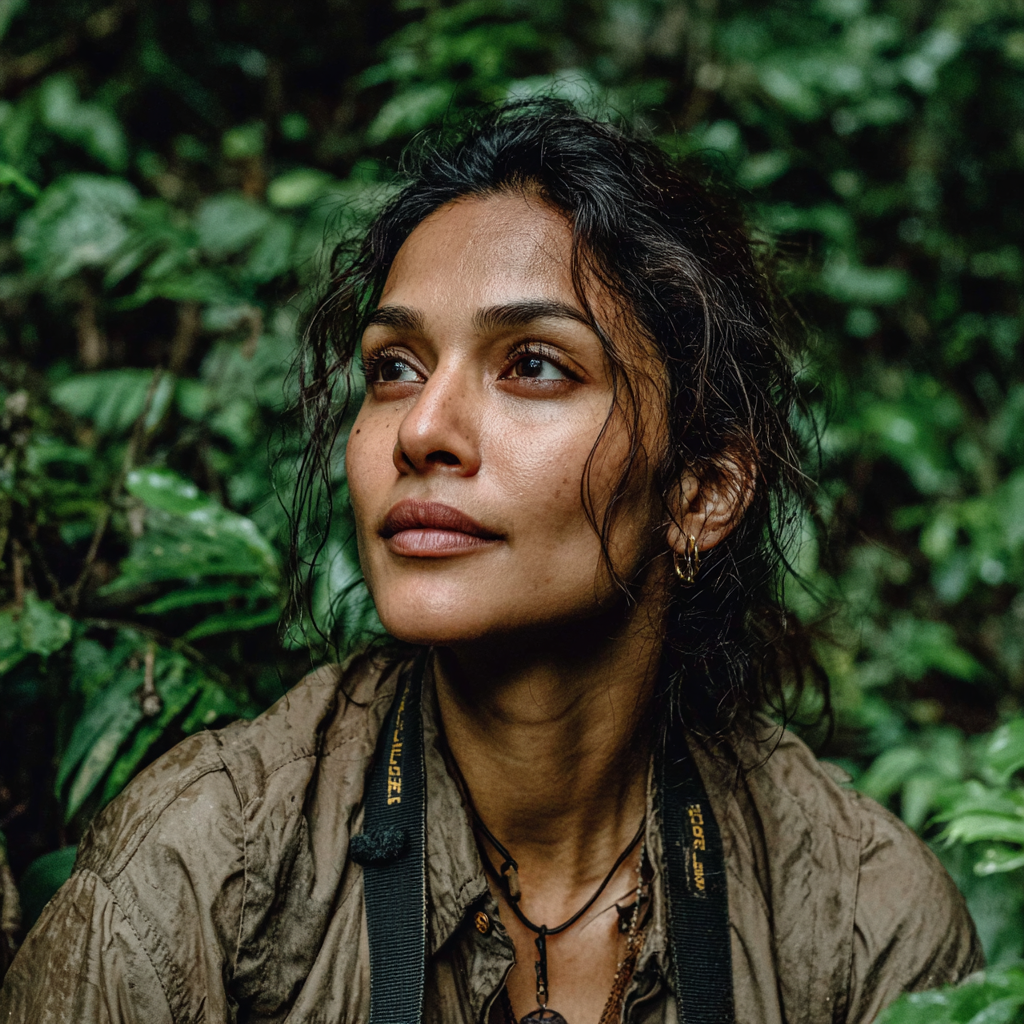
About Priya Sharma
Conservation biologist and sustainable tourism advocate. Priya works with eco-lodges and wildlife sanctuaries to promote ethical travel practices. She holds an MSc in Biodiversity Conservation and has spent years tracking endangered species across the Indian subcontinent.
More by Priya Sharma