
Minsk, Belarus: The Last Soviet Capital — A Field Guide to Stalinist Avenues, Underground Cafes, and the City That Refuses to Be European
The Story Nobody Tells
I came to Minsk because a taxi driver in Dublin told me I was an idiot. "There's nothing there," he said, glancing at my boarding pass. "Just concrete and cops." He was half right. The concrete is there, alright — fifteen kilometers of it, laid down by architects who had a blank canvas and a political ideology to enforce. The cops are there too, though they do not wear the uniforms you expect. But what that taxi driver missed, what most travelers miss, is that Minsk is the last place in Europe where history has not been sanitized for tourists. The Soviet Union collapsed everywhere else. Here, it simply changed its name.
Since 2018, citizens of 74 countries can enter visa-free for 30 days through Minsk National Airport. The city is no longer closed. It is simply overlooked, which means you will have the place largely to yourself. I spent eleven days here in late September, when the birch trees along Independence Avenue turn gold and the heating vents start pumping steam into the early dusk. By day six, I stopped checking my watch. Minsk does not run on your schedule. It runs on its own strange rhythm, one that has been ticking since 1944.
What Actually Happened Here
Minsk was flattened in 1944. The retreating German army burned eighty percent of the city to the ground. What rose in its place is one of the most complete examples of Stalinist urban planning outside Russia. The architects had a blank canvas, and they used it. The result is a city of broad avenues, symmetrical ensembles, and buildings that announce their purpose before you read the sign. The House of Government on Independence Square (praspiekt Niezaliežnasci 2) is a textbook example: Corinthian columns, triangular pediment, and a clock tower that dominates the plaza. It is not subtle. It was not meant to be.
The name of the main avenue has changed six times in the last century — from Governor's Street to Stalin Street to Independence Avenue and back again — which tells you something about the country's political turbulence. The avenue is wide enough to land a plane on, a design feature that was not accidental. Soviet urban planners liked streets that could double as emergency runways. Walk it from the railway station to the outskirts and you pass through distinct eras of construction: the 1950s Stalinist core with its wedding-cake buildings, the 1960s Khrushchev modernism with its prefab panels, the 1980s late-Soviet functionalism, and the occasional glass-and-steel insert from the Lukashenko years.
The Museum of the Great Patriotic War (praspiekt Pieramohcau 8) moved to a new building in 2014 near Victory Park. It is enormous and exhaustively detailed. The central hall has a domed ceiling with a mosaic of partisans and soldiers. The most affecting section is on the Minsk Ghetto, where 100,000 Jews were held before deportation to killing centers. The museum does not soften the history. Open Tuesday–Sunday, 10:00–18:00. Entry is 10 BYN (≈€3.20), free for students with ID.
The Architecture of Control (and Why It Is Beautiful)
Independence Avenue runs nearly fifteen kilometers through the center, one of the longest city thoroughfares in Europe. I walked the full length on my third day, starting at 6:30 AM when the street sweepers were still out and the metro had not yet filled with commuters. The best sections are between Yakub Kolas Square and October Square, where the Stalinist buildings stand in perfect symmetry — House of Government, the Central Post Office, the former Ministry of Agriculture with its stone friezes of wheat and tractors. Look up. The details are extraordinary: gilded spires, hammer-and-sickle motifs hidden in cornices, mosaic panels showing steelworkers and collective farm heroes.
The National Library of Belarus (praspiekt Niezaliežnasci 116) opened its new building in 2006, and it looks like nothing else in the city. The structure is a rhombicuboctahedron, a twenty-six-sided geometric solid, covered in reflective glass. At night it is lit in changing colors — blue, green, gold — that are visible from across the city. It is the kind of building that architects either love or hate, with no middle ground. The observation deck on the 23rd floor opens at 12:00 and costs 4 BYN (≈€1.30). The view is flat, because Minsk is flat, but you see the full scale of the city's Soviet grid. Inside, the reading rooms are quiet and well-heated, which matters in January when the temperature drops to minus fifteen.
The metro is worth using even if you do not need to go anywhere. Opened in 1984, it is spotlessly clean and runs on time. The stations are decorated in the late-Soviet style: chandeliers, marble panels, and mosaics of workers and cosmonauts. Institute of Culture station (Института Культуры) has a ceiling of stained glass. The trains run every three minutes during the day. A single ride costs 0.90 BYN (≈€0.30). The tokens are brass coins that feel satisfyingly heavy in your hand. Keep one as a souvenir.
Trinity Hill and the River That Remembers
The reconstructed Old Town, called Trinity Hill (Trajeckaje Pradmiescie), sits on the Svislach River near the center. It is small. You can walk the whole thing in twenty minutes. The buildings are pastel-colored reconstructions of what stood before the war, with wooden balconies and steep roofs. Some visitors dismiss it as artificial, which misses the point. Belarus rebuilt this quarter in the 1980s as a deliberate act of cultural restoration, not as a Disneyfication project. The result is quieter and more residential than most Old Towns in Europe. There are no chain stores. The cafes are local. The benches face the river. It is a place where Minsk residents actually go.
The Island of Tears (Vostraŭ Slioz), also called the Island of Courage and Sorrow, sits in the river just below Trinity Hill. It is a memorial to the 771 Belarusian soldiers who died in the Soviet-Afghan War. The centerpiece is a small chapel with an iconostasis inside. The figures on the exterior are not heroic. They show mothers, widows, and sisters waiting. The chapel is active. Candles burn inside even on weekdays. The island is connected to the shore by a footbridge that shakes slightly when you walk on it. Local couples come here in the evening. It is one of the most emotionally direct war memorials in Eastern Europe, partly because it commemorates a conflict that most Western visitors never think about. Free, open 24 hours.
Walk the riverbank path east from Trinity Hill toward Niamiha metro station. It is one of the most pleasant strolls in the city, passing through birch groves and past fishing spots where old men sit with cans of Alivaria beer. In September the leaves fall into the water and drift toward the Minsk Sea reservoir five kilometers north.
Where to Eat and Drink
Belarusian cuisine is honest and heavy. Draniki — potato pancakes served with sour cream — appear on every menu. Here is where to find the best versions, plus the spots locals actually frequent.
Vasilki (praspiekt Niezaliežnasci 16 and vulica Janki Kupaly 25) is a chain that sounds touristy but is actually where locals eat. The decor is bright blue and white, the portions are enormous, and the prices are from another decade. A full meal with a local beer costs 15–25 BYN (≈€4.80–€8.00). Order the draniki with machanka (pork stew), the kolduny (meat dumplings), and the cold beetroot soup. Open 10:00–23:00 daily.
Kamyanitsa (vulica Pervomajskaja 18, Upper Town) is the atmospheric choice. Set in a 19th-century merchant's house with exposed brick and candlelight, it serves traditional Belarusian cuisine with more refinement than Vasilki. The machanka here is richer, the draniki crispier, and the kvass is brewed on-site. Average check: 40–60 BYN (≈€13–€19). Open 12:00–23:00, reservations recommended for dinner.
Lido (praspiekt Niezaliežnasci 49/1, near Yakub Kolas Square) is a self-service cafeteria chain that every Minsk resident has eaten at. Point at what you want — draniki, kotlety, borscht, compote — and pay at the end. A full lunch costs 10–20 BYN (≈€3.20–€6.40). The quality is consistent, the portions are Soviet-sized, and the English translations on the menu mean you will not accidentally order tripe. Open 08:00–22:00 daily.
Litviny (vulica Karla Marksa 40) is the modern Belarusian restaurant that food critics write about. Chef Pavel Baranovsky reimagines traditional dishes with local ingredients — venison with cranberry sauce, river fish with wild mushrooms, buckwheat porridge with truffles. The space is minimalist, the wine list is excellent, and the prices are still half what you would pay in Warsaw. Average check: 70–100 BYN (≈€22–€32). Open 12:00–23:00, closed Mondays.
Depo (vulica Kamsamolskaja 19 and vulica Aktrabrskaja 19) is a trendy cafe and wine bar with two locations. They make modern blini, excellent mulled wine in winter, and a cheese board that rivals anything in Berlin. A glass of Georgian wine costs 12 BYN (≈€3.80). Open 09:00–23:00 daily.
Coffee Mouse (vulica Karla Marksa 18, near Independence Square) is the best coffee shop in the center. Try the cheese raf — an espresso with cream cheese foam that sounds wrong and tastes perfect. A coffee costs 6–9 BYN (≈€2–€3). Open 08:00–21:00 daily.
The national drink is kvass, a fermented rye bread beverage that tastes like liquid sourdough. It is sold from yellow tanker trucks on the street in summer for 1 BYN per cup. The beer is also excellent. Alivaria (founded 1864) is the oldest brewery — their unfiltered wheat beer is slightly sweet and available everywhere for 3–4 BYN per half-liter. For something stronger, try Minsk Kristall vodka, distilled locally since 1893. A bottle from a supermarket costs 15 BYN (≈€4.80).
Where to Stay
Minsk has surprisingly good accommodation at prices that feel like a mistake.
Trinity Hostel & Tours (vulica Staravilienskaja 12) is the best budget option, 100 meters from Trinity Hill. Dorms from 35 BYN (≈€11), private rooms from 80 BYN (≈€26). The staff organize visa-free registration and speak excellent English.
Loft Hostel (vulica Kazimiraŭskaja 6) is slightly further out but near excellent restaurants and coffee shops. Dorms from 30 BYN (≈€10), private rooms from 70 BYN (≈€22). The common area has a fireplace and a bookshelf of Soviet-era travel guides.
Boutique Hotel Buta (vulica Myasnikova 7) is the mid-range sweet spot. Located in a converted 19th-century townhouse near the Bolshoi Theatre, with free WiFi, a small pool, and a breakfast buffet that includes draniki. Rooms from 180 BYN (≈€58) per night.
Hotel Europe (vulica Internacyjanalnaja 28) is the grand dame of Minsk hotels, built in 2007 in the style of a pre-revolutionary luxury hotel. The location is perfect — between Independence Square and the Opera House. Rooms from 350 BYN (≈€112) per night, but often discounted to 250 BYN (≈€80) in shoulder season.
The Living City: What to Do Beyond the Monuments
Gorky Park (between Independence Avenue and the river) is the city's main green space. In summer it has an amusement park, paddle boats, and ice cream vendors. In winter the paths are cleared of snow by 07:00 and the bare trees are strung with lights. The Ferris wheel is small and slow — 5 BYN for fifteen minutes. From the top you see the full width of the avenue and the forest that begins at the city's edge. Minsk is surrounded by woods. You can be in birch forest within thirty minutes of leaving the metro.
The Yanka Kupala National Academic Theatre (praspiekt Niezaliežnasci 7) is the main drama venue, named after the country's most important poet. The building itself, a 19th-century structure with a green dome, survived the war with damage that was later repaired. Tickets range from 15 to 40 BYN (≈€4.80–€13), depending on the seat. Even if you do not understand Russian or Belarusian, the building is worth entering. The interior has a gilt auditorium and velvet seats that have not been replaced since the 1970s. Performances most evenings at 19:00, matinees on Sundays at 12:00.
For something completely different, the Cat Museum (vulica Internacyjanalnaja 25a) is a converted apartment where rescued cats roam free between rooms with different decorations. The attached bakery-cafe serves excellent coffee and cakes. Entry is 9 BYN (≈€2.90). Open Tuesday–Sunday, 11:00–20:00.
On Saturday mornings, head to the market at Kamarouski District (vulica Viery Kharuzhaj 8). It is a proper Eastern European bazaar — babushkas selling pickles from jars, men with crates of apples from their dachas, butchers with whole pig carcasses hanging in the open air. Buy a jar of forest honey, a kilo of smoked sausage, and a bag of dried mushrooms. The honey costs 15 BYN per jar, the sausage 25 BYN per kilo. It is the best picnic supplies you will find in the city.
What to Skip
The Cité Internationale de la Gastronomie et du Vin in Dijon — wait, wrong city. Here is what to actually skip in Minsk:
The National Opera and Ballet Theatre tours. The building is stunning from the outside (Neoclassical, 1939), but the backstage tours are overpriced at 40 BYN and conducted entirely in Russian. Buy a ticket to an actual performance instead — ballet tickets start at 20 BYN and the experience is incomparably better.
The GUM department store (praspiekt Niezaliežnasci 21). This Soviet-era shopping center was once the pride of Minsk consumerism. Today it is a sad collection of knock-off clothing stalls and fluorescent lighting. The only reason to enter is the bizarre KFC installed underneath a Soviet "Solidarity" relief sculpture on the facade — worth a photograph from the outside, not worth eating at.
Restaurants on the main stretch of Independence Avenue near October Square. These are the ones with laminated menus in six languages and hostesses standing at the door. The food is overpriced, the wine list is inflated, and the atmosphere is dead. Walk two streets in any direction and eat better for half the price.
The Dreamland amusement park. Unless you are traveling with small children, this Soviet-era carnival near Minsk Arena is depressing — rusting rides, overpriced games, and a pervasive smell of fried dough. Gorky Park's smaller Ferris wheel has more charm.
Day trips to the Stalin Line museum. Marketed heavily to tourists, this outdoor military museum 30 kilometers from Minsk is a collection of rusting tanks and reconstructed trenches. The history is presented without context or nuance. Spend the day walking Minsk's riverbank instead.
The Story Under the Surface
Minsk still has a KGB headquarters, and it still uses that name. It is on October Square (Kastryčnickaja plošča), a massive plaza in the city center. The building is an unmarked neoclassical structure with a courtyard. You cannot enter. Locals walk past it without looking up, a habit developed over decades. In August 2020, the square filled with protesters, and the building became a focal point. The events of that month are still fresh in Minsk. You will not see overt political discussion in cafes, but the tension is there, held under the surface. As a visitor, you should not ask direct questions about politics. Listen instead. The city tells its own story through what is present and what is absent.
The most striking absence is the lack of visible wealth disparity. There are no homeless people on the streets of central Minsk. There are no luxury cars. There are no billboards for international brands. The uniformity is initially unsettling, then strangely calming. After three days the wide avenues start to feel purposeful rather than oppressive. The city was built with an ideology, and it still wears that ideology on its surface. There is no other European capital where you can see this clearly. That is the reason to come.
I met a man named Sergei on a bench in Gorky Park on my ninth day. He was seventy-three, a retired engineer who had lived his entire life in Minsk. He pointed to a statue of a boy with a boat and told me it had been his meeting spot with his wife for fifty years. "The city changes its name," he said, "but the bench stays the same." He was right. Minsk does not charm you on arrival. It reveals itself slowly, through repetition and scale. After eleven days, the uniformity became a kind of honesty. I left with a pocket full of brass metro tokens and the certainty that I would return.
Practical Logistics
Getting There: Minsk National Airport (MSQ) is 42 kilometers east of the city. Bus 300 runs every 30 minutes to Centralny bus station, costing 5 BYN (≈€1.60). A taxi costs 40–50 BYN (≈€13–€16) — use the official airport taxi desk, not the touts. The train to Minsk Pasayrski railway station takes 1 hour and costs 3.50 BYN (≈€1.10). For visa-free entry, you must arrive and depart through the airport — land border crossings require a visa.
Getting Around: The metro is the fastest way to cross the city — three lines, 33 stations, running 05:30–00:30 daily. Single ride: 0.90 BYN. Buy tokens at kiosks in every station. Buses and trolleybuses cost 0.90 BYN, paid in cash to the driver or via the Minsk Transport app. Taxis are cheap — a cross-city ride costs 15–25 BYN (≈€4.80–€8.00). Use Yandex Go or Uber apps. The city is flat and walkable; the best way to explore the center is on foot.
Money: The Belarusian ruble (BYN) trades at roughly 3.1 to the euro and 2.8 to the US dollar. Cards are accepted in most restaurants and shops, but carry cash for markets, the metro, and street vendors. ATMs are everywhere. Exchange money at banks, not airport kiosks — the rate is better by 5–10%.
Language: English is not widely spoken outside hotels and tourist restaurants. Russian is the language you will hear. Learn a few polite phrases in Russian, not Belarusian. Most residents use Russian in daily life, and switching to Belarusian can be a political statement that you are not equipped to make. "Spasibo" (thank you), "Pozhaluysta" (please), and "Skol'ko stoit?" (how much?) will get you surprisingly far.
When to Go: The best time is late May or early September, when the temperature is mild (18–22°C) and the parks are green. June and July are warm but humid. Winter is harsh (-5°C to -20°C) but atmospheric — the city looks its most Soviet in January, with steam rising from heating vents and snow piled on the statues. Spring is muddy. Avoid the first week of May (Victory Day) and early July (Independence Day) unless you want to see military parades.
Safety: Minsk is one of the safest capital cities in Europe. Violent crime against tourists is virtually nonexistent. The primary risks are petty theft in crowded markets and unlicensed taxis at the airport. Do not photograph government buildings, police officers, or military installations. Carry your passport at all times — police have the right to check ID without cause.
Daily Budget: Budget travelers can survive on 80–100 BYN (≈€26–€32) per day — hostel dorm, Lido cafeteria meals, metro, free attractions. Mid-range travelers should budget 180–250 BYN (≈€58–€80) — private room, restaurant meals, occasional taxi, paid museums. There is virtually no luxury travel infrastructure; even the best hotel costs less than a mid-range option in Prague.
Connectivity: Free WiFi is available in most cafes, hotels, and the central metro stations. Local SIM cards from A1, life:), or MTS cost 15–25 BYN (≈€5–€8) for 30GB of data. Bring your passport to buy one.
About the Author
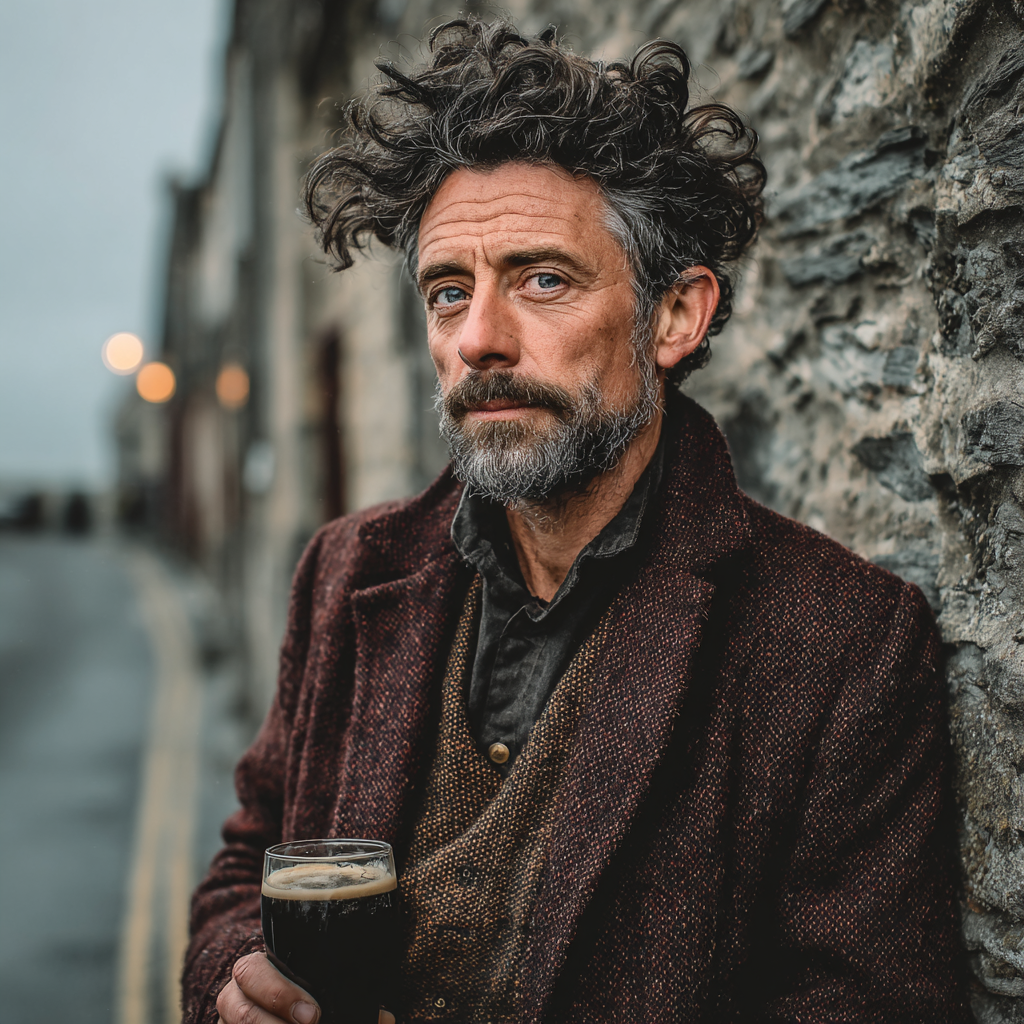
Finn O'Sullivan is an Irish storyteller and folklorist who hunts for the narratives that do not make guidebooks — the pub legends, the family feuds, the neighborhood heroes. He believes every street corner has a story if you know who to ask. Finn spent eleven days in Minsk in September 2025, sleeping in a Soviet-era hostel, drinking kvass from tanker trucks, and collecting brass metro tokens. He believes Minsk is the most misunderstood capital in Europe — not because it is hidden, but because nobody looks closely enough.
By Finn O'Sullivan
Irish storyteller and folklorist. Finn hunts for the narratives that do not make guidebooks—the pub legends, the family feuds, the neighborhood heroes. He believes every street corner has a story if you know who to ask.