
Vienna: Where Six Centuries of Habsburg Power Meet the Art of Refusing to Rush
Vienna does not wake up for tourists. The city opens its eyes slowly, reaches for a Melange, and expects you to understand that some things cannot be hurried. I learned this the hard way on my first morning in Vienna, arriving at Café Central at 8:00 AM with a checklist and a deadline. By 8:30 AM, I had abandoned both. The waiter — formally dressed in a black suit that suggested he was serving the last emperor, not a jet-lagged writer from Barcelona — brought my coffee without asking my name, placed a glass of water beside it, and disappeared. I sat there for three hours. I read a newspaper I did not understand. I ate Apfelstrudel that arrived warm enough to melt the vanilla sauce into something between liquid and memory. I watched an elderly man in the corner table write in a leather journal with a fountain pen, never once looking at his phone. That was Vienna. That was the lesson. You do not conquer this city. You wait for it to invite you in.
I am Elena Vasquez, and I have been writing about the intersection of culture and appetite for twenty years. I have spent weeks in Vienna across six visits, each one longer than the last. The first time, I thought three days was enough. The fifth time, I stayed for three weeks. Vienna is a city that reveals itself in layers, and each layer demands a different kind of attention. This guide is built for travelers who want to understand the city, not just photograph it. It is not a day-by-day itinerary. It is a map of obsessions — the things that keep pulling me back, the places I cannot stop thinking about, and the ones I have learned to politely avoid.
The Gothic Heart: Stephansdom and the City That Built Itself Around a Spire
Stephansdom does not dominate the skyline. It is the skyline. The south tower, known locally as the Steffl, rises 136 meters above Stephansplatz, and climbing its 343 steps will test your knees and your humility. The entry fee is €6, and the viewing platform opens daily from 9:00 AM to 5:30 PM, with the last ascent 30 minutes before closing. The north tower, accessible by elevator for €7.50, houses the Pummerin — Austria's second-largest free-swinging church bell, cast from Ottoman cannon captured in 1683. On clear days, the view from either tower takes in the Vienna Woods on the horizon and the patchwork of rooftops that still respects the cathedral's primacy.
Inside the nave, the stone pulpit carved by Anton Pilgram in 1515 hides a self-portrait: the architect peering from a window beneath the stairs, a medieval signature that has survived wars, revolutions, and regime changes. The cathedral's roof tiles — 230,000 of them — form the Habsburg double-headed eagle in glazed ceramic, a political statement rendered in colored pottery that has endured since the 19th century. The roof itself is steep enough to shed snow efficiently, a practical necessity that became an artistic triumph.
The catacombs beneath the cathedral run on guided tours only, hourly from 10:00 AM to 11:30 AM and 1:30 PM to 4:30 PM on weekdays, and 1:30 PM to 4:30 PM on Sundays. The tour costs €6 and lasts 30 minutes. You will see the ducal crypt where Habsburg entrails are stored in copper urns (bodies went to the Imperial Crypt at the Capuchin Church, hearts to the Augustinian Church), and the plague pit where victims of the 17th-century epidemic were buried in layers so dense that archaeologists have never fully separated them.
The treasury, open daily from 9:00 AM to 5:00 PM, holds relics and artifacts that span a millennium. Entry is €5. But the true experience of Stephansdom is free: walking through the nave during Mass, when the organ fills the space and the Gothic arches seem to stretch upward with the music.
Address: Stephansplatz 3, 1010 Vienna. Hours: Daily 9:00 AM–11:30 AM and 1:00 PM–4:30 PM (sightseeing; active worship may restrict access). Metro: U1/U3 Stephansplatz.
The Habsburg Machine: Hofburg and the Business of Empire
The Hofburg Palace complex spreads across 59 acres in the city center, a city within a city that served as the Habsburg winter residence for over 600 years. The scale is the point. This was not a home. It was an administrative apparatus rendered in stone and stucco, housing the imperial family, the Austrian president's office, the Spanish Riding School, the National Library, and enough museums to fill three days without repetition.
The Imperial Apartments, Sisi Museum, and Silver Collection share a combined entry ticket of €18 (reduced €15). The apartments open at 9:00 AM daily, and arriving before 9:30 AM means sharing the space with tour groups that have not yet marshaled their forces. Franz Joseph's study remains exactly as he left it when he died in 1916 — the military uniform laid across a chair, the desk organized with the precision of a man who rose at 4:00 AM every day for 68 years. His wife Elisabeth's rooms tell a different story: gymnastic equipment for her daily workouts, a reclining couch for the two-hour hair treatments that maintained her legendary waist, and poetry books in Hungarian, English, and ancient Greek. The Sisi Museum has become a pilgrimage site for visitors caught in the myth of the beautiful, tragic empress. The curators do not ignore the darker details: her eating disorders, her wanderlust that kept her away from Vienna for months at a time, her distant relationship with her children.
The Spanish Riding School, housed in the Hofburg's Winter Riding School, offers morning practice sessions at 10:00 AM for €15 (book one week ahead online at srs.at). The full performances, featuring the famous Lipizzaner stallions, run from €30 to €150 depending on seating. Even if you do not attend a performance, the building's Baroque white interior and the bronze horse statues in the courtyard are worth the walk through.
The Austrian National Library's State Hall, on the first floor of the Hofburg complex, is one of the world's most beautiful library spaces. The Baroque hall stretches 80 meters under a painted dome, with 200,000 volumes from the 16th to 19th centuries shelved in carved cases against the walls. Entry is €8 (reduced €5). The library still functions as a research institution, and scholars work at desks in the center beneath the ceiling frescoes. The symbolism is intentional: knowledge as power, power as spectacle, spectacle as invitation.
Michaelerplatz, the main entrance to the Hofburg, contains Roman ruins visible beneath the plaza through glass panels. The settlement of Vindobona dates to the 1st century AD, and the excavated foundations of a Roman officer's house are free to view from above. It takes 15 minutes to absorb, and almost every tourist walks past it without looking down.
Hofburg address: Michaelerkircherplatz, 1010 Vienna. Imperial Apartments hours: Daily 9:00 AM–5:30 PM (Jul–Aug until 6:00 PM). Spanish Riding School: bookings at srs.at. Library hours: Daily 10:00 AM–6:00 PM. Metro: U3 Herrengasse or U1/U3 Stephansplatz.
The Art of Acquisition: Kunsthistorisches Museum and the Habsburg Eye
The Kunsthistorisches Museum sits across Maria-Theresien-Platz from its twin, the Naturhistorisches Museum, both completed in 1891 and both designed to celebrate the 60th anniversary of Emperor Franz Joseph's reign. The building itself is a statement: a grand staircase rising between columns, with paintings by Gustav Klimt between the arches on the first floor — completed before he developed the decorative style that would make him famous, and all the more interesting for showing what he was capable of before he became "Klimt."
The museum houses the Habsburg art collection, assembled over centuries of strategic marriages, political acquisitions, and a willingness to spend imperial budgets on beauty. Bruegel's "Tower of Babel" dominates one gallery, but the real depth lies in the Egyptian and Greek antiquities on the ground floor — objects that arrived in Vienna before the British Museum or the Louvre had established their claims. Vermeer's "The Art of Painting" is here, too, one of only 35 confirmed works by the Dutch master. The painting is large enough to see the brushwork, small enough to feel intimate.
Entry is €22 (reduced €18), and the museum is free on the first Sunday of each month. Hours are daily 10:00 AM to 5:30 PM, with Thursday evenings extended until 8:30 PM. The café on the upper floor, in the Cupola Hall, serves respectable coffee and offers a quieter spot to rest than the crowded ground floor. A three-course dinner at the window costs €45 and requires advance reservation — a splurge, but one of the most atmospheric dining rooms in Europe.
Address: Maria-Theresien-Platz, 1010 Vienna. Hours: Daily 10:00 AM–5:30 PM, Thu until 8:30 PM. Admission: €22, free first Sunday of month. Metro: U2/U3 Volkstheater, or tram D/1/2/2A/57A to Burgring/KHM.
The Palace of Summer: Schönbrunn and the Weight of Leisure
Schönbrunn Palace, the Habsburg summer residence, sits on the city's western edge. The U4 metro line terminates at Schönbrunn station, and the journey takes 25 minutes from Stephansplatz. The palace offers several tour lengths, but the 22-room Imperial Tour (€24, reduced €19) covers the essential spaces without exhausting your patience. The Grand Tour (€34, reduced €28) adds 18 more rooms and is worth it only if you have a genuine interest in Rococo furniture. The gardens are completely free, stretching 1.2 kilometers behind the palace in formal parterres that culminate in the Gloriette — a neoclassical structure that offers views across Vienna to the Carpathians on clear days.
Maria Theresa's rooms reflect the mid-18th-century Rococo taste: gilded surfaces, pastel colors, and mirrors that multiply light. The Hall of Mirrors hosted six-year-old Mozart's first concert for the imperial family in 1762 — the child prodigy slipped on the polished floor, was caught by Princess Maria Antonia, and promptly proposed marriage to her. She declined. The future Marie Antoinette had standards, even at seven.
The Tiergarten Schönbrunn, founded in 1752, is the world's oldest zoo and occupies part of the grounds. Entry is €26 (reduced €15 for children), and the historic pavilions — particularly the 1906 Emperor's Pavilion — are as interesting as the animals. The zoo maintains modern enclosures alongside these historic structures, a negotiation between preservation and welfare that Vienna manages better than most.
The palace is open daily from 8:30 AM to 5:30 PM (November–March), 8:30 AM to 6:30 PM (April–June, September–October), and 8:30 AM to 7:00 PM (July–August). Last entry is one hour before closing. Book timed tickets online at schoenbrunn.at one to two weeks ahead — walk-ups sell out daily in summer.
Address: Schönbrunner Schloßstraße 47, 1130 Vienna. Hours: Daily 8:30 AM–5:30 PM (varies by season, see above). Admission: Imperial Tour €24, Grand Tour €34, gardens free. Metro: U4 Schönbrunn.
The Kiss and the Man Who Painted It: Belvedere Palace
The Belvedere Palace, south of the city center, holds the world's largest Klimt collection. "The Kiss" hangs in the Upper Belvedere, and the crowds cluster before it from opening until closing. Come at 10:00 AM or after 5:00 PM to see it without the press of bodies. The painting's gold leaf catches the light differently throughout the day — morning light makes it glow, afternoon light makes it recede into mystery.
The palace was built for Prince Eugene of Savoy in the early 18th century, a military commander who never married and channeled his energies into architecture and collecting. The gardens between the Upper and Lower Belvedere offer formal parterres and fountains that frame views back toward the city center. The Lower Belvedere hosts temporary exhibitions and displays the palace's staterooms, including the Marble Hall where Eugene received guests beneath ceiling frescoes that celebrated his victories.
The Upper Belvedere entry is €18 (reduced €15), the Lower Belvedere €14.60 (reduced €12). The Upper Belvedere is open daily 10:00 AM to 6:00 PM, with extended Friday hours until 9:00 PM. Book timed entry at belvedere.at one week ahead for peak season.
Address: Prinz Eugen-Straße 27, 1030 Vienna. Hours: Upper daily 10:00 AM–6:00 PM, Fri until 9:00 PM; Lower hours vary by exhibition. Admission: Upper €18, Lower €14.60. Tram: D, O, 18 to Schloss Belvedere.
The Living Rooms of Vienna: Coffee House Culture and Why It Matters
In 2011, UNESCO declared Viennese coffee house culture an intangible heritage, and the designation was both overdue and slightly inadequate. These are not cafes. They are public living rooms where patrons read newspapers, write novels, conduct business meetings, and nurse single cups of coffee for hours without anyone suggesting they should leave. The culture is built on a contract: the customer pays for the seat as much as the drink, and the house provides the space, the newspapers, the water, and the implicit understanding that time is not money here.
Café Central opened in 1876 and counts Trotsky, Freud, and Hitler among former regulars (not all at the same table, thankfully). The interior rises in Gothic revival arches toward a painted ceiling, and the waiters wear formal black attire that signals the seriousness of the enterprise. A Melange costs €5.50, a slice of Apfelstrudel €4.80. The Central is beautiful and slightly tourist-heavy now — arrive before 9:00 AM for a quieter experience. Address: Herrengasse 14, 1010 Vienna. Hours: Daily 7:30 AM–10:00 PM.
Café Sperl, established in 1880, keeps a more local clientele. The billiard tables in the back room see daily use, and the newspapers on their wooden holders include Turkish, Serbian, and Czech publications that testify to Vienna's continued role as a crossroads. A Melange here is €4.50, and the atmosphere is less performative than Central. Address: Gumpendorfer Straße 11, 1060 Vienna. Hours: Mon–Sat 7:00 AM–11:00 PM, Sun 11:00 AM–8:00 PM.
Café Hawelka, run by the same family since 1939, closes earlier than most (Mon–Sat 8:00 AM–11:00 PM, Sun 10:00 AM–11:00 PM) and serves Buchteln — sweet yeast rolls — fresh from the oven in late afternoon. The interior is dark, the walls are covered in artworks donated by patrons, and the clientele includes writers who have been coming for decades. Address: Dorotheergasse 6, 1010 Vienna.
Café Jelinek, at Otto-Bauer-Gasse 5 in the 6th district, is where locals actually have their morning coffee. No tourists, no fanfare, just worn velvet, a Guglhupf cake that tastes like someone's grandmother made it, and the understanding that you are here to stay. The waiters do not ask for your order. They bring what you had yesterday. This is the Vienna I fell in love with — not the palaces, but the patience.
The MuseumsQuartier: Where Imperial Stables Became Contemporary Culture
The MuseumsQuartier, west of the Ringstrasse, concentrates contemporary art institutions in former imperial stables. The Leopold Museum holds the world's largest Egon Schiele collection, including paintings that were banned as pornographic when first shown in 1918. Schiele's angular, emotionally raw nudes shocked Vienna a century ago and still disturb some viewers today. Entry is €15 (reduced €12), and the museum is free on the first Sunday of each month.
The MUMOK, the Museum of Modern Art, focuses on 20th and 21st-century work with strong holdings in Pop Art and Fluxus. Entry is €14 (reduced €11). The complex's courtyards fill with young Viennese on warm evenings, drinking beer from the on-site bars and sitting on the distinctive gray lounge furniture designed specifically for the space. The atmosphere is one of the most relaxed in Vienna — a place where the city's reputation for stuffiness is actively contradicted.
Address: Museumsplatz 1, 1070 Vienna. Hours: Most museums Tue–Sun 10:00 AM–6:00 PM, Thu until 9:00 PM. Metro: U2 MuseumsQuartier.
The Market That Feeds the City: Naschmarkt and Its Many Lives
The Naschmarkt, open Monday through Saturday, runs along the Wien River for 1.5 kilometers. The market has operated on this site since the 16th century, though the current Art Nouveau buildings date to the early 20th century. The first half sells produce, cheeses, and meats to local residents who arrive with wheeled shopping bags. The second half transitions to restaurants serving Turkish, Lebanese, Vietnamese, and Austrian food.
Neni am Naschmarkt, on the upper level near the Kettenbrückengasse end, serves Israeli-influenced dishes and stays open late enough for dinner. A meal for two costs €40–60. The market's busiest day is Saturday, when a flea market opens at the Karlsplatz end and serious collectors arrive before 7:00 AM for first pick. The flea market is free to enter, and the people-watching is as good as the antiquarian books.
Address: Linke Wienzeile/Rechte Wienzeile, 1040/1060 Vienna. Hours: Mon–Sat 6:00 AM–6:30 PM (restaurants until 10:00 PM or later). Flea market: Sat 6:30 AM–6:00 PM. Metro: U4 Kettenbrückengasse or U1/U2/U4 Karlsplatz.
The Prater: Imperial Pleasure Grounds and the Wheel That Outlasted Empires
The Prater, northeast of the city center, is a vast park that contains the Riesenrad — the Ferris wheel built in 1897 that has become a symbol of Vienna. The cabins move slowly enough that passengers board while the wheel turns. The view from the top takes in the Danube, the city center, and the distant hills. Entry is €14.50 (reduced €7.50 for children under 14), and the wheel operates daily from 10:00 AM to 10:00 PM in summer, with shorter hours in winter.
The surrounding amusement park opens seasonally, but the Prater itself remains accessible year-round. The Hauptallee, a straight path lined with chestnut trees, runs 4.5 kilometers through the park and fills with runners, cyclists, and walkers on weekends. The Prater was originally an imperial hunting ground, opened to the public in 1766 by Joseph II. The democratic gesture — a ruler giving his private park to the people — set a tone that Vienna still honors.
Address: Prater, 1020 Vienna. Riesenrad hours: Daily, seasonal variations. Admission: €14.50. Metro: U1/U2 Praterstern.
What to Skip: The Vienna That Does Not Deserve Your Time
Café Central after 10:00 AM. The space is magnificent, but the tourist crowds after mid-morning destroy the atmosphere that made it famous. Go early or go to Jelinek instead.
The Sisi Museum if you are not interested in the empress. The Imperial Apartments are worth seeing for their historical weight, but the Sisi Museum's romanticized narrative can feel like a branding exercise for a tragic figure who would have hated the attention.
The Riesenrad in bad weather. The view from the top is the point. On foggy or rainy days, you are paying €14.50 to look at clouds. Check the forecast.
Any restaurant on the Graben or Kärntner Straße with a host recruiting outside. Vienna has some of the worst tourist-trap restaurants in Europe on these pedestrian streets. The ones with multilingual menus and photos of Wiener Schnitzel are not where Austrians eat.
Schönbrunn Palace without a timed ticket. The line for walk-up tickets can exceed two hours in summer. Book online. The gardens are free and require no reservation — if you only want the gardens, skip the palace entirely.
St. Marx Cemetery for Mozart's grave. Mozart was buried in an unmarked grave in 1791, and the monument at St. Marx was erected decades later on a guess. The cemetery is atmospheric and worth visiting for its own sake — the wild overgrowth, the lilacs in spring — but do not go expecting to "see Mozart's grave." You will see a romantic approximation.
Practical Logistics: How to Actually Do Vienna
Getting In: Vienna International Airport (VIE) is 18 kilometers southeast of the city. The City Airport Train (CAT) reaches Wien-Mitte in 16 minutes and costs €14.90 one-way. The S-Bahn S7 takes 25 minutes and costs €4.30 — the budget choice. The Express Bus 210 from the airport to the city center costs €12.
Getting Around: Vienna's U-Bahn, trams, and buses are clean, frequent, and reliable. A single ticket costs €3.20 at machines or €3.00 via the Wiener Linien app. The 24-hour pass is €10.00, and the 7-day pass (which replaced the 48-hour and 72-hour passes as of January 1, 2026) costs €25–29. The Vienna City Card (€24.90 for 24 hours, €34.90 for 48 hours, €44.90 for 72 hours) includes unlimited transport and discounts at museums and restaurants. Buy it if you plan to visit more than two paid attractions.
When to Come: April through June and September through October are ideal. July and August are hot — regularly above 35°C now — and the major palaces are packed with tour groups. December is magical for the Christmas markets (Christkindlmarkt at Rathausplatz, Stephansplatz, Schönbrunn, Belvedere), but properly cold. January and February are quiet and cheap, with many restaurants closed for post-holiday vacations. The Vienna Philharmonic's free Summer Night Concert at Schönbrunn takes place on June 19, 2026 — arrive by 5:00 PM for a good spot.
Where to Stay:
- Budget: Wombat's City Hostel Vienna Naschmarkt, Rechte Wienzeile 35, 1040 Vienna — dorms from €25, privates from €65, excellent location.
- Mid-range: Hotel Kaiserhof, Frankenberggasse 10, 1040 Vienna — €110–160/night, historic building near the Naschmarkt.
- Splurge: Hotel Sacher Wien, Philharmonikerstraße 4, 1010 Vienna — €350–500/night, the original Sachertorte, and a location that puts you within walking distance of the Opera and Stephansdom.
Eating: Wiener Schnitzel at Figlmüller (Wollzeile 5, 1010 Vienna) is the pilgrimage dish — €18.90, and you must book days ahead. For a more casual schnitzel, Gasthaus Pöschl (Weihburggasse 17, 1010 Vienna) does it for €14.50 with less fanfare. A proper coffee house breakfast (Melange + Apfelstrudel) costs €8–12. A market lunch at Naschmarkt runs €10–15. A dinner at a traditional Gasthaus costs €20–35. A Michelin-starred meal starts at €80.
Language: German is the official language, but English is widely spoken in tourist areas. Learning "Guten Morgen," "Danke schön," and "Zahlen, bitte" (the check, please) will earn you warmer service.
Tipping: Round up to the nearest euro at casual places, 5–10% at restaurants. Do not leave tips on the table — hand them to the waiter when paying.
Safety: Vienna is one of the safest cities in Europe. The 1st district is safe at all hours. The area around Praterstern can feel sketchy late at night. The Karlsplatz metro station has a persistent drug scene that is more visible than dangerous, but solo travelers may want to avoid it after midnight.
Author's Note: I have written about Vienna six times, and each time I discover something I missed. The city does not reveal itself quickly. It assumes you will return. The best thing you can do in Vienna is give it the time it demands — sit in a coffee house for three hours without checking your phone, walk the Ringstrasse at sunset when the parliament building glows gold, listen to a street musician playing Mozart on a violin outside Stephansdom. Vienna is not a city to conquer. It is a city to be conquered by. Let it happen.
— Elena Vasquez Cultural Anthropologist & Culinary Storyteller @elenavasquez.travel
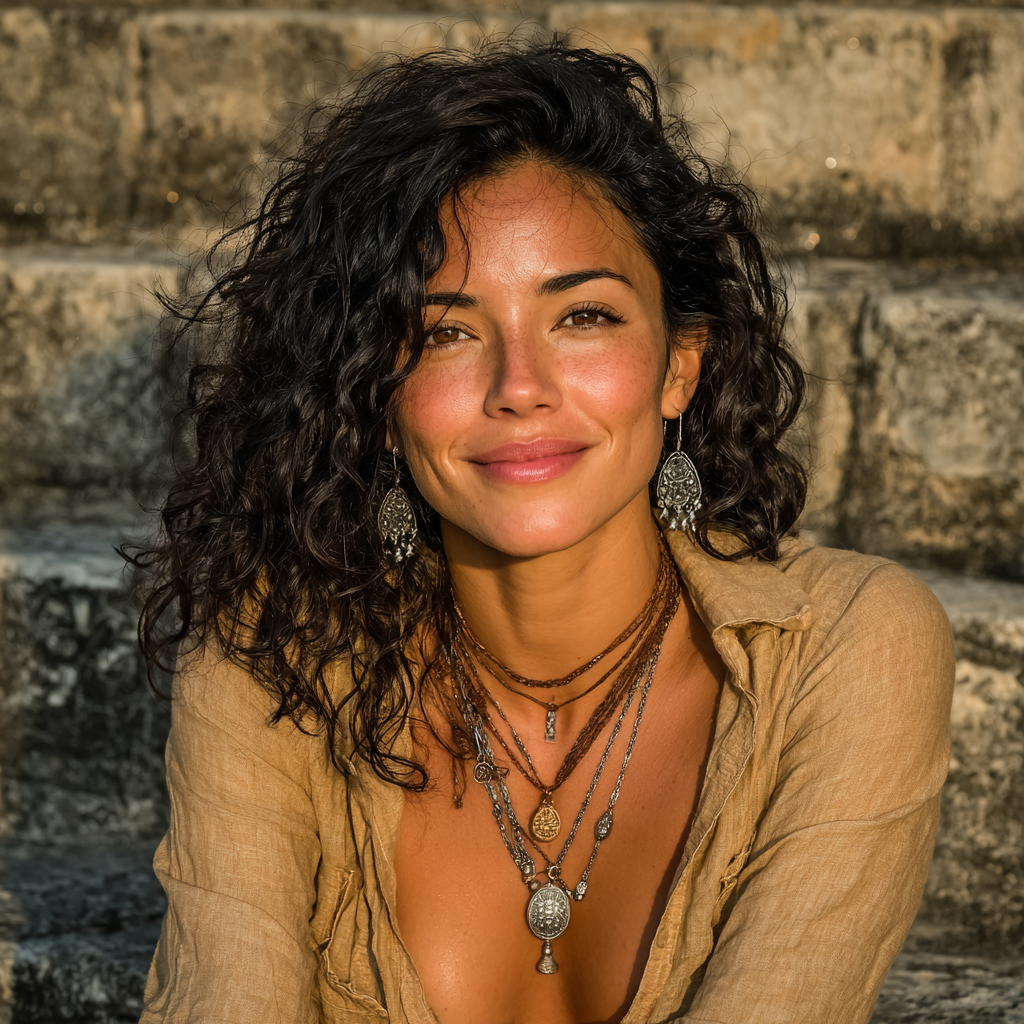
By Elena Vasquez
Cultural anthropologist and culinary storyteller. Elena spent a decade documenting traditional cooking methods across Latin America and the Mediterranean. She holds a PhD in Ethnography from Barcelona University and believes the best way to understand a place is through its kitchens and ancient streets.