
The Daintree Rainforest is older than the Amazon. Not by a little. By roughly 130 million years. This is not a tourism factoid. It is a geological truth that shapes every hour you spend here. The forest you walk through evolved before flowering plants existed, before bees, before the breakup of Gondwana. The tree ferns and cycads you pass are not "ancient-looking." They are ancient. Some species have changed so little that a Cretaceous dinosaur would recognize them.
I have spent fourteen years working in protected ecosystems across four continents. The Daintree is the only place where I have watched a saltwater crocodile slide off a mudbank fifteen minutes after spotting a southern cassowary on the same riverbank. Those two species should not coexist in the same habitat. They do here because the Daintree is not a single ecosystem. It is a stack of them, compressed into a narrow coastal band between the Great Dividing Range and the Coral Sea.
Getting In
The Daintree River ferry is the threshold. It runs every fifteen minutes from 6:00 AM to midnight, and the return fare is AU$30 for a standard vehicle. There is no bridge. The ferry is a flat barge that carries cars, trucks, and the occasional cattle trailer across a brackish river where crocodiles sun themselves on the northern bank. Do not get out of your vehicle. A sign at the boarding ramp tells you why, in five languages and one graphic photograph.
North of the river, the road becomes narrow, sealed, and increasingly dark as the canopy closes overhead. Mobile phone reception drops to nothing within five kilometers. This is not an accident. The local council has resisted demands to extend coverage because the electromagnetic interference disrupts the navigation systems of the flying foxes that pollinate the forest.
Mossman Gorge
Most visitors enter the Daintree through Mossman Gorge, which is technically on the southern side of the river but part of the same national park system. The visitor center is modern, efficient, and run by the Kuku Yalanji people under a joint management agreement with Queensland Parks. The shuttle bus from the center to the gorge itself costs AU$13.80 return and runs every ten minutes. The walking tracks are free. The main circuit is 2.4 kilometers, takes roughly an hour, and passes through rainforest, granite boulders, and swimming holes where the water is cold enough to numb your hands in August.
The Ngadiku Dreamtime Walk costs AU$85 and lasts ninety minutes. It is not a performance. A Kuku Yalanji guide walks you through the forest and explains how the green tree frog signals weather changes, why certain vines are used for fish stupefaction, and how the soap tree actually works. I have done this walk three times with three different guides. No two were identical. The knowledge is transmitted orally, not scripted, and each guide emphasizes what they personally know. One spent twenty minutes on bush medicine. Another focused on the relationship between the freshwater mangrove and the striped marsh frog. The AU$85 is not cheap, but it is the only tour in the region where the revenue flows directly to the traditional owners.
Daintree Discovery Centre
The Daintree Discovery Centre is ten minutes north of the ferry, on Cape Tribulation Road. It costs AU$42 for adults and AU$21 for children. The price includes an audio guide, an elevated canopy tower, and an aerial walkway that rises eleven meters above the forest floor. The tower is twenty-three meters high, and from the top you can see the stratification of the rainforest: the emergent layer where the oldest trees break through the canopy, the main canopy where epiphytes cluster, and the understory where the light is so scarce that some plants have evolved black leaves to absorb every photon.
The centre is not a zoo. There are no captive animals. What you see depends on the weather, the season, and luck. On a humid morning in November I watched a Boyd's forest dragon basking on a handrail for twenty minutes, motionless except for its eyes. On another visit, in July, the forest was so quiet that the only movement was a spiny stick insect pretending to be part of the aerial walkway itself. The staff keep a daily sighting log at the entrance. Check it before you decide whether to climb the tower. If someone spotted a Bennett's tree-kangaroo that morning, the AU$42 is worth it.
The River
The Daintree River has the highest density of saltwater crocodiles in Australia. There are roughly seventy adult crocodiles in the river system, which sounds modest until you realize the river is only 140 kilometers long. This works out to roughly one crocodile every two kilometers, and they are not evenly distributed. The females prefer the quieter, brackish upper reaches. The males patrol the main channel.
Crocodile-spotting cruises run from multiple jetties. Bruce Belcher's Daintree River Cruises, at the southern end near the ferry, has been operating since 1987. The cruise lasts one hour and costs AU$35. Bruce or his son Justin operate most trips. They know individual crocodiles by sight: Scarface, who lost an eye to a territorial fight; the large female who nests every September on the mudbank near the mangrove bend; the three-meter male who suns himself on the log opposite the sugarcane field. The crocodiles are not fed. They appear because the boat has learned to stop at the right places and wait. Patience is the entire method.
Do not swim in the Daintree River. Do not stand on the bank. Do not let your dog off the leash. The crocodiles are not aggressive toward humans in the way that Nile crocodiles are, but they are opportunistic. A human wading in the water at dusk is indistinguishable from a wallaby, and they eat wallabies.
Cape Tribulation
Cape Tribulation is the point where the Wet Tropics rainforest meets the Great Barrier Reef. It is the only place on Earth where two World Heritage sites touch. The reef begins a few hundred meters offshore, and on a low tide you can walk from the beach to the coral in some places. The beach itself is not safe for swimming from November to May due to box jellyfish, which are present in numbers that make the lifeguard flags irrelevant. During these months, the stinger suits for rent at the Cape Tribulation Beach House cost AU$8 and cover everything except your face, hands, and feet. The risk is real. In February 2022, a twelve-year-old boy was stung at Thornton Beach and died within minutes. The season is not a suggestion.
The Kulki Boardwalk leads from the Cape Tribulation carpark to a lookout over the beach. It is free, wheelchair-accessible, and takes ten minutes. The Marrdja Boardwalk, further north, is more demanding. It loops through mangrove forest, past a freshwater creek, and returns through lowland rainforest. The interpretive signs are genuinely detailed, explaining how the mangrove breathes through pneumatophores and why the mud is anaerobic. The walk takes forty minutes and is flat, but the humidity is the challenge. In December, the air temperature can be 32°C with 90% humidity. You will sweat through your clothes.
The Mount Sorrow Ridge Trail is a full-day hike. Seven kilometers return, 680 meters elevation gain, and it requires a reasonable level of fitness. The trail begins at the Cape Tribulation carpark, climbs through dense rainforest, and emerges at a ridge with views over the Coral Sea, the Daintree River delta, and the Alexander Range. The Queensland Parks website warns that the trail is "for experienced walkers only." This is accurate. The path is unsealed, slippery after rain, and there are no facilities at the summit. I have turned back twice due to leeches. They are not dangerous, but they are persistent, and the trail is not enjoyable when you are checking your ankles every twenty meters.
Where to Stay
The Daintree is not a resort destination. Accommodation is limited, and the best options are small, independent, and deliberately low-impact.
Daintree Eco Lodge, fifteen minutes north of the ferry, has fifteen bayans (treehouses) set in a private reserve. Rates start at AU$420 per night and include breakfast. The lodge runs on solar power, harvests rainwater, and has its own biodynamic garden. The restaurant serves native ingredients: kangaroo fillet, wattleseed damper, lemon myrtle fish. It is expensive, but it is also one of the few genuinely sustainable luxury properties in Australia.
Ferntree Rainforest Lodge, near Cape Tribulation, is mid-range at AU$140-180 per night. The rooms are basic but the location is inside the forest, and the pool is built around a natural creek. The highlight is the morning noise: fruit bats returning to roost, king parrots calling from the canopy, and the occasional crash of a tree-kangaroo landing on a roof.
Cape Trib Beach House has dorm beds at AU$35 and private rooms at AU$95. It is the cheapest option north of the river, and it has a communal kitchen, a beachfront bar, and a serious policy about food storage. The rat kangaroos will open unsecured eskies. The staff are not joking when they tape the instructions to the fridge.
What to Eat
The Daintree does not have a restaurant scene. It has a few places that serve food to people who are not here for the food.
Mason's Cafe, near Cape Tribulation, is famous for crocodile burgers. The meat is farmed, not wild, and the texture is somewhere between chicken and fish. A burger costs AU$22. The cafe also serves decent coffee and has a swimming hole in the creek behind the property. The hole is safe from crocodiles because it is upstream of a natural rock barrier and too shallow for a saltwater crocodile to enter. This is not a guarantee. It is an assessment.
The Daintree Ice Cream Company, on Cape Tribulation Road, makes fruit ice cream from its own orchard. The flavors change with the harvest: black sapote, wattleseed, jackfruit, durian in season. A cup is AU$6.50. The orchard is open for self-guided walks, and the signs identify the trees: soursop, carambola, abiu, jaboticaba. Most of these fruits are not native to Australia. They were introduced by the region's early settlers, who experimented with tropical agriculture in the 1880s.
Thornton Beach Cafe, on the road north, serves fish and chips, burgers, and cold beer. It is the only place between Cape Tribulation and Cooktown that is reliably open for lunch. The view is across the beach to the reef. The beer is AU$8. The fish is AU$18. The owner is a former commercial fisherman who knows the tides and will tell you whether the beach is passable at low water.
What to Skip
Do not swim in the ocean between November and May without a stinger suit. Do not assume the water looks safe because you cannot see jellyfish. The Irukandji is the size of a thumbnail and transparent.
Do not ignore the crocodile warning signs. They are not placed for insurance purposes. They are placed where crocodiles have been sighted, repeatedly, in the last twelve months.
Do not expect the Daintree to feel like a theme park. The forest is not sanitized. There are no railings on the creek banks, no barriers at the lookout edges, and no emergency phones on the hiking trails. If you twist an ankle on Mount Sorrow, you either walk out or you wait for someone to find you.
Do not take the Bloomfield Track in a rental car. The 33-kilometer road from Cape Tribulation to Cooktown is four-wheel-drive only, crosses multiple creeks, and is impassable after heavy rain. Every year, rental cars are abandoned in the first creek crossing because the driver ignored the warning signs. The recovery cost is AU$3,000 and the insurance is void.
Do not expect to see a cassowary on demand. The population is estimated at 4,000 birds across the entire Wet Tropics, and they are shy, solitary, and increasingly stressed by road traffic. The best chance is early morning on the Black Mountain Road, but even then, a sighting is not guaranteed. If you do see one, do not approach. The cassowary has a 12-centimeter dagger claw on each foot and has killed people.
Practical Logistics
The Daintree is 125 kilometers north of Cairns. The drive takes two hours on a good road, passing through Port Douglas and Mossman. There is no public transport north of the Daintree River except the shuttle to Mossman Gorge and a twice-weekly bus that connects with the ferry on demand. You need a car.
Fuel is available at the Daintree River ferry approach, at Wonga Beach, and at Cape Tribulation. The prices are higher than in Cairns by roughly 20 cents per liter. The Cape Tribulation service station closes at 6:00 PM and does not open on Sundays during the low season.
The dry season runs from May to October. This is the best time to visit: lower humidity, fewer stingers, and the waterfalls are still flowing from the wet season. The wet season, from November to April, is hotter, wetter, and more dramatic. Some roads close. The forest is at its most active, but the leeches are worse and the swimming is impossible.
Entry to the Daintree National Park is free. There are no gates, no ticket booths, and no rangers checking passes. The only fees are for the ferry, the visitor centers, and the tours. A reasonable daily budget is AU$120 per person, including accommodation, food, and one paid activity.
If you are staying overnight, bring insect repellent. The sandflies are not dangerous, but they are relentless. I have seen people leave after one night because they could not sleep through the itching. The repellent with the highest DEET concentration you can tolerate is the correct choice. The organic alternatives are not.
Priya Sharma is a conservation biologist and sustainable travel writer. She has worked on biodiversity projects in the Western Ghats, the Amazon basin, and the Daintree-Mossman catchment. She lives in a house with a rainwater tank and no air conditioning, and she believes the best way to understand an ecosystem is to sleep in it.
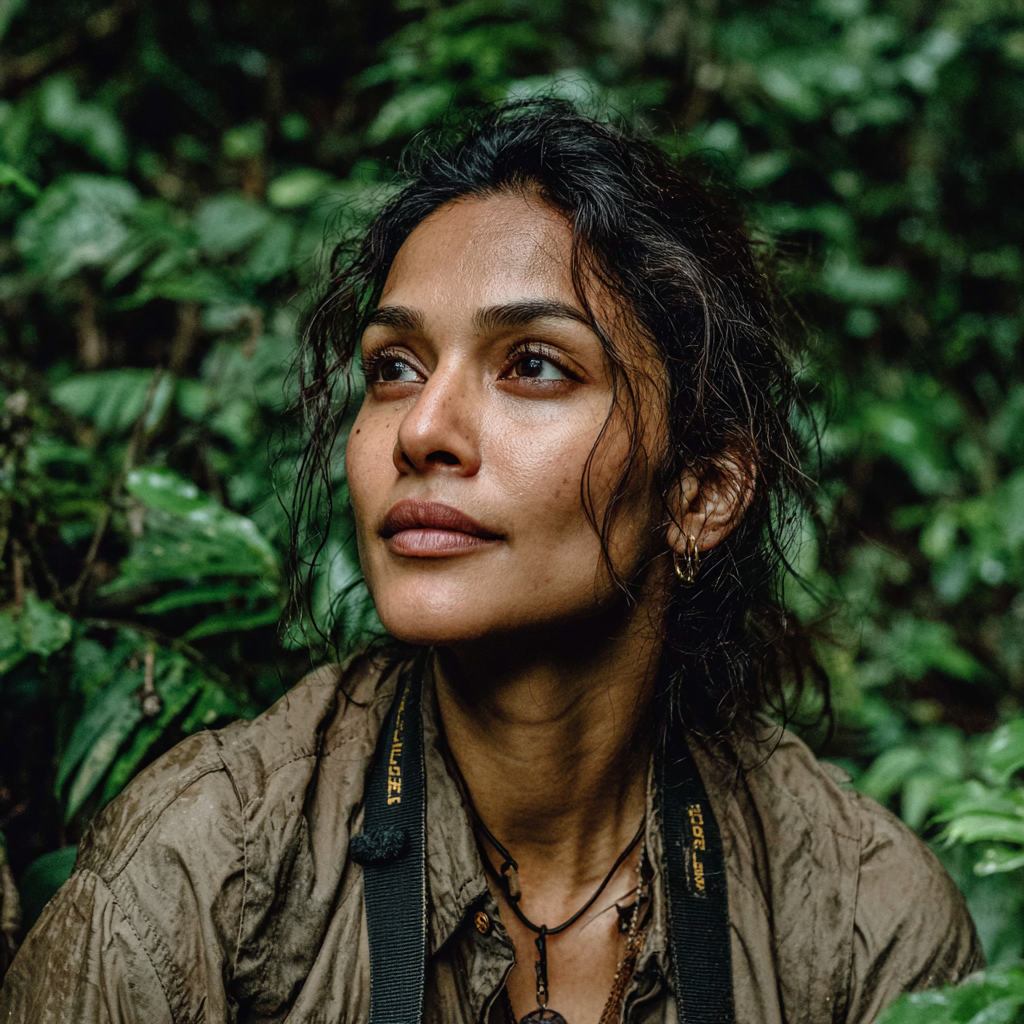
By Priya Sharma
Conservation biologist and sustainable tourism advocate. Priya works with eco-lodges and wildlife sanctuaries to promote ethical travel practices. She holds an MSc in Biodiversity Conservation and has spent years tracking endangered species across the Indian subcontinent.