
The Daintree Is Not a Zoo: 180 Million Years of Rainforest, Reef, and Animals That Can Kill You
A sustainable travel guide to the oldest tropical rainforest on Earth
The Daintree Rainforest is not a park. It is not a curated experience with gift shops and paved paths (though it has both, strategically placed). It is 180 million years old—twice the age of the Amazon—and it was here before the continents split apart. Walking through it feels like stepping into a time machine, if time machines had humidity levels of 90% and spiders the size of dinner plates.
This is a place where the rainforest meets the reef, where saltwater crocodiles patrol rivers that have flowed since the Jurassic period, and where a bird that looks like a dinosaur crossed with a peacock can disembowel you with one kick. Welcome to the Daintree. In 2026, the Great Barrier Reef turns 45 as a World Heritage site, and the Wet Tropics rainforest that spills onto it isn't far behind. There's never been a better time to visit—and never been a more important time to visit responsibly.
Getting There and Around
The Gateway: Cairns is your entry point. From Cairns, it's a 2-hour drive north (110 km) via the Captain Cook Highway—one of Australia's most scenic coastal roads, hugging cliffs above the Coral Sea. Port Douglas is closer at 45 minutes.
The Ferry: The Daintree River Ferry is the only way across. As of 1 July 2026, it costs $35 one way / $57 return per car. Motorbikes are $15, pedestrians and bicycles $7-8. The ferry runs 5 AM to midnight, 365 days a year. Card and cash accepted. Note: roadworks at the crossing are scheduled to finish around late October 2026, and a larger 36-car ferry is due in late 2027—book accommodation knowing the crossing may be slower until then.
No Car? Full-day tours from Cairns run $199-293 per person and include Mossman Gorge, a croc cruise, and Cape Tribulation. From Port Douglas, expect $180-250. Two-day overnight tours with a night in the forest start around $550-600 per person.
Fuel: Fill up in Mossman or Daintree Village. There's fuel at Cow Bay and Cape Tribulation, but you'll pay a premium and the pumps don't take all cards.
Phone: Telstra works (mostly). Everything else is a prayer. Download offline maps before you cross the river.
The Ferry Crossing
The Daintree River is a coffee-colored snake that has carved this landscape for millennia. The crossing takes five minutes, but it's a threshold. On the south bank: civilization, cafes, phone reception. On the north bank: 1,200 square kilometers of World Heritage-listed wilderness where every swim hole sign reads like a warning label.
Look down as you cross. That log? Might be a crocodile. That ripple? Definitely a crocodile. The Daintree has one of the densest populations of Crocodylus porosus in Australia, and they were here first. They will be here after us, too, if we're smart enough to leave them alone.
A Forest Older Than the Continent
To understand the Daintree, you need to understand deep time. When this forest was young, Australia was still attached to Antarctica. Gondwana was breaking apart. The plants here—king ferns, idiot fruit, the bronze loquat—are direct descendants of the flora that fed dinosaurs. Some have changed so little that paleobotanists use them to reconstruct Jurassic ecosystems.
This is why the Daintree feels different from other rainforests. It isn't just old. It's continuous. While ice ages, meteor impacts, and human civilizations rose and fell elsewhere, this pocket of north Queensland kept its climate, its humidity, and its strange, primeval cast of characters.
The Kuku Yalanji people have lived here for at least 50,000 years—arguably the longest continuous human occupation of any rainforest on Earth. They didn't just survive here; they managed it, burning understory, tending food plants, moving with the seasons. Modern conservation science is only now catching up to what they always knew.
Where the Reef Meets the Rainforest
Cape Tribulation is one of the only places on Earth where two World Heritage sites collide: the Wet Tropics Rainforest and the Great Barrier Reef. You can stand on a beach with 180-million-year-old rainforest at your back and coral reef at your feet.
Kulki (Cape Tribulation Beach): A 350-meter boardwalk from the car park leads to a viewing platform over the point where Cook's ship nearly wrecked in 1770. The beach itself is stunning—when it's not stinger season.
Dubuji Boardwalk: A 1.2 km loop through mangroves and fan palms to Myall Beach. Watch for cassowaries in the early morning, and look for the carved-out "crab holes" along the tidal flats.
Swimming: The ocean is beautiful and, from November to May, full of box jellyfish and Irukandji. Swim at your own risk outside stinger season; inside it, use a lycra stinger suit or stick to freshwater swimming holes like Emmagen Creek, 4 km north.
Emmagen Creek: Crystal clear, croc-free (usually—always check the signs), and refreshingly cold. Cross Noah Creek first—it's a shallow ford that rental car agreements love to prohibit. The drive north passes through increasingly wild forest; this is cassowary country, so drive slowly, especially at dawn and dusk.
Myall Beach: Quieter than Cape Tribulation beach, accessible from the Dubuji boardwalk. Great for sunset if you're staying overnight.
The Reef from the Rainforest: Ocean Safari runs half-day snorkeling trips from Cape Tribulation to Mackay Cay, a coral sand island on the outer reef. From ~$220 per person including gear, lunch, and national park fees. It's one of the few places in the world where you can snorkel the Great Barrier Reef and be back in the rainforest by lunch. Book ahead in dry season—it sells out.
Walking Through Deep Time
The Daintree's boardwalks are engineering marvels that let you experience the forest without destroying it. All are free and open from dawn to dusk unless signed otherwise.
Marrdja Boardwalk (Daintree National Park): 1.2 km loop through mangrove and rainforest. The interpretive signs explain how these ecosystems coexist—freshwater meets saltwater, and the forest changes character meter by meter. Look for strangler figs: nature's original hostile takeover.
Jindalba Boardwalk (Cow Bay): 700 meters through classic lowland rainforest. The trailhead is 2 km from the Discovery Centre. Wheelchair accessible for the first section.
Madja Boardwalk (Cape Tribulation): 1.2 km each way into mangrove swamps. Best at low tide when the mudskippers are out and the interpretive signs explain how everything here survives being drowned twice a day.
Daintree Discovery Centre (Cnr Cape Tribulation Rd & Tulip Oak Rd, Cow Bay): This is worth every cent. $41 adult / $19 child (5-17), open daily 9 AM-5 PM (closed Christmas Day). The 23-meter canopy tower takes you up through the forest layers—from leaf litter to emergent canopy—each level signed with what lives there. Your ticket includes a 7-day re-entry pass and audio guides in eight languages, plus a kids' version. The Jurassic Forest trail features plants that existed when dinosaurs roamed, and the Cassowary Circuit walks you through prime habitat. This place has won every eco-tourism award Australia offers, and it shows.
Field note from Priya: I once spent 40 minutes at the Discovery Centre watching a Boyd's forest dragon do absolutely nothing. It was one of the best 40 minutes of my life. This forest rewards patience.
The River
The Daintree River is the artery of this ecosystem, and the best way to see it is from a boat.
Solar Whisper (Daintree Village jetty): $35 adult / $19 child, one hour, solar-electric (silent—no diesel fumes disturbing the wildlife). Six departures daily. Best guarantee in the business: if you don't see a crocodile, you cruise again free.
Bruce Belcher's Daintree River Cruises: ~$39 adult, one hour, four generations of local knowledge. Bruce has been spotting crocs here since he was a kid, and it shows.
Crocodile Express: ~$39.50, departs from Daintree Village and near the ferry area.
Birdwatching: Dawn cruises with Daintree Boatman ($75, two hours) or Daintree River Wild Watch ($70) are magic. Kingfishers, herons, sea eagles, and if you're lucky, a Victoria's riflebird displaying or a great-billed heron frozen in the shallows.
Daintree Village: Population 200, one general store, one excellent café (the Daintree Tea House), and a viewing platform over the river. The village was settled in the 1870s by timber getters and farmers; its history is complicated—much of it carved from Kuku Yalanji country—and the nearby Daintree Tea Company is worth a stop for tastings of rare Daintree black tea, grown commercially nowhere else on Earth.
The People Who Were Here First
The Eastern Kuku Yalanji people have lived in this rainforest for at least 50,000 years. Their knowledge of this ecosystem is encyclopedic, and the best way to learn it is directly from them.
Mossman Gorge (Mossman Gorge Centre, end of Mossman Gorge Rd): The Cultural Centre is free to visit, with a café, art gallery, and the starting point for everything else. From here, a shuttle runs every 15 minutes (8 AM-5 PM) to the gorge itself—$15.50 adult / $7.75 child, family pass $38.75. Walking up the road to the gorge is prohibited for safety.
The gorge is a cathedral of granite boulders and crystal water. Swim between the rocks (check conditions first—flash floods happen), walk the 2.4 km rainforest circuit, or simply sit on the sand and listen.
Ngadiku Dreamtime Walk: $105 adult / $53 child (5-15), approximately 90 minutes, departing 10 AM, 11 AM, 1 PM, and 2 PM. This is the single best cultural experience in Tropical North Queensland. An Indigenous guide leads you along private tracks, performs a smoking ceremony, explains bush food and medicine, and finishes with bush tea and damper by the river. Transfers from the Cultural Centre are included. 2026 marks the 40th year of these walks—the guides' families have been sharing this knowledge for generations.
Mossman Gorge Art Centre: Locally made artifacts, paintings, and didgeridoos. Buying here directly supports Kuku Yalanji artists—this is the anti-souvenir-shop souvenir shop.
Wildlife
Cassowaries: There are only about 4,000 southern cassowaries left in the wild, and the Daintree is their stronghold. These 70-kilogram birds are vital to the forest—they're the only dispersers of many large rainforest fruits, so the forest literally depends on them. If you see one: stay still, don't approach, don't feed it (feeding is what gets them killed), and never turn your back on a male with chicks. That said, a wild cassowary sighting is unforgettable—I've had three in ten visits, all on quiet roads at dawn or dusk.
Boyd's Forest Dragon: Looks like a tiny dinosaur. Lives on tree trunks. Does not care about you.
Amethystine Python: Australia's largest snake, up to 5 meters. Non-venomous. Harmless unless you're a possum. Often seen crossing roads at night.
Saltwater Crocodiles: Everywhere there's brackish water. Assume they're in every river, creek, and mangrove. Don't swim where signs say don't swim. Don't stand on riverbanks. Don't be stupid.
Tree Kangaroos: Rare and mostly nocturnal. The Daintree is one of the few places you might see a Lumholtz's tree kangaroo dozing in a fork. Ask locals where they've been spotted recently.
After Dark: If your accommodation offers a night walk, take it. The Daintree after dark is a different forest: bandicoots snuffling, tree frogs calling, snakes hunting, and eyes reflecting in torchlight. Use a red-light torch (white light disturbs animals), stay quiet, and let the guide lead.
Where to Stay
Daintree Ecolodge (3189 Daintree Rd, Lower Daintree): The benchmark for sustainable luxury. Fifteen bayans (treehouses) over a private lagoon, all meals at the on-site Julaymba Restaurant (breakfast 7:30-10 AM), guided walks included. From ~$450/night, often $600-900 in peak season. Book months ahead for dry season.
Daintree Wilderness Lodge (Diwan): Seven cabins in genuine rainforest, outstanding hosts, dinner available on-site (no lunch service). $399-625/night. The "shower in the jungle" bathrooms are legendary—one reviewer called the basin "180 million years old," made from fossilized wood.
Ferntree Rainforest Lodge (Cape Tribulation): Mid-range resort with a pool, set in landscaped gardens. ~$140-200/night.
Cape Trib Beach House (Rykers Rd, Cape Tribulation): Dorms and private rooms at the beach, with The Sand Bar pizzeria on-site. Social but not party-central. Dorms ~$40-50, privates from ~$120.
Crocodylus Village and Safari Lodge (Cape Tribulation Rd): The budget backpacker standbys, with dorm beds, campgrounds, and tour desks. Dorms from ~$35.
Noah Beach Campground (Cape Tribulation National Park): The budget champion. $7.25 per adult/night, book online in advance (it sells out in dry season). National park facilities, absolute beachfront, cassowaries wandering through at dawn. Noah Creek Private Campground across the creek is the backup.
My pick: Two nights minimum. One night at the Ecolodge or Wilderness Lodge (splurge), one night at Noah Beach (soul).
Where to Eat
Mason's Cafe (Cape Tribulation): Home of the crocodile burger (~$26). Tastes like chicken, because evolution is lazy. Also does excellent jackfruit burgers, tropical fruit smoothies, and Daintree Tea. Open for lunch daily; dinner seasonally. There's a freshwater swimming hole out back—one of the few places you can swim without a croc briefing.
Daintree Ice Cream Company (Cape Tribulation Rd): ~$7 for a cup of four scoops of whatever fruit is ripe—soursop, black sapote, wattleseed, jackfruit. Cash and card. Worth the ferry crossing alone.
Turtle Rock Café (Cape Tribulation): Reliable breakfasts, good coffee, and local ambiance. The cassowary footprint decals on the floor are a nice touch.
The Sand Bar (Cape Tribulation Beach House): Wood-fired pizza and cold beer on Myall Beach. Sunset essential.
Whet Cafe: Quiet, good coffee, right in Cape Tribulation village.
Heritage Lodge "On the Turps" (Diwan): The nicest dinner in the Daintree, overlooking Cooper Creek. Book ahead—seats are limited and the kitchen closes early by city standards.
Daintree Tea House (Daintree Village): Lunch with river views. The Devonshire tea is the move.
Hook-A-Barra (Daintree Rd): Catch your own barramundi ($10 rod hire, ~$30/kg to take your fish). Closed 1 November-31 January for barramundi spawning season—respect the closure; it's why there are still barra to catch.
When to Come
Dry Season (May-October): Perfect hiking weather, lower humidity, fewer leeches, clearer water. July-September is peak—book accommodation early. This is also peak croc cruise season.
Wet Season (November-April): Hot, humid, magnificent. Waterfalls roar, rivers rise, and the forest pulses with life. Some trails close after heavy rain. Bring waterproof everything. Leeches are real; gaiters or long socks help.
Cassowary Season: September-December, when males walk their chicks through the forest. Also when they're most dangerous. Give them space.
Stinger Season: November-May. Ocean swimming requires a lycra stinger suit or nets. Freshwater swimming holes are generally fine.
Phytophthora: Dieback fungus is devastating Australian rainforests, and it spreads on shoes. Clean your boots at every boot-cleaning station. It matters more than it seems.
What to Skip
Don't day-trip past midnight. If you're not staying overnight, you're missing the best hours: dawn cassowaries, sunset on Myall Beach, the forest after dark.
Don't skip the Ngadiku for the free shuttle. Mossman Gorge is lovely on your own. With a Kuku Yalanji guide, it becomes one of the great experiences of your life. Budget the $105.
Don't swim in the ocean November-May. I don't care how good it looks. Box jellyfish are nearly invisible and can kill you in minutes.
Don't feed the cassowaries. Or any wildlife. Feeding cassowaries makes them associate humans with food, which gets them hit by cars. Selfies are not worth a dead endangered bird.
Don't drive to Cooktown unprepared. The Bloomfield Track north is 4WD-only, unsealed, with creek crossings and no phone coverage. If you have a rental sedan, Cape Tribulation is your turnaround point.
Don't double-pay for croc cruises. Book Solar Whisper first—if you see no crocodile, they'll take you again free. Their guarantee is the best value on the river.
Don't expect Wi-Fi. Buy a Telstra SIM, download offline maps, and embrace the disconnect. That's why you came.
The Honest Math
Budget traveler: Noah Beach camping ($7.25/night), self-catered meals from the general store, free boardwalks, one Solar Whisper cruise ($35). ~$80-120/day.
Mid-range: Ferntree or Beach House ($140-200/night split between two), Mason's lunch ($26), Discovery Centre ($41), croc cruise ($35-39), Ngadiku walk ($105). ~$200-280/day.
Splurge: Daintree Ecolodge ($600+/night), Heritage Lodge dinner ($80pp with wine), private birding cruise ($75), guided night walk. $500+/day.
Note: the ferry alone costs $57 return per car. If you're solo, a tour from Cairns ($199, all-in) might be cheaper than self-driving when you factor fuel, cruise tickets, and the ferry.
Practical Notes
- Best base: Two nights in the forest itself. Day-trips from Cairns mean 4+ hours of driving and you miss dawn and dusk—the best wildlife hours.
- What to pack: Stinger suit (Nov-May), insect repellent, rain jacket (year-round), sturdy shoes, binoculars, Telstra SIM, cash for small operators.
- Safety: Crocs are real. Cassowaries are real. Read the signs. They are not suggestions.
- Sustainability: Choose ECO-certified operators (look for the Ecotourism Australia logo). Stay in the forest—your money supports conservation and the local economy. Pack out your rubbish. Stay on boardwalks. Keep a respectful distance from wildlife. This ecosystem is more fragile than it looks.
- Insurance: Check your travel insurance covers remote area evacuation. The nearest major hospital is in Cairns.
The Bottom Line
The Daintree is not a zoo. It's not a theme park. It's a living, breathing, occasionally lethal relic of deep time that happens to let us visit. The cassowaries don't perform. The crocs don't do tricks. The forest doesn't care about your Instagram.
That's exactly why you should go.
Sleep lightly. The forest is awake.
About the Author: Priya Sharma is a biologist turned travel writer who believes the best souvenirs are photographs and the best travel is the kind that leaves a place better than you found it. She's been stalked by cassowaries (respectfully), hugged trees (literally), and thinks every traveler should know the difference between a python and a venomous snake.
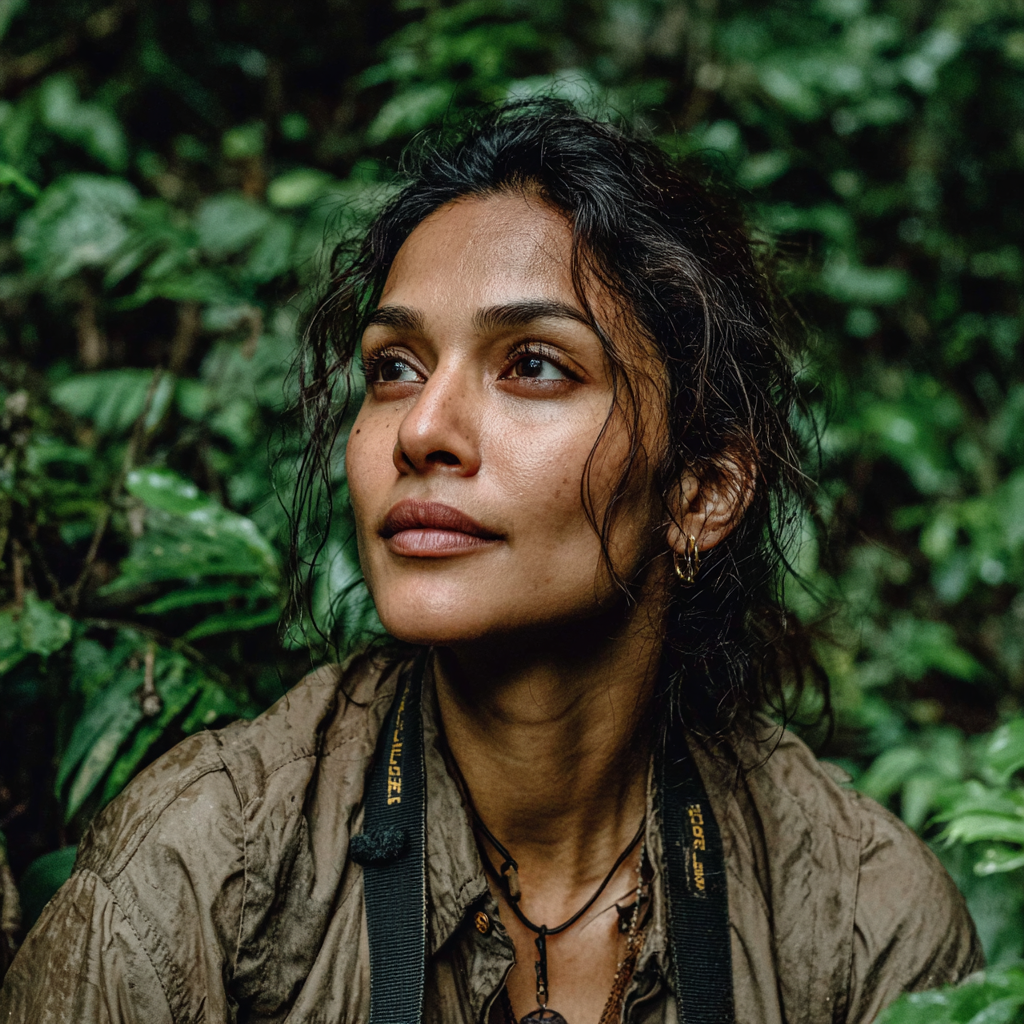
By Priya Sharma
Conservation biologist and sustainable tourism advocate. Priya works with eco-lodges and wildlife sanctuaries to promote ethical travel practices. She holds an MSc in Biodiversity Conservation and has spent years tracking endangered species across the Indian subcontinent.