
Yerevan: A City Built on Ruins, Memory, and Pink Stone
By Elena Vasquez — Cultural anthropologist and culinary storyteller. I came to Yerevan for the ancient kitchens, but I stayed for the way this city carries its history like a living thing.
Yerevan is one of those cities that refuses to be categorized. It is older than Rome, founded in 782 BCE by the Urartian king Argishti I, yet it feels unmistakably young. It is Soviet in its bones — broad avenues, brutalist monuments, and the kind of geometric grandeur that only a planned capital can achieve — but it pulses with Armenian warmth: wine bars spilling onto sidewalks, grandmothers selling sour cherry compote from their gardens, and the constant, humbling silhouette of Mount Ararat on the horizon.
I arrived in Yerevan in late autumn, when the city turns the color of the tuff stone it is built from: a pale, dusty rose that catches the low sun and glows. What I found was not a museum city, but a living one — where ancient cuneiform inscriptions sit in the same museum as Soviet space-age ceramics, where the memory of genocide is not hidden but built into the architecture of daily life, and where a dinner of khoravats (barbecue) and herb-stuffed dolma can cost less than a subway ride in Paris.
This guide is not a day-by-day itinerary. Yerevan does not work that way. It is a city to wander, to return to, to sit in. I have organized it thematically — by the forces that shaped it: the ancient, the Soviet, the traumatic, and the joyful. Each section contains the specific details I wish someone had handed me before my first visit: addresses, prices, hours, and the small truths that only come from walking a city until your shoes wear thin.
The Ancient City: Erebuni and the Birth of Yerevan
Most visitors arrive in Yerevan and head straight for the Cascade or Republic Square. I am going to ask you to do something different. Go to Erebuni first. Go to the place where the city began.
The Erebuni Historical and Archaeological Reserve-Museum sits at 38 Erebuni Street, in the southeastern suburbs, at the foot of the Arin-Berd hill. It is a 20-minute metro ride from the city center on the red line to Garegin Nzhdeh Square, followed by a 10-minute uphill walk. The museum was opened in 1968 to mark the 2,750th anniversary of the city's founding, and it houses over 20,000 artifacts from the Urartian, Achaemenid, Hellenistic, and early Armenian periods.
Practical details: The museum is open Tuesday to Sunday, 10:30 to 17:00. Admission is 1,500 AMD for adults (about $3.80 USD) and 500 AMD for schoolchildren. A combined ticket for the museum and the fortress costs 2,500 AMD for Armenian-language tours and 6,000 AMD for foreign-language tours. The museum is closed on Mondays, and photography is permitted without flash.
The real treasure is not inside the museum but above it: the Erebuni Fortress itself, built in 782 BCE by King Argishti I of Urartu. The name "Erebuni" evolved through millennia into "Yerevan," and the cuneiform inscription that marks its founding — "By the greatness of Khaldi, Argishti, son of Menua, built this mighty fortress and called it Erebuni" — is carved into a stele inside the museum. Walking up the paved gravel path to the reconstructed citadel walls, you can see the modern city spreading northward below, and on clear mornings, Mount Ararat appears as a white cone above the urban sprawl.
Pro tip: Visit early, between 8:00 and 10:00, for the low-angle light that picks out the texture of the basalt stone walls. The hill path is manageable in ordinary walking shoes, but there are no cloakroom facilities — travel light. The Erebuni district has a few local restaurants near the metro station, mostly neighborhood places without tourist menus, where a meal of khoravats and lavash will cost around 2,500 AMD ($6.40).
Also worth knowing: the Erebuni reserve includes two other branches — the Shengavit early agricultural settlement on the shores of Yerevan Lake, and the fortress city of Teyshebaini (Karmir Blur), built in the 7th century BCE on the banks of the Hrazdan River. Together, they cover about 80 hectares and represent the only archaeological reserve-museum in Yerevan.
The Cascade: Soviet Ambition Meets Contemporary Art
If Erebuni is the city's ancient soul, the Cascade Complex is its Soviet ego — and somehow, it works.
Located at 10 Tamanyan Street, the Cascade is a massive five-terraced structure of 572 steps rising 118 meters from the city center to the elevated Kanaker-Zeytun district. Construction began in 1971 and was completed in phases by 2009. The outdoor steps are always open and free. The indoor escalators run daily from 08:00 to 20:00, also free. There is no reason not to climb it at sunset, when the white limestone turns golden and the view of Mount Ararat — if the day is clear — will stop you mid-step.
Getting there: The nearest metro is Yeritasardakan Station, less than 700 meters away (about a 10-minute walk). A single metro ride costs 150 AMD ($0.40). A taxi from the city center via Yandex or GG will cost around 800 AMD ($2).
The Cascade is not merely a staircase. It is an art museum in open air. The Cafesjian Center for the Arts (CCA), founded by Gerard L. Cafesjian and opened in November 2009, occupies the interior and exterior of the complex. The outdoor Cafesjian Sculpture Garden displays works by Fernando Botero (including the Roman Warrior and Gato), Jack Youngerman, Yue Minjun, and Do Ho Suh. Inside, the Khanjyan Gallery holds the monumental triptych History of Armenia and bas-reliefs depicting the epic of David of Sasun. The CCA also houses one of the world's largest collections of contemporary glass art.
The museum's exhibition halls, shop, and visitor center are open Friday to Sunday, 10:00 to 20:00. There is a small admission fee for the museum interior (check current prices at the door, typically around 1,000-2,000 AMD). The center hosts regular concerts and events — in June 2026, for example, there are piano recitals and jazz performances scheduled on Friday and Saturday evenings, with tickets priced at 3,000-4,000 AMD.
The steps themselves are carved with Armenian historical patterns — khachkars (cross-stones), grapevines, pomegranates — and the surrounding area is lined with cafés and cocktail bars where locals gather. I spent three mornings at a café at the base, drinking Armenian coffee and watching the city wake up. It is one of the most pleasant rituals Yerevan offers, and it costs less than €2.
Memory and Mourning: Tsitsernakaberd
You cannot understand Yerevan without understanding what happened in 1915. The city does not let you forget, and neither should you.
The Tsitsernakaberd Armenian Genocide Memorial Complex sits on a hill at 8/8 Tsitsernakaberd Highway, overlooking the city from the west. The outdoor memorial — with its 12 leaning stone slabs surrounding an eternal flame, and its 44-meter stele splitting the sky — is open all day, every day, and free of charge. The Armenian Genocide Museum-Institute inside the complex is open Tuesday to Saturday, 10:00 to 17:00 (November to February: 11:00 to 16:45), Sunday 11:00 to 15:00, closed Mondays and official holidays. Admission is free, though donations are welcomed. Guided tours in English cost 7,000 AMD for 1-10 visitors, and must be reserved in advance by phone at +374 10 39 09 81.
The museum is not easy. It is not meant to be. The 12 exhibition halls present photographs, documents, personal accounts, and the political history of the genocide in which 1.5 million Armenians perished. The wall engraved with the names of countries that have recognized the genocide is a powerful, silent political statement. The Memory Alley, where trees have been planted by global leaders in solidarity, runs alongside the memorial.
Respectful etiquette: Speak softly. Do not take smiling selfies. Wear modest clothing. This is not a tourist attraction — it is a cemetery without bodies, a place of national grief.
Pro tip: Visit on a weekday morning for solitude. Avoid April 24 (Armenian Genocide Remembrance Day) unless you are prepared for emotionally intense crowds of tens of thousands.
The Pink City: Architecture and Public Spaces
Yerevan is called the "Pink City" because of the volcanic tuff stone that dominates its architecture — a pale rose color that unifies the city in a way few capitals achieve. The best place to see this in action is Republic Square (formerly Lenin Square), the architectural heart of the city. It is always open and free. The History Museum of Armenia and the National Gallery occupy the neoclassical buildings on the eastern side, and the fountain show — a synchronized music-and-water performance — runs on evenings from May through October. The museum itself is open Tuesday to Saturday, 11:00 to 18:00, with admission at 3,000 AMD ($7.70). It holds roughly 400,000 objects, including Iron Age altars and maps from the Russo-Turkish wars.
The square is flanked by the Government House, the Foreign Ministry, and the Central Post Office — all built in the Soviet neoclassical style by architect Alexander Tamanian, whose statue sits at the base of the Cascade. The symmetry is deliberate, imposing, and strangely beautiful.
A few minutes' walk north is Northern Avenue, a pedestrian boulevard of cafés, shops, and galleries that connects Republic Square to the Armenian National Academic Theatre of Opera and Ballet. The theater, built in 1933, is a masterpiece of Armenian-Soviet architecture, and tickets to operas, ballets, and concerts are often surprisingly affordable — sometimes as low as 2,000-5,000 AMD ($5-13) for decent seats. Even if you do not speak Armenian, the performances are world-class and offer a genuine window into the culture.
Another essential space is the Blue Mosque on Mashtots Avenue, the only active mosque in Yerevan. It is open daily from 09:00 to 19:00, free to enter, and prayer facilities are available. Built in the 18th century and restored with Iranian funding, it is a quiet, colorful reminder of the city's multicultural past. The courtyard garden is a peaceful place to sit, and the tiling is exquisite.
Do not miss the Matenadaran — the Mesrop Mashtots Institute of Ancient Manuscripts — at 53 Mashtots Avenue. This temple-like building houses one of the world's largest collections of ancient manuscripts, reflecting Armenia's long tradition of scholarship and Christian literacy. It is open Tuesday to Saturday, 10:00 to 17:00, admission is 3,000 AMD, and students enter free on Fridays. The building itself, a modern interpretation of medieval Armenian architecture, is worth the visit even if you never open a book.
Food and Culture: Markets, Kitchens, and Wine
I came to Yerevan for the ancient kitchens, and I was not disappointed. Armenian food is not subtle — it is generous, herb-heavy, and built around the grill.
The Vernissage Market is the best place to start. It runs on Saturdays and Sundays, 10:00 to 18:00, along Aram and Buzand Streets near Republic Square. It is free to browse. The best selection is on Sunday mornings, when vendors set out hand-carved wooden spoons, Soviet-era medals, hand-woven carpets, and kilos of dried fruit. Prices are negotiable, and a hand-carved backgammon set can cost anywhere from 5,000 to 20,000 AMD ($13-51), depending on your haggling skills and the vendor's mood.
For eating, I have three recommendations that span the budget spectrum:
Karas is a reliable chain restaurant with locations across the city, including one near Republic Square. A lunch of khoravats (barbecued pork or chicken), grilled vegetables, and lavash costs around 2,500 AMD ($6.40). It is not fancy, but it is authentic, fast, and beloved by locals.
Tavern Yerevan, near the Cascade, is a traditional restaurant in a stone-walled cellar. Dinner with wine costs around 8,000 AMD ($20.50) per person. The dolma (grape leaves stuffed with rice, herbs, and minced meat) and the khashlama (slow-cooked lamb with vegetables) are standouts. The atmosphere is warm, the wine is local, and the staff will explain the dishes with pride.
Dolmama, on Pushkin Street, is a more upscale option in the same traditional vein. It specializes in Armenian home cooking with a refined touch, and the eggplant dolma is the dish everyone talks about. Expect to pay 10,000-12,000 AMD ($25-30) per person with wine.
Wine: Armenia is one of the world's oldest wine-producing regions, with evidence of viticulture dating back 6,100 years. The Ararat Brandy Factory (not to be confused with the mountain) offers tours and tastings, but I preferred the smaller wine bars along Saryan Street — the so-called "Wine Street" — where a glass of local Areni or Voskehat costs 1,500-2,500 AMD ($4-6.40) and the bartenders are happy to talk terroir.
What to Skip
The Ararat Brandy Factory tour — unless you are genuinely passionate about brandy. The tours are expensive (around 15,000-25,000 AMD), heavily scripted, and the tasting rooms feel like duty-free shops. You can buy the same brandy cheaper at a supermarket and drink it on a rooftop with a view of the real Ararat.
The Genocide Museum on a rushed afternoon — this is not a place to tick off a list. If you only have 30 minutes, do not go. You will leave with half a story and no context. Go when you have two hours, and the emotional space to absorb it.
The Vernissage Market on a rainy Monday — it does not exist. The market is only Saturday and Sunday. I saw disappointed tourists standing on empty streets. Check the days.
Any restaurant with a "traditional show" menu — if there is a belly dancer and a laminated menu in six languages, you are paying for performance, not food. The best Armenian meals happen in cellars, gardens, and family-run spots with handwritten menus.
Practical Logistics
Getting from the airport: Zvartnots International Airport is 15 km west of the city. The #100 Express Bus runs every 30 minutes, 24 hours a day, costs 300 AMD ($0.75), and takes about 25 minutes to France Square. A taxi via Yandex or GG costs 2,000-4,000 AMD ($5-10) and takes 15 minutes. There is no train.
Getting around: The Yerevan Metro is clean, safe, and costs 150 AMD ($0.40) per ride. The two lines cover most of the city center and major attractions. Buses and marshrutkas (shared minibuses) are also available, but the metro is easier for visitors. Taxis via Yandex or GG are cheap and reliable — a ride within the city center rarely exceeds 1,000 AMD ($2.50).
Safety: Yerevan is very safe, even at night. Solo women walk Northern Avenue after midnight without concern. The only place to watch your belongings is the crowded Vernissage Market — keep your phone in a front pocket.
Money: The Armenian Dram (AMD) is the currency. Cards are accepted in most restaurants and hotels, but cash is king at markets, small cafés, and for taxis. ATMs are widely available. As of mid-2026, $1 USD ≈ 390 AMD, and €1 ≈ 420 AMD. Tipping is 10% if a service charge is not added — usually it is not.
Visas: Most EU, UK, and US citizens receive 180 days visa-free on arrival. If you are overlanding from Georgia, check evisa.mfa.am and print your e-visa if required.
Best time to visit: Spring (April to June) and autumn (September to November) offer the best weather and the clearest views of Mount Ararat. Summer is hot (35°C+ in July) but the café culture is at its peak. Winter is cold but the city is quiet, and Ararat is often crystal-clear against the snow.
Language: Armenian is the official language, but Russian is widely spoken, especially among older generations. English is increasingly common in restaurants, hotels, and museums. A few Armenian phrases — "barev dzez" (hello), "shnorhakalutyun" (thank you) — go a long way.
Power: 220V, European-style two-pin plugs (Type C and F).
Yerevan is not a city that reveals itself quickly. It is not Barcelona or Prague — it does not perform for tourists. But if you give it three days, if you climb the Cascade at sunset, if you sit with a glass of Areni wine and watch Ararat fade into the dusk, if you let the weight of Tsitsernakaberd settle into your bones, you will understand why Armenians call it their "pink city." It is not just the stone. It is the warmth of a place that has survived everything, and still opens its doors.
Elena Vasquez spent ten days in Yerevan in October 2025, eating too much khoravats and drinking wine on Saryan Street. She still thinks about the view from the Cascade.
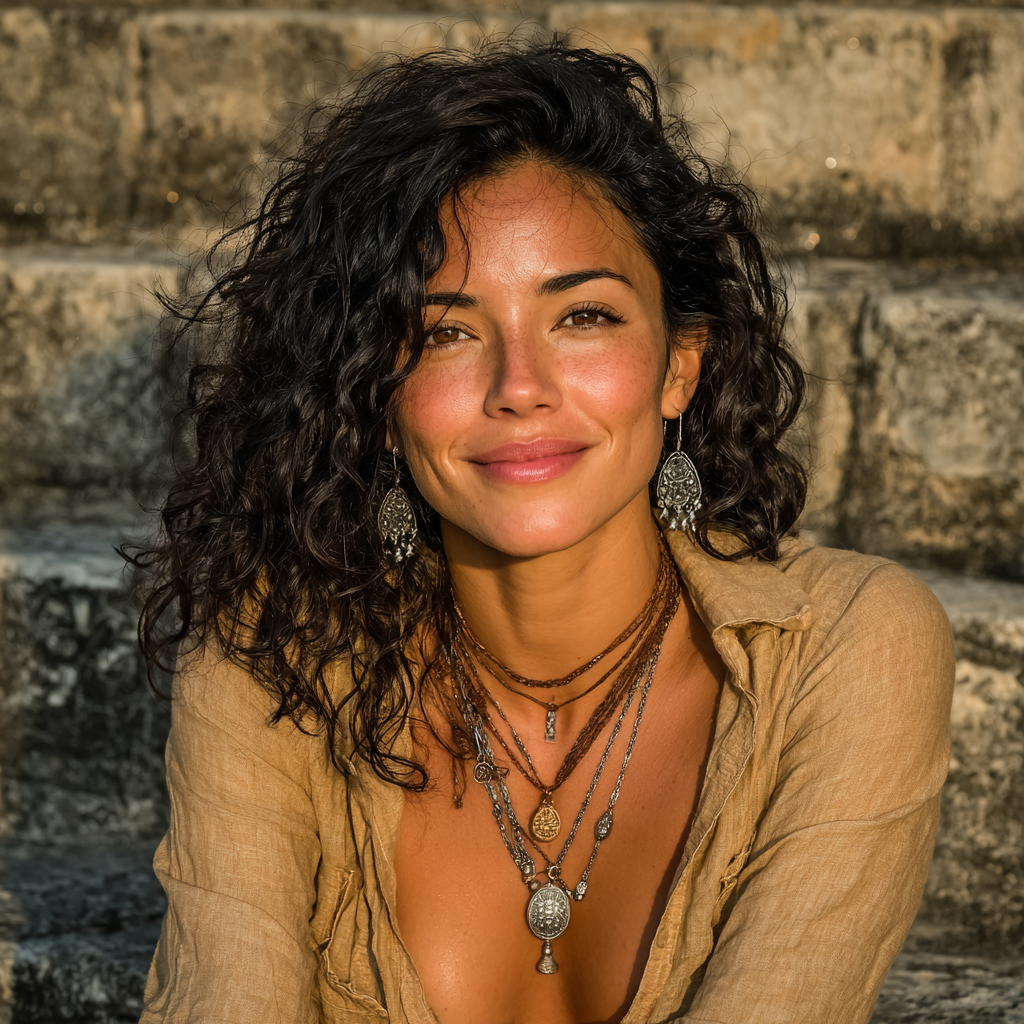
By Elena Vasquez
Cultural anthropologist and culinary storyteller. Elena spent a decade documenting traditional cooking methods across Latin America and the Mediterranean. She holds a PhD in Ethnography from Barcelona University and believes the best way to understand a place is through its kitchens and ancient streets.