
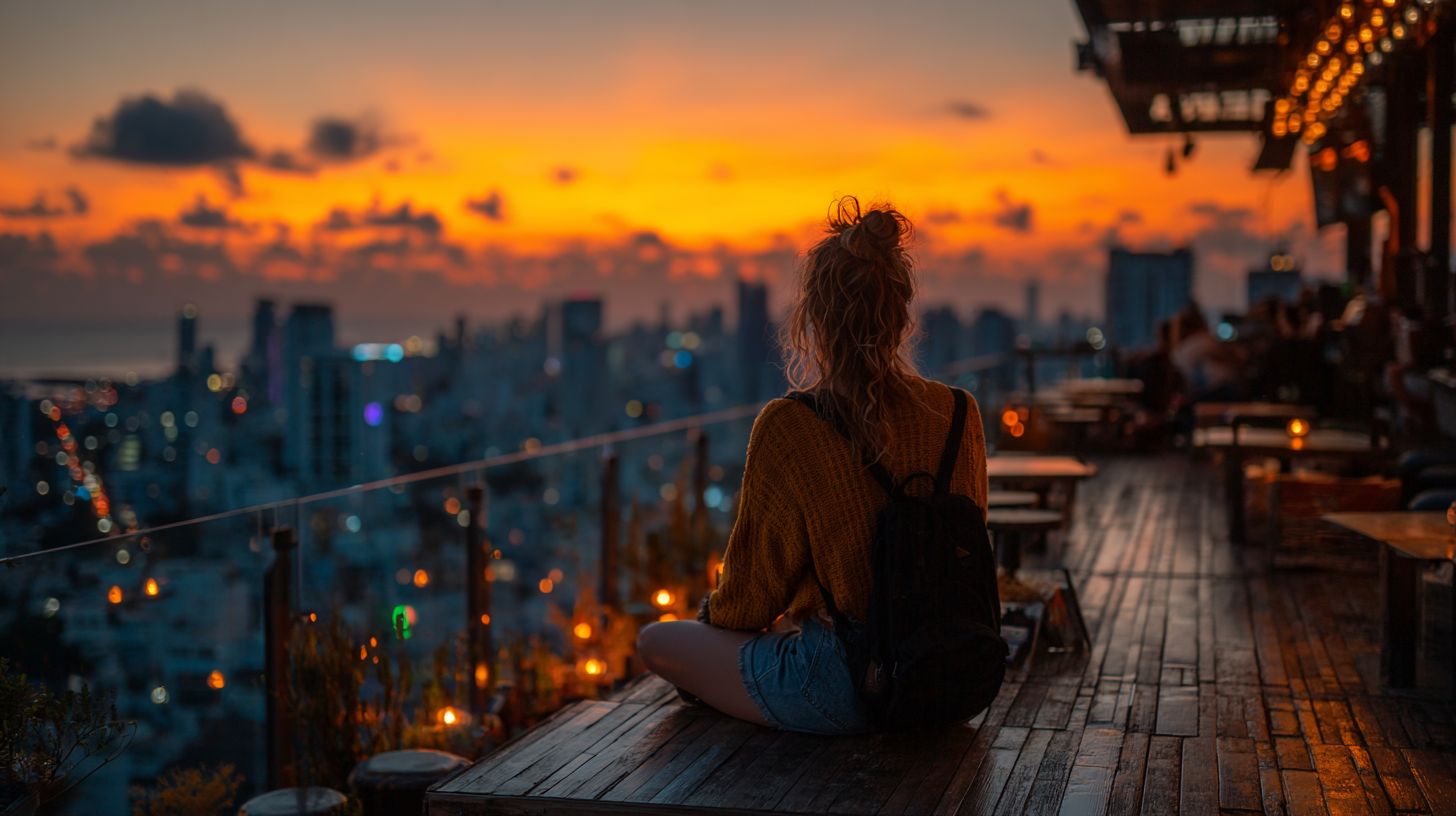
Hector Hughes has been watching something strange happen to his customers.
Hughes runs Unplugged, a UK company that rents digital detox cabins—off-grid wooden boxes with no WiFi, no phone signal, and a lockbox for your devices. When he started in 2020, "digital detoxing and analogue living was pretty much unheard of," he told me. Now? "Over half of our guests cite burnout and screen fatigue as their main motivation for booking."
That's not a niche market anymore. That's a movement.
Welcome to the year of "quietcations"—also called "Hushpitality" by trend forecasters who apparently can't resist terrible portmanteaus. Whatever you call it, 2026 is shaping up to be the year travelers stopped chasing Instagram hotspots and started paying premium prices for silence.
The Burnout Economy
I keep coming back to that Hughes quote. Burnout and screen fatigue. Not "I want to see the Eiffel Tower" or "I've always dreamed of Bali." People are booking travel to recover from their lives.
It makes sense, in a depressing way. We've built a world of always-on digital culture where global crises reach us in real-time, where Slack notifications follow us to bed, where the average person checks their phone 96 times per day. No wonder we're seeking refuge.
Visit Skåne, the tourism board for southern Sweden, has leaned into this hard. They created something called the Map of Quietude—a network of locations ranked by actual decibel levels. You can literally choose your silence. Want 30 decibels? There's a forest for that. Prefer 40? Try this lakeside meadow.
In Oregon, Skycave Retreats takes it further. Guests stay for three days in complete darkness. Not dim lighting. Not blackout curtains. Actual, total darkness. The idea is that removing visual stimulus forces a kind of mental reset. It sounds terrifying to me. It also sounds like something I'd pay $400 a night to try.
The Algorithm Rebellion
Here's where it gets interesting. This trend isn't just about noise—it's about escaping the algorithm.
For years, travel was shaped by social media. We went where Instagram told us to go. We stood in the same spots, took the same photos, ate at the same restaurants. The result was overtourism: Barcelona drowning in visitors, Venice charging day-tripper fees, Kyoto's geisha districts mobbed by camera-wielding tourists.
Quiet travel is the backlash. It's travelers saying: I don't want to go where everyone else is going. I don't want to perform my vacation for an audience. I want to actually experience something.
Nick Pulley, founder of tour operator Selective Asia, sees this daily. "More and more of our travellers, especially the anti-Instagram brigade, are turning away from overcrowded hotspots that rarely live up to their over-filtered, uncluttered online image," he told the BBC.
His customers are heading to Toledo instead of Barcelona, Brandenburg instead of Berlin. In the UK, they're skipping Cornwall for Northumberland, bypassing the Cotswolds for Somerset. These aren't second choices. They're first choices for people who've realized that crowds ruin experiences.
The Science of Silence
There's actual research behind this. Studies on noise pollution show chronic exposure elevates stress hormones, disrupts sleep, and impairs cognitive function. The World Health Organization calls environmental noise the second-worst environmental threat to public health after air pollution.
But the benefits of quiet go beyond avoiding harm. Research from the University of Michigan found that just two minutes of silence can lower blood pressure and heart rate more than listening to "relaxing" music. Another study showed that silence promotes cell development in the hippocampus—the brain region responsible for memory and emotion.
So when people pay $300 a night to sleep in a cabin with no electricity, they're not being precious. They're being scientific.
The Business of Peace
The travel industry has noticed. Hilton's 2026 Trends Report identifies "quiet over everything" as a dominant theme. Luxury hotels are redesigning spaces around acoustic privacy. Wellness retreats are adding silent dining experiences. Even airports—those temples of chaos—are experimenting with quiet zones.
But there's a tension here. The moment something becomes a trend, it risks becoming crowded. I've seen this happen with "hidden gems" that show up on TikTok and are suddenly not hidden anymore. The Map of Quietude is public. Unplugged cabins get written about in newspapers.
Can silence scale? I'm not sure. Part of what makes quiet valuable is its scarcity. If everyone starts seeking silence, do we just move the crowds somewhere else?
What Quiet Travel Looks Like
Let me give you some concrete examples of where this trend is showing up:
Digital Detox Cabins: Companies like Unplugged (UK), Getaway (US), and Off Grid Box (Europe) offer tiny cabins with no connectivity. You get a bed, a stove, some books, and a lockbox for your phone. That's it.
Silent Retreats: Buddhist monasteries have offered silent meditation for centuries. Now secular versions are booming—Vipassana centers, silent yoga retreats, "noble silence" wellness programs where nobody speaks for days.
Acoustic Tourism: Sweden's Map of Quietude is the most systematic example, but similar initiatives exist in Finland, Norway, and Scotland. These aren't just quiet places—they're marketed as quiet places, with decibel readings to prove it.
Darkness Tourism: Beyond Skycave in Oregon, there's a growing interest in sensory deprivation—float tanks, dark retreats, blindfolded dining experiences. Remove one sense, the theory goes, and the others heighten.
Off-Grid Escapes: Solar-powered cabins, wilderness yurts, shepherd's huts. The common thread: no WiFi, no cell signal, no connection to the digital world.
The Paradox of Paying for Nothing
Here's what fascinates me about this trend: people are paying premium prices for the absence of things. No WiFi. No noise. No activities. No Instagram-worthy views.
A night at an Unplugged cabin costs around £200-300. You could get a decent hotel in London for that. But people choose the cabin because of what it doesn't have.
There's something almost philosophical about this. In an economy built on adding features—more channels, more apps, more amenities—quiet travel is about subtraction. It's Marie Kondo applied to vacation.
Is This Just for the Privileged?
I need to acknowledge something: quiet travel is expensive. Digital detox cabins cost more than budget hotels. Silent retreats often require time off work that hourly employees can't afford. The ability to seek silence is, in many ways, a luxury good.
But there's a democratizing element too. Free ways to travel quietly exist: camping in national forests, hiking trails without cell service, beaches in the off-season. The trend might start with £300 cabins, but the underlying impulse—escape from digital overwhelm—is universal.
What Comes Next
I don't think quiet travel is a fad. The forces driving it—burnout, screen fatigue, overtourism backlash—are structural. They're not going away.
What I wonder is how the industry will adapt. Will we see "quiet certifications" for hotels? Decibel ratings on booking sites? Silent floors on airplanes? (Please, God, yes to that last one.)
Or will the trend evolve into something else entirely? Maybe the next phase isn't about finding silence but about creating it—noise-canceling technology, virtual reality escapes, some technological solution to a technological problem.
For now, though, the message is clear. Travelers are tired. They're overwhelmed. And they're willing to pay good money to make it stop, even if just for a weekend.
Hector Hughes has the right idea. Lock the phone in a box. Sit in the quiet. Remember what it feels like to be bored.
That's worth something.
Tags

Marcus Chen